What Is The Solar Feed-in Tariff In Australia? Maximize 2026 Savings
Installing rooftop solar is an exciting milestone, but for many Australians in 2026, the savings are smaller than expected. You might wonder why the power you send back to the grid is worth so little.
This brings us to an important question: what are solar feed-in tariffs, and why are they falling so fast? While energy companies once paid high rates for your extra power, those days are over. The strategy for saving money has changed.
This guide provides a clear overview of current tariffs across Australia and explains why rates continue to drop. Most importantly, we show you the ultimate solution. Instead of exporting power for a few cents, you can use solar battery storage to keep your own energy and maximize your household savings.
What is a solar feed-in tariff and how does it work?
If you are new to home energy systems, you might be asking a very basic question. How does the solar feed-in tariff work in everyday life?
To put it simply, a feed in tariff is a small financial credit. Your energy retailer pays you this credit for the extra, unused solar energy your roof generates. Think of your house like a giant bucket of water. During the middle of the day, your solar panels pour power into your house. If you are not running many appliances, your bucket fills up quickly. Instead of letting that extra power overflow and go to waste, your system automatically sends it out of your house and into the main public electricity grid.
When this happens, your energy company buys that extra power from you. This is known as a solar electricity feed in tariff.
You do not have to flip any switches or do anything manually to make this happen. Your home is fitted with a smart meter. This clever device tracks exactly how much power you pull from the grid. It also tracks exactly how much power you push back into the grid. At the end of your billing cycle, the energy company adds up all the power you exported. They multiply it by your agreed tariff rate. This total amount is then applied as a direct credit on your quarterly electricity bill.
This credit helps to offset the cost of the expensive grid power you buy at night. However, as these daytime credits continue to shrink across the country, finding the best solar battery in Australia is quickly becoming the smartest way for homeowners to protect their solar investment.
Eligibility: How to get a solar power feed in tariff
You do not automatically get paid just because you have solar panels sitting on your roof. You must meet a few basic requirements to start earning a solar power feed in tariff. The rules are simple, but they are very strict.
First, you must have a grid-connected solar system. If you live entirely off-grid on a rural farm, you are not connected to the public poles and wires. Because there is no physical connection, you cannot export power to an energy company.
Second, you need a bidirectional smart meter installed by your energy provider. Older, traditional power meters only spin one way. They only measure the power you buy from the company. A bidirectional meter is different. It can measure power flowing in both directions. If you have an older home, you might need to ask your provider to upgrade your meter before you can get paid.
Finally, you need an active electricity plan that explicitly includes an electricity solar feed in tariff clause. When you sign up with an energy retailer, you must pick a specific solar plan. Not all standard electricity plans offer buy-back rates. It is always a good idea to call your current retailer to check your plan details. Make sure your account is set up correctly to receive these credits.
Average solar feed in tariff rates by state in 2026
If you talk to a neighbor who installed solar ten years ago, they might brag about getting 20 to 30 cents per kilowatt-hour (kWh). Those days are long gone. Today, the feed in tariff rates are much lower.
The rates are also no longer the same across the country. They can vary wildly depending on your energy retailer and the local demand on your state's power grid. Here is a quick look at the current averages across Australian states in 2026.
In places like New South Wales (NSW) and Victoria (VIC), the average rates usually sit between 3 and 7 cents per kWh. Queensland (QLD) is the Sunshine State, and it has a massive amount of rooftop solar. Because there is so much extra power flooding the grid during the middle of the day, their rates often hover around an incredibly low 3 to 6 cents.
South Australia (SA) and Western Australia (WA) also see very low daytime rates. In some areas, standard rates might even drop below 3 cents. Sometimes, the grid is so full that the energy companies do not want your power at all.
The golden era of high solar feed in tariffs has clearly passed. The minimum and maximum averages currently seen in the open market prove that standard rates now mostly sit between 3 and 8 cents per kWh. Energy companies simply do not need to buy your daytime power at a premium price anymore.
Is the highest solar tariff always the best choice?
When Australian homeowners realize rates are dropping, they often start shopping around online. They look for the energy retailer offering the absolute highest number. They think a 10-cent tariff is automatically better than a 5-cent tariff. But you must be very careful. This is a common energy retailer trap.
An electricity plan boasting the highest solar tariff is not always the cheapest plan overall. In fact, it rarely is.
Energy retailers are smart businesses. If they pay you a high rate for your solar, they have to make that money back somewhere else on your bill. They often hide high daily supply charges in the fine print. A daily supply charge is the fixed amount you pay each day to remain connected to the grid. You pay this even if you go on holiday and use zero power.
They might also charge you very expensive evening peak usage rates. They will happily pay you 10 cents for your solar during the day when you are at work. But when you come home at 6 PM to turn on the air conditioner and cook dinner, they will charge you 45 cents to buy power back.
You must look at the overall energy plan. Compare your typical evening power usage against the expected feed-in credit.
What to do when your solar feed-in tariff gets lower?
We have to accept the current reality. Feed-in rates are dropping aggressively across Australia. Even if you find the best possible energy plan, the truth is that selling power to the grid is no longer highly profitable. So, how do you protect your investment?
Selling your extra power back to the grid for 5 cents, only to buy it back at night for 30 or 40 cents, is a losing financial game. You are basically giving away your valuable power for almost nothing. The best strategy in 2026 is no longer about exporting. The new strategy is called "self-consumption."
Self-consumption means keeping your generated solar power inside your own house. The more of your own power you use, the less you have to buy from the grid. Here are the best, most practical ways to keep your power at home and slash your bills.
Invest in a home battery solution
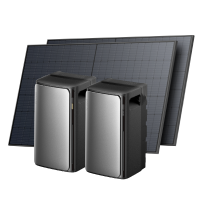
Storing your extra daytime solar energy is the best way to beat low grid buy-back rates. Your solar panels stop working when the sun goes down. But that is exactly when your family comes home and uses the most power. A home battery saves your extra daytime energy for the evening. Instead of buying expensive grid power at night, you run your home off the battery. Investing in a smart system like the EcoFlow PowerOcean Single-phase Battery lets you capture that lost value. The best part is its modular design. You do not have to buy a massive setup right away. You can start small with one 5kWh battery pack to cover basic evening needs. If your family grows, you simply buy another module and stack it on top. This protects your savings without huge upfront costs.

Unsure if your solar setup is losing money due to low feed-in tariffs? Speak with an energy expert to calculate your savings and get a tailored system recommendation. Get a solar battery quote today to take control of your power.
Schedule Your Free Consultation Today!
What kind of product or solution are you interested in?


Utilize smart energy management
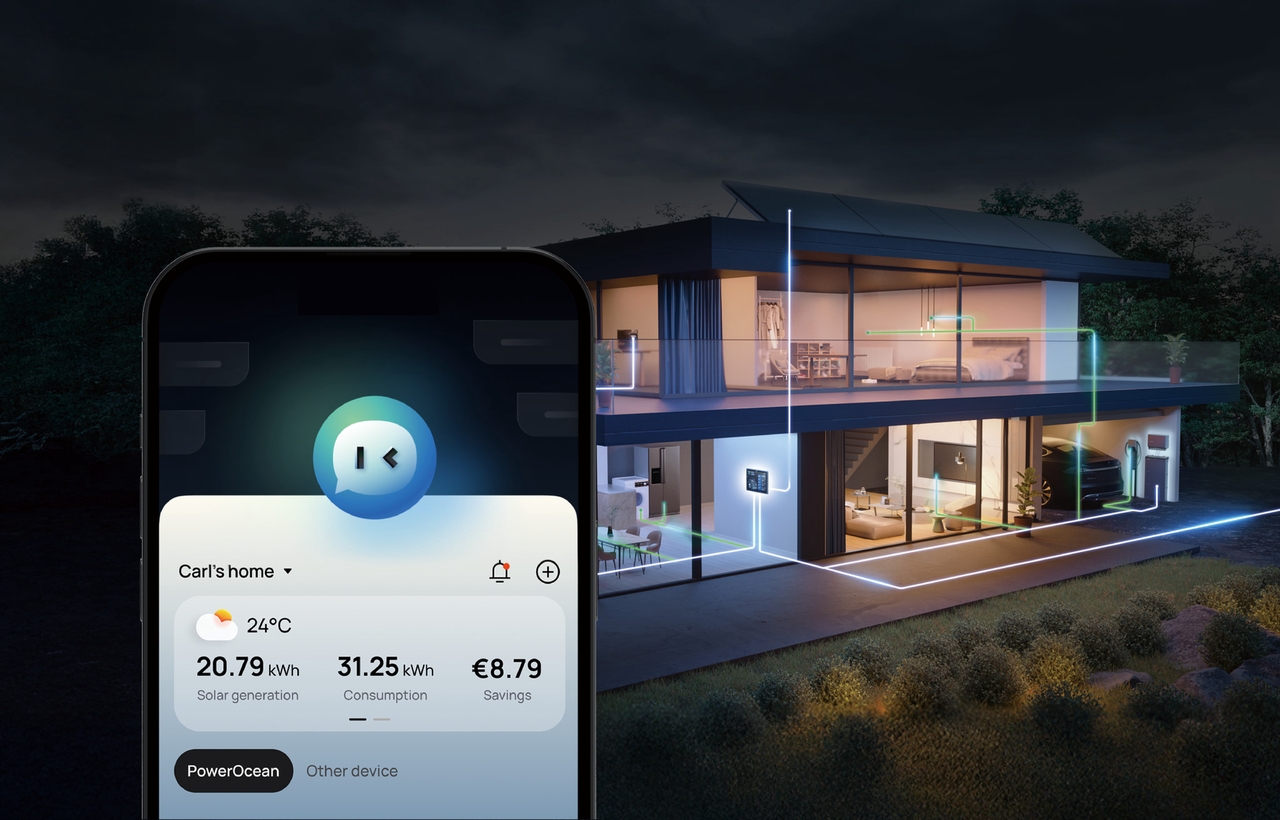
Modern homes use software to automatically manage power. You no longer have to do it manually. A smart energy monitor shows exactly where your power goes in real-time. Tools like the EcoFlow HEMS (Home Energy Management System) act as a brain for your house. This system tracks local weather forecasts and your exact energy rates. It uses this data to make smart choices. It decides if it is better to store your solar energy or use it to run heavy appliances right now. This ensures no generated solar power is ever wasted.
Shift your heavy energy loads to daylight hours
If you do not have a battery, you can still save money using load shifting. This simply means moving your heavy power usage to the middle of the day. Appliances like dishwashers, washing machines, and pool pumps use a lot of electricity. Running them at night costs top dollar. But running them during the peak midday sun uses your free solar power directly. Most modern appliances have a "delay start" button. Load the dishwasher at breakfast and set it to run at noon. This prevents your energy from being exported for a tiny solar tariff and lowers your evening grid bill.
Power your commute with excess solar energy
Electric Vehicles (EVs) are basically giant batteries on wheels. They are the ultimate "solar sponge" for your home. Homeowners with EVs can use their extra electricity to fuel their cars for free. If your car is parked at home during the day, just plug it in. You can also install a smart EV charger (like EcoFlow PowerPulse 2 EV Charger) to make this completely hands-free. It communicates with your solar setup to automatically send extra rooftop solar directly into your car. It will not pull expensive power from the grid. You save money on petrol without needing a solar power feed in tariff.
Treat your hot water system as a thermal battery
Heating water uses a huge chunk of the average Australian energy bill. You can fix this by using your hot water tank as a thermal battery. Instead of storing electricity, it stores heat. Ask a local electrician to put your hot water system on a smart timer. Set it so the water only heats up during the middle of the day. The tank will soak up your extra solar power. Because it is highly insulated, the water stays piping hot for evening showers. This reduces your reliance on the grid and completely offsets those low feed in tariff rates.
Conclusion
Understanding how the energy market works helps you make much better choices for your home and your wallet. A solar feed in tariff used to be the main reason people bought solar panels. Today, it is just a small, nice bonus on a quarterly bill. It is no longer the primary way to save money on solar in 2026.
The energy market has changed, and smart homeowners must change with it. You must emphasize keeping your power at home. Transitioning to a self-consumption model is the only way forward. By using smart habits, running heavy appliances during the day, and investing in smart home battery storage, you take the power back from the big energy retailers. This is the definitive, proven path to achieving genuine energy independence and permanently lowering your household electricity costs in Australia.
FAQs
1. Is solar feed-in tariff worth it?
It is a nice small bonus, but it should not be your main goal. The rates are very low now. The real value of solar comes from using the power yourself or storing it in a home battery, such as the EcoFlow Home Battery, instead of buying expensive electricity from the grid at night.
2. Are solar feed tariffs ending?
They are not ending completely, but they are getting much smaller every year. Some retailers even offer zero-cent tariffs during peak solar hours. The focus is shifting away from exporting power and toward installing smart home storage systems, like an EcoFlow Home Battery, to capture and use your own energy.
3. What is a good feed in tariff in Australia in 2026?
In 2026, a standard good rate is usually between 5 and 8 cents per kWh. However, you must ensure the energy plan does not include large daily supply charges hidden in the contract to offset this rate.
4. Why are solar feed in tariffs dropping?
There are simply too many solar panels in Australia now. During the day, millions of homes send power back to the grid all at once. This creates an oversupply, so energy companies drop the price they are willing to pay.
5. How is my solar electricity feed in tariff calculated on my bill?
Your smart meter measures every kWh you send to the grid. At the end of the billing cycle, the energy company multiplies those total exported kWh units by your agreed tariff rate. The total is then deducted from your bill.