Understanding the Energy Star Rating on Appliances in Australia 2026
Electricity prices are soaring in 2026, making it essential for Australian families to cut household expenses. Since home appliances are major power consumers, understanding the Energy Star rating is your best first step to lowering bills.
This guide explains how to read energy stickers and calculate the exact running costs of appliances before you buy them. You'll also learn how to combine efficient machines with the best solar battery Australia offers to permanently reduce your energy costs.
What is the energy rating label in Australia?
If you have ever walked into an electronics store, you have seen this sticker. It has a bright red top and a yellow bottom. This sticker is officially known as the Australian energy rating label. The Australian government makes it mandatory for manufacturers to display this label on many common household appliances. You will find it stuck in front of machines in physical stores. You will also see it displayed next to product pictures when you shop online.
The main goal of this label is to provide a quick, visual guide for shoppers. It acts as a standardized measuring stick. Without this label, it would be almost impossible to know how much power a machine uses just by looking at it. A cheap washing machine might look like a great deal on the price tag. However, it might use twice as much power as a slightly more expensive model.
The label lets consumers easily compare how much electricity different models use. It levels the playing field. When you understand the energy rating, you can look past the upfront price tag. You can see the true cost of owning that appliance over the next ten years. This is why paying attention to these stickers is a vital part of planning your solar battery storage and overall home energy plan.
How does the energy efficiency rating work?
The label might look like a simple sticker, but it holds a lot of important math. To get the most out of it, you need to break down the two core visual parts of the label. These two parts work together to give you the complete energy efficiency rating.
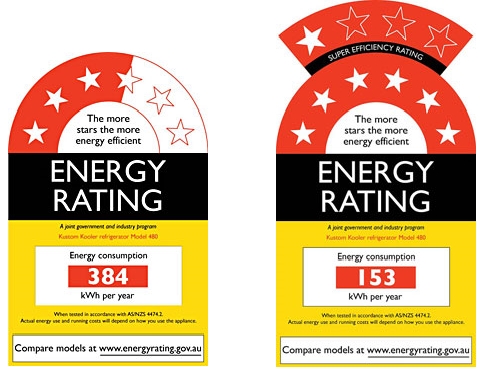
The Stars
The most famous part of the label is the star band at the top. This is the quick-glance section. The rule here is very simple: more stars mean higher efficiency. If an appliance has more stars, it uses less power to do the exact same job as a model with fewer stars.
You must remember that you can only compare stars between appliances of a similar size and capacity. For example, you can compare the stars on a 400-litre fridge with another 400-litre fridge. You cannot compare the stars on a massive family fridge to a tiny bar fridge.
Most older appliances use a standard 6-star system. However, technology is getting much better in 2026. Because of this, the government introduced a super-efficient 10-star rating system. If you see a machine with seven, eight, or nine stars, you are looking at top-tier energy-saving technology.
The Energy Consumption Number
While the stars are great for a quick look, they do not tell you the whole story. The most crucial part of the energy efficiency rating is the red box in the middle of the sticker. This box shows a bold number followed by the letters "kWh per year".
This number tells you the estimated annual energy consumption. It shows exactly how many kilowatt-hours of electricity the appliance will use in a normal year. While the stars tell you how efficient the machine is, this red box tells you exactly how much electricity it will drink.
Which appliances require an Australian energy rating?
Not every single item that plugs into the wall needs a sticker. Your toaster, coffee maker, and hair dryer do not require an energy rating in Australia. The government focuses on heavy lifters. They mandate labels for appliances that draw the most power and run the most often. Here are the main household items legally required to be tested and display the label before they can be sold:
Refrigerators and Freezers: These are the most important appliances to check. A fridge runs 24 hours a day, 7 days a week, 365 days a year. Even a small difference in ratings for an energy efficient fridge will create a massive change in your annual power bill.
Washing Machines: These machines use power to spin heavy loads of wet clothes. Many models also use huge amounts of electricity to heat the water internally.
Clothes Dryers: Dryers are notorious power hogs. Older vented dryers use an incredible amount of electricity. Newer heat-pump dryers have much higher star ratings because they recycle the hot air.
Dishwashers: Similar to washing machines, dishwashers use power to heat water to very high temperatures and run internal pumps.
Televisions: Modern smart TVs are getting larger every year. A massive 85-inch screen draws significantly more power than an older, smaller screen. The label helps you balance screen size with power usage.
Air Conditioners: Cooling and heating your home usually accounts for the biggest chunk of your quarterly bill. The labels on energy efficient AC systems are highly detailed, often showing different ratings for both cooling and heating modes.
How to calculate your appliance running cost
Looking at the stars is helpful, but doing the math is even better. You do not need to be an accountant to figure out your bills. You can use a highly practical, step-by-step method to find out what an appliance will actually cost to run in your home. By using the energy guide rating, you can predict your future bills before you ever swipe your credit card.
Step 1: Find the energy consumption number
First, look at the red section of the label on the appliance you want to buy. Find the big number listed as kWh per year. Let us imagine you are looking at a brand-new family refrigerator. The red box on this specific fridge says it uses 400 kWh per year. Write this number down.
Step 2: Check your household electricity rate
Next, you need to know what you pay for power. Grab your latest quarterly electricity bill from your provider. Turn to the second page and look at your usage charges. You are looking for your rate of "cents per kWh". In Australia, this rate changes depending on your state and your specific plan. For this example, let us say your electricity provider charges you 30 cents per kWh ($0.30).
Step 3: Multiply the two figures together
Now, grab a calculator. You need to multiply the appliance's yearly usage (from Step 1) by your electricity rate (from Step 2).
Here is the math: 400 kWh x $0.30 = $120.00.
This means that a specific refrigerator will cost you roughly $120 every single year just to keep it plugged in. Doing this math helps consumers see completely past the initial price tag. You can do this calculation for two different machines in the store to see which one is truly the better deal for your wallet.
How higher energy ratings help you save money
When you shop for appliances, you will quickly notice a trend. Machines with high energy ratings usually cost more upfront. A basic 3-star washing machine might be on sale for a very low price. Sitting right next to it, a 5-star model might cost a few hundred dollars more. Many shoppers just look at the upfront price and buy the 3-star machine. This is a common mistake.
You have to think about the long-term running costs. Let us use the math trick we just learned.
Imagine the cheap 3-star fridge uses 600 kWh a year. At 30 cents a kWh, it costs you $180 a year to run. Now imagine the more expensive 5-star fridge only uses 300 kWh a year. It costs you just $90 a year to run.
The 5-star fridge saves you $90 every single year. Most good fridges last for at least 10 years. Over a decade, that 5-star fridge will save you $900 in electricity costs. That massive saving easily covers the extra money you spent at the cash register. Excellent energy ratings mean the appliance eventually pays for itself.
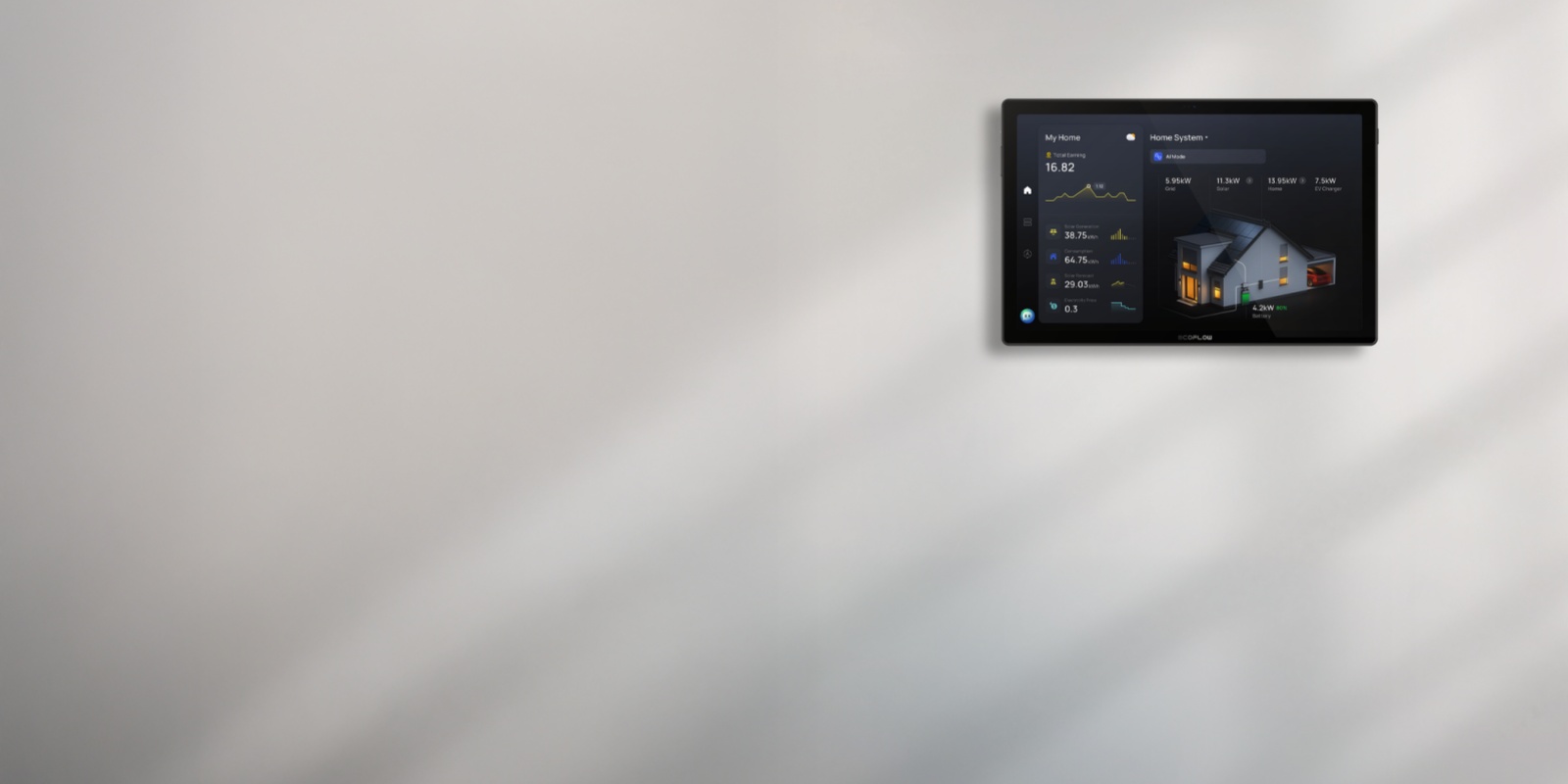
Choosing efficient appliances is just the very first step. Tracking how and when you use them is how you maximize your savings. You cannot improve what you do not measure. This is where smart technology comes in. Tools such as the EcoFlow PowerInsight 2 Monitor can give you real-time visibility into your home's energy flow. This smart screen helps you see exactly when your appliances are drawing the most power, allowing you to change your habits and save even more cash.
Save even more: Pair your appliances with solar
Buying appliances with a high energy rating is a very smart move. It will definitely bring your quarterly power bills down. However, there is a catch. No matter how good your rating is, your appliances are still pulling power from the grid. Even a perfect 10-star air conditioner costs money to run if you are buying electricity from the power company.
Investing in solar power is the first step to reducing your household energy costs. By generating your own clean electricity, you immediately cut down on the power you need to buy from the grid.
Since most Australian homes use the bulk of their power in the evening, after the sun has set, the ultimate strategy is to pair your solar with a storage system. This allows you to run your efficient appliances using free solar power stored during the day, effectively shielding your family from high evening peak rates.

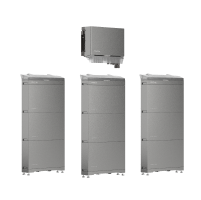
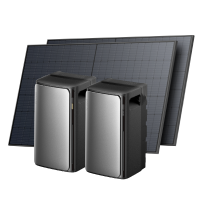
Shifting the power source for your appliances away from expensive evening grid rates is simple with a modern home battery setup. For example, pairing your solar with a modular system like the EcoFlow PowerOcean Single-Phase Battery allows you to store the free sunlight you collect during the day. A single battery module holds 5kWh of clean energy, and you can easily expand your capacity up to 15kWh in one inverter as your needs grow.
Unsure how a solar battery can work alongside your energy-efficient appliances to maximize your savings? Request a consultation with EcoFlow professional energy experts today to get a tailored quote for your home.
Schedule Your Free Consultation Today!
What kind of product or solution are you interested in?

Conclusion
Understanding the Energy Star rating gives you power over your electricity bills. Learn how to read the stars. Figure out how to calculate the red numbers. These simple steps ensure you make smart, cost-effective choices at the appliance store. You can stop overpaying for cheap machines that secretly waste electricity.
However, buying better appliances is only half of the puzzle. You can combine these high-efficiency machines with a smart home solar storage system. This setup completely removes the guesswork from your daily routine. You can easily store your own solar power during the day. Then, you use that stored energy to run your highly rated machines at night. This smart strategy ensures long-term protection against rising grid prices for decades to come.
FAQs
What is a good Energy Star rating for a fridge?
For a modern family refrigerator, a 4-star to 5-star rating is considered very good. Because a fridge runs constantly, choosing a model with 4 stars or higher will save you a massive amount of money over its typical ten-year lifespan compared to a 2-star model.
Does a higher energy rating mean it uses less electricity?
Yes, absolutely. A higher rating means the machine is highly efficient. If you compare two washing machines of the exact same size, the one with more stars will use significantly less electricity to wash the exact same load of clothes.
Is a 4-star energy efficiency rating considered good in 2026?
Yes, a 4-star rating is still considered very good and reliable for most large household appliances. While super-efficient 8-star or 10-star machines exist, a solid 4-star appliance strikes a great balance between an affordable purchase price and low ongoing running costs.
Which is better, a 3-star or a 5-star washing machine?
A 5-star machine is much better for your wallet. It uses far less power and water. You can cut costs further by running it on solar storage, like the EcoFlow home battery. Over a few years, the 5-star model easily pays for its higher price.
Are appliances with higher energy ratings worth the extra upfront cost?
Yes, they are usually worth the extra money. The savings on your power bills add up fast. You save even more when powering them with a system such as the EcoFlow home battery. Over time, the efficient machine easily pays for itself.