
Types of Solar Panels UK: Compare & Choose
Most UK homeowners choose monocrystalline panels because their high efficiency allows more electricity to be generated from a limited roof area. Polycrystalline and thin-film panels can still suit specific projects where budget, available space or weight are important considerations. Battery storage can also complement a solar installation by storing surplus daytime generation for later use.
This guide breaks down the main types of solar panels available for UK homes, explains how to assess roof space and shading, and looks at how battery storage and smart energy management can affect how much of your solar electricity you use at home.
Key Takeaways
Monocrystalline panels are a popular residential choice – their higher efficiency can provide more power from a limited roof area.
Shading and roof layout affect system performance – chimneys, dormers and multiple roof pitches can influence panel placement, string design and inverter selection.
Battery storage can increase solar self-consumption – it stores surplus daytime generation for use when solar output is lower, such as in the evening.
UK incentives can affect project economics – eligible solar and battery installations can benefit from 0% VAT under current rules, while eligible exports can receive payments through the Smart Export Guarantee (SEG).
What Main Types of Solar Panels Work for UK Homes?
The main types of solar panels available for UK homes include monocrystalline, polycrystalline and thin-film panels, along with specialised options such as bifacial modules and solar tiles.
Monocrystalline panels: highest efficiency per square metre
Monocrystalline panels are made from single-crystal silicon and are commonly recognised by their dark, uniform appearance. They generally offer higher efficiency than older polycrystalline and thin-film technologies, making them a practical choice where roof space is limited. On a typical UK semi-detached home, roof space may be restricted by valleys, dormers or neighbouring structures, so higher-efficiency modules can help maximise installed capacity. They can also generate electricity under diffuse daylight, although output is lower than under stronger sunlight. Check solar panel dimensions alongside efficiency when estimating how many modules will fit.
Polycrystalline panels: budget-friendly standard performance
Polycrystalline modules are made from multiple silicon crystals and have traditionally been associated with a blue, speckled appearance. They generally have lower efficiency than modern monocrystalline modules, so more roof or mounting area may be needed to achieve the same installed capacity. Their lower upfront cost can make them attractive in projects where space is readily available, although polycrystalline panels are less common in new residential installations than they once were. For larger outbuildings or other sites with ample usable space, they may still be worth considering.
Thin-film panels: lightweight and adaptable to roof shapes
Rather than using conventional crystalline-silicon wafers, thin-film panels use thin layers of photovoltaic material deposited onto a supporting surface. They generally have lower efficiency than crystalline-silicon modules, so they can require more installation area for the same nominal output. However, some thin-film products are lightweight and flexible, which can make them suitable for applications where conventional rigid panels are less practical, such as certain lightweight structures or curved surfaces.
Alternative solar designs: bifacial panels and solar tiles
Specialised designs cater to distinct aesthetic or structural requirements:
Bifacial panels: These modules can generate electricity from light reaching both the front and rear sides. Their additional output depends on factors such as ground reflectivity, mounting height, spacing and the amount of rear-side irradiance available. They may be particularly suitable for some flat-roof or ground-mounted applications where the rear side can receive reflected light.
Solar roof tiles: Solar tiles integrate photovoltaic technology into a roof surface and can provide a more integrated appearance than conventional panel arrays. They may appeal to homeowners who prioritise roof aesthetics, although suitability and planning requirements depend on the property and local rules..
| Solar Panel Type | Typical Efficiency | Appearance | Roof Space Required | Best UK Application |
|---|---|---|---|---|
| Monocrystalline | Higher efficiency, with some current modules reaching 25% | Dark, uniform appearance | Lower | Space-constrained residential roofs |
| Polycrystalline | Generally lower than modern monocrystalline | Blue, speckled appearance | Moderate to large | Projects with ample roof or mounting space |
| Thin-Film | Generally lower than crystalline silicon | Slim, depending on technology | Larger | Lightweight or specialised applications |
| Bifacial | Depends on module and rear-side conditions | Dual-sided design | Depends on mounting setup | Suitable flat roofs and ground-mounted systems |
| Solar Tiles | Varies by product | Integrated roof appearance | Depends on roof design | Aesthetic-focused or integrated roof projects |
How Do You Choose the Right Solar Panels for Your UK Home?
The right solar panels depend on your electricity use, available roof space, shading and budget. Panel efficiency and expected lifespan are also worth comparing before you choose.
Match Panel Type to Household Energy Needs
A two-bedroom cottage may have very different electricity needs from a household running an air-source heat pump and charging an electric vehicle. Review your annual electricity statement to understand your typical electricity consumption and daily demand. If roof space is limited and you want to maximise installed solar capacity, higher-efficiency monocrystalline panels can provide more power within the available area. For a useful starting benchmark, see how many kWh does a house use.
Choose Panels for Roof and Shading Conditions
UK roofs rarely present a pristine, unobstructed south-facing canvas. Nearby mature oaks, neighbouring brick chimneys, and dormer windows cast wandering shadows throughout the day. In conventional string systems, partial shading can reduce the output of the affected section and, depending on the system design, may also affect the performance of other modules on the same string. If your roof spans east-west aspects or experiences patchy shading, consider the electrical design of the array as well as the panel type. Multiple MPPT inputs, optimisers or microinverters may help manage different roof orientations or shading conditions, depending on the system design.
Balance Performance, Cost and Lifespan
While lower-grade panels shave a few hundred pounds off your initial quote, panels are a long-term infrastructure investment. Many established solar panels come with long-term performance warranties, commonly covering around 25 years, although the guaranteed end-of-period output varies by manufacturer and model. When comparing quotes, consider the panel’s efficiency, product warranty, performance warranty and expected degradation rate alongside the upfront cost. A higher-efficiency panel may be particularly valuable where roof space is limited.
Why Pair Solar Panels with Battery Storage?
Solar panels often generate more electricity during the day than a household can use immediately. With solar battery storage, a battery can store some of that surplus for use in the evening or when solar output is lower.
Solar generation peaks at midday
During the UK summer, solar generation is typically strongest around the middle of the day, although the exact peak depends on factors such as location, roof orientation, tilt, shading and weather. In most homes, occupants are out at work or school, leaving baseline consumption hovering around a modest 200 to 400 watts. Without a battery, surplus electricity may be exported to the grid or used by other household loads, depending on the system and the home’s electricity demand. A battery can instead store some of that surplus for later use, helping reduce the amount of electricity a home needs to import at other times.
Batteries preserve excess solar for evening use
A well-sized domestic battery quietly absorbs that midday excess. When 18:00 arrives—bringing with it the kettle, induction hob, evening telly, and laundry cycles—the home draws directly from stored solar reserves rather than importing expensive grid power. A suitably sized battery can increase the proportion of solar electricity used within the home by storing surplus daytime generation for later use. The actual improvement depends on the battery size, solar array, household demand and operating strategy.
Hybrid inverters seamlessly manage home energy flows
Hybrid inverters can combine solar generation and battery management within a single system, reducing the need for separate equipment in some installations. Depending on the system architecture, solar electricity can be directed to battery storage before being converted to AC for household use. This can help simplify energy management, although conversion efficiency and response times vary by product. A connected Home Energy Ecosystem can bring generation, storage and household loads together.
Modular single-phase batteries scale with needs
Many UK homes use a 230V single-phase electricity supply, so the electrical characteristics of the property should be considered when selecting a battery system.
Single-phase compatibility: Storage systems should be compatible with the home's electrical supply and any applicable DNO (Distribution Network Operator) requirements. Export limits and connection requirements can vary by installation, so these should be confirmed during system design.
Adaptability to split orientations: Homes with panels distributed across east, west, and south pitches require flexible PV input management. The EcoFlow OCEAN 2 Plus Single Phase is tailored precisely for UK single-phase homes, accommodating multiple roof aspects and patchy shading scenarios to keep solar capture high and grid dependency low.
Modular headroom: As household electricity demand changes, some modular battery systems allow additional storage capacity to be added over time. Whether expansion is possible depends on the specific battery and inverter architecture.
How Can Solar Panels Help UK Homes Maximise Energy Savings?
Solar panels can reduce electricity bills by cutting the amount of power you need to buy from the grid. Using more of your own solar electricity and exporting unused surplus can improve the overall savings.
Zero VAT relief helps reduce upfront installation costs
The UK Government currently provides 0% VAT treatment for qualifying installations of certain energy-saving materials, including solar panels and eligible electrical battery storage. The current temporary zero rate applies through 31 March 2027, subject to the relevant eligibility rules. This can reduce the upfront cost of an eligible residential installation, although the effect on payback time depends on the overall system cost and household energy use.
Use Solar self-consumption for Bill Savings
Solar electricity used directly in the home can reduce the amount of electricity purchased from the grid. The value of self-consumption depends on the household’s electricity tariff, while exported electricity is paid according to the export tariff available under the relevant supplier or scheme. Structuring habits around self-consumption, such as scheduling dishwashers and tumble dryers to run during daylight hours, directly protects your household cash flow.
Smart energy management boosts self-consumption
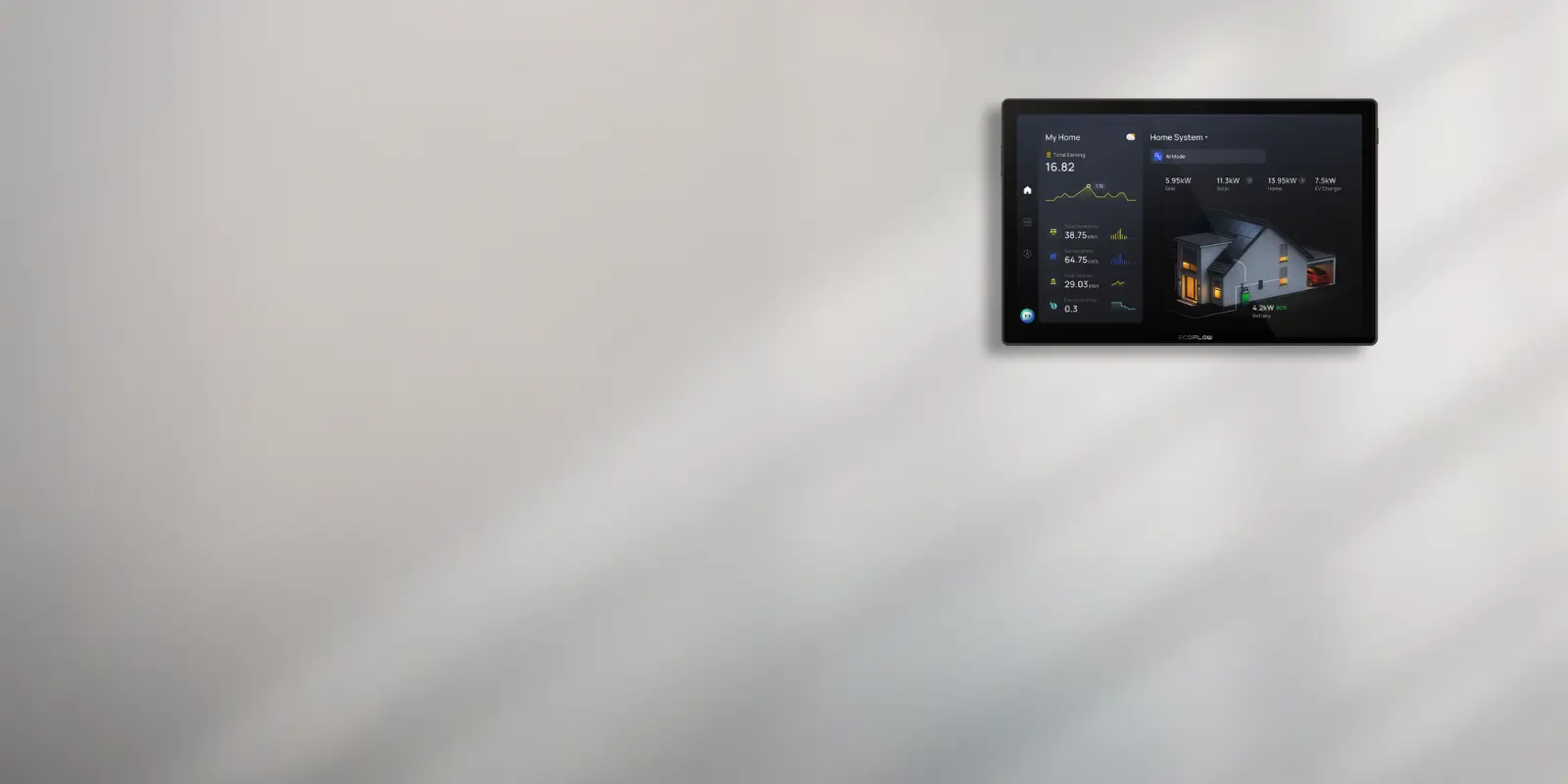
Smart energy management can help you use more of the solar power you generate instead of exporting it or buying electricity from the grid later. The EcoFlow PowerInsight 2 tracks solar generation, household consumption and battery levels in real time, while AI-driven energy management can coordinate compatible devices and direct surplus solar to flexible loads when it is available.
Smart Export Guarantee schemes generate additional solar income
When your battery is full and household demand is satisfied, surplus electricity can be exported to the grid. Eligible small-scale generators in Great Britain can receive payments through the Smart Export Guarantee (SEG), with participating suppliers setting their own tariff rates and terms. Comparing available SEG tariffs can help you choose a suitable export arrangement.
Schedule Your Free Consultation Today!
What kind of product or solution are you interested in?

Conclusion
Monocrystalline panels are a strong choice for many UK homes because their higher efficiency can help maximise generation where roof space is limited. Polycrystalline and thin-film technologies may still suit specific projects where space, weight or budget are important considerations. Before choosing a system, compare panel efficiency, available roof space, shading, warranties and the total installed cost. If your panels regularly generate more electricity than you use during the day, battery storage can help you store some of that surplus for later use.
Disclaimer: The information in this article is provided for general guidance only and does not constitute financial, legal, tax or technical advice. UK solar, battery, VAT, export and planning rules may change, and eligibility can depend on your property, system and location. Always check the latest guidance from the relevant government or regulatory authority and consult a qualified installer before making decisions about your solar or battery system.
FAQs
Do solar panels produce electricity on cloudy winter days?
Yes. Solar panels can still generate electricity on overcast winter days because they can use diffuse daylight. However, output is generally lower than under clear, strong sunlight, and the actual reduction depends on cloud cover, panel orientation, system size and local weather conditions.
How many solar panels do I need for a 3 bedroom house in the UK?
There is no fixed number of panels for a three-bedroom home. A typical installation might use around 8 to 12 panels, but the required number depends on panel wattage, roof space, shading and the home’s annual electricity use. A professional installer can size the system based on the property’s roof and electricity demand.
Do home solar installations require formal planning permission?
Many domestic solar installations can be installed under permitted development rights, but the rules and conditions vary across England, Scotland and Wales. Listed buildings, designated areas and installations that do not meet the relevant permitted development conditions may require additional approval. Check the current rules for your location and property.
Can I combine different types of home solar panels?
It is technically possible to combine different panel types or wattages, but the system needs to be designed carefully. Panels with different electrical characteristics are generally better managed through separate strings, suitable MPPT inputs or individual microinverters, depending on the system architecture. Mixing incompatible panels on the same string can reduce system performance, so an installer should check the voltage, current and operating characteristics before combining modules.
How long do residential solar energy panels usually last?
Residential solar panels are designed to operate for several decades, and 25-year performance warranties are common. The guaranteed output at the end of the warranty period varies by manufacturer and model, so check the product and performance warranties before buying.

