
How Much Energy Can a Solar Panel Generate? UK Solar Panel Output Explained
Solar panels can generate useful amounts of electricity in the UK, even during cloudy weather. How much electricity you actually generate depends on the panel’s wattage, where you live, roof orientation, shading, system design, and the time of year.
This guide explains how much electricity a typical solar panel can generate per day, month, and year, with examples for common UK system sizes from 3kW to 6kW. It also covers the main factors that affect solar output and practical ways to use more of the electricity your panels generate.
Key Takeaways
● Typical output for a single panel: A 400W domestic solar panel can generate roughly 340 to 420kWh of electricity per year in the UK under suitable conditions, although actual output varies by location, orientation, shading and system losses.
● The seasonal swing is significant: Solar generation is much higher in late spring and summer than in winter, when shorter days and lower solar elevation reduce output.
● How a full array performs: A 4kW domestic system can generate roughly 3,400 to 4,200kWh per year under favourable UK conditions, although actual annual generation varies by site and system design.
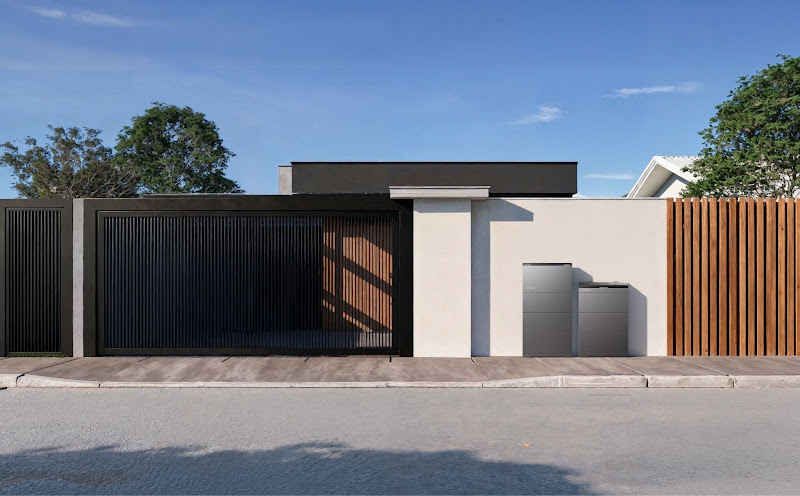
● Storage can help increase solar self-consumption: Solar panels generate most of their electricity during daylight hours, while household demand often continues into the evening. A battery can store surplus solar electricity for later use. An EcoFlow Solar Battery can help shift surplus solar to those evening hours.
How Much Energy Does a Solar Panel Generate in the UK?
Before sizing a multi-kilowatt rooftop array, it helps to understand how much electricity a single panel can generate. A single panel is the basic building block of a typical domestic solar PV system.
How Much Electricity Does One Solar Panel Generate per Day?
On an annual average, a modern 400W residential panel can generate roughly 1.0 to 1.2kWh of electricity per day in many UK locations, although site conditions can push the annual average higher or lower.
Daily output varies significantly with the season and weather. On a bright summer day, a 400W panel can generate more than 2kWh, while output on a dull winter day may fall to a few tenths of a kWh.
How Much Electricity Does a Solar Panel Generate per Month?
Monthly generation broadly follows the UK’s seasonal daylight and solar-irradiance patterns.
| Month | Typical Daily Yield per 400W Panel | Total Estimated Monthly Yield |
|---|---|---|
| January | ~0.3–0.4 kWh | ~9–12 kWh |
| March | ~1.0–1.1 kWh | ~31–34 kWh |
| June | ~2.0–2.1 kWh | ~60–65 kWh |
| September | ~1.2–1.3 kWh | ~36–39 kWh |
| December | ~0.2–0.3 kWh | ~6–9 kWh |
Through late spring and summer, longer days and stronger solar irradiance generally increase generation, while shorter winter days and lower sun angles reduce monthly output.
How Much Electricity Does a Solar Panel Generate per Year?
Over a full 12-month cycle, a 400W panel on a well-oriented, unshaded UK roof could generate roughly 340 to 420kWh of electricity. Actual output depends on location, roof orientation and tilt, shading, system losses and other site conditions.
In general, locations in southern England tend to have higher solar irradiation than northern parts of the UK, although the actual output of an individual installation depends on its specific site conditions.
In general, locations in southern England tend to have higher solar irradiation than northern parts of the UK, although the actual output of an individual installation depends on its specific site conditions.
How Does Solar Panel Output Change Between Summer and Winter?
In June, southern England can receive around 16 hours of daylight, while December has fewer than 8 hours in many locations. The lower winter sun angle and shorter daylight period reduce the amount of solar energy available to PV panels.
Winter output does not normally fall to zero because solar panels can generate electricity from diffuse daylight as well as direct sunlight. However, seasonal variations can be substantial and should be considered when estimating annual generation.
How Much Energy Can a Solar Panel System Generate in the UK?
Many UK residential systems use around 8 to 16 panels, depending on available roof space, electricity demand and the desired system capacity. Check solar panel dimensions against the usable roof area before finalising the layout.
| System Size | Typical Panel Count (400W Panels) | Indicative Annual Generation | Typical Applications |
|---|---|---|---|
| 3kW | 7–8 panels | ~2,700–3,350 kWh | Smaller homes or properties with limited roof space |
| 4kW | 10 panels | ~3,400–4,200 kWh | Typical residential installations |
| 5kW | 12–13 panels | ~4,250–5,250 kWh | Larger homes or higher electricity demand |
| 6kW | 15 panels | ~5,100–6,300 kWh | Larger homes, EVs or other higher-load applications |
3kW Solar Panel System Output
A system in this range might use seven or eight 400W panels, giving around 2.8 to 3.2kWp of rated capacity. Annual generation can vary significantly by location and installation conditions, with around 2,700 to 3,350kWh representing an indicative range under favourable conditions. It can suit smaller homes or properties with limited roof space and relatively modest electricity demand.
4kW Solar Panel System Output
A 4kW system is a common residential system size in the UK and could generate around 3,400 to 4,200kWh a year under suitable conditions. Whether this is an appropriate size depends on the property’s roof space, electricity consumption, orientation, shading and other site-specific factors.
5kW Solar Panel System Output
A 5kW system could generate around 4,250 to 5,250kWh a year under suitable conditions. It may be appropriate for homes with higher electricity demand or plans to add loads such as an EV or heat pump.
6kW Solar Panel System Output
A 6kW installation could generate around 5,100 to 6,300kWh a year under suitable conditions. The additional capacity may be useful for larger properties or homes with higher electricity demand from EV charging, heat pumps or other electrified appliances.
How Do You Calculate Solar Panel Output in the UK?
Calculating your potential generation requires just a handful of figures rather than complex engineering tools.
Solar Panel Output Formula
A simple way to estimate annual solar generation is:
Annual Generation (kWh) ≈ System Size (kWp) × Specific Yield (kWh/kWp)
● System Size (kWp): The combined peak capacity of the solar panels, such as 10 × 400W = 4.0kWp.
● Specific Yield (kWh/kWp): The amount of electricity a solar PV system is expected to generate per installed kWp in a year. This varies with location, orientation, tilt, shading and system design.
● System Losses: Inverter conversion, wiring, temperature effects, shading and other losses reduce the electricity actually delivered by the system.
MCS uses location, orientation, inclination and shading factors when calculating estimated annual PV output, rather than relying on a single UK-wide peak-sun-hours figure.
Example: Calculating the Output of a 400W Solar Panel
As a simplified example, consider a single 400W (0.4kWp) panel on an unshaded, south-facing roof in the Midlands:
Panel capacity: 0.4kWp
Indicative annual specific yield: approximately 850–950kWh/kWp, depending on the exact site and system assumptions
Estimated annual output: 0.4 × 850–950 ≈ 340–380kWh
This is an illustrative calculation rather than a site-specific forecast. A professional PV assessment can produce a more accurate estimate using the property's location, roof orientation, tilt and shading.
What Does kWh Mean for Solar Panel Generation?
A kilowatt-hour (kWh) measures the amount of energy used or generated over time. For example, a device drawing 1,000 watts (1kW) for one hour uses 1kWh.
In everyday terms, 1kWh can power different appliances for different lengths of time depending on their rated power and operating cycle. For example, it could run a 100W device for around 10 hours or a 3kW kettle for a total of about 20 minutes.
Solar Panel Output vs. Typical UK Household Electricity Use
Ofgem’s updated 2026 Typical Domestic Consumption Values (TDCVs) provide a useful benchmark for annual electricity consumption. For single-rate electricity customers, the 2026 values are:
● Low: ~1,600 kWh/year
● Medium: ~2,500 kWh/year
● High: ~3,800 kWh/year
These are benchmark consumption levels rather than fixed values for households of a particular size. Actual electricity use can be much higher for homes with electric vehicles, heat pumps or other significant electrical loads.
A 4kW system producing around 3,800kWh per year could generate more electricity annually than Ofgem’s 2026 medium single-rate benchmark of 2,500kWh. However, annual generation and household consumption do not occur at the same time, so this does not mean the household can operate independently of the grid. Understanding how many kWh does a house use helps you compare that output with your own demand.
What Affects Solar Panel Output in the UK?
Two identical systems fitted on two different properties can yield noticeably different results due to physical and local factors.
Location and Sunshine Levels Across the UK
Geography plays an undeniable role. Solar irradiation varies across the UK, with southern areas generally receiving more solar energy than northern regions. This geographic difference can affect annual PV generation, although the output of an individual installation also depends heavily on orientation, tilt, shading and system efficiency. The further south you are, the higher your annual output ceiling.
Solar Panel Orientation and Tilt
The direction your panels face and the angle of your roof both affect how much solar energy your system can generate throughout the year.
● South-facing: Generally provides the highest annual solar output in the UK, although east- and west-facing systems can also perform well.
● East/West Split: East-facing panels tend to produce more electricity in the morning, while west-facing panels generally generate more in the afternoon and early evening. This can better align generation with household demand in some homes.
● Tilt Angle: The optimal tilt depends on location and system design. A roof does not need to have a particular pitch to be suitable for solar, and installers can assess the expected yield for the specific roof.
Energy Saving Trust confirms that south-facing roofs generally perform best, while east- and west-facing roofs can still generate significant electricity.
Weather, Clouds and Seasonal Changes
Direct sunlight generally produces the highest output, but solar panels can continue generating electricity in overcast weather because PV cells can also use diffuse daylight. Output can fall substantially under heavy cloud, but the exact reduction depends on cloud conditions, time of day, panel orientation and the system itself.
Shading and Roof Obstructions
Even partial shading can reduce solar output. In some string-inverter systems, shading on one panel can affect the performance of other panels connected to the same string. Microinverters or power optimisers can help reduce the impact of partial shading by allowing individual panels or smaller sections of the array to operate more independently.
Panel Efficiency, Temperature and System Losses
Counterintuitively, solar panels perform more efficiently in cool, bright conditions than in sweltering heat. Solar PV modules generally become less efficient as cell temperature rises above their rated test conditions. The exact temperature coefficient varies by panel model, so the manufacturer’s specification should be used for a precise estimate. For example, a cool, sunny day can provide better module efficiency than a very hot day with the same solar irradiance. However, summer can still deliver much more total energy because of longer daylight hours and generally stronger solar irradiance.
How Can You Make the Most of Your Solar Energy?
How you use the electricity also affects the value of your solar system. Using more of your solar electricity directly can reduce the amount of electricity you need to buy from your supplier, while surplus generation can potentially be exported or stored for later use. Options for solar battery storage can help you retain more of that daytime generation.
Choose the Right Solar Panel System Size
Avoid choosing a system size based solely on the lowest upfront cost or the maximum possible roof coverage. Consider your usable roof area, current electricity demand, expected future loads such as an EV or heat pump, and how you plan to use or export surplus electricity. Base your setup on your roof’s usable area, future electrification plans (such as adopting an EV or switching from a gas boiler to a heat pump), and your everyday consumption patterns.
Maximise Solar Self-Consumption
Under the Smart Export Guarantee (SEG), eligible generators in Great Britain can receive payments for electricity exported to the grid. The export rate is set by the supplier and can vary significantly between tariffs, so there is no single standard SEG rate.
For comparison, Ofgem’s electricity price cap average unit rate for default tariffs is 26.11p/kWh for July–September 2026 and 26.32p/kWh for October–December 2026. Actual import and export rates depend on the tariff and supplier.
As a result, using solar electricity directly can often be more valuable than exporting it, particularly when the import rate is substantially higher than the export rate.
● Schedule dishwashers and washing machines to run around lunchtime.
● Charge portable power tools, vacuums, and laptops in the early afternoon.
● Use immersion heaters with solar diverters to warm your hot water tank with excess midday generation.
Add Battery Storage
Solar generation and household electricity use do not always happen at the same time. Panels typically produce most of their power around the middle of the day, while many UK households use more electricity in the evening for cooking, lighting and heating. Without a battery, surplus daytime generation that is not used immediately may be exported to the grid.
A home battery such as the Ecoflow OCEAN 2 Plus single phase can store surplus solar electricity for use later in the day, reducing the amount of power you need to buy from the grid and increasing solar self-consumption. During periods of low solar generation, the battery can also be charged from the grid when electricity is cheaper if you are on a suitable time-of-use tariff.
Monitor Your Solar Generation and Energy Use
Solar output can swing quite a bit through the day, especially with the UK’s changeable weather. Keeping an eye on your system shows you how much your panels are producing, how much the house is using, and how much is sitting in the battery.
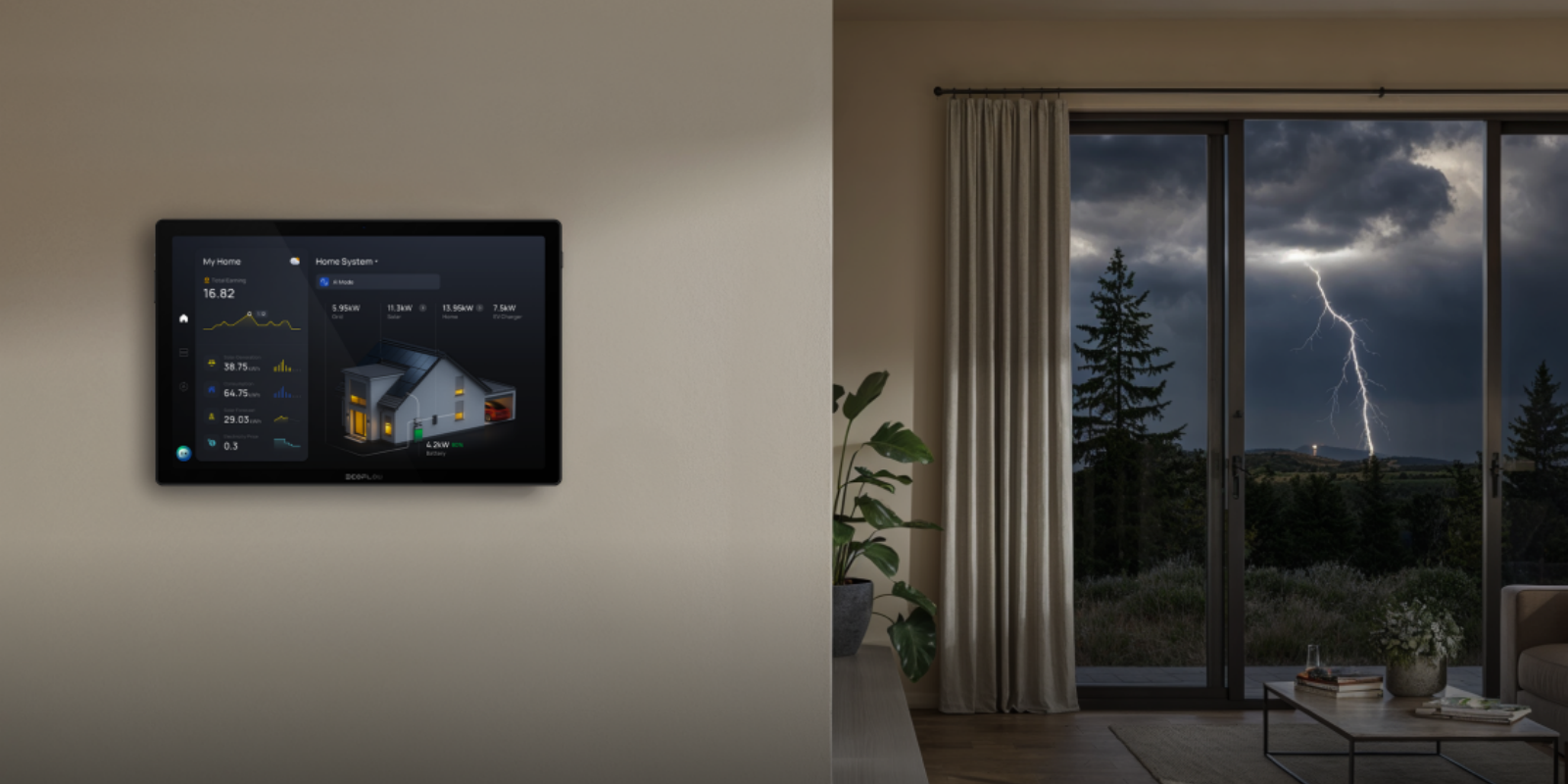
An energy management system like the EcoFlow PowerInsight 2 pulls all of that together in real time. If your panels are generating more than the house needs right then, you can put that surplus to work on the washing machine, dishwasher, or dehumidifier. Over time, that makes it easier to use more of your own solar instead of shipping it out to the grid.
Schedule Your Free Consultation Today!
What kind of product or solution are you interested in?

FAQs
How Much Energy Does a 400W Solar Panel Generate in the UK?
A 400W solar panel can generate roughly 340 to 420kWh of electricity per year under suitable UK conditions, although actual output varies by location, orientation, shading and system design. On a daily basis, this corresponds to an annual average of roughly 0.9 to 1.2kWh, while daily output can be considerably higher in sunny summer conditions and much lower on dull winter days.
Do Solar Panels Generate Electricity on Cloudy Days?
Yes. Solar panels can continue generating electricity on cloudy days because PV cells can use diffuse daylight as well as direct sunlight. However, output can fall substantially depending on cloud cover, the time of day and other site conditions.
Do Solar Panels Work in Winter in the UK?
Yes, solar panels continue generating electricity during the UK winter. Shorter days and lower solar elevation generally reduce winter output compared with summer, although the exact difference varies by location and weather conditions. Cooler temperatures can also improve PV module efficiency compared with very hot conditions.
How Many Solar Panels Does a UK Home Need?
The number of solar panels a UK home needs depends on available roof space, electricity consumption, panel wattage, orientation and shading. With 400W panels, a 3kW to 5kW system would require roughly 8 to 13 panels. Homes with higher electricity demand, such as those with an EV or heat pump, may choose a larger system where roof space and other installation constraints allow.
Can Solar Panels Generate Enough Electricity to Power a House?
A sufficiently sized solar PV system can generate as much or more electricity than a home’s annual consumption on a net annual basis. However, annual generation does not necessarily match electricity demand hour by hour or season by season. Homes seeking reliable electricity throughout the year generally need access to the grid, suitable energy storage, or another backup arrangement.
How Much Solar Energy Can a Home Use Directly?
The proportion of solar electricity a household uses directly depends on its consumption pattern, solar system size and operating schedule. A battery can substantially increase solar self-consumption by storing surplus generation for later use. For example, an MCS 2025 worked example estimated 29% PV self-consumption without storage and 82% with an energy storage system, illustrating how much the result can vary depending on the system and household assumptions.

