
Heat pump grants in 2026: How much you could receive as a UK homeowner
Heat pump grants are available in the UK to help homeowners switch to low-carbon heating at a reduced cost. Heat pumps are efficient devices that transfer warmth into your home from outside air or stable underground temperatures. They lower carbon emissions compared to fossil fuel systems and can cut your average energy bill over time.
Below, we cover the main heat pump grants in the UK that can help you install an energy-efficient heat pump in your property at a lower cost.
Boiler Upgrade Scheme (BUS): The main heat pump subsidy in the UK
With the BUS subsidy, you can install a heat pump or boiler at a lower cost. This grant heat pump scheme covers part of the cost of switching from fossil fuel heating systems such as oil, gas, or LPG to a heat pump boiler.
The BUS is available to residents of England and Wales. Current grants provided by the BUS are as follows:
£7500 for an air-source heat pump (ASHP)
£7500 for an air or ground source heat pump (GSHP), including water source heat pumps and those on shared ground loops.
£5000 towards a boiler.
Note that hybrid setups, such as gas and air source heat pumps, are ineligible for the BUS grant. Moreover, the maximum capacity supported is 45kWth for individual systems and 300kWth for shared ground loops.
You are eligible for the BUS grant if and only if you meet the following:
You are the owner of the property (e.g. business, a second home, or a property you rent out to tenants) you are applying for.
You are replacing your fossil fuel system with a heat pump or boiler.
Your installer will commission and install the heat pump within 120 days of application for the grant.
Your property must have a valid Energy Performance Certificate (EPC) with a satisfactory energy efficiency rating. An EPC is valid for 10 years.
For boilers:
Your property must be off-grid.
Your property is in a rural area.
The boiler has an emissions certificate showing that polluting emissions are kept to a minimum.
To apply for heat pump grant funding, contact an MCS-certified installer to get quotes. Your installer will review whether you meet the qualifications set by the UK government. Once confirmed, you can agree to the quote.
The installer will then process the application on your behalf via the Ofgem (Office of Gas and Electricity Markets) website. The grant will be taken off the amount you pay for installation.
UK’s energy support scheme: Zero VAT on heat pumps until March 2027
The UK government, through various legislations, has implemented a 0% VAT on the installation of several energy-saving materials from May 2023 to March 2027. Then, from April 2027 onwards, the VAT rate will be increased to 5%.
Included in this policy is the installation of water and ground source heat pumps. For instance, if you install a central heating system but with ASHP or GSHP instead of a conventional boiler, you will enjoy a 0% VAT for the installation since the principal material involved is zero-rated.
The relief also covers preparatory work needed for ground source heat pump installation. Only air source heat pumps that are permanently fixed qualify as energy-saving and zero-rated materials. Portable or movable units are excluded.
The zero VAT policy significantly reduces the cost of installing a heat pump and makes the upfront investment more attractive. For example, if the labour and equipment for a GSHP installation totals £10,000, you will not pay any VAT on that amount.
Heat pump grants in Europe 2026: How UK support compares
According to recent data from the European Heat Pump Association (EHPA), heat pump subsidy levels vary across European countries. Some countries offer generous upfront grants while others rely on tax credits or low-interest loans. In several markets, governments have begun to tighten support as uptake rises. Funding caps apply more often and eligibility rules have grown stricter.
The UK follows a more stable path compared to other European countries. Current grant and subsidy policies provide a multi-year framework that supports long-term household planning. The Boiler Upgrade Scheme (BUS) offers fixed air source heat pump grants England and Wales, alongside GSHP grants, while zero-rate VAT on installations extends through 2027. This structure allows homeowners to plan upgrades with confidence.
Planning your heat pump installation in 2026
In this section, we provide a quick guide to help you plan a successful, cost-effective heat pump installation.
Step 1: Check the availability of the grant. Refer to the guidelines and requirements stipulated above regarding the eligibility for the BUS grant and zero VAT. Note as well the deadlines for the application to these grants.
Step 2: Confirm installer certification. Choose an installer that is certified by the Microgeneration Certification Scheme (MCS), which is the primary authorized body for providing quality marks for installers of renewable technologies.
Step 3: Check your property's EPC rating. Most grant schemes require a minimum level of insulation such as loft or cavity wall coverage for efficient performance. A higher EPC score improves comfort and reduces running costs. You can learn how to improve EPC rating before applying. An accredited assessor can confirm whether a property upgrade is needed.
Step 4: Compare ASHP and GSHP for your property. GSHPs deliver strong efficiency but require land for ground loops and carry higher installation costs. ASHPs suit most homes, need less space, and perform well in the UK climate.
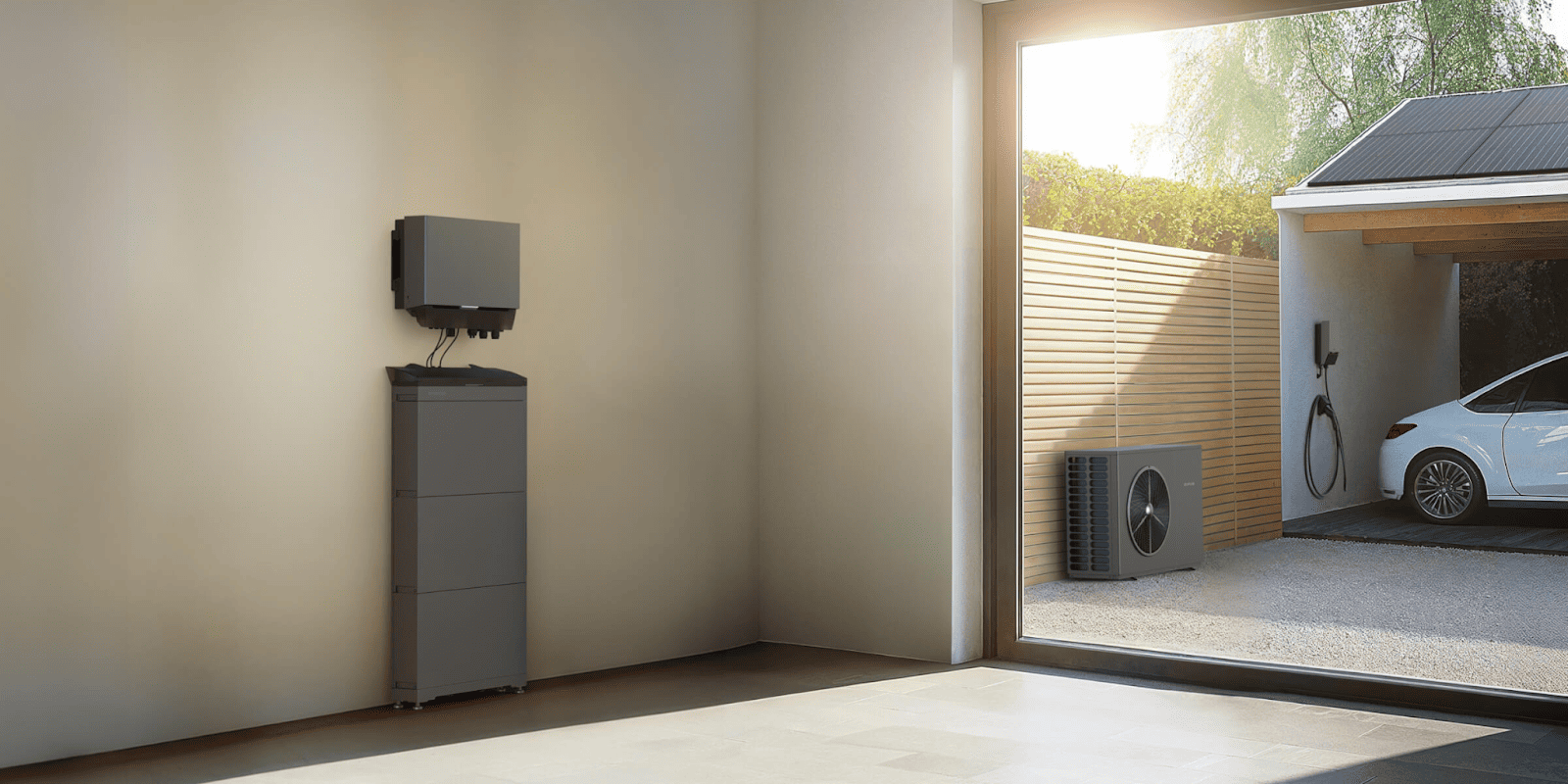
Air source heat pumps like EcoFlow PowerHeat are a practical and efficient solution for low-carbon heating because they fit most UK homes and work well within most building layouts and structures. The systems extract heat from outdoor air, even in cold weather, and convert it into steady indoor warmth with high efficiency.
PowerHeat draws heat energy from ambient air and converts it into efficient home heating. It works with the EcoFlow app, giving you full visibility of your whole-home energy data. You can adjust the temperature for rooms and hot water and schedule heating and cooling.
You can pair EcoFlow PowerHeat with EcoFlow PowerOcean, a home solar battery solution with an advanced safety system, LFP battery technology, and a fire prevention module. PowerOcean supports batteries expandable up to 45 kWh and offers over 6,000 charge cycles.
Final takeaways for 2026
Many homeowners assume that low-carbon heating sources are costly to install. That may have been true several years ago, but heat pump grants and VAT relief make 2026 and 2027 the best windows for an affordable and sustainable installation.
In the UK, government reliefs support a more affordable heat pump installation. The Boiler Upgrade Scheme (BUS) can cover a significant portion of the heat pump cost after grant, and the zero VAT policy on energy-saving materials reduces your overall spend.
Schedule Your Free Consultation Today!
What kind of product or solution are you interested in?

FAQ
Can you get a grant for a heat pump in the UK?
Yes, a heat pump is a strong long-term investment for home comfort and energy savings. They can cut energy bills and carbon emissions. Upfront costs may be higher than conventional heating, but is it worth getting a heat pump? With current grants, the answer is yes for most UK homes.
How to get money for a heat pump?
You do not get money from a heat pump subsidy. The grant will simply cover a portion of the installation cost as quoted by your chosen installer. Once approved, the grant applies directly to the installation invoice.
Is a heat pump a good investment?
Yes, a heat pump is a great, long-term investment for home comfort and energy conservation. They can cut energy bills and carbon emissions. Upfront costs may be higher than conventional heating, but there are grants that can help.
How much to get a heat pump in the UK?
The average installation cost for a residential home is £12,500. While the initial costs may be high, the UK government has grants. Government grants can cut costs to about £7,500, making the initial investment more affordable.
How much do heat pumps cost?
Heat pumps typically cost between £8,000 and £14,000 depending on the size and model. Grants can help cover part of the cost. Long-term savings on energy bills can offset the upfront investment over time.

