
Top Benefits of a Domestic Air Source Heat Pump: A 2026 Guide for UK Homeowners

As a replacement for carbon-heavy gas boilers, an air source heat pump is now widely considered the most sustainable and cost-effective heating solution for modern homeowners.For one, because of its easy installation and readiness for retrofitting, even in flats and apartments.
What is an air source heat pump and how does it work?
An air source heat pump extracts heat from the air outdoors and transfers it to your home’s main heating system to keep the house warm.
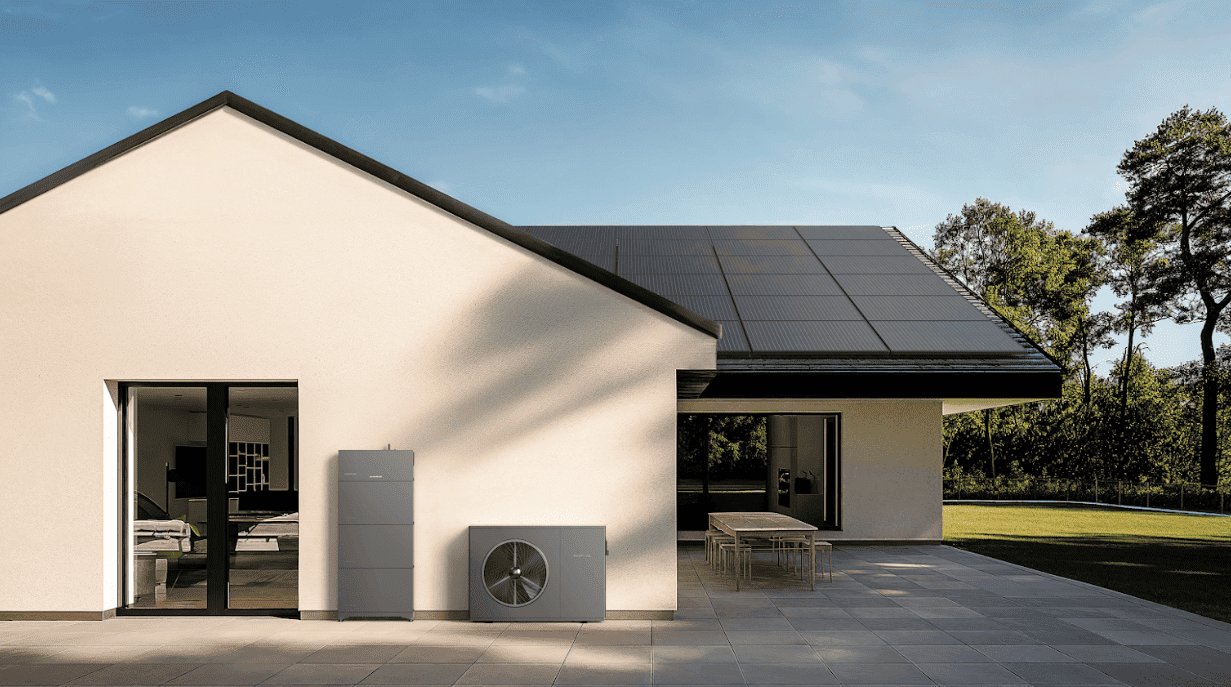
With a modern air-to-water heat pump like EcoFlow PowerHeat, your home gets an efficient heating system that you can fully control and monitor. From heating power analysis to constant temperature adjustments, PowerHeat gives homeowners full access to their home’s heating.
Similar heat pumps can also be integrated with EcoFlow PowerGlow, a smart immersion heater that offers an elevated water heating experience to your home.
Benefits of an efficient air source heat pump system
Compared to gas boilers that operate at high flow temperatures and recurrently switch between on and off cycles, air source heat pumps operate at low flow temperatures—up to 55°C on a steady, consistent manner—which results in less energy consumed.
Their efficiency is particularly measured by their Coefficient of Performance (COP), which indicates how much heat energy they produce for every unit of electricity consumed. A COP of 3.5 means that for every 1-kilowatt-hour (kWh) of electricity used, the heat pump delivers 3.5 kWh of heat.
For a more realistic view of their efficiency over a full heating season, their average COP during this period is recorded as their Seasonal Coefficient of Performance (SCOP). When run alongside eco battery solutions, particularly photovoltaic systems with energy storage, homeowners operating heat pumps can expect even lower running costs.
Is a heating air source heat pump right for your UK home?
Installing an air source heat pump is not as complex as with other heat pump systems, even when you live in a flat or an apartment. You need just a well-ventilated outdoor space to put the unit in, along with larger radiators than what you use with gas boilers, or underfloor heating as an alternative.
Due to its flexibility, PowerHeat pairs well with either a radiator or underfloor heating as your home’s main heating system—or even both at the same time. It also comes in two variants: a 9kw air source heat pump and a 20kW model.
An air source heat pump provides steady heating when run continuously, reducing cold spots often experienced with gas boilers. And since it does not use combustion to generate heat, you can expect an improved indoor air quality.
Doubling down on what it can do for your home, an air source heat pump system, particularly air-to-air heat pumps, can also cool your home in the summer by reversing its process. Instead of extracting heat from outside, they extract heat from your house and then transfer it outside.
Carbon and environmental benefits
The electrification of heating and hot water is one of the key steps towards a net-zero future, and the use of a domestic air source heat pump supports the cause.
Unlike the average UK gas boiler that emits more CO2-equivalent emissions in a year than taking seven transatlantic flights, a heat pump simply moves heat instead of generating it. By switching to this heating system, you not only benefit from lower running costs and improved air quality at home, but you also contribute to a greener future backed by both the UK’s and Europe’s decarbonisation and energy security goals.
Outdoor air heat pump installation: Space and noise considerations
Because it relies on a consistent air flow heating system, your outdoor air heat pump requires a well-ventilated space to maintain peak efficiency.. And if you choose an air to water heat pump system such as PowerHeat, you either replace your existing hot water tank or add a hot water cylinder for your hot water supply.
Most air source heat pump systems fall under permitted development, so installation permits are not required unless you don’t meet the specified criteria. Do exercise caution in terms of your system’s noise levels, even if modern units are generally quiet (around 40 to 60 decibels).
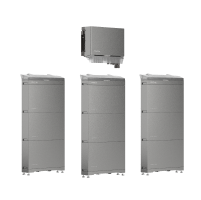
To make your air source heat pump more economical, consider connecting it to a residential battery storage like EcoFlow PowerOcean. This way, you don’t rely much on the grid to keep it running and instead utilize your own stored solar power, limiting overall electricity costs.
Costs, grants, and long-term value with heating air source heat pump systems
While the average installation of a domestic air source heat pump in the UK remains around £11,000, new 2026 incentives make the transition more affordable than ever. The Boiler Upgrade Scheme (BUS) provides eligible homeowners in England and Wales with a fixed £7,500 grant toward their air source heat pump system, which installers are required to deduct from the quote upfront.
Insulation requirements have been relaxed too, so homeowners no longer have to install loft or cavity wall insulation to qualify for the funding. The 0% VAT rate on the entire installation also remains in effect until March 2027.
Due to superior efficiency, an air source heat pump offers lower running costs. These savings are further amplified in 2026 by the shift of "green levies" away from electricity bills, lowering the unit price of power. You can drive these costs down even further by connecting your heat pump to a home battery storage system and choosing an air source heat pump system that allows smart home energy management like EcoFlow PowerHeat tools to take advantage of off-peak time-of-use (TOU) tariffs.
With an average lifespan of 20 years—compared to just 15 for gas boilers—investing in an air source heat pump today ensures a sustainable, cost-effective air flow heating system for decades to come.
Doing it right: Design, controls, and servicing
Prior to having your air source heat pump installed, it is important to first schedule a heat loss survey as well as insulation checks.
A heat loss survey is crucial in sizing the ideal heat pump system in relation to your house, as it determines the areas losing heat and the reasons they do. Likewise, insulation checks help homeowners prepare their house accordingly because air source heat pumps work best in a well-insulated space.
Come installation day, make sure that you outsource the job to an installer certified by the Microgeneration Certification Scheme (MCS). Not only does this ensure the utmost safety and quality of installation, but it also ensures that you qualify for a government grant for heat pumps like the BUS.
To improve the daily performance of your air source heat pump, have your installer accurately set the weather compensation or heating curve. This feature automatically adjusts the temperature of the water circulating in your heating system based on the outdoor temperature. You can also fine-tune it along the way.
Schedule Your Free Consultation Today!
What kind of product or solution are you interested in?

Why air source heat pump systems are a popular choice in the UK
With the UK government’s efforts in pushing homeowners to shift from gas boilers to heat pumps, specifically through financial grants, air source heat pump systems are catching the interest of more and more UK homeowners
After all, its installation is simple, it is easy to use, and it makes for an accessible option that supports a net-zero future. Modern EcoFlow units are also built for longevity, often supported by an EcoFlow warranty policy for peace of mind…
FAQ
Should an air source heat pump be in the sun or shade?
Either works, as long as it has lots of open space around it. This helps it move air easily, so it can work as efficiently as possible. Modern systems like PowerHeat are designed to be in both environments, and do not require covers anymore as well.
At what temperature do heat pumps fail?
Heat pumps are designed to work even when it's freezing. They won't fail, although they consume more energy in winter. Some people combine their heat pump with their existing boiler (smart hybrid system) to get through extreme weather conditions.
Do air source heat pumps use a lot of electricity?
Air source heat pumps are very efficient. In general, they produce more heat than the electricity they use, as evidenced by their Coefficient of Performance (COP). This makes them a great way to save money on energy bills over time.
Can an air source heat pump work with existing radiators?
Yes, but larger radiators may be needed because heat pumps run at lower flow temperatures than gas boilers. Underfloor heating is also a strong option.
Do I need planning permission to install an air source heat pump?
Usually no. Most systems fall under permitted development in the UK, as long as the installation meets the required rules and noise limits.

