
How Fixed Energy Tariffs Work and How to Maximise Savings in 2026

With energy prices remaining a key concern, fixed energy tariffs provide stability by offering specific rates per kilowatt-hour (kWh) that allow homeowners to track potential financial savings, especially when combined with a solar storage system. But in 2026, are energy companies still offering fixed tariffs? And should you choose them over dynamic deals from suppliers like Octopus Energy?
What Is A Fixed Tariff Energy Plan?
Under a fixed energy tariff, these two components are locked for a period of either 12 or 24 months:
Unit rate: The price per kWh for imported electricity.
Standing charge: The daily fee for grid connection and metering — see how electricity charges explained impact your total bill.
During this lock-in period, your rates will not change, even during market fluctuations. This type of tariff specifically helps most homeowners predict their energy bills based on how much energy they use for one billing period.
Are Flexible Energy Tariffs Good Compared To Fixed Tariffs?
Your chosen tariff structure affects your energy tariff. In the table below, you can see how fixed energy tariffs compare with other tariff types.
| Tariff Type | How It Works | Pros | Cons |
|---|---|---|---|
| Fixed | Unit rate locked for contract term | Budget certainty, shields from short-term price spikes | No benefit if wholesale prices fall; exit fees may apply |
| Variable | Follows market/price cap changes | Flexibility to switch anytime | Bills rise with energy prices |
| Time-of-Use (ToU) | Different rates for day/night or by hour | Encourages off-peak use; suits smart homes/batteries | Requires smart meter & automation |
Fixed energy tariffs offer unmatched stability and protection against price hikes. However, UK regulators and industry bodies are increasingly encouraging consumers to explore flexible and dynamic pricing structures.
In 2026, the Ofgem energy price cap only applies to variable or default tariffs. The cap is reviewed every three months, so the figure changes quarterly. Check Ofgem's latest announcement for the most current cap. Variable rates can rise or fall with each review. A fixed tariff locks your price in for the full duration of your contract.
How Solar Panels And Battery Storage Work With Fixed Energy Tariffs
With solar panels and home energy storage, you can either save through self-consumption, earn by exporting surplus energy, or benefit from both.
1. Fixed Tariff + Solar: How Energy Avoidance Savings Work
By generating and consuming your own electricity through a solar energy system, you unlock the home battery storage benefits and avoid paying for imported energy—a huge financial advantage even under a fixed unit rate. For example, if your fixed tariff is at 28p/kWh and you self-consume 3,000 kWh/year, that amounts to an “avoided cost” of £840 annually.
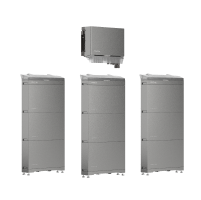
Solar panels alone can achieve this, but the amount soars with a battery like EcoFlow PowerOcean that allows consumption of self-generated energy even at night, acting similarly to a home-integrated portable power station.
2. The Role of Export Payments (SEG)
Under the UK’s Smart Export Guarantee (SEG), energy suppliers are required to pay for exported solar electricity—providing an additional source of income for eligible homeowners. The export rate varies for every supplier (e.g. Octopus Energy, EDF, E.ON) and is separate from your import rate, so you can choose between these two rate combination:
Fixed import rate + variable export rate (the most common)
Variable import rate + fixed export rate
To qualify, ensure you have a smart export meter for accurate export tracking which is a key requirement under SEG.
How Fixed Energy Tariffs Affect Your Solar Storage Strategy
Fixed energy tariffs are beneficial for solar storage systems, however, other tariff structures may be better in certain situations.
When Fixed Energy Tariffs Are the Best Choice
Homeowners who prioritize budget certainty over market fluctuations benefit the most from fixed energy tariffs.
The predictable unit rate ensures consistent savings from self-consumption, and makes it easier to estimate the return of investment (ROI) of a solar battery by knowing the price for each kWh your battery allows you to use for your own consumption. Opt for this tariff structure if you have high solar output and/or stable consumption patterns.
When Variable Or Time-Of-Use (Tou) Tariffs Work Best
Are flexible energy tariffs good alternatives to a fixed deal? The answer depends on your ability to shift your power usage to cheaper times of the day.
EcoFlow's solar energy storage solutions let you capitalise on off-peak electricity rates. Charge your battery at night when agile or time-of-use rates are low. Then discharge or export to the grid during peak hours. This is known as battery arbitrage: buying low and selling high.
Fully dynamic pricing is becoming the standard in 2026. Suppliers like Octopus Energy and Tibber have pioneered this approach in the UK. Under this system, electricity costs change every half hour to reflect live wholesale market prices. This is where an EcoFlow and Octopus Energy integration becomes a powerful tool for lowering your bills.
What to Check Before You Fix Your Energy Tariff
To make the most of your entire contract duration and minimize drawbacks, review the following:
Exit fees: Fixed deals often charge around £75 to £150 per fuel—electricity and gas—for premature contract termination.
Standing charges: These daily fees still apply regardless of how much solar energy you generate. For a full breakdown of how they work, see our guide to electricity standing charges.
Smart meter compatibility: This ensures that you get paid under the SEG accurately. Having a compatible smart meter also affords you access to ToU and dynamic tariffs.
Export contract terms: SEG payments usually continue even if you switch import tariffs as they are treated as different contracts. Confirm that your export provider allows this.
Metering setup: For accurate net billing, your metering setup must record import and export separately.
Battery system integration: Verify that your inverter and battery system, like those from EcoFlow, are configured for accurate energy flow tracking and SEG compliance. EcoFlow'ssmart home energy system can automate this.
Schedule Your Free Consultation Today!
What kind of product or solution are you interested in?
Octopus Energy Fixed Tariffs and Other Available Fixed Energy Deals
The EcoFlow and Octopus Energy integration allows you to charge your battery when rates are low and use stored power when rates are high. Below are some popular Octopus Energy fixed tariffs and flexible options. All are compatible with energy storage systems like EcoFlow's.
Octopus Fixed Tariffs: Fixed unit rates and standing charges for 12 to 24 months, with optional SEG export payments.
Flexible Octopus: Variable unit rates where Ofgem’s price cap applies.
Octopus Agile: Half-hourly dynamic pricing based on wholesale market rates. Agile Octopus rates shift every 30 minutes. This makes it ideal for homeowners with solar energy systems like EcoFlow's
Other energy suppliers such as British Gas, EDF, E.ON, and Shell also offer similar fixed deals. The decision on who to go for will then rely on each supplier’s export compatibility and integration with smart home energy systems.
How to Calculate Your Real Savings with a Fixed Tariff
Knowing the factors that influence your actual savings under fixed energy tariffs can help manage expectations and help you make well-informed decisions.
| Factor | Example | Impact |
|---|---|---|
| Fixed import rate | 28p/kWh | Avoid when using self-generated energy |
| Annual solar production | 4,500 kWh | ~60–70% self-use with battery |
| SEG export rate | 15p/kWh | Paid for excess exports |
| Battery capacity | 10 kWh | Increases self-consumption to ~80% |
| Standing charge | 60p/day (~£219/year) | Still applies regardless of solar generation |
In general, homeowners with solar panels and a battery storage can reduce the cost of home battery system under a fixed tariff by avoiding imported energy costs, and earning income from exporting surplus energy. If you are checking whether are energy companies offering fixed rates that suit solar households, compare the total annual cost across suppliers. Keep in mind that fixed daily charges still apply for grid connection, as these support infrastructure maintenance.

Should I Fix My Energy Tariff in 2026?
Before signing a fixed-deal contract, consider the following to see if fixing your energy is really the best fit for you:
Check your usage pattern: Have a high self-consumption rate? Go for fixed tariffs. Even if you live in a flat, a balcony solar system can help you lock in these benefits.
Consider the future: If you have any plans of retrofitting your home with an EV charger, heat pumps, or larger batteries, smart tariffs are best in future-proofing setups.
Monitor wholesale trends: Wait until market prices are low before officializing a fixed-tariff contract to avoid being locked in with elevated unit rates.
Use a comparison tool: Low unit rates do not automatically translate to low annual costs. Compare each tariff structure’s total annual cost by considering kWh, unit rate, and standing charge.
Read export contract small print: Identify your choice of tariff’s SEG export rates to manage expectations.
Frequently Asked Questions About Fixed Energy Tariffs
What Is A Good Energy Tariff In The Uk?
While fixed energy tariffs provide price stability, they aren’t always the best option. Know the available tariff structures, particularly their total annual cost, which includes the unit rate and standard charge, to determine what suits your household best.
Should I Switch to a Fixed Energy Tariff?
If you value budget certainty and protection from volatile prices in 2026, going for a fixed tariff is a smart choice. However, avoid signing a fixed-deal contract when market prices are elevated to avoid having a costly fixed unit rate.
What Happens When My Fixed Energy Tariff Ends?
Your energy supplier will offer you new deals prior to the end of your contract. But if you miss this part of the negotiation, you'll be automatically rolled onto their standard variable tariff, which is subject to the Ofgem price cap.
Can I have a fixed import tariff and a separate export tariff?
Yes. In the UK, import and export tariffs are usually separate contracts. Many homeowners combine a fixed import tariff with a variable SEG export tariff to balance bill stability and export income.
Do fixed energy tariffs still work well with battery storage?
Yes. Battery storage can still lower bills under a fixed tariff by increasing self-consumption and reducing imported electricity, especially when paired with solar panels and smart energy management.

