
Everything You Need to Know About the Electricity Standing Charge in 2026
Your energy bill doesn’t stop running when your lights do. Even with every plug off, you are still liable for the electricity standing charge, a daily fixed fee that applies regardless of usage. But what does this charge actually cover? And why does it appear on every bill even when you barely use any power? With energy price predictions, understanding how standing charges work is key to managing your average monthly electric bills.
What Is a Standing Charge for Electricity?
A standing charge for electricity is a fixed daily fee you pay to your energy supplier, regardless of how much energy you use. It appears on your bill as a separate line from the unit rate for electricity. Towards the end of 2025, the charge for direct debit customers on standard variable tariffs rose to 53.7p per day, up from 51.4p in the previous quarter.
Because the standing charge is fixed, it represents a larger portion of the bill for low-usage households. It can make up 29% of annual electricity costs for minimal users. Households with lower average home power consumption feel this impact most.
Tracking this alongside unit rates helps you distinguish fixed versus variable costs.
What Your Electricity Standing Charge Pays For
Every standing charge you pay contributes to the infrastructure that keeps the UK’s power system running. It typically covers:
Network maintenance: About half of the charge the electric grid. 13.5p/day pays for high-voltage transmission, 12.6p/day for local distribution.
Metering and operations: Covers meter readings, smart meters, and basic supplier services like billing and customer support. Standard credit customers pay a bit more.
Policy costs: Funds government schemes such as the Warm Home Discount, green levies, and renewable energy projects.
Supplier overheads and profit: A small part goes to supplier profit (EBIT) and a buffer to cover unexpected costs.
List of Standing Charges in the UK (2026)
When looking at energy standing charges UK wide, you will notice distinct differences across the regions. These also vary depending on electricity supplierand payment type.
Average Standing Charge for Electricity in the UK
For direct debit customers on standard variable tariffs, the average electricity standing charge rose to 54.75p/day for January to March 2026. That is up from 53.68p/day in the last quarter of 2025. This totals roughly £200 per year for electricity alone.
Combined with gas standing charges (which also rose from 34.03p to 35.09p/day on average), a typical dual-fuel household now pays around 90p/day in total standing charges. It helps to look at how these fixed fees stack up alongside unit rates.
Regional Variations
Standing charges for electricity vary across the 13 UK supply regions because of differences in local network costs. As of early 2026, daily rates for direct debit customers range from as low as 45.7p in the Southern region to as high as 71.0p in North Wales and Mersey. Your specific rate depends heavily on the cost of maintaining your local distribution network. Gas standing charges, by contrast, show little regional variation.
Tip: Check Ofgem’s regional price cap tool to see the maximum standing charge for your postcode and better understand your fixed costs.
Payment Type Impact
Electricity standing charges also depend on how you pay your bills.
Direct Debit: The average standing charge is 54.75p/day, totaling around £200/year.
Prepayment Meters: Since April 2024, prepayment charges are aligned with direct debit using a levelisation mechanism. This means prepayment customers now also pay the same average of £200/year.
Standard Credit: Customers paying quarterly bills face higher charges—averaging around £230/year (approx. 63p/day)—due to the additional administrative and debt-recovery costs incurred by suppliers.
Schedule Your Free Consultation Today!
What kind of product or solution are you interested in?
How the Annual Standing Charge Impacts Your Bill
Even though the standing charge for electricity is fixed, its share of your total bill changes depending on your household’s average consumption.
For instance, a medium-use household consuming around 2,700 kWh per year will see the standing charge represent roughly 21% of their bill. For low users consuming about 1,800 kWh annually, this fixed cost can jump to 29% or more.
If your home is energy-efficient or often unoccupied, you end up paying more per kWh consumed than a high-usage household. Tracking these fixed costs can help you identify where your always-on consumption comes from. Appliances on standby and smart devices drawing power all contribute. An real time energy monitor can make this easier to spot.
With the current energy price capping set at £1,758 per year, the electricity standing charge alone accounts for roughly £200. This fixed fee limits how much you can save from conservation efforts alone. You cannot reduce this portion of the bill by turning off lights. Use a free solar panel calculator to estimate your potential savings from solar.
How to Reduce or Avoid Electricity Standing Charges
You cannot eliminate standing charges entirely. But you can minimise their impact or choose tariffs that better match your usage habits.
Request a temporary waiver
If your home will be empty—like during a renovation or a long holiday—you can ask your energy supplier to pause your standing charge temporarily. Some suppliers may charge a small fee to reconnect or restart it when you return.Switch to zero-standing-charge tariffs
Some energy suppliers offer no-standing-charge tariffs. These are ideal for low-usage homes or holiday cottages. They often come with higher unit rates, so use an energy bill calculator to check whether the savings balance out.Install a smart meter
A smart meter gives you real-time insight into when and how you use electricity. It helps spot wasteful patterns and reduce energy consumption at home. You can also use it to accurately track unit rates versus fixed costs.Boost energy efficiency
Improve your home’s efficiency to offset standing charges through:
Time-of-use tariffs that reward off-peak consumption.
Better insulation under grants for renewable energy (up to £10,000).
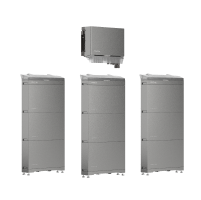
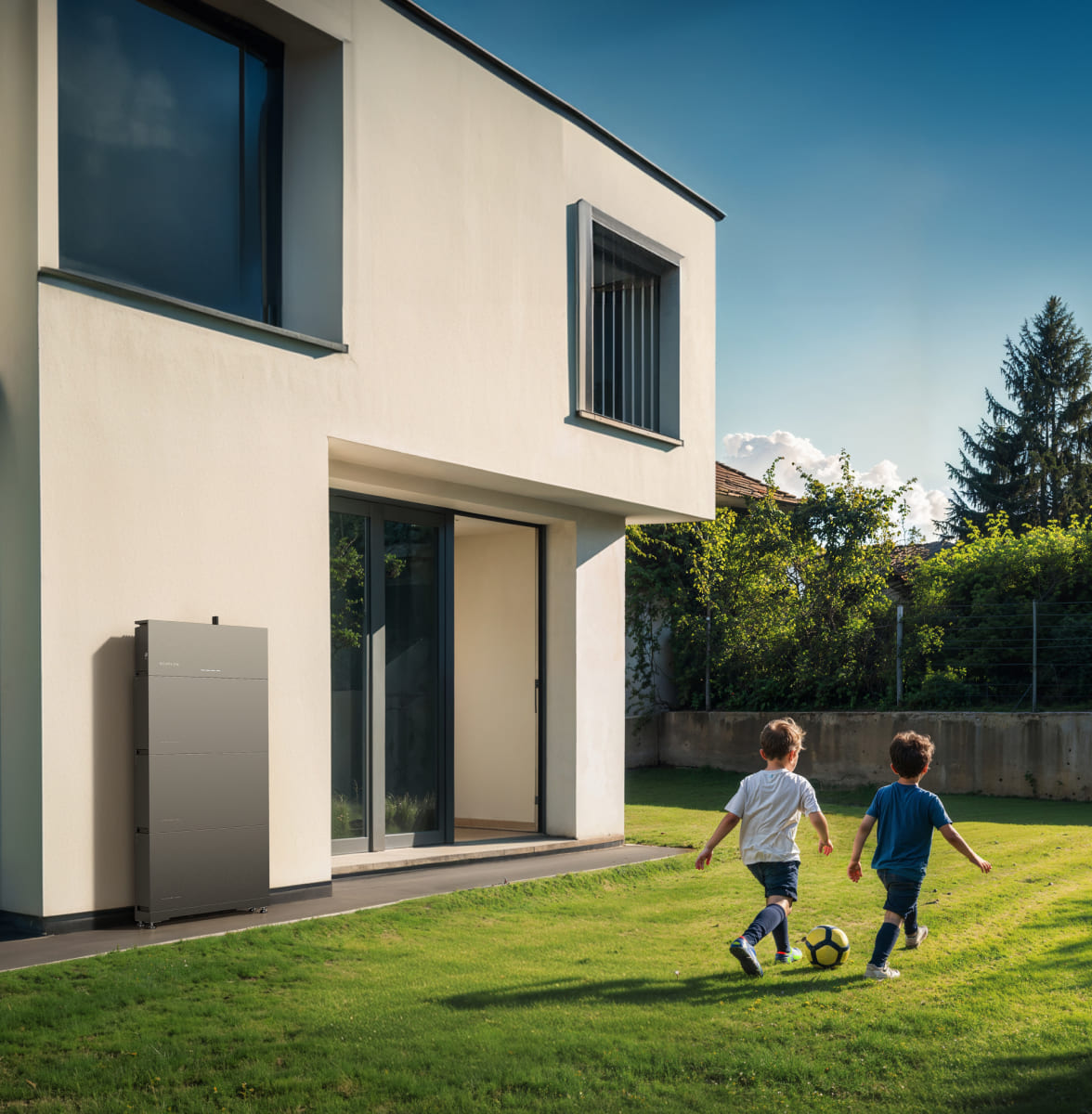
Installing solar panels and a home storage solution like EcoFlow PowerOcean, which lets you store renewable energy.
Pairing PowerOcean with EcoFlow’s AI-Powered Home Energy Management System helps you automatically monitor, optimise, and manage energy flows between your solar panels, appliances, and home energy storage.
Through EcoFlow HEMS and PowerInsight, an all-in-one energy monitor, you can also view energy data in real-time and control your smart devices like room thermostat and EV chargers.
Explore support schemes
Try applying for the Warm Home Discount, offering £150 credit toward electricity costs. Keep an eye on Ofgem’s upcoming 2026 fixed-fee reform, which may introduce lower or income-adjusted standing charges for vulnerable consumers.
Take Control of Your Electricity Standing Charge in 2026
Now that you know what a standing charge for electricity is and how it affects your annual spend, you can take active steps to protect your household budget. While these fixed daily fees are unavoidable for most grid-connected homes, their impact can be significantly reduced.
By tracking your consumption and upgrading your home efficiency with home energy storage systems like EcoFlow PowerOcean and energy monitor PowerInsight, you can offset these costs and save hundreds annually without sacrificing comfort.
Want to see how much you could save? Learn more about how EcoFlow can help lower your overall energy costs in 2026. Schedule a free consultation today.
FAQs
Why do I have to pay an electricity standing charge?
Standing charges cover the daily cost of keeping your home connected to the electricity grid, maintaining local and national infrastructure, and funding national energy schemes. They apply even when you aren’t actively using electricity at all.
Can I avoid paying the electricity standing charge?
You can switch to a zero-standing-charge tariff or request a temporary pause if your property is unoccupied. These options may include higher unit rates or a small reconnection fee later.
What is the average standing charge for electricity in the UK?
As of Q1 2026, the national average standing charge for direct debit customers is 54.75p per day. This totals around £200 per year for electricity alone, according to Ofgem's quarterly price cap for standard variable tariffs.
Why are standing charges different by region?
Regional differences come down to network maintenance costs. In rural areas, electricity must travel longer distances. Fewer households also share the cost of maintaining local distribution networks. This pushes standing charges higher in those regions.
Do standing charges apply even if I use very little electricity?
Yes. Electricity standing charges are fixed daily fees, so they still apply even if your usage is very low. That is why they make up a larger share of the bill for low-consumption households.

