
What Are the Benefits of EV Charger Home Installation in 2026?
Investing in an EV charger home solution is a smart 2026 move. Unlike expensive public rapid chargers with high premiums, benefits of installing an EV home charger include "refuelling" overnight for much cheaper. Future-proofing now also allows for integration with solar energy and battery storage, resulting in long-term efficiency that public infrastructure cannot match.
UK Rules for Installing an EV Charger at Home
When considering an EV charger home installation in the UK, compliance with national standards and regulations is crucial to ensure safety and long-term reliability. Since June 2022, all new chargers in Great Britain must be “smart,” which means they are capable of scheduling charging sessions at off-peak times by default, include randomised delay functions to help stabilise the grid, and have built-in cybersecurity protections.
Building regulations also play a role, particularly Approved Document S (Part S), which requires charge points or cable routes to be planned for new or renovated buildings to support electric vehicles. Homeowners should also prioritise choosing OZEV-approved devices that comply with UK and EU safety standards.
Selecting a compliant device not only makes installation smoother but also helps secure grant eligibility where available.
EcoFlow PowerPulse 2 represents a practical and forward-looking choice because it meets these regulatory requirements while offering strong smart charging features, backed by a comprehensive EcoFlow UK warranty. At the same time, EcoFlow’s AI-powered Home Energy Management System (HEMS) makes for seamless integration and energy monitoring.
By aligning with both compliance and innovation, Ecoflow’s HEMS alongside PowerPulse 2 helps ensure your home installation is ready for present demands and adaptable to future EV technologies.
Avoiding Hidden Costs: How Much to Install EV Charger at Home?
When installing an EV charger at home, one of the biggest hidden expenses can come from unexpected electrical upgrades. In the UK, your local Distribution Network Operator (DNO) must be notified of your installation, but sometimes an application to connect is required if demand exceeds safe limits.
A key factor is the rating of your cut-out fuse, which is typically 60, 80, or 100 amps. If your supply is limited, installing a charger without verifying this could result in costly delays. To manage loads safely, dynamic load management (DLM) systems are often integrated to balance charging demand against household usage, preventing overloads.
Another smart step to take into consideration is planning cable routes or ducting in advance, especially if you anticipate upgrading to higher-capacity charging in the future.
By designing with foresight now, you minimise the possibility of renovations and electrical rework later, protecting yourself from expensive system overhauls while keeping your charging options flexible.
Safety Standards for Your EV Charger Home Setup
Safety is at the core of any EV charger home installation, and following proper protection standards ensures peace of mind.
To comply with the UK wiring regulations (BS 7671 Section 722) and ensure adequate smart EV charger house fuse protection, a dedicated circuit is required to prevent overloading existing household systems.. Protection against dangerous voltages is also essential, which is why open-PEN fault protection is a standard feature in compliant chargers.
Residual Current Devices (RCDs) or RCBOs play a key role in safety. The recommended choice is a Type A unit with 6 mA DC detection, though in some cases a Type B is used for broader fault protection. Mode 3 charging, the standard for home setups, ensures safer, controlled delivery of electricity compared to extension leads or non-dedicated outlets.
PowerPulse 2 addresses these concerns comprehensively by integrating open-PEN protection, compliant RCD/RCBO setups, and robust internal safeguards. With these measures in place, homeowners can confidently charge their vehicles knowing the system is safe and fully aligned with UK standards.
Comparing the Best Home EV Chargers in the UK for Interoperability
A truly future-proof EV charger home installation ensures you are not locked into one system or vehicle brand. Across the UK and EU, the Type 2 connector (IEC 62196-2) is the universal standard, which makes it vital for compatibility with today’s and tomorrow’s electric cars.
Looking ahead, the most forward-thinking chargers support OCPP (Open Charge Point Protocol), enabling you to choose from a variety of apps and providers for smarter control. Another emerging standard, ISO 15118, allows for Plug & Charge technology, where billing and authorisation are handled automatically between vehicle and charger.
For eco-conscious families, bi-directional charging capabilities such as Vehicle-to-Home (V2H) or Vehicle-to-Grid (V2G) are also worth factoring in, as they can transform your car into an energy storage asset, complementing your existing residential battery storage system if any.
By choosing a charger that has these features, you avoid having to pay for expensive replacements later on and maintain your options for future energy services, upgrades, and new cars.
Schedule Your Free Consultation Today!
What kind of product or solution are you interested in?


Smarter Charging: Benefits of Installing an EV Home Charger
EV owners often focus too much on the upfront costs of EV charger home installation. While the initial cost is a factor, the long-term benefits of installing an EV home charger far outweigh the primary investment.
Faster charging speeds: Move beyond standard 3-pin plugs to significantly reduce your vehicle's downtime.
Increased property value: Future-proof your home for the growing UK EV market and enhance its overall appeal.
Off-peak energy access: Connect to time-of-use tariffs to access the cheapest electricity rates available. A modern smart EV charger, such as PowerPulse 2, can pair with time-of-use tariffs, automatically scheduling at home EV charging during off-peak hours to cut costs. This is especially useful at night, when the rates are lowest.
Beyond tariffs, surplus solar charging is an attractive feature, allowing homeowners with PV panels to prioritise renewable energy before drawing from the grid.
This is furthered by battery integration, which stores energy for later use and moves charging into the most cost-effective and environmentally friendly times.
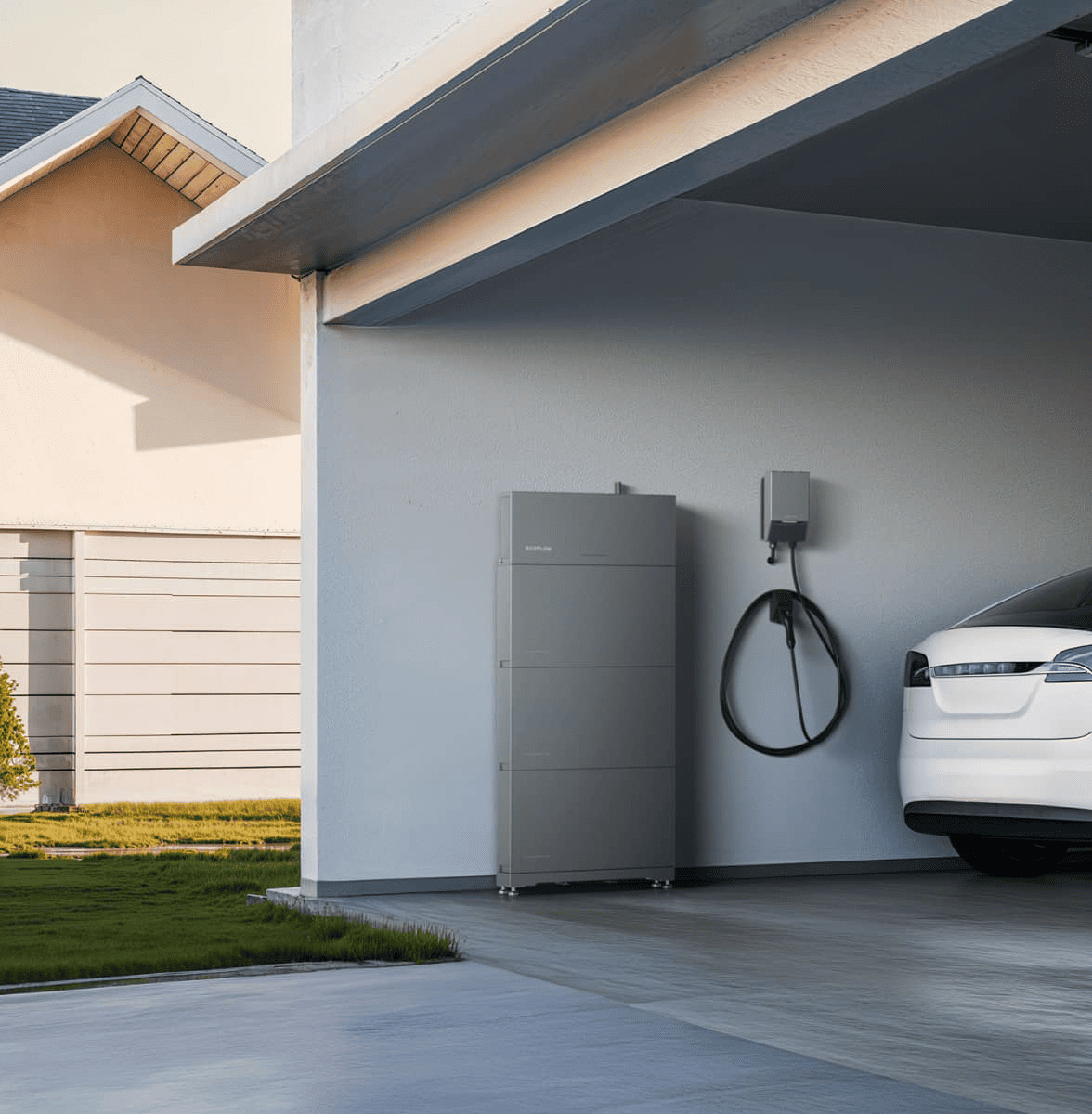
The PowerPulse 2 integrates seamlessly with EcoFlow PowerOcean battery system and wider home energy ecosystem, making it easier to coordinate solar, storage, and charging into one platform. This means homeowners not only save money but also reduce their carbon footprint while enjoying maximum flexibility in how they charge their electric vehicle.
Choosing the Best Home EV Chargers: Practical Features for Daily Use
When looking through the best home EV chargers 2026 has to offer, seemingly small design decisions can make a big impact on day-to-day use.
One of the first considerations is whether to choose a tethered unit, which comes with a fixed cable for convenience, or a socketed model, which offers greater flexibility for different vehicles.
Outdoor durability is also key, so looking for strong IP and IK ratings ensures the unit can withstand weather and accidental impacts. Connectivity is another important but sometimes overlooked factor. While Wi-Fi is common, reliable alternatives such as Ethernet or 4G backup connections ensure the charger stays online even if your home network drops.
Accessibility features, including a suitable mounting height, integrated cable management, and easy servicing access, improve usability for all family members. Whether you have young kids, teens, and senior citizens residing in your home, handling and dealing with energy matters won’t be intimidating with the help of prior features.
Planning Permission and Noise Considerations for EV Home Chargers
A typical EV charger home installation in England falls under permitted development rights, meaning no formal planning permission is needed. However, certain conditions still apply, particularly regarding the charger’s size, placement, and its distance from the highway.
Homeowners should always verify these criteria with their local authority to avoid unexpected issues. Proper siting also makes a difference in everyday comfort. Placing the charger thoughtfully can reduce potential noise from cooling fans or prevent the unit from being a visual distraction, particularly in front gardens or near living spaces.
What Sets the Best Home EV Chargers Apart?
A future-proof EV charger home installation is more than just a convenience—it is an investment in safety, adaptability, and long-term savings.
By choosing smart, standards-compliant solutions like EcoFlow PowerPulse 2, homeowners avoid costly rework and ensure compatibility with solar, tariffs, and even vehicle-to-home applications. Charging is made safer, less expensive, and prepared for the upcoming generation of EVs by adhering to UK standards and making strategic plans.
Schedule a consultation today and keep up with current EV technologies and the UK’s regulations before you install a home EV charger. Remember: Choosing certified installers also ensures you maintain your product warranty for peace of mind.
FAQ
1. How much does it cost to install an EV charger at home in the UK?
Installation in the UK this 2026 typically costs £800–£1,200 depending on your home’s wiring, fuse rating, and charger choice. Smart, OZEV-approved units may qualify for grants, reducing the cost. Potential upgrades also add around £400 to £600.
2. Do I need permission to install an EV charger at home?
In most situations, no formal planning permission is required as chargers qualify under permitted development. However, always check local conditions, especially for listed buildings or conservation areas. It can still be dependent on zoning laws.
3. What is the best home EV charger for UK households?
The best home EV chargers combine smart features, safety compliance, and flexibility. EcoFlow’s PowerPulse 2 is a strong option, offering solar and battery integration with a smart energy monitoring system to fully optimize your home EV charging.
4. Can I use solar panels to charge my EV at home?
Yes. A compatible smart charger can prioritise surplus solar energy before drawing electricity from the grid, helping lower charging costs and reduce reliance on peak-rate power.
5. Do I need a dedicated circuit for a home EV charger?
Yes. In the UK, a dedicated circuit is typically required for safety and compliance. This helps prevent overloads and ensures the charger operates correctly under BS 7671 guidance.

