
Best Home Battery Storage in the UK: Comparing Systems, Costs and Capacity
The best home battery for your UK home depends on your solar setup, how much electricity you use, and whether you want backup power. For most homes, a 5–10 kWh battery is enough to store surplus solar for the evening, while a household with a heat pump, EV, or a bigger solar array might need 10–20 kWh or more. Go AC-coupled if you’re adding storage to an existing solar system, or hybrid DC-coupled for a brand-new installation. Before you buy, compare usable capacity, continuous output, round-trip efficiency, backup capability, warranty terms, and the full installed cost. This guide covers the main battery types, typical UK prices, suitable capacities, and the features worth checking before you commit.
Key Takeaways
A battery lets you keep more of your solar for your own use instead of sending it back to the grid.
Charging overnight when power’s cheap can cut what you import during peak hours, though the savings depend on your tariff and how much the battery loses along the way.
AC-coupled batteries are usually the easier option for an existing solar setup, while hybrid systems suit new installs.
Right now, home battery installations in Great Britain come with 0% VAT, subject to the rules and conditions.
The right battery size comes down to your evening use, your solar output, your inverter’s power, and any plans for an EV or heat pump.
How Do the Best Home Battery Storage Systems Compare?
Battery capacity matters, but it’s only one part of the decision. Check how the system connects to your solar panels, how much power it can supply at once, and whether it works with your tariff.
AC-Coupled vs DC-Coupled Battery Systems
Every home battery connects to your mains supply through one of two architectures:
DC-coupled (hybrid): Power from your panels goes straight to the battery through a hybrid inverter, then gets converted to AC for your appliances. With fewer conversion steps, you get round-trip efficiency up around 90% to 94%. That makes DC coupling the natural pick for a brand-new installation.
AC-coupled: An AC system sits independently on your home’s AC ring. Your panels produce DC, a standard solar inverter turns it into AC, and if you’re not using it, an integrated battery inverter converts it back to DC to store. You lose a couple of percentage points to conversion, but an AC setup connects easily to any existing solar array without touching your current inverter.
| Feature | AC-Coupled Systems | DC-Coupled (Hybrid) Systems |
|---|---|---|
| Best Suited For | Retrofitting existing solar setups | Brand-new solar + battery installations |
| Inverter Setup | Separate battery inverter alongside solar inverter | Single hybrid inverter handling both |
| Efficiency | ~85% – 89% (multiple conversions) | ~90% – 95% (fewer conversions) |
| Installation Flexibility | Can sit anywhere with mains access | Typically located closer to the solar inverter |
| Grid Charging Speed | Limited by dedicated battery inverter | Often shares higher inverter throughput |
Battery Capacity and Usable Energy
A battery’s nominal capacity is the total storage it’s rated for. Usable capacity is what you can actually draw to power your home. Take a 10 kWh battery with a 90% depth of discharge, you’ve got about 9 kWh to work with. Check the manufacturer’s figures, because usable capacity varies from model to model.
Power Output and Round-Trip Efficiency
Capacity dictates how long your battery can run, but continuous power output (measured in kW) determines what you can turn on at the exact same moment. A unit rated at 3 kW continuous output will cover lighting, the fridge, and your television without breaking a sweat. However, the moment your heat pump fires up while an induction hob and electric shower are running, demand easily breaches 7 kW, forcing your home to draw the difference from the grid. Round-trip efficiency reflects the energy retained after taking electricity in and sending it back out. Top-tier systems sit between 88% and 94%, meaning for every 10 kWh put in, you retrieve around 9 kWh.
Battery Lifespan and Cycle Life
Quality residential batteries are designed to work reliably for 10 to 15 years. Manufacturers measure this durability in cycles, one full charge and discharge cycle per day equates to roughly 3,650 cycles over a decade. Premium LFP packs generally promise 6,000 to 8,000 cycles while retaining at least 70% of their original capacity under warranty.
Automated Energy Management Capabilities
Modern UK energy systems rely heavily on intelligent software that syncs with dynamic half-hourly tariffs like Octopus Agile or time-of-use tariffs like Intelligent Octopus Go. A connected home energy ecosystem can help coordinate solar generation, battery charging and household demand, depending on the equipment and its compatibility. Advanced systems may also monitor weather forecasts and electricity prices to help decide when to store solar, charge from off-peak grid power or export excess energy.
How Much Does Home Battery Storage Cost in the UK?
The battery is only one part of the total cost. Your quotation may also include an inverter, mounting equipment, protection devices, cabling, labour and upgrades to the consumer unit. For a useful comparison, focus on the complete installed price rather than the battery price alone.
Home Battery Prices by Capacity
The Energy Saving Trust estimates that a home battery storage system typically costs around £5,000–£8,000. The final price depends on the battery’s capacity, inverter setup and installation requirements. Larger systems or those with backup features may cost more. Actual prices vary by brand, inverter configuration, installation work and backup features.
Typical Home Battery Installation Costs
Installation usually adds around £800 to £1,800, depending on the wiring route and the condition of your existing electrical system. It can cost more if the consumer unit needs upgrading, or if cables have to be run from a garage or loft to the distribution board. An MCS-certified installer will also manage your Distribution Network Operator (DNO) application. Under UK grid connection rules, systems with an inverter output of 3.68 kW (16A single-phase) or lower follow a straightforward G98 “fit-and-inform” notification, while larger systems require prior G99 approval before installation can proceed.
Costs of Retrofitting an Existing Solar System
Adding solar battery storage to an existing solar system may involve more labour than installing solar panels and a battery together. If the current solar inverter is relatively new, an AC-coupled battery may be added with limited disruption. If the inverter is already close to the end of its expected service life, replacing it with a hybrid inverter and adding a DC-coupled battery may be more practical.
Ongoing Maintenance and Ownership Costs
Lithium batteries have no moving parts and generally need very little routine maintenance. The installation area should still stay clean, dry, and well ventilated. The inverter, though, may need servicing or replacing sooner than the battery, often around the 10-year mark. Depending on the system and labour involved, that could set you back around £800 to £1,500.

What Size Home Battery Do You Need?
There is no single battery size that suits every UK home. A small battery may cover evening lighting and appliances, while a larger system may be justified if your home uses a heat pump, charges an EV or has a high-output solar array. Start with your actual electricity data, then consider how your energy use may change over the next few years.
Choosing Battery Capacity Based on Household Electricity Use
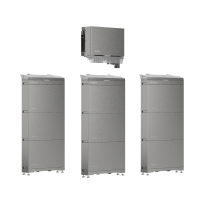
A standard British home without electric heating uses about 8 to 10 kWh of electricity per day. For many of these households, a 5 to 8 kWh battery can cover a substantial part of evening demand. Homes with heat pumps or electric vehicles need a more detailed assessment because daily consumption and peak loads can be much higher. Modular systems such as the EcoFlow OCEAN 2 Plus Single Phase may suit homeowners who expect their electricity needs to grow, as the system can be expanded to as much as 96 kWh. The final size should still be based on smart meter data, solar generation and the battery’s usable capacity.
Matching Battery Capacity to Solar Generation
Pairing an oversized battery with a modest solar array leads to wasted capacity during winter, while an undersized battery attached to a large array results in premature curtailment and unwanted grid export all summer.
Before choosing a battery, consider how many kWh a house uses each day, alongside the amount of solar electricity it generates and the surplus available for storage.
A standard rule of thumb for the UK climate is to match usable battery capacity closely to your solar array’s peak kilowatt-peak (kWp) rating:
3 kWp – 4 kWp Solar Array: Pairs best with a 5 kWh – 7 kWh battery.
5 kWp – 7 kWp Solar Array: Pairs best with an 8 kWh – 12 kWh battery.
8 kWp+ Solar Array: Justifies 13 kWh to 20 kWh+ of storage, especially when supporting heavy domestic electrification.
Accounting for Evening and Overnight Energy Demand
Your evening and overnight electricity use shows how much energy the battery needs to provide after the sun goes down. Cooking, laundry, heating and home entertainment often create the highest demand between 5:00 PM and 9:00 PM, so reviewing half-hourly smart meter data can help you choose a suitable capacity. The EcoFlow PowerInsight 2 provides a clearer view of these patterns through its 10.95-inch touchscreen. It shows live solar generation, household consumption and battery charging or discharging across compatible systems, helping you identify when and where electricity is being used. Use this information alongside historical smart meter data and expected solar generation before finalising your battery size.

What Should You Look for in a Home Battery System?
After choosing the capacity and battery type, check compatibility, backup performance, installation conditions, tariff controls and warranty coverage. These details can affect the system’s safety, savings and long-term value.
Checking Solar, Inverter and Smart Meter Compatibility
The battery must work with your solar panels, inverter and consumer unit. Ask the installer whether any upgrades are needed, especially if you have an older meter or electrical system. Understanding SMETS1 vs SMETS2 can also help you assess smart meter compatibility with your chosen tariff, although eligibility depends on your energy supplier and meter configuration.
Comparing Backup Power and Essential Circuit Support
Many home batteries shut down automatically during a power cut due to anti-islanding regulations designed to protect grid engineers. If backup power is required, choose a system with an Emergency Power Supply (EPS) or an automatic transfer gateway. In the UK, safe islanded operation requires compliant electrical isolation and an independent earthing arrangement that meets DNO and BS 7671 safety regulations. Be sure to confirm whether the EPS output can support your critical circuits (such as refrigeration, Wi-Fi, heating pumps, and lighting) or full-house loads.
Matching Battery Controls to Electricity Tariffs
Good energy management software can improve your savings. Look for controls that support:
Charging during cheaper half-hourly periods.
Adjusting charge schedules according to solar forecasts.
Discharging during expensive peak periods.
Checking Installation Requirements and Warranty Terms
Batteries are commonly installed in garages, dedicated outbuildings, or ground-floor utility rooms. Under current UK safety guidelines (such as BSI’s PAS 63100), loft, roof-space, and bedroom installations are strictly prohibited due to thermal extremes and fire escape route risks. For outdoor installations, ensure the unit carries a suitable IP weather-resistance rating and built-in cold-temperature protection. Also verify that the warranty covers at least 10 years, specifies fair cycle/throughput limits, and guarantees an end-of-warranty capacity retention of at least 70%.
Schedule Your Free Consultation Today!
What kind of product or solution are you interested in?
Conclusion
A home battery can make a UK solar system more useful by shifting surplus daytime generation into the evening, when household demand is usually higher. It may also reduce peak-time imports when used with a suitable time-of-use tariff. However, the savings depend on the battery’s usable capacity, power output, efficiency, tariff access and installation cost. Before choosing a system, review at least a year of smart meter data, compare the full installed price and confirm whether the battery supports your existing inverter, solar panels and preferred tariff. If backup power is important, check the EPS or gateway arrangement separately, because many standard batteries do not operate during a power cut.
FAQs
Are Home Batteries Worth It in the UK?
Yes, home batteries are worth it for most UK properties, typically delivering an annual electricity bill reduction of 40% to 70% when paired with solar panels or off-peak dynamic tariffs. With current 0% VAT relief and access to time-of-use tariffs, payback periods generally range from 6 to 9 years, well within typical 10-to-15-year warranty periods.
How Much Battery Capacity Is Normal to Lose in a Year?
A degradation rate of roughly 1.5% to 2.5% per year is normal for high-quality residential lithium iron phosphate (LFP) batteries. Under standard domestic operating conditions, a quality system will retain between 70% and 80% of its original usable capacity after 10 years of continuous daily cycling.
How Much Value Do Solar Panels Add to a House in the UK?
Solar installations boost UK property values by an estimated 2% to 6%, depending on property size and region. Prospective buyers increasingly value lower running costs, and an upgraded Energy Performance Certificate (EPC) rating makes homes noticeably more attractive on the market.
How Long Will a 10 kWh Battery Last?
The answer depends on the battery’s usable capacity and the appliances connected to it. A 10 kWh battery may cover essential loads such as a fridge, router, lights and heating controls for several hours, while high-power appliances can drain it much faster. To estimate backup time, list the appliances you want to keep running, check their combined power demand and allow for the battery’s reserve level and inverter losses.
Can I Get a Grant for Home Battery Storage?
Direct standalone battery grants are rare, but funding is available through specific government-backed schemes. The Warm Homes: Social Housing Fund (formerly SHDF) and ECO4 (Energy Company Obligation) provide free or subsidised solar and battery storage for eligible low-income or energy-inefficient households. For general homeowners, the main incentive remains the 0% VAT relief on all residential battery storage installations until 31 March 2027.

