Complete Solar EV Charger Guide: Fuel Your Daily Drive with the Sun
Electric vehicles are changing Australian roads very quickly. In 2026, a record number of families are leaving petrol cars behind. Cutting out traditional fuel costs saves a lot of money. However, charging an electric car from the standard power grid is still quite expensive. National electricity prices keep rising every single year. This pushes drivers to find cheaper ways to power their daily routines.
The smartest answer might already be on your roof. If you have solar panels, you hold the key to big savings. Adding a dedicated solar EV charger lets you bypass the expensive power grid. Instead of paying high electricity rates, you can fuel your daily commute using free sunshine.
This guide will show you exactly how to do this. We will explain how this smart technology works. We will cover the top benefits for your home budget. We will also help you figure out the right system size for your property. Finally, we will show you how to keep charging your car even after the sun goes down.
What is a solar EV charger and how does it work?
To understand why this tech is so helpful, we need to look at standard chargers. A regular car charger is a basic device. It pulls electricity straight from the grid. It does not check where the power comes from. It also does not check the current energy rates. If you plug your car in during the evening peak times, a standard unit just consumes expensive grid power. This creates a very large utility bill over time.
A solar electric vehicle charger is much more advanced. It operates as a smart system that talks to your home's solar inverter. When you combine this setup with a home solar battery, you gain total control over your house's power.
During the day, your rooftop panels absorb the Australian sun. They convert that sunlight into usable electricity. First, this generated energy powers your essential home needs. It runs your refrigerator, your lights, and your air conditioning. However, solar panels often produce much more power than a house uses during the bright midday hours.
Normally, this extra energy flows back to the public grid. Your energy company gives you a small feed-in tariff in return. In 2026, these tariffs are very low across Australia. You might only get 5 cents per kilowatt-hour for exporting energy. Later, you have to buy that energy back for 35 cents. This is a very bad financial trade.
This is exactly where smart charging comes in. A smart charger steps in before that extra power leaves your property. It actively detects the extra solar energy. Then, it diverts that power directly into your vehicle's battery. This means your EV charger solar connection acts like an automated energy manager. It directs free power exactly where it saves you the most money.
Top benefits of a solar-powered electric car charger
Adding smart technology to your driveway gives you more than just daily convenience. It helps you actively control your long-term energy bills. Here are the biggest advantages of installing a dedicated solar-powered electric car charger in your home.
Massive cost savings on fuel
The most immediate benefit is the huge drop in your transport costs. Electric vehicle batteries can hold a massive amount of power. Charging a standard 60kWh battery from the grid can cost over $20 per session. If you commute daily and charge often, these grid expenses pile up fast. They can easily cost you hundreds of dollars every month. By using a smart charger to avoid peak grid rates entirely, you can save thousands of dollars a year. You effectively turn your roof into a free refueling station.
100% Green commuting
Many Australians buy electric vehicles to protect the environment and enjoy cleaner air. However, grid electricity often comes from burning fossil fuels like coal or gas. If you charge your car using grid power, your travel still relies on carbon emissions. Driving on pure solar power completely fixes this issue. It wipes out the carbon footprint of your daily commute. You can drive through your city knowing your car runs entirely on clean, renewable energy.
Smart charging modes and app control
Today's smart chargers provide great flexibility. They include various modes to match your specific daily needs. For instance, you can choose a "solar-only" setting. This mode automatically pauses the session if clouds block the sun and solar output falls. Alternatively, a "mixed" mode offers a quicker charge. It pulls power from your solar panels and the grid at the same time. This ensures you are ready to hit the road without delay.
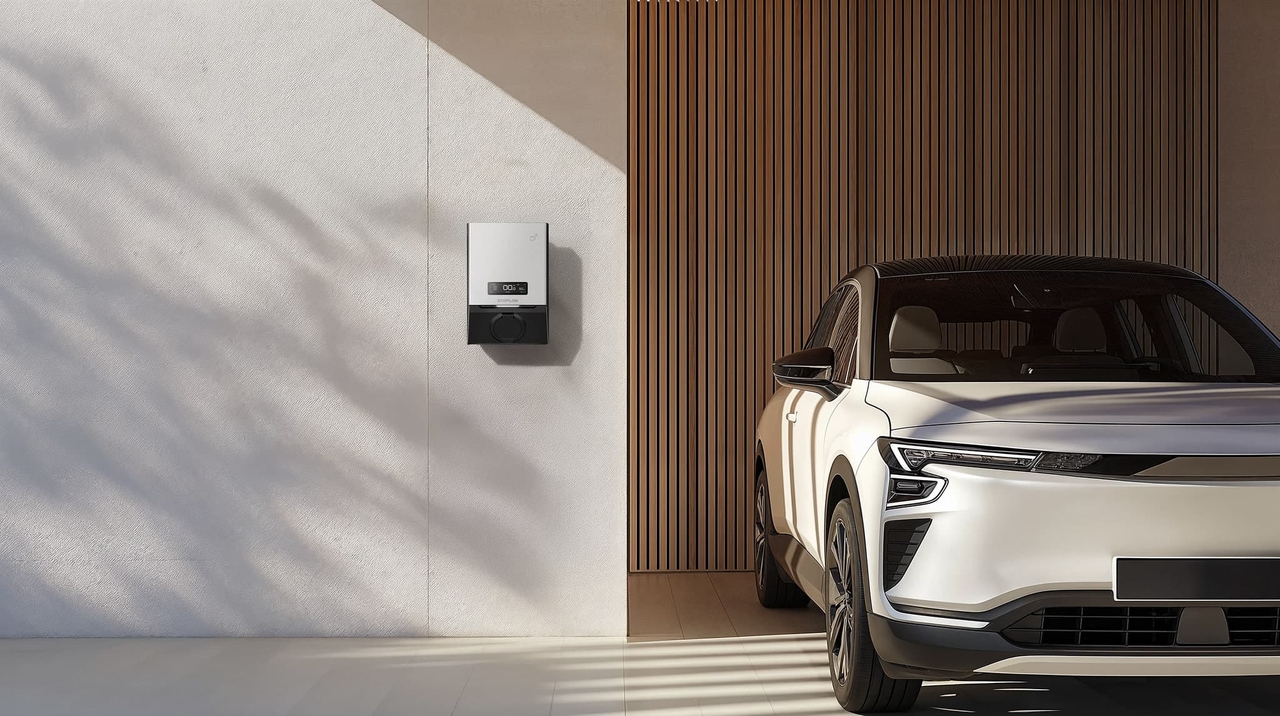
When you use advanced equipment, like the EcoFlow PowerPulse 2 EV charger, you keep total control on your smartphone. The dedicated app tracks your real-time solar generation. It automatically adjusts the electrical flow for you. This ensures your vehicle charges efficiently without ever overloading your home's main circuit breaker.
Enhanced grid stability
During hot Australian summers, the public power grid often faces heavy strain. This happens when everyone turns on their air conditioning at once. By using a solar-powered car charger, you actively lower the load on the grid. Becoming entirely self-sufficient helps prevent local blackouts. It keeps your neighborhood's power supply stable during extreme weather.
What size solar system do you need for solar EV charging?
Before you buy new charging equipment, you must check your current solar power capacity. Not every rooftop system makes enough extra energy to fuel a car. You need to ensure your panels produce a good daily surplus. Let's look at some practical targets for standard Australian homes.
Evaluating your daily commute
First, think about your normal driving distance. The typical Australian driver travels about 35km to 40km every day. Restoring the energy for this distance takes roughly 6kWh to 8kWh of electricity. This amount serves as your minimum daily charging target. If your workplace is far away, your daily energy needs will naturally be much higher.
Assessing your household consumption
Next, factor in your normal household energy use. Your solar panels must power your home before they can charge your car. Otherwise, your essential appliances will lose power. To run a solar electric car charger properly, you need a steady energy surplus. Energy experts generally advise keeping a solar panel array between 6kW and 10kW. This size supports both a home and an electric vehicle without any issues.
If your existing system is smaller than 5kW, you will probably use most of that power just running standard kitchen appliances. Because of this, there will not be enough extra energy left over to activate the charger. Most smart units need a minimum of 1.4kW of dedicated excess power just to start the "solar-only" mode.
Upgrading for faster charging
If you want faster charging speeds, a larger system is always better. A strong 10kW system gives you plenty of energy to run your house air conditioning while delivering pure solar power to your car outside. Upgrading your roof capacity ensures your solar car charger performs perfectly all year round. If you have a large roof and want to capture huge amounts of daytime energy, look into a 20kW solar battery. This expands your storage reserves significantly.
Charging at night: Adding a battery to your solar EV charging setup
While daylight charging is very efficient, it creates a big problem for the average commuter. Peak solar generation happens during the midday hours. This is exactly when most vehicles are parked at office buildings, not in residential driveways.
When you finally arrive home at 6 PM, solar production is dropping fast. Therefore, how can you practically use a solar-powered EV charger if your car is only home during the evening?
The most effective answer is adding robust home energy storage.
Adding a home battery completely solves this timing problem. It functions as a secure tank for your solar production. Throughout the day, your rooftop panels generate electricity. Since the house is empty and appliance usage is low, this extra energy flows directly into your home battery. It safely stores the bright midday sunshine inside your garage.
When you park your car in the evening and connect the charger, the smart system notices that the sun is down. Instead of buying expensive power from the public grid, the charger draws electricity straight from your home battery. You smoothly transfer the stored solar energy into your vehicle overnight. This entirely bypasses the costly evening peak tariffs.
Achieving this off-grid freedom requires a high-capacity storage solution. For instance, pairing your smart charger with the EcoFlow PowerOcean Single-phase Battery gives you modular flexibility. It allows you to stack battery units (5kWh-15kWh in one inverter) easily as your energy needs grow. These units also feature safety guards, such as active fire protection and auto-heating technology, to ensure the battery performs well in extreme Australian weather. Furthermore, selecting a system with independent battery management ensures that your home's power remains stable.

Building a complete energy setup changes how you manage your home utilities. You capture the sun's power at noon while you are busy at work. Then, you drive your car using that exact same power the following morning. This smart cycle guarantees that no renewable energy is wasted. It gives your family true energy independence.
Are you unsure if your current roof panels can support off-grid vehicle charging? Or are you looking to install an overnight storage system to beat peak rates? Connect with our energy experts to get a solar battery quote. We will tailor it exactly to your specific driving habits and home energy needs.
Schedule Your Free Consultation Today!
What kind of product or solution are you interested in?

How much can you save with a solar EV charger in Australia?
Looking at the exact financial return shows exactly why this technology is so popular today. Australian electricity pricing can be complex. But understanding the difference between buying power and exporting power reveals the true value of your solar energy.
The high cost of grid charging
Imagine the cost of standard charging when you get home from work at 6 PM. You immediately hit peak Time-of-Use grid rates. These rates frequently reach 35 cents per kWh in many states. Buying 10kWh to recharge your car for the next day costs you $3.50. While this sounds like a minor daily expense, it adds up quickly. It totals nearly $1,300 every year just for charging a single vehicle at home.
The low value of exporting solar
Now, consider the value of exporting your unused solar energy. Without a smart charger, your extra power flows directly into the public grid. Energy companies pay you a small feed-in tariff. If your tariff is 5 cents per kWh, exporting 10kWh of energy earns a mere 50 cents in bill credits. This is a very poor return on your solar investment.
Maximizing your daily savings
By routing that same 10kWh into your car instead, you give up the 50-cent export credit. But you successfully avoid the $3.50 grid consumption charge. This smart energy routing creates a net savings of $3.00 every single day. This adds up to well over $1,000 saved per year.
This simple math explains why a solar EV charger in Australia pays for itself so quickly. The financial benefits are even greater for families with two electric vehicles. More driving speeds up your return on investment. To maximize these savings and defend against future price hikes, consider managing your property through the EcoFlow home energy ecosystem. This network ensures your panels, charger, and appliances work together. They turn every ray of sunlight into real financial savings.
Conclusion
For Australian families, managing energy bills is now a top priority. Investing in a solar-powered car charger is a clever way to future-proof your home. It protects you against rising petrol costs and high electricity rates. Instead of renting power from big companies, you can start producing your own fuel.
Whether you schedule your charging during daylight hours from your roof or use a home battery for overnight solar EV charging, the financial result is the same. You greatly reduce your expenses every time you drive your car. In 2026, shifting your daily commute to run for free, clean sunshine is clearly the smartest financial decision an Australian driver can make.
FAQs
1. Can you charge an electric car with just solar panels?
Yes, you certainly can. If you install a compatible smart charger and your solar system generates enough daytime surplus, it works perfectly. The charger will seamlessly direct that extra renewable energy straight into your vehicle's battery.
2. How many solar panels does it take to charge an EV?
It depends on your daily mileage. Adding 2kW to 3kW of solar capacity is a great baseline. This amount usually covers an average daily commute. It also ensures you still have enough power for your essential home appliances.
3. What EV chargers work with solar panels?
You need a smart charger built for solar pairing. Models like the EcoFlow PowerPulse 2 integrate with your inverter to use surplus solar energy. This allows you to charge your car using free sunshine, keeping costs low and avoiding expensive grid power.
4. Can I charge my EV at night using solar power?
Yes, if you install a home battery. Systems like the EcoFlow PowerOcean Single-phase Battery store excess solar during the day. When you plug in at night, the charger pulls from this stored energy instead of the grid, helping you avoid high electricity rates.
5. What is the 80% rule for EV?
The 80% rule is a smart battery health guideline. To significantly extend the life of your EV battery, you should only charge it to 80% for daily use. You should reserve a full 100% charge strictly for long-distance road trips.