
Tornado Facts: Formation, Structural Risks and Home Power Resilience
Tornadoes are among the most destructive atmospheric phenomena on Earth. They pack violent winds capable of flattening entire neighborhoods in mere seconds. Understanding key tornado facts and weather warning signs serves as the primary defense for household safety.
When severe convective storms strike, they frequently down utility poles and leave communities without electricity for days or even weeks. Developing a proactive emergency plan helps mitigate these risks. Investing in a reliable home battery backup ensures a household remains safe, illuminated, and fully operational when the local grid goes dark. Nature acts unpredictably, but human preparation does not have to be left to chance. Learning the science behind these storms empowers residents to make smart, life-saving decisions before the dark clouds ever form.
What is a Twister? Basic Facts About Tornadoes
To truly respect these incredible storms, it helps to understand their origins. Certain facts about tornadoes reveal that they are not just random acts of nature. They are highly organized mechanical systems driven by specific weather patterns. Understanding these atmospheric triggers makes it much easier to effectively prepare for a tornado and secure a property before warning sirens ever sound.
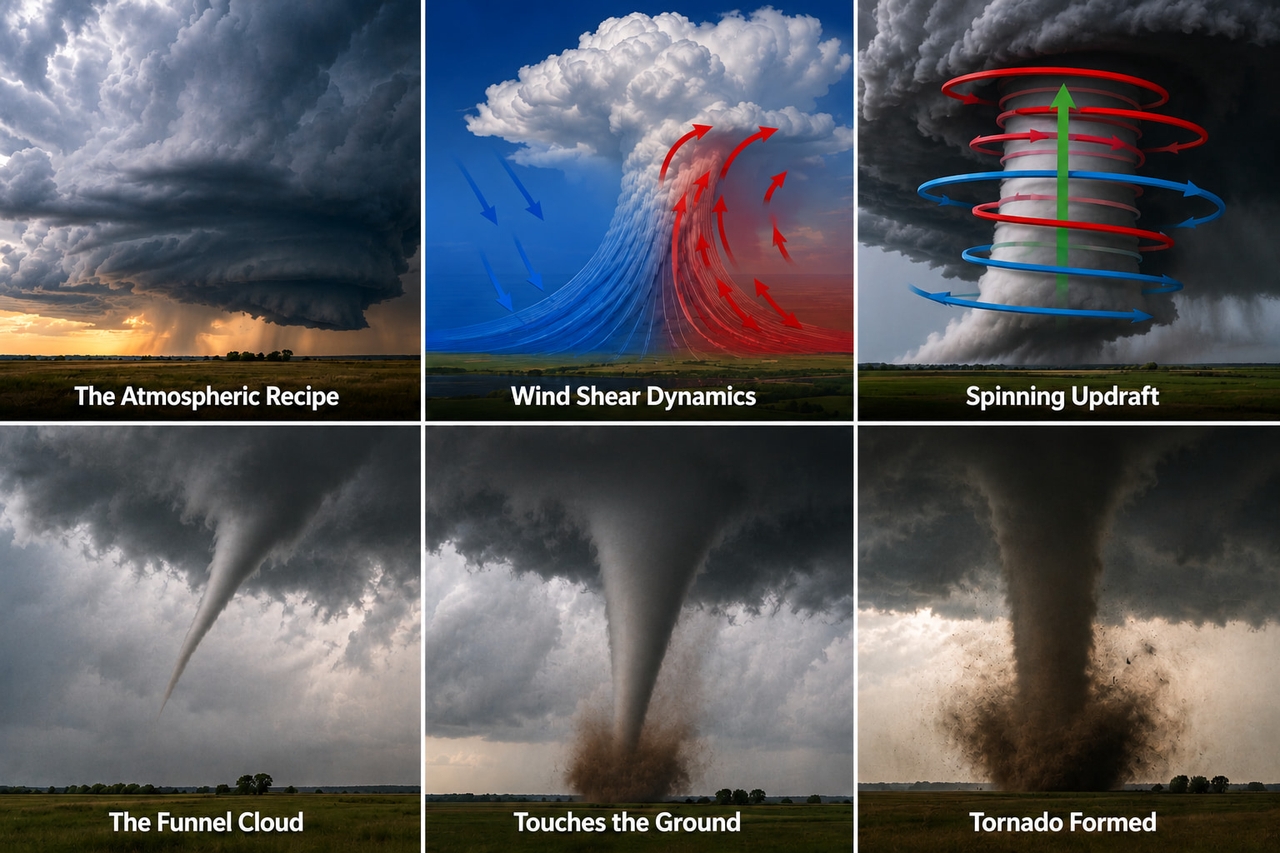
Reviewing a few basic facts about twisters breaks down the exact science of their formation into four key steps:
These violent storms develop from supercells when rising warm moisture collides with cold air to create massive atmospheric lift.
Sharp changes in wind speeds at different altitudes create an invisible, horizontal spinning tube of air that thunderstorm updrafts tilt upright.
This accelerating vertical column acts like a massive vacuum, cooling and condensing nearby moist air into a classic visible funnel cloud.
A swirling vortex in the sky only earns the official classification of a tornado once it touches the ground and begins picking up surface debris.
Measuring the Intensity: Interesting Things About Tornadoes
Not all storms possess the same destructive capabilities. Recognizing how experts measure these events uncovers some truly interesting things about tornadoes. Understanding the scale of destruction helps communities build better building codes and stronger infrastructure.
The Enhanced Fujita Scale
Meteorologists do not measure a tornado's wind speed directly while it is happening. Instead, they rate these storms using the Enhanced Fujita (EF) Scale after the event passes. This system estimates peak wind speeds based entirely on the structural damage inflicted on buildings, trees, and city infrastructure.
Engineers and weather experts survey the damage path. They look at 28 different damage indicators, such as barns, shopping malls, and hardwood trees. By analyzing how these specific structures failed, they can accurately estimate the wind velocity required to cause that specific failure. For a deeper look at how the National Weather Service conducts these surveys, you can review the official NWS damage assessment criteria.
Velocity Thresholds
Wind speeds vary drastically across the EF spectrum. The damage profile escalates rapidly from minor property disruptions to catastrophic structural failure. Here is a breakdown of the typical impact at each level:
EF Rating | Estimated 3-Second Gusts | Typical Damage Profile |
|---|---|---|
EF0 | 65 to 85 mph (104.6 to 136.8 km/h) | Minor; broken tree branches, shallow-rooted trees toppled, and damaged gutters. |
EF1 | 86 to 110 mph (138.4 to 177 km/h) | Moderate; roof shingles stripped away, broken windows, and overturned mobile homes. |
EF2 | 111 to 135 mph (178.6 to 217.3 km/h) | Considerable; roofs torn off well-constructed homes, large trees snapped in half. |
EF3 | 136 to 165 mph (218.9 to 265.5 km/h) | Severe; exterior walls collapsed, entire stories of houses destroyed, trains derailed. |
EF4 | 166 to 200 mph (267.1 to 321.9 km/h) | Devastating; well-constructed homes leveled completely to the foundation. |
EF5 | Greater than 200 mph (321.9 km/h) | Incredible; homes swept completely away, heavy cars thrown through the air like missiles. |
Path Distances and Widths
While movies show massive funnels lasting for hours, reality looks quite different. An average twister stays on the ground for less than 10 minutes. According to official data from the National Weather Service, a typical tornado damage path covers a relatively short distance of about one or two miles, with a width of around 50 yards.
However, extreme historical events shatter these averages. Some massive storms have carved continuous damage paths exceeding 200 miles (321.9 km) in length. Furthermore, a few highly documented monster storms have grown to a staggering width of 2.6 miles wide. These massive wedges of wind wipe out everything in their path and leave scars on the landscape visible from space.
Debunking Common Myths: Fun Facts About Tornadoes
Misinformation during extreme weather often leads to dangerous decisions. Clearing up these misconceptions introduces some genuinely fun facts about tornadoes while providing crucial safety education. Outdated advice often causes more harm than good.
The Window Pressure Myth
A dangerous misconception claims that opening windows before a storm hits equalizes indoor pressure. Old beliefs suggested a sealed house would explode from the pressure drop.
In reality, buildings fail because high winds lift the roof or push walls inward. Opening windows simply wastes critical survival time. It also allows high-velocity winds to enter the living space. Once inside, the wind pushes upward against the ceiling, making it much easier to lift the roof right off the house. The safest choice is to avoid glass entirely.
Highway Overpass Hazards
Seeking shelter under a concrete highway overpass seems like a logical instinct. The solid concrete looks indestructible. Unfortunately, this action is incredibly dangerous.
The narrow structural openings underneath a bridge create a dangerous wind-tunnel effect. As wind is forced through the tight space beneath the overpass, its velocity actually increases. This acceleration exposes individuals to high-speed flying debris, which is the primary cause of injury. Furthermore, a bridge offers zero protection from shifting winds that can easily pull people out from underneath the structure.
Terrain Limitations
Many residents near mountains or large rivers feel naturally protected. A common myth insists that valleys and bodies of water act as barriers against severe weather.
Historical records completely disprove this idea. Twisters easily cross deep rivers and scale steep ridges to cause massive damage at high elevations. A powerful supercell reaches tens of thousands of feet into the atmosphere. Therefore, ground-level terrain has very little influence on the immense forces driving the rotation above. No geographical feature provides a guaranteed shield against a violent vortex.
Managing the Aftermath: Severe Weather and Power Outages
The immediate danger of high wind passes quickly, but the secondary disasters can last for weeks. Severe convective storms frequently target critical utility infrastructure. They splinter wooden utility poles, snap high-voltage transmission lines, and completely destroy neighborhood electrical substations. When a primary storm path intersects the local grid, the resulting blackouts are rarely fixed within hours. Large-scale repairs often stretch into multi-week recovery operations, leaving affected residents without cooling, communication, or fresh water.

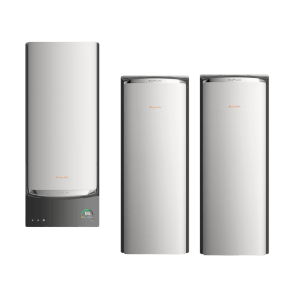
To maintain household stability, emergency preparedness requires a resilient power strategy. Integrating an advanced home storage system like the EcoFlow OCEAN Pro Solar Battery System ensures that a residence shifts seamlessly into a standalone power bubble during extended outages. Providing a robust 24kW of continuous whole-home power output, this platform easily manages high-demand starting loads. A household can simultaneously run multiple 5-ton central climate units, electric well pumps, and critical security networks without overloading the system. An Intelligent Mode optimizes power distribution, prioritizing essential circuits when battery reserves get low.
Because safety and long-term durability are critical when recovering from severe natural disasters, this storage architecture features a highly stable modular design. Individual battery components charge and discharge independently to maximize system uptime. The system scales dynamically from a base of 10kWh up to a massive 80kWh of capacity, holding enough stored energy to sustain a household through prolonged, multi-day grid restorations. Since it integrates directly with the main electrical panel, it requires installation by a certified professional electrician. This ensures the setup meets all local building codes and operates safely alongside existing utility connections.
Get Your Free Home Energy Consultation!
Which energy solution are you interested in?

Are you ready to resolve uncertainty about reliable solar battery backup solutions? Taking proactive steps today prevents chaos tomorrow. We can help you design the perfect energy architecture to protect a modernized property against grid failures. Request a consultation today to find a sustainable energy solution tailored to specific household needs.
Essential Safety Measures and Emergency Preparedness
Understanding storm behavior is just the first step. Real survival depends on executing a clear plan. A simple, well-practiced routine stops panic the moment warning sirens begin to ring.
Designating a Safe Room
Finding the right shelter matters immensely. A certified storm shelter or reinforced basement offers the ultimate protection. Yet, plenty of modern houses lack underground areas.
When those are missing, residents need to quickly reach a small, windowless interior room on the lowest floor. Options like a central closet, an interior bathroom, or a closed inner hallway work best. Putting maximum solid walls between people and the roaring storm serves as the main goal.
The Protective Cushion Strategy
Fast-moving debris causes the vast majority of injuries during severe weather. The wind itself rarely hurts anyone directly. The real danger comes from everyday items turning into high-speed projectiles.
Once safely inside the shelter room, everyone must cover their head and torso. Crawling under a heavy desk or thick table builds a great shield against falling roof beams. Adding layers like thick blankets, winter sleeping bags, or even a heavy mattress provides a soft barrier. This extra padding blocks flying glass and sharp wooden splinters.
Understanding Severe Weather Alerts
Knowing the distinct difference between a tornado watch and a warning is absolutely critical for timely action. Misunderstanding these terms often leads to complacency.
A "watch" indicates that atmospheric conditions are favorable for twisters to form across a broad regional area. It means people should stay alert and review their safety plans. A "warning" means a vortex has been physically spotted by a trained observer or indicated by weather radar. When a warning is issued, danger is imminent, meaning residents must take cover immediately. For official definitions and current alerts, reviewing resources at Weather.gov keeps everyone informed.
Conclusion
Reviewing foundational tornado facts highlights how quickly violent weather can disrupt our daily infrastructure and compromise basic safety. While the exact path of a severe storm remains highly unpredictable, a home’s emergency readiness does not have to be left to chance. Establishing proper shelter protocols, understanding weather terminology, and eliminating dangerous myths form a solid foundation for survival. Combining that knowledge with reliable power backup ensures a family stays protected, connected, and completely self-sufficient through any extreme weather emergency that sweeps across the region.
FAQs
What's an interesting fact about tornadoes?
An interesting fact is that they can strike at any hour, though activity usually peaks between 4 PM and 9 PM. Additionally, the vast majority rotate in a cyclonic (counterclockwise) manner. This motion originates from the parent storm's rotating updraft, rather than the Coriolis effect.
How do tornadoes usually start?
They usually start within massive thunderstorms called supercells. Warm, moist air rising rapidly from the ground collides with cold, dry air higher up. This creates intense updrafts that tilt rotating, horizontal winds into a vertical, destructive funnel.
What state has the most tornadoes?
Texas experiences the highest total number of these storms annually, averaging around 120 per year. It sits perfectly within "Tornado Alley," where moist Gulf air constantly collides with dry air descending from the Rocky Mountains.
How long does an average tornado last on the ground?
An average vortex stays on the ground for less than 10 minutes, traveling roughly 5 miles. While the wind threat ends quickly, power grids can remain disabled for weeks. Using heavy-duty backups like the EcoFlow OCEAN Pro sustains a household until normal utility service is restored.
Why are tornadoes called twisters?
They earned the nickname "twisters" due to their highly visible, twisting funnel shape and the violent rotational force they exert. The intense spinning motion literally twists structures apart, snapping trees and throwing debris in circular, winding patterns across the landscape.

