
Thermal Battery Explained: How Industrial Storage Differs from Home LFP Backups
As industries and homeowners look for cleaner ways to manage energy, two battery technologies are gaining attention: thermal batteries and lithium iron phosphate (LFP) battery systems. Although both store energy, they serve entirely different purposes. Thermal batteries store heat for industrial applications, while LFP systems provide electrical backup for homes and businesses. Understanding the difference helps explain why each technology plays a unique role in the transition toward cleaner energy.
What is a thermal battery and how does it work?
A thermal battery storage stores energy as heat rather than electricity. Instead of relying on electrochemical reactions like lithium batteries, it converts electricity into thermal energy, stores that heat inside specialized materials, and releases it when needed for industrial processes.
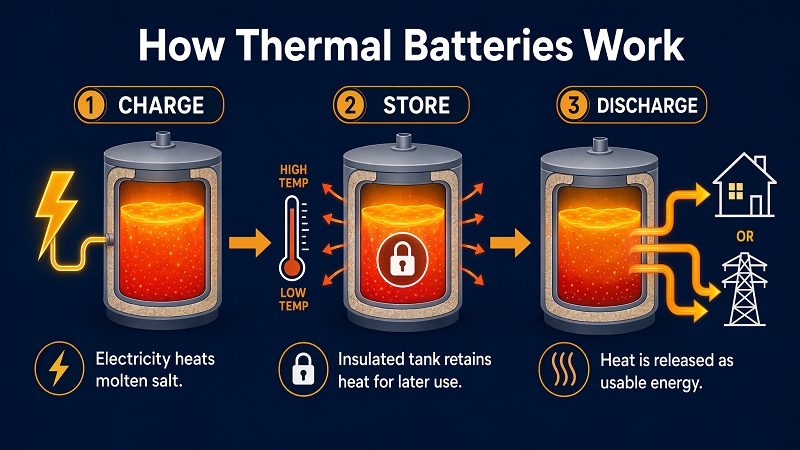
The basic process consists of three steps:
Step 1: Charge the system
Low-cost electricity from the grid or excess renewable energy power electric heating elements that generate heat.
Step 2: Store the heat
The heat is retained inside materials such as graphite blocks, crushed volcanic rock, sand, or engineered ceramic bricks. These materials can withstand temperatures above 1,000°C while minimizing heat loss.
Step 3: Use stored energy
When heat is required, the battery transfers the stored thermal energy directly to industrial equipment, producing steam or high-temperature heat for manufacturing processes.
Because energy is delivered as heat instead of electricity, thermal batteries are particularly suited for industries where heat is the primary energy requirement.
The core advantages of thermal batteries and their use cases
Thermal batteries offer several advantages for industrial energy storage while addressing challenges that conventional battery systems cannot.
Built from abundant materials
Most thermal batteries use inexpensive, widely available materials such as sand, graphite, crushed rock, or refractory bricks. This reduces dependence on critical minerals used in conventional lithium-ion batteries.
Supporting renewable-powered grids
Thermal batteries can absorb surplus renewable electricity during periods of high wind or solar generation and store it as heat. This helps reduce renewable energy curtailment while supporting overall grid stability.
Replacing fossil fuel heat
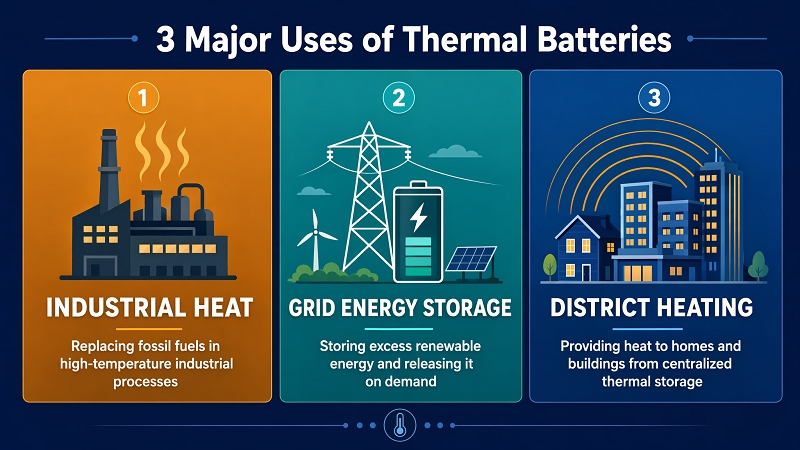
Many industrial sectors, including food processing, pulp and paper, chemicals, cement, steel, and glass manufacturing, depend on high-temperature heat. Thermal batteries can replace fossil-fuel-fired boilers or furnaces by supplying clean, stored thermal energy instead.
The 5 main types of advanced thermal batteries
To understand thermal batteries a bit more, we have rounded up some of the major types of thermal batteries you can find on the market, and thereby learn a bit more about them.
Type | Simple definition |
Solid-State Sensible Heat Storage | Stores heat by raising the temperature of solid materials such as graphite, firebrick, sand, or crushed rock. |
Liquid Sensible Heat Storage | Stores thermal energy in heated liquids like molten salt or pressurized water for later use. |
Latent Heat Storage (PCM) | Uses phase-change materials that absorb and release heat as they melt and solidify. |
Thermochemical Energy Storage (TCS) | Stores energy through reversible chemical reactions with minimal long-term thermal losses. |
Key differences: thermal batteries vs modern LFP systems like EcoFlow Ocean Pro
Although both technologies store energy, they are designed for entirely different applications. Thermal batteries provide stored heat for industrial processes, while LFP battery systems deliver electricity for residential backup and energy management.
Difference | Thermal Batteries | LFP Systems (e.g., EcoFlow Ocean Pro) | Verdict |
|---|---|---|---|
Energy medium and output type | Store energy as heat and release it as high-temperature thermal energy, such as steam or hot air, for industrial processes including food production, steel manufacturing, and glass production. | Store energy chemically inside Lithium Iron Phosphate (LFP) battery cells and supply clean, pure-sine-wave AC electricity directly to a home's electrical distribution panel. | LFP wins for home electrical backup. |
Scalability and physical footprint | Built as large-scale, stationary industrial installations that require significant space, heavy insulation, and specialized infrastructure to handle extremely high operating temperatures. | Feature compact, modular designs that can scale from 10kWh to 80kWh and are suitable for installation in residential garages, utility rooms, or other dedicated indoor spaces. | LFP wins for residential installation flexibility. |
Reaction speed and backup delivery | Designed to provide continuous thermal energy over extended heating cycles rather than delivering instant electrical backup. | Respond within milliseconds during a power outage, allowing essential household appliances and critical circuits to continue operating with minimal interruption. | LFP wins for instant backup power. |
Maximizing home energy resilience with EcoFlow Ocean Pro
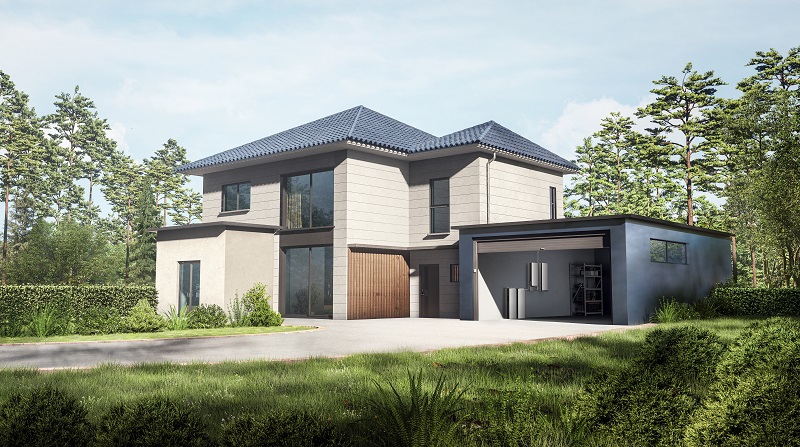
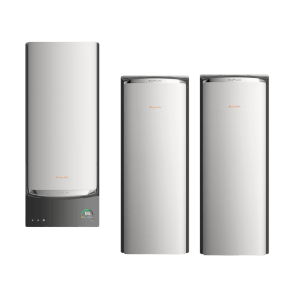
Unlike thermal batteries, EcoFlow Ocean Pro is an LFP home battery system designed to deliver reliable electrical backup and smarter energy management. Its primary goal is to improve home energy resilience by maintaining power during grid outages while helping homeowners reduce electricity costs.
Key capabilities of the Ocean Pro include:
Smart energy scheduling: Automatically charges and discharges the battery based on electricity pricing and solar production.
Multi-source energy management: Integrates grid power, rooftop solar (up to 40kW input), and standby generators to keep essential circuits operating.
Advanced safety: Combines a built-in fire prevention module, waterproof construction, thermal management, and 360-degree Aerogel insulation for dependable operation under demanding conditions.
Rather than supplying industrial heat, Ocean Pro delivers continuous electrical power for lighting, refrigeration, communications, HVAC systems, and other critical household loads.
Get Your Free Home Energy Consultation!
Which energy solution are you interested in?

Conclusion
Thermal batteries and LFP battery systems solve different energy challenges. Thermal batteries store renewable electricity as high-temperature heat for industrial applications, helping reduce fossil fuel use in manufacturing.
LFP systems like EcoFlow Ocean Pro store electricity chemically to provide reliable home backup power, optimize solar self-consumption, and improve household energy resilience. Together, these technologies support a cleaner and more flexible energy future by addressing both industrial and residential energy needs.
FAQs
How long does a thermal battery last?
Most thermal batteries are designed for decades of operation because they primarily use durable materials such as graphite, refractory bricks, or rock. Actual lifespan depends on system design, operating temperatures, and maintenance requirements.
How hot do thermal batteries get?
Depending on storage technology, thermal batteries can operate from a few hundred degrees Celsius to well above 1,000°C, making them suitable for demanding industrial heating applications.
Can a thermal battery be used to power my home during an outage?
Not directly. Thermal batteries store heat rather than electricity, so they are not designed to provide household backup power. Home backup applications are better suited to electrical battery systems such as LFP batteries.
What materials are used to build thermal batteries, and are they environmentally friendly?
Many thermal batteries use abundant materials, including graphite, silica sand, crushed rock, ceramic bricks, molten salts, or phase-change materials. Because these materials are widely available and often recyclable, they generally have a lower reliance on critical minerals than conventional lithium-ion battery systems.

