
Why Office Sheds with Electricity Are the Ultimate Backyard Investment
The transition to remote work has completely transformed how we view our homes. No longer just places to rest, our living spaces must now double as productive environments.
However, a simple wooden or metal shed shell is only half the equation. To truly replicate a corporate environment, a backyard workspace requires reliable power. Electricity transforms a cold, dark storage unit into a fully functional, climate-controlled executive suite.
In this guide, we will explore the tangible benefits of adding electricity to your office shed, the main methods for bringing power to your backyard, how to calculate your energy demands, and how next-generation smart energy home battery systems can protect your productivity.
Why is an office shed with electricity worth the investment?
Choosing to run power to your backyard office is more than a convenience; it is a structural upgrade that yields high daily returns in productivity and increases your overall property value.
Year-round climate control
Without insulation and power, outdoor structures quickly mimic the extreme weather outside. Running electricity to your shed allows you to operate space heaters, fans, or modern mini-split heating and air conditioning (HVAC) systems. This ensures you can work comfortably through peak summer humidity or freezing winter mornings.
High-speed connectivity
A professional modern workflow relies heavily on uninterrupted internet. Trying to connect to the main house's Wi-Fi router 50 feet away through exterior walls often results in dropped video calls and agonizingly slow upload speeds. An electrified shed can power dedicated network routers, local network switches, modems, and hardwired Wi-Fi boosters to secure lightning-fast connectivity.
Optimal ergonomics and lighting
Battery-powered lanterns and laptop screens only get you so far. With a dedicated electrical connection, your backyard office can host high-quality LED overhead and task lighting to prevent eye strain. You can also run multiple external monitors, phone docks, and ergonomic sit-to-stand desks that require continuous power.
Property asset valuation
An electrified, finished outbuilding is highly attractive to prospective homebuyers. By converting a standard shed into a fully wired, functional accessory workspace, you are adding legitimate square footage to your usable living area, significantly boosting your home's resale value.

How to get electricity to your shed: the core approaches
When planning your backyard office power, you generally have two primary routes to choose from, depending on your budget, energy demands, and future goals.
Method A: Grid-tied extension (traditional underground wiring)
This method involves running a direct-burial USE cable from the main house panel to a dedicated subpanel in the shed. Because of the technical risks and the necessity of adhering to national safety standards, this installation requires a certified electrician to ensure overall safety and strict building code compliance.
Method B: Solar & smart home battery integration (clean, modern choice)
This approach focuses on integrating solar panels and battery storage to run your office as a grid-tied backup during outages. It avoids expensive trenching procedures across your lawn, bypasses traditional utility dependence, and guarantees that your backyard office keeps running seamlessly.
Planning your shed's power requirements
Before laying cables or buying equipment, you need to calculate exactly how much power your devices will draw.
Step 1: Calculating the total electrical load
To avoid tripping breakers, list every device you plan to use simultaneously and add up their wattages:
LED overhead and task lights: 10 Watts to 30 Watts
Laptop charger: 60 Watts to 100 Watts
Dual external monitors: 80 Watts to 150 Watts
Space heater or mini-split AC: 1,000 Watts to 1,500 Watts
Small coffee maker or office fridge: 100 Watts to 400 Watts
A basic laptop and monitor setup might only draw 200 Watts, but adding a portable heater or desktop fan instantly pushes your power demand above 1,500 Watts.
Step 2: Understanding surge current and LRA
Appliances with motors, such as air conditioners and refrigeration units, experience a massive, brief surge of power the moment they start up. This is known as Locked Rotor Amps (LRA) or peak starting power. If your electrical source cannot handle this sudden, heavy surge, your appliances will fail to turn on, your lights will flicker, and your system may automatically shut down to protect itself.
Step 3: Ensuring safety, permits, and grounding
Electricity is highly dangerous if mismanaged. In almost every municipality, running electrical lines to an outbuilding requires formal electrical permits and professional inspections. Additionally, your shed subpanel must be properly grounded with its own grounding rod to prevent electrical shocks and structural fires, protecting your investment and keeping your home insurance policy intact.
Power your main home and office shed seamlessly with Ocean Pro
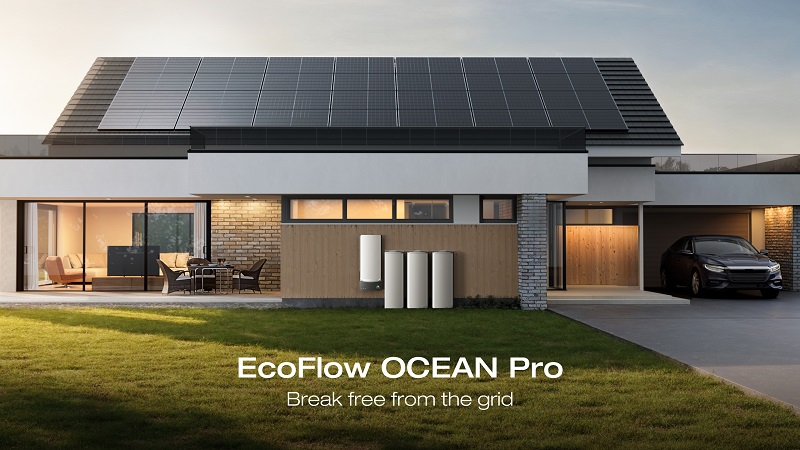
For homeowners seeking the ultimate premium solution, you do not have to choose between powering your backyard office and securing your main household. The EcoFlow Ocean Pro is a unified, whole-home energy storage and backup system designed to run both major household appliances and remote backyard workspaces with unmatched reliability.
Get Your Free Home Energy Consultation!
Which energy solution are you interested in?
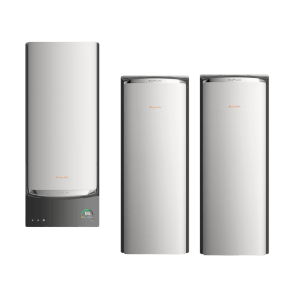

Reasons why the EcoFlow Ocean Pro is built to handle the absolute heaviest electrical loads with ease:
High-demand performance
Massive output power: The system is available in two distinct models offering either 11.5kW or 24.0kW of nominal AC output power. This is more than enough to run your entire office shed, heavy HVAC climate control, and main household appliances simultaneously.
Incredible surge capability: It boasts an industry-leading 205A LRA (Locked Rotor Amps) load start capability. This ensures high-demand compressor loads, like central air conditioning, start up smoothly without causing voltage drops or power flickers in your workspace.
Solar harvesting and limitless scalability
Unmatched solar input: It supports a maximum STC solar input of 40kW, featuring 8 independent MPPT channels (each supporting 5kW per channel) with a wide voltage range of 60-480V DC to capture maximum daylight.
Massive storage capacity: Each modular battery unit holds 10kWh of DC energy. A single inverter can support up to 8 battery units linked together for a staggering 80kWh of total energy storage. For ultra-large properties, the system can scale even further by supporting up to 2 active inverter units.
Smart Integration: Connects smoothly with the EcoFlow OCEAN Smart Electrical Panel 40 (sold separately) and can be monitored directly through Wi-Fi, cellular (LTE/4G), and the mobile app.
Smart connectivity and safety
You can monitor and manage your real-time power generation, battery reserves, and active loads directly from your desk using the EcoFlow Mobile App, utilizing dual-band Wi-Fi (2.4Ghz/5Ghz) or cellular (LTE/4G) connections. It carries premier safety certifications including UL 9540, UL 1741, and UL 1973.
Conclusion
Adding electricity to your backyard shed is the single most important step in transforming an ordinary outdoor structure into a premium, year-round home office. By carefully planning your total electrical load and choosing the right wiring or solar strategy, you ensure a safe, functional, and highly productive work environment.
While traditional grid wiring is reliable, investing in a high-efficiency backup and solar ecosystem like the EcoFlow Ocean Pro guarantees total peace of mind. It secures your daily professional productivity while doubling as a robust, whole-home backup safety net for your entire family during unexpected grid blackouts.
FAQs
Do I need a building or electrical permit to put power in my office shed?
Yes, running new wiring to backyard structures requires local electrical permits. Hiring a licensed professional ensures your installation meets strict code standards, protecting your safety and keeping your home insurance policy valid.
Can I legally run power to my shed?
Yes, you can legally run electricity to your shed. However, you must acquire the required local building permits, follow electrical codes, and have a licensed professional inspect and sign off on the installation.
How much would it cost to setup office sheds with electricity?
Costs typically range from five hundred to several thousand dollars. Standard grid trenching is often cheaper upfront, while premium solar battery systems require higher initial investments but eliminate ongoing monthly utility power bills.
How deep does the electrical wire trench need to be?
For safety, underground electrical cables for setting up office sheds with electricity require a trench between 18 and 24 inches deep (consult your local electrical code). This crucial depth protects your power lines from accidental shovel punctures, lawn care tools, or winter frost heaves.

