
No Upfront Cost Solar Options: Is a Loan, Lease, or PPA Right for Your Home?
Paying for solar panels upfront isn't the only way to reduce electricity costs. No upfront cost solar refers to financing options that let homeowners install a solar energy system without making an initial payment, instead covering costs through monthly loan payments, lease fees, or electricity purchases.
In 2026, homeowners can choose from several financing options that eliminate large initial investments while making solar more accessible. Understanding how solar loans, leases, and power purchase agreements (PPAs) differ can help you select an option that matches your budget, long-term goals, and home battery energy management system needs.
The three pillars of no upfront cost solar panel financing options
No upfront cost solar financing generally falls into three categories: zero-down solar loans, solar leases, and power purchase agreements (PPAs).
Although each option allows homeowners to install solar panels without an initial payment, they differ in ownership, maintenance responsibilities, monthly payments, and long-term financial benefits.
Zero-Down Solar Loans
How it works
A zero-down solar loan allows homeowners to finance the entire installation cost without making an upfront payment.One of the primary benefits of a solar loan is ownership. Since you own the panels and related equipment from the beginning, the system becomes part of your property rather than remaining under the control of a third-party provider.
The 2026 catch
While ownership remains attractive for many homeowners, purchasing a solar system through a loan no longer includes one major federal advantage. The federal residential solar tax credit for purchased residential systems expired at the end of December 2025, meaning new loan-financed installations no longer receive this nationwide incentive. Homeowners are also responsible for maintaining the equipment throughout its lifespan.
Solar Leases
How it works
With a solar lease, a third-party solar company installs and owns the equipment on your property. Many homeowners choose solar leases because maintenance responsibilities are largely removed. The provider typically handles system monitoring, equipment servicing, repairs, warranty claims, and performance checks during the lease period.
Immediate savings
Solar lease payments are generally designed to be lower than the household's previous electricity bill, allowing homeowners to begin saving shortly after installation.
Power Purchase Agreements (PPAs)
How it works
A Power Purchase Agreement (PPA) works similarly to a solar lease because a third-party company owns, installs, and maintains solar equipment. The key difference is how homeowners pay. Instead of paying a fixed monthly lease amount, you purchase the electricity generated by the system at a predetermined price per kilowatt-hour (kWh).
One advantage of a PPA is that payments are tied directly to energy production. If weather conditions, or other factors reduce the system's output, your payment decreases accordingly, as you only purchase the electricity actually generated.
Variable monthly bills
Unlike fixed lease payments, monthly PPA bills naturally fluctuate throughout the year. During sunny summer months, the system typically generates more electricity, resulting in higher energy purchases from the provider. During winter or extended cloudy periods, production generally decreases, lowering monthly payments.
Feature | Zero-Down Solar Loan | Solar Lease | Power Purchase Agreement (PPA) |
|---|---|---|---|
Upfront payment | None | None | None |
System ownership | Homeowner | Solar provider | Solar provider |
Monthly payment | Fixed loan payment | Fixed lease payment | Based on electricity generated |
Maintenance responsibility | Homeowner | Provider | Provider |
Payment changes over time | Usually fixed | Usually fixed | Varies with system production |
Eligible for state/local ownership incentives | Often yes (where available) | Usually the provider claims ownership-related incentives | Usually the provider claims ownership-related incentives |
Best suited for | Long-term ownership | Low-maintenance savings | Flexible, production-based payments |
The 2026 advantage: why leases and PPAs are leading the market
While system ownership remains attractive for some households, third-party ownership (TPO) models such as solar leases and Power Purchase Agreements (PPAs) have gained momentum because they continue to benefit from incentives that purchased residential systems no longer receive.
The "TPO" (Third-Party Ownership) tax advantage
The federal residential solar tax credit for purchased home solar systems expired at the end of December 2025. As a result, homeowners who finance solar through a loan generally cannot claim this former nationwide incentive for new installations.
However, the situation differs for third-party ownership providers. According to the IRS Residential Clean Energy Credit, companies that own and operate leased or PPA-based solar systems may still qualify for applicable commercial clean energy tax incentives available to eligible commercial projects through December 31, 2027, subject to program requirements and prevailing federal regulations.
How savings are passed down
Instead of receiving a tax credit directly, homeowners may benefit indirectly through:
Lower monthly lease payments
Reduced per-kWh electricity rates under a PPA
Competitive contract pricing compared with previous years
Lower total energy costs over the agreement period
The amount of savings passed to homeowners varies by provider, installation size, utility rates, financing structure, and local market conditions. For this reason, obtaining quotes from multiple installers remains one of the best ways to compare available offers.
The rise of pre-paid leases and PPAs
Another residential solar financing model receiving increased attention is the pre-paid lease or pre-paid PPA. Rather than making monthly payments throughout the agreement, homeowners make a single discounted payment at the beginning of the contract.
This upfront payment is often lower than purchasing a solar system outright because the provider may still benefit from applicable commercial tax incentives. In return, homeowners receive the electricity generated under the agreement without ongoing monthly lease payments for the contract term.
Decision guide: how to find the right option for you
Every homeowner has different financial goals, energy usage patterns, and long-term plans. While all three solar financing options remove the need for a large upfront investment, each is designed for a different type of homeowner.
Choose a Solar Loan if | Choose a Solar Lease or PPA if |
|
|
Elevating your setup: maximizing energy resilience with home battery backup
Installing solar panels can reduce electricity costs, but they do not automatically provide backup power during outages. Pairing a solar system with a home battery backup allows homeowners to store excess electricity for later use, improving both energy resilience and daily energy management.
Going beyond the grid
A home battery stores surplus solar energy produced during the day for use when it is needed most. During grid outages, the battery can continue powering selected household circuits, helping keep essential appliances operating until utility service is restored.
Battery storage also offers benefits beyond emergency backup. In areas with Time-of-Use (TOU) electricity pricing, stored energy can be used during peak-rate periods when utility electricity is more expensive. This can reduce reliance on the grid during high-cost hours while making better use of the electricity generated by your solar panels.
Enhancing energy resilience with EcoFlow Ocean Pro
For homeowners looking to strengthen their energy resilience, the EcoFlow Ocean Pro is designed as a dedicated home battery backup solution that complements residential solar installations.
Whether paired with a solar loan, lease, or Power Purchase Agreement (PPA), it helps extend the value of a solar energy system beyond daylight hours.
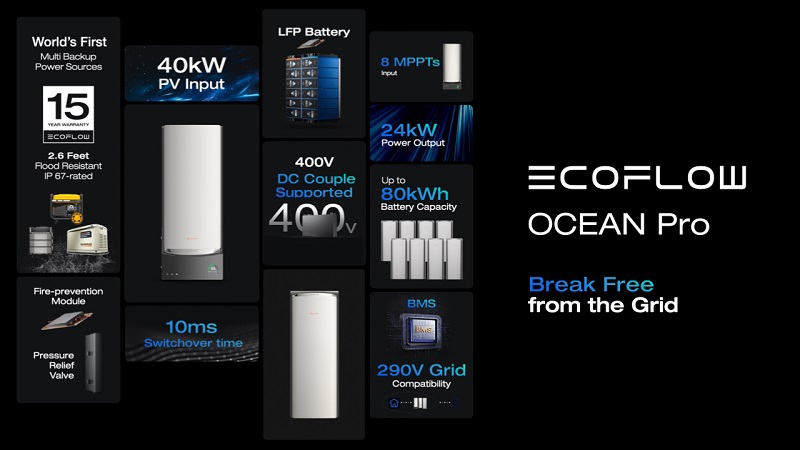
Some of its notable features include:
Lithium iron phosphate (LFP) battery chemistry: Built using LFP technology, the battery is designed for enhanced safety, thermal stability, and a long operational lifespan suitable for residential energy storage.
Compatible with financed solar systems: Depending on the installer, the battery system can often be incorporated into a solar financing package, simplifying installation and payment through a combined agreement.
Automatic backup power: Intelligent energy management can detect grid interruptions and automatically switch selected household circuits to battery power, reducing disruption during unexpected outages.
By combining rooftop solar with battery storage, homeowners gain greater control over their energy use while improving preparedness for power interruptions and fluctuating electricity prices.
Get Your Free Home Energy Consultation!
Which energy solution are you interested in?

Conclusion
No upfront cost solar financing has made residential solar more accessible than ever in 2026. Whether you choose a zero-down solar loan, solar lease, or Power Purchase Agreement (PPA), each option removes the need for a large initial investment while offering different advantages in ownership, maintenance, and monthly payments.
Before making a decision, request quotes from multiple solar providers to compare financing terms, projected savings, and available local incentives. If you're considering long-term energy resilience, also ask whether a home battery backup such as the EcoFlow Ocean Pro can be included in your financing package, helping your home stay powered during outages while making better use of your solar energy.
FAQs
Are solar panels worth the upfront cost?
For many homeowners, solar panels can lower long-term electricity costs and increase energy independence. Whether they are worthwhile depends on installation costs, local utility rates, available state incentives, household electricity usage, and how long you plan to stay in your home.
Does a zero-down solar lease or PPA make it harder to sell my home?
Not necessarily. Some agreements can be transferred to a new homeowner, while others may require a contract buyout before the sale. Reviewing transfer terms with your provider before signing can help avoid complications later.
Since the federal residential solar tax credit expired in December 2025, are there still incentives for zero-down solar?
Yes. While homeowners purchasing systems generally no longer receive the former federal residential credit, qualifying lease and PPA providers may continue benefiting from commercial tax incentives. Many states and utilities also continue offering rebates or renewable energy programs.
Can I add a home battery backup like the EcoFlow Ocean Pro to a zero-down financing solar panel plan?
In many cases, yes. Some solar providers offer battery storage as part of a combined financing package, allowing homeowners to install both solar panels and a compatible home battery under a single loan, lease, or financing agreement, depending on provider offerings.

