
20KW Solar System: Cost, Output, and Battery Options
A 20kW Solar System can help you cope with the rising electricity bills and increasing energy needs of your household. Many high-use properties can have monthly bills of $200 or more, and even $500. When selecting a system, the power rating isn't the only thing you need to look for. It is important to know output, size, price, batteries, and installation requirements. This guide explains these factors clearly while exploring the EcoFlow OCEAN Pro hybrid inverter and battery system, scalable from 10kWh to 80kWh for greater energy flexibility. Let's get started!
What is a 20kw solar system?
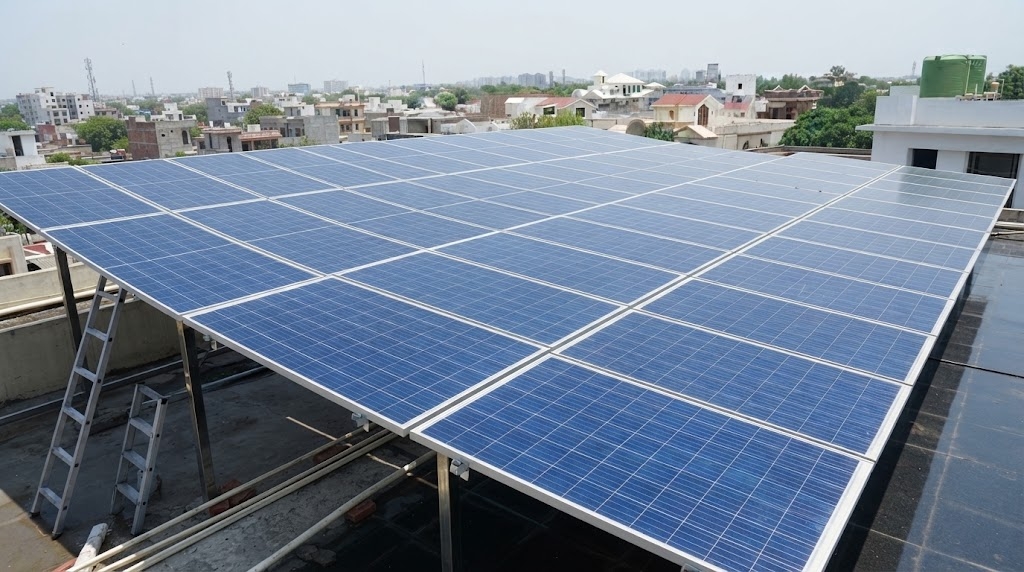
A 20kw solar installation consists of approximately 20,000w of total DC solar panel capacity. These panels are generally used in conjunction with an inverter of a similar size to the total rating of the panels to ensure efficient energy conversion. It is appropriate for large households, small to medium-sized businesses, and properties with high electricity use during the day. It could power energy-intensive systems like swimming pools, electric cars, and air conditioners. A 20kw solar power system can be used in a grid-tied system, an off-grid system, or a hybrid system with battery backup.
How does a 20kw solar power system work and how much electricity can it produce?
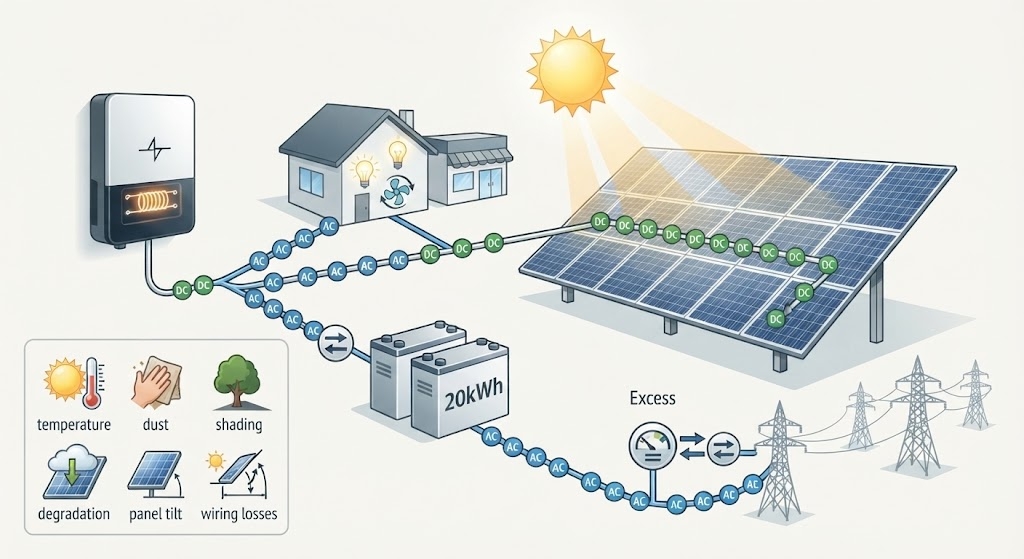
A 20kW solar power system is a group of solar panels that generate DC electricity for your property from sunlight. The inverter then transforms this DC electricity into usable AC electricity for a home or business. When there is too much electricity, it can be sent to the grid or stored in a battery, like a 20 kWh battery. Stored energy or electricity from the electrical grid powers your electrical loads at night or when the sun is not strong. Production depends on sunlight, panel tilt, shading, dust, temperature, degradation, inverter efficiency, wiring losses, and the weather. You can use the following formula to calculate electricity production:
Daily generation = system size × peak sun hours × performance factor
Please note that the actual electricity production depends on the location of the installation and the design of the system.
How many solar panels do you need for a 20kW system?
To size a 20kW solar system, divide 20,000 watts by your chosen panel's power rating. You can use the following formula to do so:
Panel-count formula = Number of panels = 20,000W ÷ panel wattage
Panel rating | Approx. panels for 20kW |
400W | 50 |
450W | 45 |
500W | 40 |
550W | 37 |
600W | 34 |
Does a 20kW solar system need a battery?
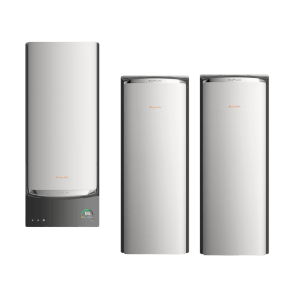
A 20kW solar system does not always need a battery, but storage can improve solar energy use. You can explore the EcoFlow OCEAN Pro Solar Battery System that combines a hybrid inverter with batteries, scalable from 10kWh to 80kWh. This flexibility lets you choose storage capacity matching your 20kW array and future expansion plans. Let's uncover its key specs below:
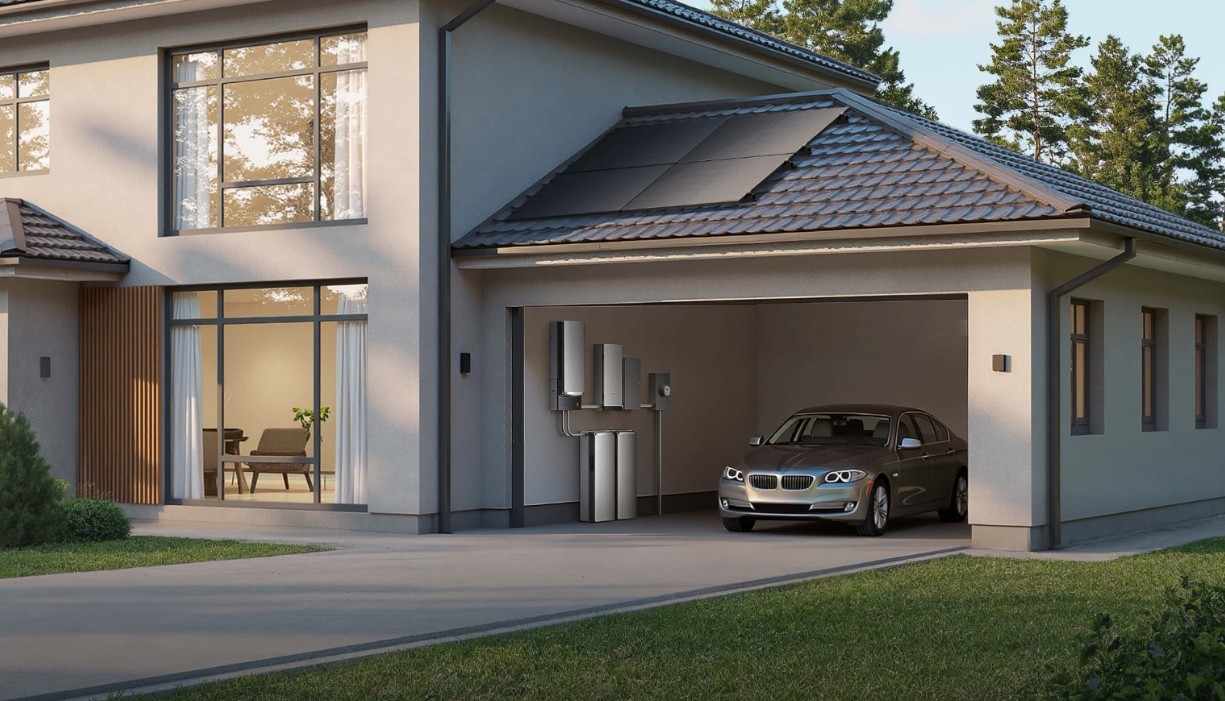
Solar input: The hybrid inverter can accommodate up to 40kW solar input. Eight MPPTs allow for expansion room on a 20kW array.
Power output: It has a continuous power output of up to 24kW. This facilitates multiple AC units, EV charging, and water pumps at once.
Backup & optimization: There's only a 10ms delay when switching in the case of an outage. TOU optimization and self-powered mode place a preference on solar over battery backup.
Protection & warranty: Key components include a 15-year warranty. AFCI and GFCI protection help isolate faults through its decoupled battery design.
Climate compatibility: The system operates from -4°F to 140°F. It also supports grids up to 290V for challenging regions.
For proper sizing and installation, get quotes from certified local installers instead of attempting DIY work.
Get Your Free Home Energy Consultation!
Which energy solution are you interested in?

What can a 20kW solar system power?
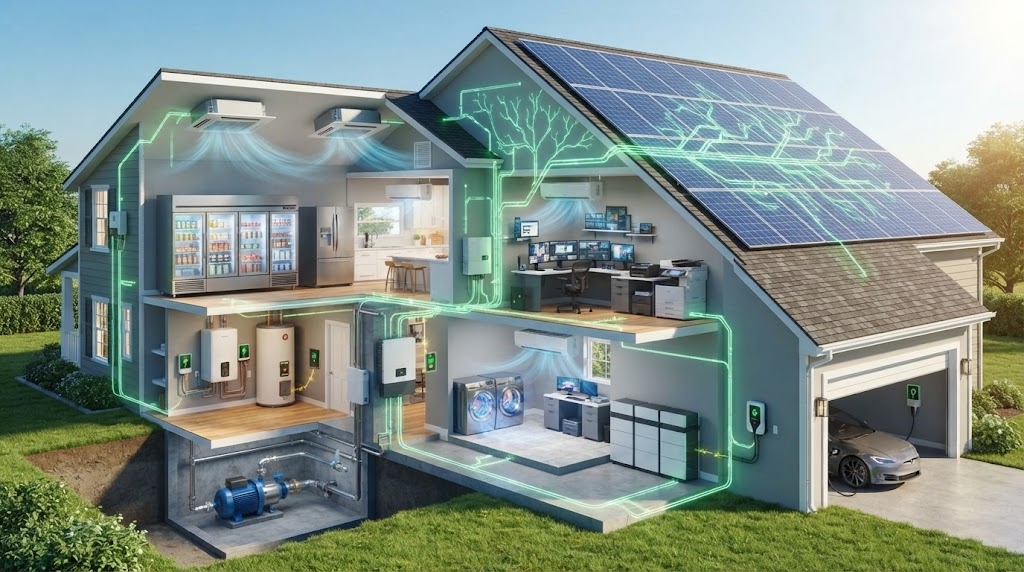
A 20kW solar system is suitable for a large family that has a high electricity demand. You can power:
Multiple air conditioners
Refrigerators and freezers
Water pumps
Electric water heaters
Washing machines and other appliances
Home office equipment
EV charging
Daily energy use, however, is different from peak household demand, which reflects the amount of energy appliances require at the same time. Peak demand can be high due to the use of high-power appliances such as air conditioning, heating, pumps, and EV chargers. These types of electrical appliances need adequate electrical capacity. A 20kW system doesn't necessarily mean that your family can use a 20kW load. Suitability depends on usage patterns, availability of sunlight, system design, and whether battery storage is suitable for the household.
Is a 20kW solar system right for you?
Use these criteria to determine whether a 20kW system fits your needs:
High electricity use: A 20kW system suits properties with substantial annual electricity consumption. Review your bills before deciding on this system size.
Available installation space: Check your roof or ground area before installation. You need enough usable space for the required solar panels.
Strong solar exposure: Good sunlight improves system performance throughout the year. Minimize shading from trees, buildings, chimneys, or nearby structures.
Future energy needs: Take into account future electricity requirements before system sizing. Upgrades such as EV charging, electric heating, or other factors can make a significant difference in consumption.
Conclusion
For larger homes and buildings that require a lot of electricity, a 20kW solar system installation might be a realistic option. However, the actual energy production will vary with location, the system design, and the operating conditions. Before choosing the size of the system, please check how you use electricity annually, including the possibility of future loads like EV charging. Battery storage can provide backup and shift excess solar energy to nighttime use. You can use the EcoFlow OCEAN Pro, a scalable solar-plus-storage solution. Make comparisons for annual production, equipment, warranties, installation costs, and long-term value before making a decision.
FAQs
How much power does a 20kW solar system produce per day?
A 20kW solar system can produce roughly 70–110 kWh daily, depending on sunlight and local conditions. High-sun regions may reach 100–130 kWh, while lower-sun areas can produce 60–80 kWh. Shading, dust, weather, seasonality, and inverter losses can reduce output by 10–20%.
Can a 20kW solar system power my whole house?
Yes, a 20kW solar system can successfully power a large home, multiple air conditioners, appliances, pools, and EV chargers. Under favorable conditions, the annual production may be about 29,000 kWh, and daily production is typically 70–90 kWh. You can use the EcoFlow Ocean Pro Solar Power Battery System that provides storage for nighttime use and backup during outages.
How much would a 20kW solar system cost?
In the United States, a 20kW solar system costs approximately $41,000–$64,000 before incentives, according to a 2026 industry cost guide. Solar panels, inverters, mounting hardware, and labor commonly account for major installation expenses, while prices vary significantly between states. Separately, EnergySage reports that a 20 kW system costs around $49,000 based on real installation quotes from its marketplace. Homeowners should check current state and local incentives, which vary by location, for potential savings instead.

