
UK Solar Programme: Grants, Funding and Support for Homeowners in 2026
Solar panels can cut electricity bills, but the upfront cost puts many households off. In 2026, support may be available through national schemes, local councils and devolved programmes in Scotland and Wales. What you can get depends on where you live, your income and your home’s energy rating. This comprehensive guide covers available nationwide programmes, regional variations across England, Scotland, and Wales, practical application steps, and hardware strategies to stretch every kilowatt-hour once your system goes live.
Key Takeaways
Big upfront help: The Warm Homes Plan includes grants and government-backed loans, while ECO4 supports eligible energy-efficiency upgrades; availability and terms vary.
Where you live matters: England, Scotland, and Wales each run their own thing including Home Energy Scotland loans up north, the Nest scheme in Wales.
Strict eligibility rules: Most grants want a low EPC rating (bands D–G) and a household income under a set threshold.
Storage can improve self-consumption: A battery stores daytime solar generation for later use; its financial value depends on your import and export tariffs.
0% VAT stays in force: Qualifying solar and home battery installs keep zero-rate VAT across Great Britain until 31 March 2027.
What Solar Grants and Funding Schemes Are Available in the UK in 2026?
The main options include grants for eligible households, supplier-funded improvements and loans for homeowners who need help with the upfront cost. Check each scheme’s current rules before applying, as eligibility and funding can vary.
If you are planning solar with storage and smart controls, explore how these components work together within a home energy ecosystem. Check grant eligibility separately.
Warm Homes Plan: Government Support for Home Energy Upgrades
Backed by the Department for Energy Security and Net Zero (DESNZ), the multi-billion-pound Warm Homes Plan underpins the UK’s broader push to decarbonise domestic properties and eradicate fuel poverty. Rather than treating clean energy as a piecemeal job, this umbrella policy bundles fabric-first insulation upgrades with clean generation like rooftop solar and heat pumps. It targets lower-income households and low-efficiency properties first, providing direct capital grants administered through local authorities to bring vulnerable homes up to modern thermal and electrical standards.
ECO4 Scheme: Energy Supplier Funding for Eligible Home Energy Improvements
Running under mandated obligations placed on medium-to-large energy suppliers, the Ofgem ECO4 Scheme targets Britain’s least energy-efficient homes. Household benefits, EPC rating, tenure and the proposed measures determine eligibility; solar PV also depends on qualifying electric heating. Funding is not guaranteed, and a contribution may be required. Local councils can also refer vulnerable residents through ECO4 Flex rules, subject to the applicable referral criteria. ECO4 runs until 31 December 2026 following its extension.
Warm Homes Loan Scheme: Government-Backed Financing for Solar and Battery Storage
If your household doesn’t qualify for a grant, a loan may help spread the cost of solar panels or a home battery. Check the scheme’s current interest rate, repayment period and eligibility rules before applying, as these details affect whether the monthly payments make sense for your budget.
| Scheme | Primary Target | Typical Financial Support | Key Requirement |
|---|---|---|---|
| Warm Homes: Local Grant (England) | Low-income & fuel-poor households in England (EPC D–G; on- or off-gas) | Council-approved improvements; subject to assessment and funding | EPC band D–G, income usually £36,000 or less; benefit or postcode routes also apply |
| Warm Homes Loan Scheme (UK-wide) | Able-to-pay & moderate-income homeowners | Government-backed loans; amounts and rates depend on lender | Property ownership, accredited installer, standard credit/affordability check |
| ECO4 / ECO4 Flex | Benefit recipients & fuel-poor homes | Comprehensive retrofit grants | Means-tested benefits or council referral |
| Warm Homes Loan Scheme | Able-to-pay & moderate-income homeowners | Low-interest / 0% financing packages | Suitable property ownership & credit check |
| 0% VAT Relief | Qualifying residential installations in the UK | 0% VAT on qualifying supply-and-install work until 31 March 2027 | Combined supply & install contract |

What Solar Funding Is Available Across Different UK Regions?
Your options depend partly on where you live. England, Scotland and Wales run different programmes, and support available in one nation may not apply in another.
England: Warm Homes: Local Grant for Eligible Households
In England, the Warm Homes: Local Grant is delivered through local authorities. Targeting low-efficiency homes (EPC D–G)—including homes heated by mains gas—the grant delivers fully funded, non-repayable energy retrofit packages subject to council assessment and available funding. Household income is usually £36,000 or less, with alternative benefit or postcode eligibility routes.
Scotland: Home Energy Scotland Grants and Loans
In Scotland, Home Energy Scotland (HES) provides generous grants and interest-free loans, but standalone domestic solar PV and home batteries were phased out of the HES funding scheme in 2024. HES supports eligible clean heating and energy-efficiency measures, with loans also available for certain renewable technologies. Scottish households looking for dedicated, government-supported finance for standard solar panels and battery storage should look to the UK-wide Warm Homes Loan Scheme or local community group-buying frameworks instead of devolved HES PV loans.
Wales: Nest and Green Homes Wales Support
The Welsh Government operates its Nest scheme to tackle cold homes, alongside expanding regional Green Homes frameworks. Nest offers free, impartial advice to any Welsh householder, while households meeting both financial and property eligibility criteria can receive home energy improvements—including solar arrays—without paying a single penny. Green Homes Wales offers eligible homeowners interest-free loans and expert retrofit support, subject to credit and affordability checks.
How Can Homeowners Apply for Solar Funding in the UK?
Funding rules vary by scheme, so check the current criteria before choosing an installer. You’ll usually need to provide details about your household income, benefits and EPC rating, and wait for written approval before work begins.
Identify Funding Schemes Available in Your Area
Check your council’s website or the Energy Saving Trust’s solar guidance to see whether funding is available in your area. In England, councils manage their own Warm Homes funding, so application dates and eligibility can differ by location. For a broader overview of grant money for solar panels, compare the funding routes before checking the current official scheme criteria.
Check Household, Property and Income Eligibility
Gather your relevant paperwork beforehand:
Energy Performance Certificate (EPC): Download your current certificate from the official GOV.UK EPC Register to confirm your rating sits at band D, E, F, or G.
Income Evidence: P60 slips, payslips, or self-assessment tax summaries confirming gross household income.
Benefit Documentation: Current award letters for qualifying DWP support (such as Universal Credit or Child Tax Credits).
Complete a Home Assessment and Confirm Eligible Improvements
Once preliminary paperwork passes muster, an accredited retrofit assessor visits your property. They inspect loft insulation, wall construction, roof structural integrity, and shading patterns. The assessor compiles a tailored Whole House Retrofit plan confirming whether solar PV makes sense as a standalone measure or needs to be coupled with fabric insulation.
Submit Your Application and Wait for Funding Approval
Your chosen installer or local scheme delivery manager will lodge the formal application. Check the scheme’s rules before signing contracts or starting work, and obtain any required written approval; retrospective funding may be unavailable. Furthermore, verify that your installer is certified under the Microgeneration Certification Scheme (MCS), and check the specific funding requirements. SEG accepts MCS certification or an equivalent standard recognised by the supplier. Keep your MCS certificate with your installation handover documents.

How Can Homeowners Maximise the Value of Solar Funding?
A funded installation can lower the cost of going solar, but your savings also depend on how much of the electricity you use at home. Timing appliances and storing surplus power can help you rely less on grid electricity. Compare solar battery storage options against your household’s generation and evening demand.
Maximise Solar Energy Self-Consumption
Sending raw electricity back to the grid via the Smart Export Guarantee (SEG) pays a supplier-set rate above zero. Compare your actual import and export tariffs before deciding when to use or store solar electricity. Shifting everyday domestic loads into midday generation windows is the easiest operational win. Running washing machines, dishwashers, and EV chargers during bright daylight hours ensures high-value self-generated power replaces costly retail grid imports directly.
Store Surplus Solar Electricity with Battery Storage
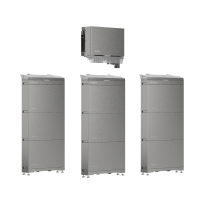
For households with solar panels, daytime generation often exceeds what the home can use, while electricity demand rises in the evening. A home battery stores some of that excess power for use after sunset or when grid electricity is more expensive. The EcoFlow OCEAN 2 Plus single phase combines solar conversion with expandable home battery storage. It lets homeowners keep more surplus solar power for evening use, from boiling the kettle to running heating circulators, instead of exporting it to the grid for a relatively low payment.
Manage Household Energy Use with Smart Energy Monitoring
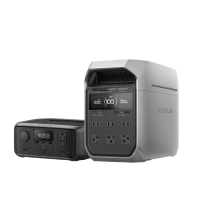
Once your solar panels and battery are up and running, it helps to keep track of how your household uses electricity. The EcoFlow PowerInsight 2 displays real-time solar generation, household consumption and battery levels on an 11-inch screen. You can see how much power the heat pump is using and whether your panels are generating enough on a cloudy day, then adjust your energy use accordingly.
Schedule Your Free Consultation Today!
What kind of product or solution are you interested in?
Conclusion
Solar funding can make installation more affordable, but the right option depends on your location, household circumstances and property. Check your local scheme’s current eligibility rules, get approval before work begins, and use an MCS-certified installer. Once the system is running, using more of your solar power at home can help increase the savings.
Disclaimer: This article provides general information, not financial or eligibility advice. Policy details were checked on 6 November 2026 and may change. Funding, loan approval and savings are not guaranteed. Confirm current terms with the official scheme administrator, local authority or lender before committing to work, and recheck this information before publication.
FAQs
How Much Can I Save Using Solar Panels in the UK?
Savings vary by household. There is no single UK-wide savings figure: system size, location, self-consumption and import and export tariffs all affect the result. Ask your installer for a household-specific estimate, including battery costs where relevant. Exact savings come down to your roof orientation, how many people are home, and when you use power during the day.
Can Renters Get Solar Panels in the UK?
Yes. Private and social tenants can get grant-funded solar through schemes like ECO4, but only with explicit written permission from your landlord or housing association. Landlords have to agree to the installation and lease terms, though you get the immediate benefit of lower bills while you’re living there.
Do Solar Panels Work in Winter in the UK?
Yes. Solar panels keep working right through a British winter, because photovoltaic cells run on daylight, not heat. Shorter days and grey skies do pull total output down compared with midsummer, but a modern monocrystalline panel still churns out baseline electricity on a cloudy or rainy day.
Can I Get Solar Panel Funding if I Have Bad Credit?
Bad credit does not automatically prevent access to non-repayable grants such as ECO4/ECO4 Flex or the Warm Homes: Local Grant; check the scheme’s assessment requirements. Eligibility depends on factors such as household income, benefits and your property’s EPC rating.
Loans are different: applicants to the Warm Homes Loan Scheme must pass the lender’s credit and affordability checks. Repayments are made to the lender, not through Council Tax bills.

