
Grant Money for Solar Panels 2026: Every UK Program, Eligibility & How to Apply
The UK government has boosted financial support for home renewables in 2026, making solar and battery systems more affordable for more households. Through schemes such as the Warm Homes Plan, ECO4, and the 0% VAT rate, eligible homeowners can now access significant grant money for solar panels, reducing thousands of pounds from upfront installation costs. This guide explains who qualifies, how much funding is available in 2026, and the steps to secure your subsidy before the budget runs out.
What Are the UK Solar Panel Grants for 2026?
The uk government has made its green energy schemes simpler, focusing on better insulation and full-home upgrades. Many residents are starting by asking, “Is my house suitable for solar panels?” to see if they can take advantage of the funding available this year.
What the Warm Homes Plan Covers
The Warm Homes Plan is the government’s big push for 2026. It offers decent grants for low‑carbon heating and solar. The focus is on low‑to‑mid income households. You get non‑repayable vouchers that cover a good chunk of the cost for solar panels and battery storage.
ECO4 Scheme Eligibility and Benefits
The Energy Company Obligation (ECO4) remains a powerhouse for those on specific benefits or living in fuel poverty. Under this scheme, medium and large energy suppliers are legally required to fund energy efficiency measures, often resulting in “fully funded” (free) solar installations for qualifying households.
Home Upgrade Grant Maximum Amounts
The Home Upgrade Grant (HUG) is specifically for properties not connected to the gas grid. In 2026, eligible homeowners can access up to £25,000 for a suite of measures including solar panels, high-grade insulation, and air-source heat pumps.
Zero VAT Policy on Solar Installations
The 0% VAT relief on energy-saving materials has been extended through 2026. This means you don’t pay a penny in Value Added Tax on the components or the labour, representing an immediate 20% saving compared to standard home improvements.
How Much Funding Can You Get for Solar and Batteries?
Understanding the raw numbers is essential for planning your household budget. While “free solar” is possible under certain schemes, most homeowners will look at a blend of grants and self-funding.
| Funding Route | Typical Coverage | Estimated Saving |
|---|---|---|
| ECO4 (Full Support) | 100% | £8,000 - £12,000 |
| Warm Homes Plan | 50% - 70% | £4,000 - £7,000 |
| Standard Installation | 0% (VAT Relief Only) | £1,500 - £2,000 |
Calculate the Total Installation Cost Coverage
To find your net cost, subtract your specific grant voucher from the MCS-certified installer’s quote. Most 2026 programs now require a “whole-house” quote to ensure the solar panels are sized correctly for your specific property.
Estimate Smart Export Guarantee Payments
The Smart Export Guarantee (SEG) allows you to sell excess energy back to the grid. In 2026, competitive rates from providers like Octopus or OVO mean a typical 4kWp system could earn you £150 to £400 per year in export credits alone.
Project Yearly Electricity Bill Reductions
By generating your own power, you can expect to knock 60% to 80% off your annual electricity bill. This is especially true if you shift your “heavy” chores—like running the dishwasher or washing machine—to the middle of the day. To fully grasp the savings, it’s helpful to understand how solar panels work with your electric bill by essentially replacing expensive grid energy with your own free, harvested sunshine in real-time.
Compare Full Funding Vs Partial Support
While full funding via ECO4 is ideal, partial support through the Warm Homes Plan often allows for higher-spec equipment. It’s a trade-off between “zero cost” and “higher efficiency” that depends entirely on your eligibility tier.
Estimate the Payback Period After Installation
With 2026 grant levels, the average UK payback period has dropped significantly. Most households now see their systems “break even” in 5 to 8 years, leaving another two decades of virtually free electricity.

Do You Qualify for These Solar Programs?
Eligibility is about the efficiency potential of your bricks and mortar.
Review Your Current EPC Energy Rating
Most grants require your property to have an Energy Performance Certificate (EPC) rating of D, E, F, or G. If your home is already an ‘A’ or ‘B’, you likely won’t qualify for low-income grants, though you still benefit from the 0% VAT.
Verify Your Household's Total Annual Income
For many local authority-led schemes, a combined household income of less than £31,000 - £36,000 (depending on the region) is the standard threshold for maximum funding.
Check Your Existing Heating System
Priority is often given to homes using “climax-intensive” heating, such as old electric storage heaters or coal. Upgrading these to a solar-and-heat-pump combo is the fastest way to get your application approved.
Rules for Homeowners and Tenants
Homeowners have the easiest path, but private tenants can also apply provided they have the landlord’s written permission. Social housing tenants should contact their local council or housing association, as most have dedicated 2026 retrofit budgets.
Identify Your Local Council's Funding Availability
Funds are often distributed via Local Authority Flexibility (LA Flex). This means your local council in Leeds or Bristol might have slightly different criteria than one in Cornwall, so always check your specific borough’s website.

How to Maximise Your Grant and Savings with the Solar and Battery Combination?
To get the most out of 2026’s policy landscape, you need to think beyond the panels. The government now prioritises “integrated energy systems” because they reduce the strain on the National Grid.
Battery Storage to Use More of Your Own Energy
Installing solar panels alone often leads to a “daytime surplus”—where you generate heaps of power while at work, only to buy it back from the grid at expensive peak rates in the evening. To maximise the economic value of your 2026 grant, adding a storage system is now a necessity.
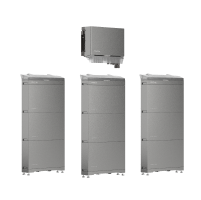
Deploying a solution like the EcoFlow PowerOcean allows you to capture that midday sun and use it during the high-tariff evening hours, significantly boosting your self-sufficiency. This system utilises ultra-safe LFP (Lithium Iron Phosphate) battery tech and is incredibly flexible, with the ability to expand up to 45kWh. Crucially, presenting a plan that includes a stable, fire-certified storage system like this can actually improve your grant approval odds, as it proves your home will achieve genuine “energy independence.”
Heat Pumps to Increase Whole-House Efficiency
Under the 2026 Warm Homes Plan, “single-measure” upgrades are being phased out in favour of multi-technology retrofits. To lock in the highest tier of funding, you should look at coupling your generation with your heating.
By integrating the EcoFlow PowerHeat air-source heat pump, you can convert your solar energy directly into home heating and hot water, bypassing expensive gas entirely. With a 20kW heating capacity, it is robust enough for the typical British semi-detached or detached home. Because the PowerHeat, PowerOcean, and PV panels operate on a seamless communication protocol, this “Generate-Store-Use” ecosystem perfectly matches the government’s 2026 criteria for “Whole-House Transformation,” making your application far more attractive to auditors.
Smart Energy Systems for Better Control
Using an app-based management system allows you to see exactly where your energy is going. Sophisticated home energy management system software can automatically divert power to your immersion heater or EV charger when the battery is full.
MCS-Certified Systems for Grant Approval
Every single grant program in the UK requires MCS (Microgeneration Certification Scheme) certification. If your installer or the products used aren’t MCS-certified, your grant application will be rejected instantly.
Flexible System Design for Future Upgrades
The best 2026 systems are modular. Start with what the grant covers today, but ensure your home battery storage and inverter stack can grow as your family—or your fleet of electric vehicles—expands.
How to Apply and Get Approved Without Delays?
The secret to a successful application is preparation. Follow these steps to ensure you don’t get stuck in a “pending” loop.
Find Local Approved MCS Solar Installers
Start by using the MCS directory to find a reputable local firm. Get at least three quotes to compare; a good installer will handle the bulk of the grant paperwork for you.
Book a Professional Home Energy Assessment
A Retrofit Assessment (part of the PAS 2035 standard) is often a prerequisite. An assessor will visit your home to verify your EPC and recommend the most effective measures.
Gather Required Financial and Benefit Evidence
Have your P60, benefit award letters, and recent energy bills ready in digital format. Delays in providing “proof of income” are the number one reason applications stall.
Submit Application Through Official Energy Portals
Most applications are now handled via the Government’s TrustMark portal or your energy supplier’s dedicated ECO4 page. Ensure all names match your energy bill exactly to avoid identity flags.
Schedule Your Free Consultation Today!
What kind of product or solution are you interested in?

Conclusion
For UK homeowners, the 2026 grant options are worth a close look. With schemes such as the Warm Homes Plan and the 0% VAT incentive, upfront solar costs are now significantly lower than before, especially when combined with available grant money for solar panels. A smart, integrated setup—efficient solar panels paired with reliable storage like the EcoFlow PowerOcean and clean heating solutions such as PowerHeat—does more than reduce your bills. It also helps protect your home from long-term energy price volatility.
FAQ
1. Can I Have Solar Panels if I Live in a Conservation Area?
Yes, but you will likely need to apply for “Planning Permission” rather than relying on Permitted Development rights. Councils in conservation areas often require “in-roof” panels or placements that aren’t visible from the main highway to maintain the historic character of the neighbourhood.
2. Do Solar Panels Add Value to Your House When Selling?
Yes, solar panels typically increase a property’s value by an average of 4% to 14% in the UK market. Buyers in 2026 are increasingly looking for homes with lower running costs and high EPC ratings, making a pre-installed solar and battery system a major selling point.
3. Do I Need to Tell My Home Insurance if I Get Solar Panels?
Yes, you must inform your insurance provider to ensure the panels and batteries are covered under your buildings insurance policy. While it rarely increases premiums significantly, failing to disclose the installation could void a future claim related to roof damage or electrical issues.
4. Can You Add More Solar Panels to an Existing System in the UK?
Yes, you can add panels, but it may affect your existing SEG (Smart Export Guarantee) contract or Feed-in Tariff (FiT) status. It is usually best to install a second, independent “string” or upgrade your inverter to ensure the new panels don’t drag down the performance of the old ones.

