
Maximise Every Watt of Your Scottish Power Feed in Tariff (FiT)
The Scottish Power Feed in Tariff (FiT) was created to reward people who invest in solar to reduce carbon footprint and those generating clean energy from their own roof. However, this does not seem to be the case in reality because the quarterly bill statement is still high. Here is why. Most homeowners are enrolled into a legacy framework designed for a different energy era entirely. What's actually eating away the financial returns from your solar system is fixed export rates, deemed generation assumption, and passive grid-reliant structures.
This guide looks at:
What the Scottish Power feed in tariff System is
How to manage your metering and submit readings
The financial pain points of relying only on export tariffs
How to shift from passive exporting to gaining complete energy self-consumption
How to optimise financial returns using advanced home energy technology solutions
Understanding the Scottish Power feed in tariff System
How the Feed in Tariff Scottish Power Scheme Works
The Scottish Power feed in tariff was formed by the UK government to reward households that were generating their own renewable electricity. Under this scheme, Scottish power is the licensed electricity supplier and is also responsible for processing payments to enrolled micro-generators.
The Scottish Power feed in tariff was closed to new applicants in 2019 and was replaced with the Smart Export Guarantee (SEG). Households that had enrolled in this program before it was closed continue to receive guaranteed payments directly from the utility provider. Payments are calculated based on independently verified generation data and are made using the original contractual terms agreed at registration. One downside to the program is that the terms have not changed even though the energy price caps have changed since then.
The Core Difference Between Generation and Export Tariffs
FIT payments are split into two distinct income streams, and conflating them is the most common source of financial confusion.
The generation tariff pays for every kilowatt-hour (kWh) your solar panels produce, regardless of whether you use it yourself or send it back to the grid
The export tariff only pays for the electricity you supply to the national grid
Many homeowners usually assume that the quarterly statement reflects all generated value. They forget that they consume a large proportion of solar output which is only partially captured through the generation component. And this means that actual grid exports are valued at a considerable lower separate rate.
Why Legacy FiT Rates Struggle to Match Modern Energy Costs
During the creation of legacy export rates, the electricity costs were lower than they are today. This means that the export tariff you receive per kWh you export is fixed at the original historical figure. The unit rate you pay to import electricity from the grid, on the other hand, has increased with successive price cap adjustments.
This creates an uncomfortable reality, the value of power you send out is less than the cost of buying equivalent electricity back during evening demand peaks. And that's why you cannot rely on the export income alone to offset bills of the imported electricity.
Managing Your Metering and Submitting Readings Without Friction
Step-by-Step Guide to a Scottish Power Feed in Tariff Meter Reading
Accurate data capture is the foundation for every FiT payment. To do this, check your generation meter which is typically a standalone unit installed near your inverter or consumer unit. It's separate from your main import meter.
If yours is a traditional dial meter, read the digits from left to right. Don't read the red-framed digits. Make sure you capture the full kilowatt hour (kWh) figure displayed on the unit.
For people with smart meters that are configured for FiT purposes, get the Scottish Power feed in tariff meter reading from the generation screen using your meter’s cycle button. The value is usually labelled, Generation (kWh) or Total kWh generated.
Scottish Power Feed in Tariff Submit Reading Online Process
Log into your Scottish Power online account and head to the dedicated Feed-in Tariff section in your account dashboard to submit your Scottish Power feed in tariff reading online. Enter your generation reading exactly as recorded. Ensure that there are no transposed digits. Also, if possible, input your export meter figure. It's always a good practice to cross-reference both values against the previous submission. The new input should be higher although the portal usually rejects the input when the new figures are lower than the previous submission. After clicking confirm, save or screenshot the on-screen reference number as proof of successful filing.
To prevent any delays that can result in payments being pushed to the following cycle, submit your Scottish Power feed in tariff meter reading promptly at the start of each quarter.

Overcoming Common Failures in the Scottish Power Feed in Tariff Reading Process
If the online portal returns an error or fails to accept your submission, try clearing your browser cache and attempt the process again or use an alternative browser.
If you want to get your scottish power feed in tariff reading but the physical generation meter displays a warning or shows a blank screen, don't guess the figures. Instead, contact Scottish Power's dedicated FiT support line to log a meter fault and request a manual payment assessment.
If you see that your submissions have gone through but no confirmation reference is generated, follow up in writing within 48 hours to create a documented audit trail.
If you report any issues promptly, missed quarterly windows due to technical failures don't result in permanent payment loss. However, delaying escalating the issues can complicate the resolution process.
The Financial Pain Points of Relying Solely on Export Tariffs
Why Sending Surplus Solar Power to the Grid Costs You Money
Between 10am and 3pm on clear days are peak solar generation hours. This means that your solar panels are generating more electricity than your household can consume.
If you don't have an efficient local storage solution, the surplus power generated leaves your property and earns a low, fixed export rate. And to further make this more painful, during evening hours when there is no solar energy generation and your household demand increases, you will buy the same energy back from the grid at a higher rate.
In short, you are selling energy at wholesale legacy costs and buying it back at full retail cost. And this is a type of transaction that’s working against your financial interests and grows more costly as import tariffs continue to rise.
The Massive Gap Between Grid Import Costs and Export Paybacks
It's a fact that there is a financial imbalance embedded in legacy FiT export arrangements. Standard export tariff values for pre-2019 FiT contracts typically sit in the range of 3–6 pence per kilowatt-hour (pkWh), while the average residential import unit rate has repeatedly climbed and now is at 24.67 p/kWh through successive energy price cap reviews.
Note: The current electricity price cap is 24.67 p/kWh. Always check on Ofgem’s official website for updated price caps.
This means that for every unit of surplus electricity you sell to the grid, you receive only a fraction of what it would cost to purchase that same unit back. And this translates to you forfeiting hundreds of pounds of potential annual value by deciding to export to the grid instead of retaining and using the power internally.
How Fixed Export Estimations Miscalculate Your True Solar Value
In many legacy FiT contracts, export payments are calculated using the deemed export methodology. In this calculation, export payments work on assumptions that you export 50% of electricity you generate to the grid.
Modern solar installations are designed to maximise generation and provide output levels that exceed the 50% rule. If your solar panels are producing more than your daytime consumption, a deemed export clause means you receive payment on only half your generation total, while the actual surplus flowing back to the grid may be considerably higher. And there's no contractual mechanism you can use to claim additional compensation for the difference.
Shifting from Passive Exporting to Complete Energy Self-Consumption
Breaking Free from Rigid Legacy Tariff Constraints
Legacy FiT structures were built around a passive model of energy participation: generate power, send the surplus to the grid, receive a predetermined payment, and repeat. This framework doesn't need anything from a homeowner, just submitting meter readings. It doesn't offer a mechanism for capturing maximum value from energy exports.
To shift from this model, you have to prioritise your home as the first destination of all energy you generate. Use every available watt at your house before exporting surplus to the grid. This approach does not void your existing FiT agreement. What it does is guarantee that your generation payment can cover the electricity you are consuming at your house. And through this, reduces your electricity import bill and minimizes your dependence on utility set export rates.
The Financial Benefits of Storing Power Locally Over Grid Exporting
You get a compounding financial advantage by retaining surplus solar energy in an on-site storage instead of exporting it to the grid. For example, instead of getting 3-6 p/kWh, you can store this energy and draw from it during evening peak hours. This means you won’t need electricity from the grid that costs 24.67p/kWh.
Note: The current energy price cap from Ofgem is 24.67 p/kWh. This figure is not constant but changes. To stay updated, always check for the current rate from Ofgem’s official website.
The return you get from this setup is avoiding paying the retail rate for electricity that is six times more than the export payment. And with every revision, the difference between the two figures keeps on increasing, making local storage the best hedge against grid price volatility that your fixed FiT export rate was never designed to address.
Future-Proofing Your Home Against Evolving Utility Provider Policies
Rules and regulations for legacy FiT arrangements are not constant. They are subject to reviews which may be due to administrative policies or a change in provider’s policy. Or even grid updates that affect how generation data is processed and compensated.
Investing in behind-the-meter energy infrastructure, such as home battery storage, smart inverters, and intelligent energy management software, helps to shield your home from outside energy policy risks. This strategy lowers the percentage of your energy budget that is at the mercy of the utility provider. So, for each kilowatt-hour you store and consume in your household is a unit permanently removed from the grid-import equation. And this means that you are getting the full financial value from your original solar investment for the remainder of your contract term regardless of what tariff structures look like in future.
Optimising Financial Returns with Advanced Home Energy Technology
High-Performance Single-Phase Battery Storage Solutions

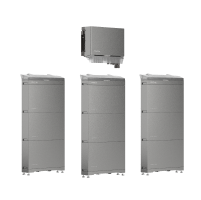
You can now capture all of the lost value due to the current low structure for exporting electricity back into the grid using the compact but expandable EcoFlow OCEAN 2 Single-Phase Battery Storage Solution. The EcoFlow OCEAN 2 has been designed to integrate seamlessly with your current solar array. It captures all excess daytime generation that would otherwise have gone to waste (exported at low legacy tariff rates) and makes this available on demand during high-cost evenings.
If you have an existing Scottish Power feed in tariff scheme and you are looking to maximize the financial output from your existing scheme, then implementing the OCEAN 2 can help you achieve this. This home energy ecosystem solution can store the excess energy produced, reducing over reliance on the grid energy without affecting your existing generation contract.
Automated Smart Energy Platforms for Dynamic Pricing Using EcoFlow Intelligent HEMS
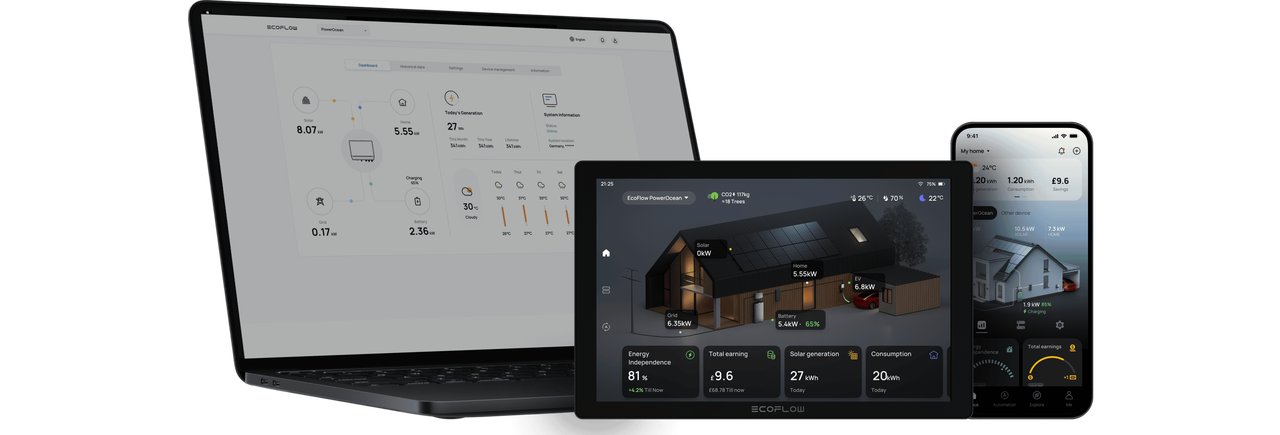
Your household can automate the charge/ discharge decision-making process based on changes in pricing using the AI-driven EcoFlow Intelligent HEMS. This system continuously analyses incoming grid pricing data, household consumption patterns, and solar generation forecasts. It then uses this data to help decide when to store or consume energy in real time.
If you are a legacy Scottish Power feed in tariff customer exposed to static export values, the Intelligent HEMS gives you an edge to financial management that the original FiT framework can’t provide. The intelligent system ensures the stored energy is deployed when the costs are at the maximum levels, ensuring you save on your electricity costs.
Conclusion
For any legacy Scottish Power feed in tariff arrangement, accurate meter reading and timely submission are non-negotiable. Without these two, your payments can stall and errors accumulate. However, this data alone cannot compensate for the financial shortcomings of the export-first energy strategy, especially in the high-tariff environment. To get the most out of your existing Scottish Power FiT contract, you have to combine diligent reporting with deliberate self-consumption. This means storing surplus solar generation locally and eliminating dependence on low-rate grid export payments. You should also deploy intelligent hardware to automate decision-making for maximising every watt you generate.
EcoFlow is a pioneer in advanced home energy management. We are dedicated to helping your household gain complete energy independence and financial efficiency. Our intelligent hardware and modern solar battery storage systems can help upgrade your legacy solar installations for the modern energy landscape. All our solutions are eco-friendly and are built to offer a smooth transition from being a passive grid exporter to an active self-consumer who retains the full value of every generated watt. Check out our website EcoFlow UK to explore our innovative storage options and energy ecosystems and start maximizing your legacy FiT returns
Schedule Your Free Consultation Today!
What kind of product or solution are you interested in?

Scottish Power Feed in Tariff Frequently Asked Questions (FAQs)
How often do I need to submit a quarterly solar statement?
You submit your Scottish Power feed in tariff meter readings to Scottish Power once every quarter. Submission windows open at the start of every quarter and usually run for several weeks. The exact date for submitting your data depends on your account and your registration cohort. To know exactly when you should submit your FiT readings, read through your FiT agreement documents or log into your online account.
Can I upgrade my property storage system while keeping a legacy contract active?
Yes. You can add a battery storage or any other behind-the-meter equipment and this does not invalidate your legacy Scottish Power feed in tariff contract or affect your generation tariff entitlement. FiT payments are calculated based on what your solar panel produces, not what happens to the electricity once it enters your property. As a precaution, you can notify Scottish Power for any significant system changes and retain documentation of the installation. However, adding storage is a common upgrade that is in line with the existing regulatory framework.
What should I do if my system records more generation than the portal allows?
If your Scottish Power feed in tariff meter reading is rejected in the submission portal because it exceeds the system’s expected maximum, don’t force through an estimated lower figure. The best solution is contacting Scottish Power’s FiT customer support team directly. Then, provide your meter photograph and the exact readings displayed, and request for a manual review. Unusual seasonal generation spikes and delayed previous generations are two factors that cause discrepancy flags, which can easily be solved using documented evidence.

