
How Scottish Power EV Tariffs Work With Home Battery Storage
If you drive an electric vehicle in the UK, switching to a dedicated time-of-use tariff like ScottishPower’s EV tariff is one of the quickest ways to reduce your running costs. However, while charging your car overnight at discounted rates saves money on the road, your household appliance usage during peak evening hours can still result in higher energy bills. This guide explains how ScottishPower EV tariffs work with home batteries, and how storing cheaper overnight electricity can help reduce your daytime energy costs.
Key Takeaways
Scottish Power EV tariffs provide lower-cost charging periods that can be combined with home battery storage to shift electricity use away from peak hours.
A home battery allows households to store cheaper electricity and use it when EV charging demand and household energy consumption increase.
The right battery capacity and lifespan are essential for maximising savings from time-of-use electricity tariffs.
Solar panels are not required but can further increase savings when combined with battery storage and flexible electricity tariffs.
Smart energy monitoring helps households understand energy flows and make better charging and usage decisions.
How Do ScottishPower EV Tariffs Work With Home Battery Storage?
A home battery makes the most of an EV tariff by charging when electricity is cheapest and supplying your home when rates increase.
Off-Peak Electricity Windows and Battery Charging Strategy
ScottishPower’s EV tariffs offer a multi-rate structure that provides a cheap overnight electricity window (typically offering around five hours of cheaper overnight electricity, depending on the tariff plan). During this window, the price per kWh drops dramatically compared to standard day rates. While the primary goal of this tariff is to charge your electric vehicle, installing a home battery allows more of your household electricity usage to benefit from off-peak rates. By setting your battery to force-charge overnight alongside your EV, you help cover more of your household electricity needs using lower-cost stored energy.
Peak-Time Energy Shifting with Home Battery Storage
After the off-peak window ends, your battery takes over during expensive peak hours. It uses the cheaper electricity stored overnight to power your home, helping you avoid higher grid rates.
Smart Meter Requirements for EV Tariff and Battery Storage
To use ScottishPower’s EV tariffs, you need a SMETS2 smart meter or a compatible SMETS1 meter with automatic half-hourly readings. This allows ScottishPower to track your off-peak usage and bill your EV and battery charging accurately.
| Time Window | ScottishPower EV Tariff Rate | Grid vs. Battery Strategy | Typical UK Household Use |
|---|---|---|---|
| Off-Peak (12am – 5am) | Lower overnight rate | Charge EV & Home Battery from Grid | EV Charging, Battery Storage, Washing Machine |
| Daytime (5am – 4pm) | Higher daytime rate | Discharge Battery to Power Home | Laptops, Lighting, Refrigeration, TV |
| Peak Hours (4pm – 9pm) | Standard/Peak Rate | Discharge Battery (Minimise Grid Import) | Cooking, Heat Pump, Kettle, Entertainment |
How Can Battery Storage Maximise ScottishPower EV Tariff Savings?
Pairing your EV tariff with the right battery capacity and smart software ensures you never run out of stored low-cost electricity during expensive peak hours.
Battery Capacity for Storing More Off-Peak Electricity
For UK households on ScottishPower EV tariff plans, storage capacity directly dictates how much low-cost electricity you can capture overnight to cover daytime demand and high-power household spikes.
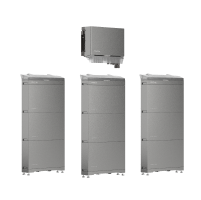
The EcoFlow OCEAN 2 Plus Single Phase supports expansion up to 60kWh storage capacity on a single inverter. This vast capacity allows busy families to easily store enough overnight electricity to handle daytime loads and high EV demand without relying on expensive grid imports. Furthermore, it features premium LFP (Lithium Iron Phosphate) battery cells rated for 10,000 cycles, designed to support long-term daily charge and discharge cycles.
Smart Energy Monitoring for Optimising Charging and Usage
Evening energy demand can increase significantly when multiple high-load appliances operate at the same time. You might be charging the car, running the dishwasher, heating the place, and drawing from your battery all at once. Without decent data, it’s hard to know which appliance is pulling the most or whether you’re drawing from the grid.
The EcoFlow PowerInsight 2 gives you a much clearer view of what’s actually going on. Its 11-inch HD touchscreen shows battery level, household consumption, solar output, and grid draw in real time. And with AI Energy OS, it picks up your daily routines and helps manage EV charging, appliance use, and battery settings to match how you actually live.
.png)
How Can You Choose the Right ScottishPower EV Tariff and Battery Storage Setup for Your Home?
Whether you go for an EV tariff on its own or a full tariff-plus-battery setup comes down to three things: how many miles you do each day, how much power your household uses, and your available budget.
When Is an EV Tariff Alone the Practical Choice?
If your household electricity consumption during daytime hours is minimal—for example, if you work away from home all day and have low background electricity demand—an EV tariff alone might be sufficient. In this scenario, charging your car overnight covers the majority of your energy costs without requiring an upfront investment in home storage.
When Does Adding Battery Storage Make Financial Sense?
If you use a lot of electricity during the day, battery storage can help cut costs. Store 10 to 20 kWh of cheaper overnight power and use it during the day to reduce grid reliance and speed up payback.
What Factors Should You Consider Before Adding Battery Storage?
Before installing a home battery, check your daily energy use, fuse capacity, available space, and future solar plans. Understanding how many kWh does a house use on a typical day is especially important, as this helps determine the battery capacity needed to store enough off-peak electricity without paying for unnecessary storage.
| Comparison Factor | EV Tariff Only | EV Tariff + Home Battery Storage |
|---|---|---|
| EV Driving Cost | Low (Off-peak overnight charging) | Low (Off-peak overnight charging) |
| Daytime Household Power Cost | High (Full peak grid rates apply) | Low (Powered by stored off-peak electricity) |
| Upfront Capital Cost | Zero (Tariff switch only) | Moderate to High (Battery hardware & installation) |
| Grid Independence | Low | High (Insulated from daytime peak price spikes) |
| Ideal Household Profile | Low daytime energy use, single EV focus | High daytime energy usage, families, heat pumps |
Note: Rates estimated based on current tariff structures; regional variations apply
How Do Solar Panels Change the Value of ScottishPower EV Tariffs?
Integrating solar PV alongside an EV tariff and battery storage creates a complete, multi-layered home energy solution.
Solar Generation for Reducing Daytime Grid Electricity Use
During spring and summer months, solar panels generate free electricity during daylight hours. This directly powers daytime background loads and charges your battery for free. A suitable EcoFlow Solar Battery solution can help homeowners store excess solar energy and use it when electricity demand rises, leaving more of the overnight off-peak grid allocation available for electric vehicle charging.
Combining Solar, Battery Storage and EV Tariffs for Greater Energy Savings
In winter, when solar generation drops across the UK, your battery seamlessly relies on ScottishPower’s off-peak grid electricity to keep energy costs down. In summer, your battery prioritises free solar power. This hybrid setup creates a more connected Home Energy Ecosystem, where solar generation, battery storage, EV charging and household energy use can work together to maximise savings.

How to Set Up ScottishPower EV Tariffs With Home Battery Storage?
Follow these four simple steps to integrate your ScottishPower EV tariff with your home energy storage system cleanly and effectively.
Smart Meter and EV Tariff Eligibility Requirements
First, verify that your home has a functioning SMETS2 smart meter. Apply for ScottishPower’s EV tariff via their portal or app, confirming that your EV or smart charger is supported for off-peak rate switching.
Checking Battery and System Compatibility
Ensure your battery inverter, such as a Hybrid Inverter, supports AC-coupling or grid-charging modes. Systems like the EcoFlow OCEAN 2 Plus are designed for seamless grid charging during low-cost tariff windows.
Software Scheduling: Charging and Discharging Time Settings
Using your battery management app or a central hub like the EcoFlow PowerInsight 2, set an automated scheduled charging window that precisely matches ScottishPower’s off-peak hours (e.g., 00:00 to 05:00). Ensure the battery is set to discharge to home loads outside these hours.
Note: Check whether your smart meter updates for British Summer Time (BST). Some meters stay on GMT year-round, meaning your cheap charging window may shift to 01:00–06:00 during summer.
Performance Monitoring and Iterative Adjustments
Monitor your energy dashboard during the first month. Check for unexpected grid import spikes during peak hours and adjust your battery state-of-charge limits or EV charge timing accordingly.
Schedule Your Free Consultation Today!
What kind of product or solution are you interested in?

Conclusion
If you’re a UK homeowner looking to cut your energy bills and make your supply more resilient, ScottishPower’s EV tariffs work effectively alongside a home battery. You fill the battery overnight at the cheap rate, then run the house off it through the day when grid prices are at their highest. That covers your car and everything else in the home. With a scalable kit like the EcoFlow OCEAN 2 Plus and the PowerInsight 2 handling the management, helping homeowners manage energy costs and household electricity use more effectively.
FAQs
Can I charge my EV and home battery at the same time?
Yes, you can charge your EV and home battery simultaneously during the ScottishPower off-peak window, provided your total household electricity demand does not exceed your main electrical fuse limit (typically 60A or 100A in UK homes). Some smart energy management systems can help balance power draw to keep total import safely within your main fuse limits.
Can I charge my home battery during ScottishPower EV tariff off-peak hours?
Yes, you can set your home battery to charge from the grid during ScottishPower’s cheap overnight off-peak hours using your battery system’s mobile app or smart control panel. This allows you to store low-cost energy for use throughout the following day when grid rates are higher.
Is a home battery still worthwhile in winter without much solar generation?
Yes, a home battery remains highly worthwhile in winter because you can charge it entirely overnight using cheap off-peak electricity from your ScottishPower EV tariff. Even with zero solar generation, winter grid-charging allows you to bypass expensive peak daytime electricity rates every single day.
Can I use peak-rate electricity when my battery runs out?
Yes, if your home battery runs out of stored energy, your system automatically switches back to drawing electricity directly from the grid at standard tariff rates. Your home will continue receiving electricity from the grid when battery storage is unavailable, although backup capability depends on system configuration.

