
Renewable Energy for Homes: How Solar Panels and Battery Storage Cut UK Energy Bills
UK households are still watching closely when and how they use electricity. Solar panels can cover part of your daytime demand, while a home battery stores surplus solar or cheap overnight power for later. Together, they cut grid imports, make smart tariffs work harder and give households more control over evening costs. This guide explains how solar and battery storage work in UK homes, what savings are realistic, and what to check before choosing a system.
Key Takeaways
Slash grid reliance: Solar alone takes 30–40% off bills. A battery captures the daytime surplus and lifts self-consumption past 80%.
Capitalise on smart tariffs: Overnight rates are at their lowest, so winter charging keeps you on cheap power all year.
Get paid for exports. Whatever the battery can’t hold earns bill credits via the Smart Export Guarantee (SEG).
0% VAT incentive: In Great Britain, eligible energy-saving materials, solar PV and batteries among them, are zero-rated until 31 March 2027.
What Is Renewable Energy for Home?
Home renewables mean tapping resources like sunlight, wind or ambient heat to cut how much power or fuel your household buys from the grid. In the UK, the most practical options usually come down to solar panels, battery storage, heat pumps and solar thermal.
Common Types of Renewable Energy for Homes
Several proven microgeneration technologies operate across the UK:
Solar Photovoltaics (PV): Rooftop modules convert daylight directly into usable alternating current (AC) via an inverter.
Domestic Battery Storage: Dedicated lithium-based units store generated solar power or cheap off-peak grid electricity for later use.
Heat Pumps (Air Source and Ground Source): These compress ambient heat from the outdoor air or soil to warm radiators, underfloor piping and domestic hot water.
Solar Thermal: Fluid-filled collectors heat water directly for taps and showers.
Micro-Wind Turbines: Pole- or roof-mounted turbines generate electricity from wind currents, though they need specific planning sign-off and unshielded rural plots.
| Technology | Best For | Main Benefit | Watch-Out |
|---|---|---|---|
| Solar PV | Unshaded south, east, or west-facing roofs | Generates daytime electricity with low maintenance | No power at night; weaker winter output |
| Battery Storage | Solar homes or smart-tariff users | Stores solar or cheap off-peak power for later use | Adds upfront cost; backup needs EPS setup |
| Heat Pumps | Well-insulated homes | Efficient heating and hot water, with BUS grant support | May need radiator or pipework upgrades |
| Solar Thermal | Homes with hot water cylinders | Efficient summer hot water | Limited winter output; hot water only |
| Micro-Wind | Rural or exposed coastal plots | Can generate well in windy seasons | Poor fit for towns; planning and servicing issues |

Why Solar Power Is a Popular Option for UK Homes
Solar PV counts as one of the simpler renewable upgrades for many UK homes, it runs on daylight, not just direct sunshine. Even under cloud, a well-sited rooftop system still generates useful electricity and trims how much you pull from the grid during the day.
0% VAT relief: The UK Government has zero-rated VAT on domestic energy-saving materials, including solar panels and residential storage batteries, through to 31 March 2027.
Straightforward planning: Most residential installs fall under Permitted Development rights, so you rarely need formal planning permission unless your home is listed or sits in a conservation area.
Silent, low-maintenance operation: With no moving parts, rooftop arrays quietly generate clean power for 25 years or more with minimal upkeep.
How Can Solar Panels and Battery Storage Reduce Energy Bills?
Solar panels lower bills by replacing part of your grid electricity with self-generated power. A battery adds another layer by storing unused solar or cheap off-peak electricity, then releasing it when household demand and grid prices are higher.
Use Solar Power to Reduce Grid Electricity Imports
Whenever your rooftop array generates power, that electricity feeds your active home loads first. If your washing machine is running while the sun is up, you are consuming free self-generated kilowatt-hours (kWh) instead of paying standard retail rates—often 24p to 30p per kWh—from the National Grid.
Store Excess Solar Energy for Later Use
Peak solar generation hits between 11:00 and 15:00, when many British homes are empty. Without storage, unconsumed energy flows back to the grid for modest export rates. With solar battery storage, a residential battery can capture that daytime surplus, letting you draw on stored solar energy when the family returns home to cook dinner, run the dishwasher, and stream television.
Use Off-Peak Electricity Tariffs to Charge Home Batteries
Modern smart tariffs (such as time-of-use rates offered by Octopus Energy or British Gas) provide discounted electricity overnight, frequently below 8p–10p per kWh. Checking how much is electricity per kWh at different times of day helps households compare tariff rates and understand potential savings. During darker British winters when solar yields dip, your home battery can still help manage electricity costs by making use of lower off-peak rates.
Earn Payments by Exporting Surplus Solar Electricity
If your battery hits 100% capacity and your rooftop continues producing power, you do not lose that energy. Licensed energy suppliers purchase this excess under the Smart Export Guarantee (SEG), adding a steady passive credit to your utility account. Understanding how solar generation, battery storage, and household demand work together as part of a home energy ecosystem can help you decide when to store electricity and when to export it.

How Much Can You Save With Solar Panels and Battery Storage?
Savings vary from home to home, so it is better to think in ranges rather than fixed promises. Your final return depends on system size, roof direction, daytime electricity use, export rates, battery capacity, and access to smart tariffs.
Estimate Annual Savings From Solar Panels
A typical 4 kWp domestic solar array in the UK generates around 3,400 to 4,000 kWh per year. Solar alone can reduce grid imports significantly, often by using around 30%–40% of generation on site, while a battery can raise self-consumption to roughly 75%–85%. Standalone systems typically trim £350 to £500 off annual utility bills, depending on daytime occupancy and current grid unit rates.
Compare Savings With and Without Battery Storage
Adding a battery raises your self-consumption rate from roughly 35% up to 75%–85%, delivering a major jump in annual savings:
| Metric / Consideration | Solar Panels Only (Approx. 4 kWp) | Solar Panels (4 kWp) + Battery Storage (9–10 kWh) |
|---|---|---|
| Typical Self-Consumption Rate | 30% – 40% | 75% – 85% |
| Average Annual Bill Reduction | £350 – £550 | £800 – £1,200+ |
| Overnight Cheap Rate Arbitrage | No | Yes (charges cheaply overnight in winter) |
| Power Cut Resilience | Shuts down automatically for grid safety | Back-up power available (with EPS gateway) |
| Estimated Upfront Cost (0% VAT) | £5,500 – £7,500 | £9,500 – £13,500 |
| Average Payback Horizon | 8 – 11 years | 7 – 10 years (faster with smart tariffs) |
Understand Smart Export Guarantee Payments and Electricity Tariffs
The Smart Export Guarantee (SEG) requires mid-to-large UK energy suppliers to pay micro-generators for exported low-carbon electricity. Rates vary significantly across providers: standard tariffs pay between 3p and 5p per kWh, while flexible tariffs from tech-led suppliers offer fixed export rates exceeding 15p per kWh or dynamic half-hourly tracking. Combining high-yield export tariffs with smart storage gives you complete control over whether to hoard your power or sell it for profit.
How Do You Choose the Right Renewable Energy System for Your Home?
The right setup is not always the largest one. A good renewable energy system should match your roof space, daily electricity pattern, budget, and future plans, such as EV charging or switching from gas heating to a heat pump.
Assess Your Household Electricity Consumption
Knowing how many kWh a house uses each day, when its peaks hit and whether solar can cover a decent chunk of that demand sets the baseline for system sizing.
Home energy monitors take the guesswork out of it. The EcoFlow PowerInsight 2 features an intuitive 11-inch touchscreen that maps real-time domestic energy flows, showing household consumption alongside solar generation and battery charge/discharge activity. Track those everyday patterns and you can size your baseline power needs with complete clarity before commissioning an install.
Choose the Right Solar and Battery Capacity
Working out solar panel and battery storage capacity comes down to balancing your household’s demand, available roof pitch and planned PV panel count. Properties with EVs or heat pumps often need larger arrays spread across multiple roof faces (east/west split installs, for example).
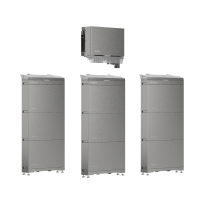
In these bigger homes, pick an inverter architecture with multiple independent Maximum Power Point Trackers (MPPT) to keep solar harvesting at peak across different panel strings. The EcoFlow OCEAN 2 Plus Single Phase, for instance, comes with three independent MPPTs and supports up to 24 kW of solar input — the configuration headroom needed for extensive domestic arrays. The precise solar size and battery capacity you should choose will always depend on your specific model choices, daily kWh requirements, roof orientation and professional engineering layout.
Compare Installation Costs and Payback Periods
While premium equipment carries higher initial costs, quality components with high cycle lifespans (typically 6,000+ cycles using Lithium Iron Phosphate / LFP cells) deliver superior levelised costs of energy over a 15-year period. Factor in warranty duration, software functionality, and installer workmanship guarantees when reviewing quotes.
Check UK Installation Requirements and Available Support
To export electricity and avoid connection issues, check these points before installation:
MCS certification: Use an MCS-certified installer if you want to apply for Smart Export Guarantee payments. Most SEG suppliers will ask for MCS certification or an equivalent recognised certificate.
DNO approval: Small systems are usually handled under G98 after installation. Larger solar or battery systems may need G99 approval from your local Distribution Network Operator before work begins.
Local support schemes: Check Home Energy Scotland, Nest Wales, and local council schemes, as support can vary by region, income level, and property type.
Schedule Your Free Consultation Today!
What kind of product or solution are you interested in?
Conclusion
Solar panels and battery storage aren’t a one-size-fits-all upgrade, but they work well for UK homes with suitable roof space, steady electricity use and access to smart tariffs. Solar cuts daytime grid use, while a battery shifts that value into the evening or cheaper overnight periods.
Before investing, compare your annual usage, roof layout, battery size, export tariff and DNO requirements. A well-sized system can cut bills meaningfully, but the best returns usually come from matching the kit to how your household actually uses electricity.
FAQs
How Long Does a Solar Battery Take to Pay Itself Off?
In the UK, a solar battery usually clears its cost in 7 to 10 years. Pair it with a dynamic time-of-use tariff and you can charge overnight on the cheap, that’s when payback comes fastest.
Can I Use My Solar Battery During a Power Cut?
Yes, as long as you’ve got an Emergency Power Supply (EPS) switch or a dedicated backup gateway. That’s what cuts your property off from the grid safely when the power goes down.
What Is the Average Lifespan of a Home Solar Battery?
Modern lithium iron phosphate (LiFePO4) batteries run 10 to 15 years. Most come with a warranty covering at least 6,000 charge-discharge cycles, down to 70–80% capacity.
Is It Worth Having a Home Battery Without Solar Panels?
Yes; households on smart time-of-use tariffs can charge the battery exclusively using ultra-cheap overnight grid electricity and discharge it during costly daytime peak hours to bank substantial bill savings.
How Much Do Solar and Battery Add to House Value in the UK?
Installing a solar-plus-storage system can boost a UK property’s value by an estimated 2% to 4%, largely by improving the property’s Energy Performance Certificate (EPC) rating, which modern buyers actively seek out.

