
PAS 2035 Explained: Step-by-Step Guide to UK Home Retrofit Compliance
If you’ve been looking into making your British home warmer, greener, or cheaper to run, you’ve probably come across the term PAS 2035. PAS 2035 is the UK’s official framework for domestic retrofit, developed with input from industry bodies and backed by government guidance. According to the UK Government’s retrofit standards and compliance requirements, PAS 2035 ensures that energy upgrades are designed and delivered using a whole-house approach to avoid unintended issues such as damp and poor ventilation. This guide walks you through the whole process – from the initial assessment right through to the final handover, so you can be sure your home upgrade meets government‑backed standards for comfort and efficiency.
How Does the PAS 2035 Framework Work?
PAS 2035 takes a big‑picture approach. It steers you away from random, one‑off upgrades that can sometimes cause problems like damp or mould further down the line.
Adopt the Whole‑House Retrofit Principle
Instead of looking at windows or boilers in isolation, PAS 2035 treats the entire building as one system. That way, an upgrade in one area doesn’t end up causing trouble somewhere else.
Categorise Properties into Specific Risk Paths
Every project gets a “Risk Path” – A, B, or C – based on how complex the building is and how much work you’re planning. That decides what level of professional oversight you’ll need to keep things on track.
Establish Mandatory Technical and Quality Standards
Compliance is a formal requirement for funded projects. According to TrustMark, the UK Government-endorsed quality assurance scheme for retrofit, all work carried out under schemes like ECO4 must comply with PAS 2035 to ensure consumer protection and installation standards. The framework sets out tight technical specs that make sure every bolt and board meets UK building regs and then some.
Link Retrofits to Government Funding Eligibility
If you’ve got your eye on schemes like the Social Housing Decarbonisation Fund or ECO4, you’ll need PAS 2035 compliance. It’s the gateway to getting financial support for your energy upgrades.
Prioritise Fabric First for Energy Efficiency
Before you start fitting fancy gadgets, the framework insists on “Fabric First” – better insulation, airtightness, and glazing. Cut the building’s heat demand first, and any home battery storage you install later will be far more effective at managing your remaining energy needs.

Who Needs to Be Involved in Your Retrofit Project?
Getting a retrofit right means putting together a team of certified professionals. Here’s who you’ll need.
A Qualified Retrofit Advisor
This is your first port of call. They’ll walk you through the benefits of different energy-saving measures, explaining technical aspects like what solar energy storage is, how solar energy storage works and whether they’re likely to work for your home.
A Certified Retrofit Coordinator
The coordinator is the most important role on the job. They run the project from start to finish, look after your interests, and make sure everything meets PAS 2035 requirements.
A Retrofit Assessor
The assessor comes to your property to check its current condition, energy performance, and any existing problems that need sorting before work starts.
TrustMark-Registered Installers
Only installers registered with TrustMark can do the physical work. That means they’ve been vetted and their work comes with insurance, which gives you a bit of peace of mind.
A Retrofit Designer
The designer draws up the technical plans. Their job is to make sure the measures you choose – say, external wall insulation – actually suit your home’s architecture and ventilation needs.
What Happens During Assessment and Design?
This phase is where the data meets the drawing board. It’s about understanding the “as-is” state of your home to plan a better “to-be” future.
Complete a Thorough Building Condition Survey
Assessors check for structural issues, damp, or rot. You can’t insulate a wall that has underlying damp issues, as this would only trap moisture and cause long-term damage.
Perform an Accurate Occupancy Assessment
The way you live in your home—how many people are there and how you use heating—affects the retrofit design. A retired couple has very different energy needs than a young family with four children.
Calculate Current Energy Performance Benchmarks
Using software, the team establishes a baseline of your home’s current efficiency. This assessment often includes a detailed look at thermodynamics, answering questions like how a hot water heater tank works with your heating system to optimise overall efficiency. This allows for an accurate prediction of how much carbon and money you’ll save post-retrofit.
Identify Ventilation and Moisture Requirements
Here’s one of the most important steps: if you seal a house up tighter, you’ve got to sort out ventilation. The rule is simple – ventilate when you insulate. It stops condensation from building up and keeps the air inside healthy.
Develop a Medium-Term Improvement Plan (MTIP)
The MTIP is a 20-to-30-year roadmap. It sets out what you should install now and what can wait until later. That way, the work you do today won’t block future upgrades down the line.
.png)
What Are the Installation Phase Requirements?
Once the designs are approved, the physical transformation begins. This stage focuses on high-performance materials and intelligent integration.
Execute Fabric Upgrades and Energy Storage
Many older UK homes, such as Victorian properties or semis with complex rooflines and garage extensions, face challenges with solar PV output due to shading or awkward orientations. Once the building fabric is insulated, PAS 2035 often recommends energy storage to maximise efficiency.
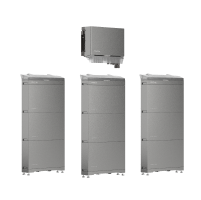
For these complex layouts, a highly adaptable system like the EcoFlow OCEAN 2 is ideal. Its triple-MPPT design perfectly handles the multi-oriented roofs common in British suburbs, significantly boosting solar yield. Given the UK’s notorious “grey” weather, its 120V low start-up voltage ensures the system kicks in earlier in the morning or under overcast skies. Furthermore, to combat local grid instability, its 0ms-level backup switching keeps heat pumps and smart home hubs running without a flicker during power cuts.
Integrate Smart Management and Control Systems
The “Monitoring and Evaluation” stage of PAS 2035 is basically a performance check. It makes sure you’re actually getting the energy savings you were promised. That’s where smart home tech becomes essential – it gives you the proof.
Take the EcoFlow PowerInsight 2. It acts as your home’s energy brain and fully meets PAS 63100 safety standards for UK energy storage. Instead of burying your data somewhere out of sight, it puts it on a clear 11‑inch HD touchscreen. You get an at‑a‑glance view of your energy flow, which ticks the visibility box for PAS.
The real workhorse is the AI Energy OS. It’s designed for the UK grid and plays nicely with dynamic tariffs like Octopus Agile. It automatically charges your batteries when power’s cheap and runs them down when prices spike. With Matter 1.4 support, it also talks to your Tado or Nest thermostats – so your heating and power systems pull in the same direction to hit those strict energy targets.
Install High Efficiency Low Carbon Heating
With the fabric improved, the home is now ready for low-carbon heat sources like Air Source Heat Pumps (ASHPs). Because the house retains heat better, these systems can run at lower, more efficient temperatures.
Ensure Compliance with Quality Installation Standards
Installers must document their work with photos and site logs. This “evidence pack” proves that the insulation is continuous and that no cold bridges were created during the process.
How Is Energy Performance Monitored After the Retrofit?
PAS 2035 includes an “evaluation” period to make sure the house actually performs as promised.
Track Daily Energy Use on a Dashboard
Use a smart display to keep an eye on things. A modern home energy management system can be integrated here to provide real-time data on how your new systems are running within expected limits.
Adjust Storage Cycles for Peak Demand
Tweak your battery settings as the seasons change – shorter winter days mean different storage needs. That helps keep your savings on track.
Compare Real Savings Against Predictions
Your retrofit coordinator will look at your actual energy bills and compare them to the initial model. That’s how you verify success.
Keep an Eye on Indoor Air Quality and Ventilation
Use sensors to make sure CO2 and humidity levels stay within healthy limits.
Fine‑Tune System Settings for Best Efficiency
Sometimes you just need a small adjustment to the heat pump curve or the solar inverter settings – to get the setup working its best for your household.
What Is Required for the Final Handover?
The final stage is about empowering the homeowner and formalising the upgrades in national databases.
Conduct a Post-Installation Performance Check
The Coordinator performs a final walk-through to ensure every measure has been installed according to the design and that the home is functioning correctly.
Provide the Owner with Operation Manuals
You shouldn’t be left guessing how to work your new tech. You must be provided with a “Physical Data Manual” explaining how to operate and maintain your new energy systems.
Upload Documentation to the Trustmark Database
All certificates, warranties, and design documents are uploaded to the National TrustMark Data Warehouse, providing a permanent digital record of the retrofit.
Issue the Final Retrofit Completion Certificate
This document proves you’ve met the required standards. It helps protect your home’s value, and you may need it if you decide to sell the property down the line.
Schedule Mandatory Post-Construction Monitoring
Depending on the risk path, you may need a follow-up assessment a few months down the line. This checks that nothing unexpected, like hidden thermal bridging, has shown up over a full heating season.
Schedule Your Free Consultation Today!
What kind of product or solution are you interested in?

Conclusion
Following the PAS 2035 process might feel like a fair bit of red tape. But it’s the only way to make sure a British home retrofit gets done properly. Put fabric first, bring in the right people, and use smart storage like the EcoFlow OCEAN 2. That’s how you turn an old draughty house into a low‑carbon home that’s ready for the future.
FAQ
1. Is PAS 2035 Mandatory?
Yes, PAS 2035 is mandatory for all publicly funded retrofit projects in the UK, such as those under the ECO4 or Social Housing Decarbonisation Fund. While not strictly “law” for private homeowners paying out-of-pocket, it is highly recommended to ensure quality and insurance validity.
2. Is Retrofitting Worth It?
Absolutely, as a comprehensive retrofit can reduce energy bills by up to 70% while significantly increasing the comfort and market value of your home. It also protects the building structure from damp and decay for decades to come.
3. How Long Does a Retrofit Assessment Take?
A standard on-site assessment usually takes between 2 and 4 hours, depending on the size and complexity of the property. However, the subsequent data processing and report generation may take another week.
4. How Much Is a Retrofit Assessment?
The cost typically ranges from £400 to £800, depending on your location in the UK and the size of your home. This fee covers the professional expertise of the Assessor and the creation of your Medium-Term Improvement Plan.
5. What Is the Difference Between PAS 2030 and 2035?
PAS 2030 focuses on the “how” (installation standards), while PAS 2035 focuses on the “what and why” (the whole-house design and management). Think of PAS 2035 as the architectural and management framework, and PAS 2030 as the manual for the builders on the ground.

