
What Is Octopus Energy Zero Bills and Can UK Homeowners Actually Achieve It in 2026?
This article explains the Octopus Energy Zero Bills scheme as defined by Octopus Energy. It also explores the general approaches households discuss when aiming to reduce energy bills outside the official Zero Bills programme.
One of the greatest cost burdens in the UK is energy. This concept of having no cost for home energy is no longer a concept; Octopus Energy is making it a contractual gurantee for specifically approved homes, and the scheme is rolling out throughout the UK, including Scotland. This guide aims to clarify what Octopus Energy Zero Bills is, who can access it and how homeowners not in the scheme can work towards significantly lower energy bills in the UK.
What Is the Octopus Energy Zero Bills Scheme?
Octopus Energy Zero Bills is a smart tariff that ensures that those who qualify for the scheme do not have to pay anything for their home energy bills for 5 or 10 years. It isn't a rebate or discount. It is available on homes built or retrofitted to a certain standard; Octopus solar panels, a home battery and Octopus' technology platform that manages the heat pump. On-site generation, storage and smart management combine to make a qualifying home efficient enough for Octopus to offset any energy costs on the grid and provide the guarantee.
Equipment shall be from Octopus's approved manufacturer list. EcoFlow is one of the permitted brands of batteries and inverters. A Fair Use Allowance is in effect; this is approximately twice the normal use for new construction. Excludes EV charging, billed separately.
How Has Zero Bills Expanded Across the UK?
The scheme opened in 2022 and has developed through a partnership with approved property developers. More than 5,000 homes are now qualified for Zero Bills by Octopus Energy by 2026, covering affordable rent, private rent, shared ownership and private sale. The firm aims to reach its 100,000 Zero Bills homes by 2030, and the scheme is also live in Germany, France and New Zealand.
Is Octopus Energy Zero Bills Available in Scotland?
Yes. The first Octopus Energy Zero Bills Scotland development, in partnership with Discovery Homes, was Tranent Grove in North Dundee, launched in January 2026. This is Scotland's first Zero Bills site, with all 57 properties eligible for the optional tariff upgrade. At the development, homeowners will have no energy bills for 10 years and as more developer partnerships emerge, it will be available across the border.
What Technology Powers a Zero Bills Home?
Solar panels
The generation source that enables a Zero Bills home is solar PV panels. They use daylight as their fuel to generate electricity for a house during the day, and store any excess in the battery rather than send it to the grid.
Home battery storage
If solar panels aren't stored, they can only generate power when the sun is shining. By storing excess energy produced during the day and delivering it in the evening and at night, the battery helps balance solar output with household demand.
Heat pump
A gas boiler is replaced as the main heating and hot water system with a heat pump. It consumes electricity and is much more efficient than direct electric heating, so it is a natural choice for a dwelling that generates and stores its own electricity.
Smart energy management and monitoring
They manage the relationship between the solar, battery, heat pump and grid through Octopus Energy's platform. It works to maximise the use of the lowest-cost power source (whether battery storage or the grid) at each moment, as well as minimise the amount of electricity drawn from the grid when it is cheapest.
Can Existing Homes Achieve Zero Energy Bills Without Buying a New Build?
Currently, the Zero Bills tariff is targeted for new properties and certified developer properties. The vast majority of UK households do not have the option to just join the scheme as they live in a pre-existing home. The real-life issue these homeowners face is, " Can I achieve a similar result in my existing house?
True zero energy bill housing UK, in the contractual sense, Octopus defines it as requiring the full approved technology stack managed by their platform. But households that invest in solar, battery storage, and smart monitoring can reduce bills substantially. The path toward near-zero bills in an existing home follows the same logic: generate on-site, store surplus, and manage consumption intelligently. The guide on Warm Homes Plan energy efficiency upgrades explains how the government's current investment programme supports exactly these improvements for existing homes.
How Home Battery Storage Can Help Reduce Energy Bills in Existing Homes
This is not part of the Octopus Zero Bills scheme, but a broader category of household energy strategies.
The home battery is the piece homeowners most often underestimate. If it is not used, excess solar power is sold to the grid at low Smart Export Guarantee prices, but a household would be charged high prices for evening electricity. It stores excess daytime electricity generation and draws on it when needed at night, significantly reducing electricity imports.

The EcoFlow PowerOcean Single-Phase is designed for average UK single-phase properties. It can be expanded to 15kWh as the house's demand increases, enabling a modular design that begins at 5kWh. It features lithium iron phosphate (LFP) battery chemistry for a long, stable cycle life, a 15-year warranty, and automatic cutover during a power outage for whole-home backup. It is part of the EcoFlow Home Energy Ecosystem, which allows users to manage the entire solar home energy system, making it a reliable option for many UK homes and making solar energy more dependable for all-day use.
Knowing Where Your Energy Goes: The Importance of Real-Time Monitoring
Solar and battery hardware is the foundation. Only when the homeowner has up-to-the-minute awareness of where energy is being produced, stored and used can they achieve the lowest possible bills. Without it, a system runs passively. Standby appliances, unused appliances during peak tariff periods, and appliances used at night when they could have been used during the day are ignored and unchallenged.
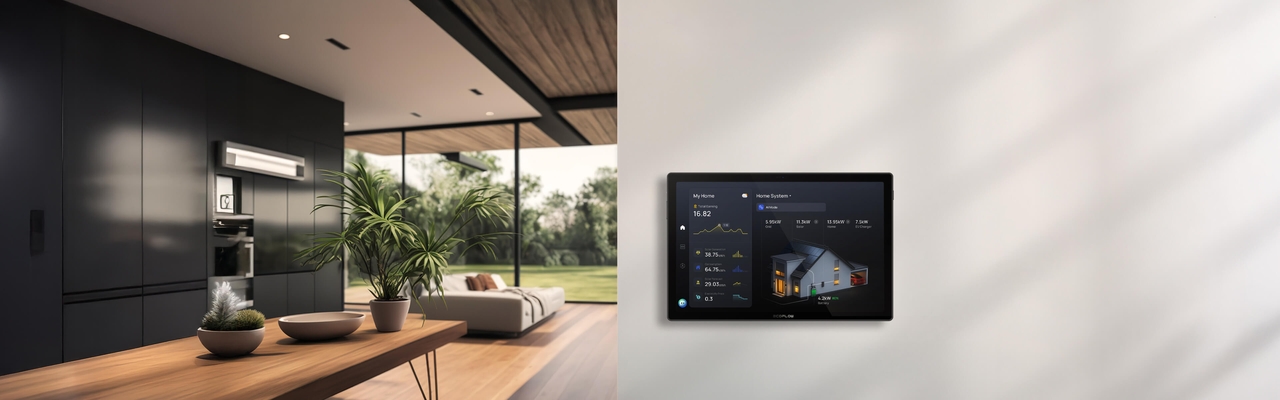
That visibility comes as a standalone home energy-monitoring layer, the EcoFlow PowerInsight 2 Monitor. It monitors all energy flows around the house in real-time, is compatible with solar and battery systems, and provides homeowners with all the data they need to help them notice when their appliances are using more energy than they should, when their battery is operating properly, and when they can save energy during less expensive time-of-day periods. For any household working toward zero energy bill housing UK, monitoring is the intelligence layer that turns a passive system into an actively managed one.
Financial Support Available for UK Homeowners in 2026
The Warm Homes Plan
The government's Warm Homes Plan pledges up to £15 billion of public funding to help improve the condition of up to 5 million homes and alleviate fuel poverty for around a million families by 2030. It contains grants and interest-free loans for homeowners retrofitting their homes with heat pumps, solar panels, and battery storage, as well as targeted support for low-income residents and new regulations mandating that landlords retrofit their rental properties.
ECO4
The Energy Company Obligation scheme (ECO4) offers insulation & low carbon heating upgrades to homes in the most vulnerable groups (those on means-tested benefits) or with low EPC ratings. Measures can be fully funded for eligible homes via their energy supplier.
0% VAT on solar and battery installations
VAT is 0% for solar panels, battery storage and energy-saving materials fitted in homes. This is true for both new construction and retrofits, and lowers the initial cost of solar and battery.
Smart Export Guarantee
The Smart Export Guarantee (SEG) obligates licensed energy suppliers to remunerate domestic consumers for surplus solar PV electricity supplied to the grid. Payments are lower than electricity costs, but they help to improve the cost of a solar system and cover standing charges.
Steps to Take if You Want to Move Toward Zero Energy Bills
Assess your current energy use
Use the annual electricity usage (kWh) from your energy bill, or download the data from your smart meter. This will provide you with the foundation for an accurate sizing of a solar and battery system.
Check your roof and home suitability
The roof should face south and not be shaded much, nor too small for the 10 panels. With proper inverter configuration, east and west-facing roofs can be effective. If your home is in a conservation area or listed, ensure that you check for planning restrictions.
Check your eligibility for grants and support
Please make sure to look at your household income and/or EPC rating to see if you are eligible for Warm Homes Plan grants and/or ECO4 funding before requesting quotes. These can make a big difference in lowering or eliminating up-front costs for eligible households.
Get multiple quotes from MCS-certified installers
MCS is the only certification recognised for the Smart Export Guarantee and government grant schemes, as well as by installers. Obtain at least 3 quotes and request that each installer work with your actual usage data to size the system.
Conclusion
Octopus Energy Zero Bills provides a guaranteed outcome for qualifying new-build homes, now available in Scotland as well as across England and Wales. The direct route for the majority of households in existing properties in the UK to the scheme is not yet open. However, the technology behind it is accessible to any homeowner: solar energy, home storage batteries and real-time monitoring. When you add the Warm Homes Plan, ECO4 and 0% VAT on installations, the difference between the Zero Bills ideal and what an existing home can do is now at its lowest ever.
Schedule Your Free Consultation Today!
What kind of product or solution are you interested in?


FAQs
What is the Octopus Energy Zero Bills scheme?
Octopus Energy Zero Bills is a smart tariff that will make eligible homeowners pay nothing for their home energy bills for 5 or 10 years. It’s for homes designed to a certain specification that include solar panels, a home battery and heat pump technology, all controlled by Octopus Energy's technology platform.
Is Octopus Energy Zero Bills available in Scotland?
Yes. It was launched in Scotland in January 2026, in 57 homes at Tranent Grove in North Dundee. It is the first Zero Bills site in Scotland, and homeowners will be guaranteed no energy bills for 10 years.
Who qualifies for a Zero Bills home in the UK?
The property needs to be approved by Octopus Energy and fitted with approved solar, battery and heat pump technology. The vast majority of properties eligible for these schemes are new-build houses delivered by Octopus's developer partnerships, but some retrofitted existing properties might also be eligible.
Can I achieve zero energy bills in an existing home, not just a new build?
The official Octopus Zero Bills tariff is mostly targeted at certified new-build homes. Solar, battery storage and energy monitoring are effective ways for existing homeowners to save a lot on bills, but not a way to enter the Zero Bills scheme.
What technology do I need to reach near-zero energy bills?
The central technologies are solar PV panels for on-site electricity generation, a home battery to store energy when it is not needed to reduce electricity costs, and a smart energy monitor to show, in real time, where energy is being used. By installing a heat pump instead of a gas boiler, dependence on fluctuating gas prices decreases.
Does EV charging count as zero bills under the Octopus scheme?
No. charging of No. EVs are not included in the Zero Bills guarantee and will be charged at the unit rates of the Intelligent Octopus Go. The remaining energy consumption at home will fall within the scope of the scheme, except for the Fair Use Allowance.

