
LFP vs NMC Battery: Differences, Lifespan, and Which Is Better?
LFP and NMC are two widely used lithium-ion chemistries in battery storage, and they suit different applications. LFP generally offers longer cycle life and better thermal stability, while NMC packs more energy into a smaller, lighter battery.
For UK homeowners comparing solar battery storage options, those differences can affect lifespan, installation requirements, cold-weather performance and long-term cost. Here’s how LFP and NMC compare.
Key Takeaways
LFP batteries generally offer longer cycle life: Some LFP cells and systems can deliver around 4,000–6,000+ cycles, while NMC products may offer roughly 1,500–2,500 cycles, depending on the cell design and operating conditions.
NMC batteries are generally lighter and more compact: Their higher energy density makes them well suited to EVs and other applications where space and weight matter.
LFP is generally more thermally stable: This makes it well suited to stationary storage applications and frequent cycling.
Cold weather affects both: Many lithium-ion battery systems restrict charging below 0°C unless the cells are heated or otherwise protected for low-temperature charging.
For many UK home solar setups, LFP can be a practical option: Its longer cycle life, thermal stability and lower production costs can be more relevant than the compact footprint offered by NMC.

What Are LFP and NMC Batteries?
LFP and NMC are both lithium-ion battery chemistries, but they use different cathode materials. These differences affect energy density, cycle life, thermal stability, and cost.
What Is an LFP Battery?
An LFP battery uses lithium iron phosphate (LiFePO₄) as its cathode, paired with a graphite electrode. The chemistry has good structural and thermal stability and releases less oxygen under thermal abuse than many layered oxide chemistries. It is also widely used in EcoFlow Solar Battery systems designed for residential storage. LFP can perform well under frequent cycling and support thousands of charge and discharge cycles, depending on cell design and operating conditions.
What Is an NMC Battery?
An NMC battery uses a cathode made from nickel, manganese and cobalt. This combination supports high energy density in a relatively compact footprint. The balance of nickel, manganese and cobalt affects energy density, structural stability and electrochemical performance, which has made NMC widely used in electric vehicles and other weight-sensitive applications.
How Do LFP and NMC Batteries Differ in Battery Chemistry?
One of the main differences lies in the cathode crystal structure.
LFP's olivine structure: Strong phosphorus–oxygen (P–O) bonds contribute to the cathode's structural and thermal stability.
NMC's layered structure: Its layered transition-metal oxide structure supports higher energy density, but some NMC chemistries can become less thermally stable at elevated temperatures or high states of charge.
LFP vs NMC Battery: Key Differences Compared
LFP generally prioritises longer cycle life and thermal stability, while NMC prioritises higher energy density and lower weight.
| Feature | LFP (LiFePO4) | NMC (LiNiMnCoO2) |
|---|---|---|
| Nominal Cell Voltage | ~3.2 V | ~3.6 V – 3.7 V |
| Typical Cycle Life (to 80% capacity) | ~4,000–6,000+ cycles in some cells and systems | ~1,500–2,500 cycles in some cells and systems |
| Energy Density | Moderate (~90–160 Wh/kg) | High (~150–250 Wh/kg) |
| Reported Thermal Runaway Temperature* | ~270°C | ~210°C |
| Cobalt / Nickel Content | None | Yes |
| Common Applications | Residential solar, stationary ESS | EVs, compact electronics |
*Thermal runaway temperatures vary with cell chemistry, format, test method and measurement definition, so these figures should be treated as indicative rather than universal thresholds.
LFP vs NMC Energy Density
NMC generally offers higher energy density. Because it can pack more kilowatt-hours into a smaller, lighter battery pack, NMC is well suited to electric vehicles where weight and available space matter. In contrast, LFP cells typically require more space to store the same nominal capacity. For many residential wall-mounted or ground-mounted systems, where weight and footprint may be less restrictive, this difference can be less important.
LFP vs NMC Lifespan and Cycle Life
Daily domestic cycling makes cycle life an important consideration, and LFP generally offers a longer cycle life than NMC. Some LFP cells and systems can deliver around 4,000 to 6,000 full cycles before reaching 80% of their original capacity, which could correspond to roughly 10 to 15+ years of daily cycling under suitable conditions. NMC products may reach around 1,500 to 2,500 cycles under comparable conditions, but actual service life depends on depth of discharge, temperature, charging behaviour and cell design.
LFP vs NMC Safety and Thermal Stability
Thermal stability is an important consideration when installing high-capacity battery storage in an attached garage, loft or utility room. LFP generally has a higher thermal stability threshold than many NMC chemistries and can release less oxygen during thermal decomposition. This can reduce the severity and propagation risk of thermal runaway under some conditions. NMC can reach thermal runaway at lower temperatures in some cell designs, although the exact behaviour depends on cell chemistry, format and test conditions.
LFP vs NMC Charging and Discharging Performance
Daily usage habits differ between the two:
LFP generally handles higher states of charge well: LFP typically tolerates frequent cycling and higher states of charge better than many NMC chemistries, although avoiding unnecessary extreme charge and discharge conditions can still help extend battery life.
NMC can benefit from a mid-band buffer: Keeping an NMC pack at a very high state of charge for extended periods can accelerate degradation. Some manufacturers therefore recommend limiting routine charging to around 80% to 90% and using 100% when needed, but the recommended limit varies by battery system.
LFP vs NMC Cost
Cobalt and nickel can add to the material cost of NMC cells and may be subject to commodity price fluctuations. LFP uses iron and phosphorus in its cathode instead, which can give it a cost advantage on a per-kWh basis. For homeowners considering how much is electricity per kWh, this cost difference can be one factor to consider alongside battery lifespan. Over the battery’s operating life, this cost advantage can be reinforced by LFP’s longer cycle life, although the overall levelised cost of storage depends on the system price, operating conditions, financing and replacement requirements.
LFP vs NMC for Home Energy Storage in the UK
The more suitable chemistry depends on whether your priority is longer cycle life, thermal stability, compact size or lower weight.
Why Battery Chemistry Matters for UK Solar Storage
With dynamic tariffs such as Octopus Agile, British households can shift battery charging to cheaper half-hour periods, which may include overnight periods, and discharge during higher-priced periods such as the evening peak. Octopus identifies 4 pm to 7 pm as a typical daily rush period, although Agile prices change every half hour and can vary from day to day. Combined with daytime rooftop solar, frequent cycling can make cycle life and thermal performance important considerations for long-term battery value.
LFP vs NMC for Solar Battery Storage
Stationary solar installations do not need to move, so the lower weight of NMC may be less important than cycle life and thermal stability for some homeowners. An LFP battery can support frequent cycling in solar battery storage applications, such as storing midday solar generation, powering evening heat pumps or cookers, and charging during lower-priced periods, subject to the battery’s operating limits.
How LFP and NMC Perform in Different UK Homes
Available installation space dictates options:
Terraced houses and flats: Where a system must fit into a small cupboard or hallway, NMC's compact profile can be an advantage. However, slimline LFP modular systems can reduce the footprint difference between the two chemistries.
Detached homes with garages or outbuildings: LFP can be a suitable option where space is less restrictive and frequent cycling is expected. Its longer cycle life and thermal stability can be useful for long-term stationary storage.
LFP vs NMC in Cold UK Weather
Sub-zero winter mornings can affect lithium battery performance, particularly in an unheated garage, porch or outdoor lean-to:
Charging limits: Many lithium-ion battery systems restrict charging below 0°C because low-temperature charging can increase the risk of lithium plating and permanent capacity loss. The exact minimum charging temperature depends on the battery design and its heating and battery-management system.
Discharge stability: NMC can retain better low-temperature discharge performance than LFP in some cell designs, while LFP's internal resistance can increase at low temperatures and temporarily reduce available output.
The practical solution: Some modern residential LFP systems use integrated heating or other temperature-control features to bring the cells into a suitable operating range during cold weather.
What Else Should You Consider Besides Battery Chemistry?
Battery chemistry is only one part of a home energy system. Understanding how many kWh does a house use can help put battery capacity into context, while inverter output, usable capacity, solar input, backup needs and installation conditions can all affect how the system performs day to day.
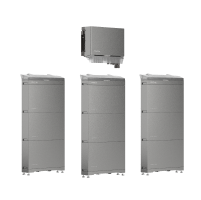
If you’d rather keep things simple, an integrated system saves you matching separate batteries and inverters. The EcoFlow OCEAN 2 Plus Single Phase pairs LFP battery storage with a hybrid inverter, so solar generation, battery charging and backup power all run within one system.
Once the hardware is in, the next challenge is knowing when to use, store or pull electricity from the grid. That matters in the UK, where cloud cover and shorter winter days can swing solar output fast. PowerInsight 2 shows solar generation, household consumption and battery status in real time, making it easier to use surplus solar or capitalise on lower off-peak rates.

LFP vs NMC: Which Battery Is Better for You?
Matching the chemistry to your specific household circumstances can make the decision clearer.
When Should You Choose an LFP Battery?
Consider an LFP battery if you’re installing residential solar storage, prioritise longer cycle life and thermal stability, and expect frequent daily cycling. Depending on the battery system and operating conditions, LFP can support 10–15+ years of service. For stationary home storage, LFP is widely used because its cycle life and thermal characteristics suit frequent cycling.
When Should You Choose an NMC Battery?
Consider an NMC battery if you need lightweight, high-energy-density storage where physical dimensions and weight are important, such as in electric vehicles, portable battery packs or applications with strict space or payload restrictions.
Schedule Your Free Consultation Today!
What kind of product or solution are you interested in?

Conclusion
LFP and NMC each have distinct strengths. NMC offers higher energy density, making it useful where size and weight matter, while LFP generally offers longer cycle life and greater thermal stability.
For many UK home solar storage systems, LFP can be a practical option because stationary batteries may place less emphasis on compact size. Beyond chemistry, consider usable capacity, inverter output, warranty, cold-weather protection and backup capability when comparing systems.
Setups such as the EcoFlow OCEAN 2 Plus Single Phase pair LFP battery storage with a hybrid inverter, while PowerInsight 2 helps you monitor household generation, consumption and battery use.
FAQs
Do LFP batteries lose capacity over time?
Yes, LFP batteries lose capacity over time, but they can retain capacity well compared with many other lithium-ion chemistries. Calendar ageing and daily charge cycles gradually reduce capacity, while a quality LFP pack may retain around 80% of its original capacity after 4,000 to 6,000 full cycles under suitable conditions. This can support a long service life in a home solar setup, but actual lifespan depends on temperature, depth of discharge, charging behaviour and system design.
Should you charge an LFP battery to 100% every day?
Yes, an LFP battery can generally be charged to 100%, and periodic full charges can help the Battery Management System (BMS) improve state-of-charge estimation. Because LFP has a relatively flat voltage curve, voltage alone is less useful for estimating the exact state of charge, so some systems use a full-charge point for calibration. However, the recommended charging routine varies by battery system, and keeping any lithium-ion battery at a very high state of charge for long periods can accelerate ageing, particularly at high temperatures.
Does NMC perform better than LFP in winter?
NMC can offer better low-temperature performance than LFP in some cell designs, partly because of differences in internal resistance and electrochemical behaviour. However, both chemistries can experience reduced performance at sub-zero temperatures, and low-temperature charging can increase the risk of lithium plating. The minimum charging and discharge temperatures vary by battery system, while an unheated LFP battery may experience a temporary reduction in available output until its temperature rises.
Are LFP batteries heavier than NMC batteries?
Yes, LFP batteries are generally heavier and more physically bulky than NMC batteries with the same nominal energy capacity. LFP has lower gravimetric energy density than NMC, with representative figures around 90–160 Wh/kg for LFP and 150–250 Wh/kg for NMC, although actual pack-level values vary by cell and system design. This can make LFP systems larger or heavier for the same nominal capacity, but the difference may be less important in stationary residential installations.

