
How Home Batteries Reduce Electricity Costs Amid Rising Energy Prices in the UK
UK electricity is still pricey, so more households are shifting usage away from costly evening hours. A home battery helps by soaking up cheap overnight power or spare solar, then using it later when grid rates climb.
With solar panels, it keeps more daytime generation at home. Without solar, it can still work on tariffs such as Economy 7 or smart overnight rates — provided the price gap is wide enough. This guide looks at how much a UK home battery can realistically save, and when it makes financial sense.
Key Takeaways
Save £400–£950 a year: Storing cheap or self-generated power keeps you off expensive 4–7pm peak-rate electricity.
Works with or without solar: Lifts solar self-consumption from 40% to over 80%, or cuts bills purely through overnight tariff arbitrage (charging at 7p–9p/kWh).
0% VAT (Until March 2027): UK households can pay zero VAT on eligible home battery installations. A professional supply-and-install contract can reduce the overall installed cost compared with buying battery hardware separately at the standard VAT rate.
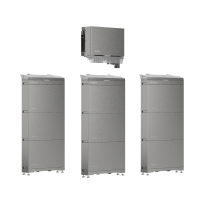
Modular sizing: Scalable systems such as the EcoFlow OCEAN 2 Plus Single Phase match today’s home loads while leaving room to expand for a future heat pump or EV.
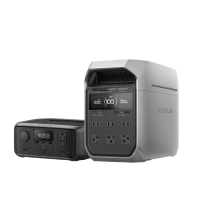
Visual energy control: Tools like the EcoFlow PowerInsight 2 track live energy flows, automate charge windows and squeeze the most from SEG export returns.
7–11 year payback: Long-lasting LiFePO4 cells deliver 6,000+ cycles (12–15 years of use), so you keep pure profit once you’ve broken even.
Why Are Electricity Prices Rising in the UK?
UK electricity bills are shaped by more than household usage. Wholesale gas prices, network costs, standing charges, and Ofgem’s quarterly price cap all affect what families pay each month.
Understanding the UK Energy Price Cap and Electricity Tariffs
Set by the energy regulator Ofgem, the Energy Price Cap governs the maximum rate suppliers can charge consumers on standard variable tariffs (SVTs) per kilowatt-hour (kWh) and standing charge. Although introduced to protect vulnerable consumers from blatant overcharging, the cap is not a ceiling on your total annual bill; your final spend depends directly on how much power you consume. When comparing electricity costs per kWh across tariffs, remember that Ofgem adjusts the cap every three months, meaning household budgeting remains subject to seasonal price changes.
How Wholesale Energy Prices Affect Household Electricity Bills
The UK’s electricity mix still leans heavily on gas-fired combined-cycle gas turbine (CCGT) stations. Under Britain’s marginal pricing mechanism, the priciest source needed to balance peak national demand sets the wholesale price for all electricity generated in that period. So even when wind farms and solar arrays are pumping out abundant clean power, household rates can stay stubbornly high because gas plants dictate the settlement price on the grid.
Why Peak-Time Electricity Use Can Increase Energy Costs
National demand spikes predictably between 4pm and 7pm, as families get home, fire up the oven, switch on the induction hob and pop the kettle on. To stop local Distribution Network Operators (DNOs) coming under strain, suppliers slap a steep premium on this high-demand window. Run a heavy-draw kit including tumble dryers, dishwashers, electric immersion heaters during those late-afternoon hours and you’ll inflate your monthly direct debit every time.

How Do Home Batteries Help Reduce Electricity Bills?
A home battery saves money by changing when your home uses grid electricity. Instead of buying power at expensive evening rates, you can use stored off-peak electricity or daytime solar generation.
Storing Cheap Off-Peak Electricity for Peak-Time Use
Smart time-of-use tariffs offer substantially cheaper electricity during off-peak windows. For battery-only or solar-plus-storage homes, tariffs like Octopus Flux (designed specifically for storage), Octopus Agile (half-hourly wholesale tracking), or traditional Economy 7 provide attractive charging windows. Households that also run an EV can access dedicated dual-fuel/EV rates such as Octopus Go or British Gas Electric Driver (typically 7p–9p/kWh overnight), allowing the home battery to charge in tandem with the car. The wider the spread between off-peak charging and evening peak rates, the greater your arbitrage savings.
Increasing Solar Self-Consumption With Battery Storage
Solar panels often produce the most power between late morning and mid-afternoon, when many homes use less electricity. Without a battery, much of that surplus may be exported at a lower rate. A solar battery storage system stores more of this daytime generation, so it can be used later for cooking, lighting, appliances, and evening routines.
Using Smart Energy Management to Optimise Battery Charging and Discharging
Battery savings come down to timing. A fixed schedule misses chances, charging from the grid before a sunny day, say, or drawing stored power too early. A dashboard like EcoFlow PowerInsight 2 helps by showing solar production, household use, battery level and grid flow in real time. Rather than waiting for the monthly bill to see what happened, homeowners can watch when the battery charges, when the home pulls from the grid and how much solar is being used on-site. That makes it easier to adjust charging windows, dodge needless peak-rate imports and judge when exporting surplus power is worth it.
How Smart Export Guarantee Payments Affect Battery Savings
The Smart Export Guarantee (SEG) pays eligible homes for low-carbon electricity exported to the grid, but rates vary widely by supplier. A battery lets you choose whether to store solar for later or export it when rates look attractive. Read the tariff terms carefully, some SEG plans limit how battery-exported electricity is treated.
How Much Money Can a Home Battery Save in the UK?
Savings vary widely from one home to another. The biggest factors are your tariff, evening electricity use, solar generation, battery size, and whether you can charge cheaply overnight.
Typical Annual Electricity Bill Savings With Home Batteries
A medium-sized UK household using roughly 3,500 to 4,000 kWh per year can realistically expect to save between £400 and £950 annually by incorporating home battery storage. The exact return depends on how aggressively you harness off-peak price differences and how much domestic solar you capture.
| Household Setup | Annual Grid Power Used | Typical Electricity Bill (Without Battery) | Estimated Bill (With Battery Storage) | Projected Annual Savings |
|---|---|---|---|---|
| Grid Only (Smart Tariff) | 3,800 kWh | ~£1,026 (at 27p/kWh flat) | ~£580 (off-peak load shifting) | £446 / year |
| Solar PV (4kWp) Only | 3,800 kWh | ~£780 (standard solar direct use) | N/A | Baseline comparison |
| Solar PV (4kWp) + 10kWh Battery | 3,800 kWh | ~£1,026 (full grid reference) | ~£250 – £350 | £676 – £776 / year |
| Solar + EV / Heat Pump (High Demand) | 7,500 kWh | ~£2,025 (at 27p/kWh flat) | ~£1,050 (solar capture + off-peak EV) | £975+ / year |
Note: Figures are indicative and based on average UK tariffs of 27p/kWh standard, 8.5p/kWh off-peak, and a 4kWp solar array.
Home Battery Savings With and Without Solar Panels
While a standalone battery provides excellent value through tariff arbitrage, combining storage with rooftop PV yields the highest financial return:
Standalone Battery: Operates purely on tariff arbitrage. You charge at cheap night rates (e.g., 8p/kWh) and displace daytime/peak purchases (e.g., 28p/kWh). Every unit of power cycled nets roughly 20p in gross savings.
Solar-Coupled Battery: Captures solar energy generated at zero marginal cost. Instead of exporting surplus solar electricity at 5p–8p/kWh and later importing electricity at 27p/kWh, a battery allows households to store more solar energy for later use. The net savings depend on the avoided import costs, the export revenue forgone and battery efficiency losses.
Example Savings Calculation Using Peak and Off-Peak Electricity Rates
Consider a typical semi-detached home drawing 10 kWh of electricity between 4:00 PM and midnight:
Without Battery: 10 kWh drawn from grid at 28p/kWh = £2.80 per evening.
With Battery (Off-Peak Charged at 8.5p/kWh): Accounting for realistic real-world AC-to-AC round-trip efficiency of ~82–85% (including inverter conversion and thermal losses), the battery requires roughly 12 kWh of grid import to deliver 10 kWh of usable power. Overnight charging cost = 12 kWh × 8.5p = £1.02 per evening.
Daily Saving: £2.80 - £1.02 = £1.78 per day.
Yearly Arbitrage Saving: Approximately £650 per year purely from shifting peak-hour consumption onto off-peak rates.
How Long Does It Take for a Home Battery to Pay for Itself?
For a professionally installed, right-sized battery system, average UK payback periods sit between 7 and 11 years. When paired with a smart tariff and solar array, payback can compress to approximately 7 to 9 years. Because modern lithium iron phosphate (LiFePO4) systems reliably operate for 12 to 15 years, households enjoy a comfortable multi-year window of net savings after recouping capital expenditure.

How to Choose the Right Home Battery for Maximum Electricity Savings
The best battery is not always the largest one. A good fit should match your daily consumption, solar output, evening load, tariff structure, and future plans such as an EV or heat pump.
Understanding Your Household Electricity Consumption
According to Ofgem benchmarks, a low-use property burns through around 1,800 kWh a year, a medium household 2,900–3,900 kWh, and high-demand homes, often with heat pumps or several occupants, top 4,300 kWh. If you’re unsure how many kWh a house uses for your household size, check your smart meter data or recent winter bills to see your average daily kWh, which sets the baseline for your storage needs.
Comparing 5kWh, 10kWh, and 15kWh Home Battery Systems
Pick the right physical capacity and you’ll neither overpay for hardware you don’t need nor run dry by 7:30pm:
5kWh battery: Best for flats or 1–2 bedroom terraced homes with modest daytime baseloads, or properties with small roof spaces (under 2.5 kWp solar).
10kWh battery: The sweet spot for a typical 3–4 bedroom UK semi. Covers evening cooking, lighting, telly and the morning routine before solar kicks in.
15kWh+ battery: Ideal for detached properties, households running an air-source heat pump, or homes charging an EV overnight while keeping plenty in reserve for the house.
Matching Battery Capacity to Solar Generation and Daily Energy Use
Battery size should match both your solar output and when your home actually uses electricity. A UK household may generate plenty of solar power around midday, especially in summer, but still need grid electricity in the evening if that surplus is exported instead of stored.
For homes with standard single-phase supplies, the EcoFlow OCEAN 2 Plus Single Phase can store surplus solar for later use and help reduce peak-rate grid imports. Its modular design also makes it easier to start with the capacity you need now, then add more storage later if you install an EV charger, heat pump, or larger solar array.
How Battery Efficiency and Usable Capacity Affect Savings
Spec sheets are worth checking carefully because the headline capacity is not always what you can actually use. Nominal capacity refers to the battery’s total internal storage, while usable capacity shows how much energy is available for daily discharge. Round-trip efficiency also matters: if a battery is rated at 90%, about 10% of the energy is lost during charging and discharging. A system with high usable capacity and strong efficiency will make better use of cheap overnight power or stored solar energy.
Choosing a Home Battery With Smart Tariff Integration and Energy Management
Modern energy savings rely on automation. The most cost-effective battery systems feature onboard software capable of communicating directly with UK smart tariffs via API integrations. A home energy ecosystem can help coordinate household energy use, solar generation and battery storage, making it easier to charge during cheaper periods and use stored electricity when grid prices rise.
Is Home Battery Storage Worth It in the UK?
Sizing up battery storage means weighing upfront installation costs against lifecycle resilience and long-term savings.
Home Battery Installation Costs and Long-Term Savings
A standard 5–10kWh residential battery install typically costs £3,500 to £7,500 fully fitted, covering an AC-coupled or hybrid inverter, electrical protection and labour. It’s a sizeable outlay, but it locks in predictable running costs and shields your budget from future price spikes.
Battery Lifespan, Maintenance, and Replacement Costs
LiFePO4 chemistry is generally more thermally stable than many older lithium-ion chemistries and is widely used for long-cycle residential storage.
In real-world use, cycling once or twice a day, a well-maintained unit lasts 12 to 15 years with virtually no routine maintenance. Inverter components may need attention or replacement around year 10, but ongoing running costs stay minimal.
Available VAT Relief and Financial Incentives for Home Batteries
Since 1 February 2024, the UK government has extended 0% VAT relief to standalone domestic battery storage and retrofitted systems, valid until 31 March 2027. Crucially, this 0% rate applies strictly to combined supply-and-installation contracts. Purchasing hardware alone via retail or online stores without installation still incurs standard 20% VAT. Having an accredited installer supply and fit the system effectively removes VAT across both hardware and labour, knocking up to £1,000–£1,500 off the total upfront cost.
When Home Battery Storage Makes Financial Sense
A domestic battery provides compelling, immediate financial returns if your property meets any of the following criteria:
You already have rooftop solar panels and export a substantial volume of unspent power back to the grid.
Your household can switch to a time-of-use smart tariff offering steep off-peak discounts.
You operate an electric car or an air-source heat pump, shifting overall household fuel spend onto your electricity bill.
You seek protection against quarterly Ofgem price cap volatility and winter peak tariffs.
Schedule Your Free Consultation Today!
What kind of product or solution are you interested in?
Conclusion
Home batteries aren’t a shortcut to free electricity, but they do make UK household energy costs more controllable. Their value comes down to simple timing: charge when power is cheaper or solar is available, then use that stored power when grid prices climb.
For households with rooftop solar, high evening usage, an EV, a heat pump or access to a strong time-of-use tariff, battery storage can meaningfully cut annual bills over time. A scalable system such as the EcoFlow OCEAN 2 Plus Single Phase helps store more solar for evening use, while EcoFlow PowerInsight 2 gives homeowners a clearer view of consumption, battery status and grid interaction. Before investing, compare your daily usage, tariff spread, export rate, installation cost and expected payback period. When those numbers stack up, a home battery becomes a practical way to trim peak-rate electricity use and shield your household budget from future price swings.
FAQs
Can a home battery reduce electricity bills without solar panels?
Yes. A home battery can cut bills noticeably without solar by working a smart time-of-use tariff. Set it to charge from the grid overnight during cheap off-peak hours (say 00:00 to 05:00), then discharge that stored power across the peak evening, and you sidestep buying electricity at standard or peak daytime rates.
How much can a 10kWh home battery save per year in the UK?
A 10kWh home battery typically saves a UK household £500 to £850 a year, depending on tariff rates and solar availability. Homes pairing a 10kWh unit with existing solar and dynamic export tariffs tend to land towards the top of that range.
Is it cheaper to charge a home battery overnight?
Yes, charging overnight is substantially cheaper if your energy supplier offers a time-of-use or dual-rate tariff. Night rates on specialist smart tariffs often drop to between 7p and 9p per kWh, compared to daytime and evening peak rates that frequently exceed 25p to 30p per kWh.
Can you charge a home battery from the grid in the UK?
Yes, UK regulations and standard Distribution Network Operator (DNO) connections fully permit charging home batteries directly from the grid. Modern AC-coupled and hybrid systems come equipped with intelligent software designed specifically to schedule grid charging during off-peak hours.
Do home batteries save money in winter?
Yes. Home batteries deliver solid savings through the winter months by leaning on cheap overnight grid tariffs rather than solar. UK solar output drops sharply between November and February, but you can still charge your battery to 100% overnight at low off-peak rates, shielding your household from high daytime peak prices right through the coldest months.
Is a home battery worth it without a smart electricity tariff?
No. A standalone battery with no solar rarely stacks up financially on a flat-rate standard variable tariff. Without a gap between day and night rates, there’s no arbitrage margin to generate savings, you need either solar PV or a time-of-use smart tariff to see a return.

