
Ground Mounted Solar Panels UK: System Types, Installation Requirements & Planning Guide
If rooftop installation is restricted due to roof orientation, shading, structural considerations or space restrictions, ground mounted solar panels offer a viable alternative. They can also be an opportunity for installers to design larger, more flexible solar arrays for customers with suitable land.
But a successful ground mounted solar panels project requires more than just selecting a frame and setting up the array. Solar exposure, ground conditions, foundations, drainage, access, planning requirements, and the property's long-term requirements should all be considered when designing the system.
This guide covers the key ground mount solar panels solutions in the UK, the site assessments installers will undertake before installation, and the planning considerations that can impact the delivery of a project. It also explores how energy storage and smart energy management can enable customers to utilise their solar system's electricity more effectively.
Understanding Ground-Mounted Solar Panel Systems
Ground mounted systems are intended to be mounted on open ground and not on the roof of a building. They can provide flexibility for installers in panel tilt, array size, and spacing, all of which are subject to the site's access and ground conditions.
Ground mounted solar panels can be a viable solution for customers who have land available, if roof space is limited or cannot achieve the desired generation potential. What is important is to evaluate the entire project context before recommending a system type.
How Ground Mounted Solar Panels Work
Solar panels that are set into the ground and supported by ground-mounted structures. The array is oriented to receiving sunlight, and the cables connect to the inverter and the electrical system.
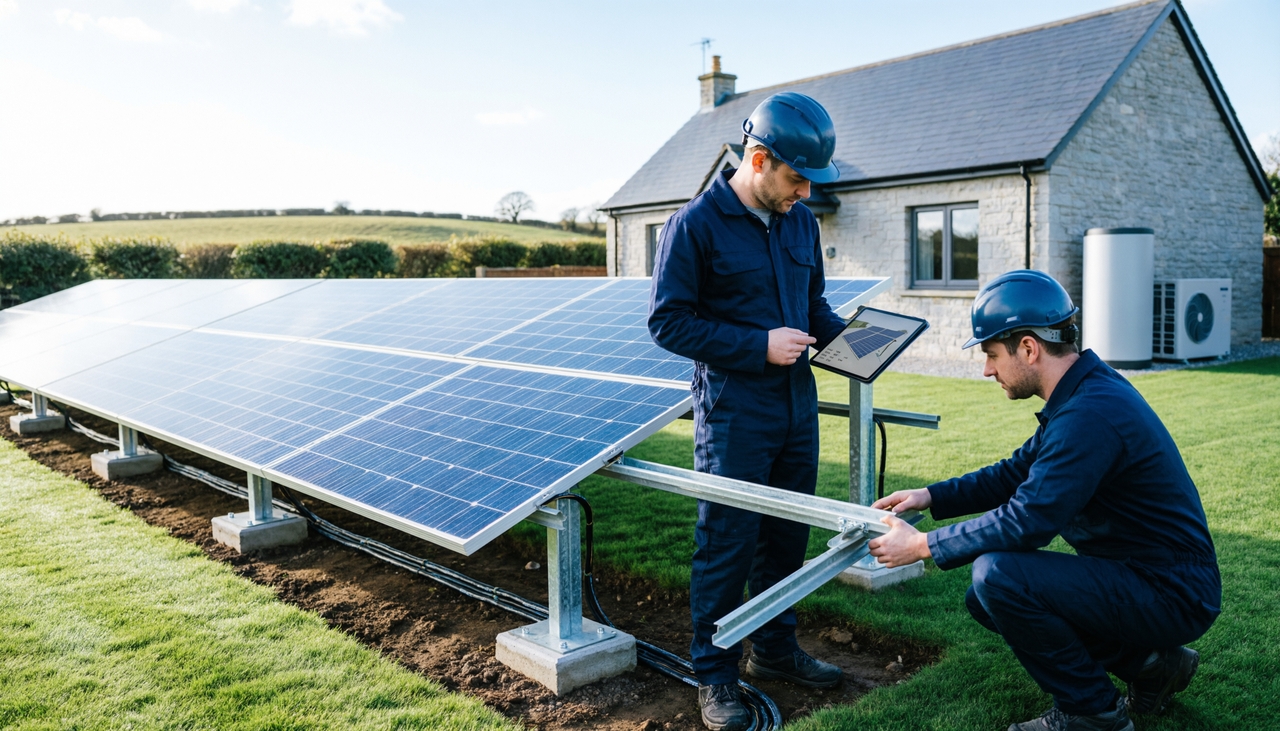
Installers can anchor the structure with driven piles, ground screws, concrete foundations or fixed frames, depending on the location. The final approach should be designed to fit the soil conditions, wind exposure, panel layout and expected size of the array.
Differences Between Ground Mount Solar Panels and Rooftop Installations
What is different is the amount of design flexibility. Where roofs do not face the right direction or are shaded, ground-mount solar panels may be installed at a more appropriate angle and orientation.
But land-based projects typically take up more site areas, more civil work, and more site planning. Another set of considerations that the installer should make is trenches, cable layout, foundations, and access requirements that may not exist in a conventional rooftop installation.
Common Uses for Ground-Mounted Solar Panel Systems
Ground mounted solar panel systems are usually considered for small commercial buildings, larger residential lots, farms and rural residences where there is available land for the system.
They may be appropriate if the customer would like a larger array than the roof will allow or if the roof is unfeasible due to shading, structure, layout, or age. They can also assist installers in maintaining a more uniform array layout on an open site.
Advantages and Limitations of a Solar Panel Ground Mount
When installing a solar panel ground mount, there may be more control over orientation, tilt, spacing and access to the panels for maintenance. Such benefits may help inform better design decisions if the land available is appropriate and doesn't pose future shading issues.
Meanwhile, systems installed on the ground could be more expensive to install, require more preparation, and may require planning considerations. Before recommending the solution, installers should consider those factors, together with expected generation, customer budget, site constraints and long term energy objectives.
Ground-Mount Solar Solutions Available in the UK Market
There are a number of ground-mount solutions available for the UK market, ranging from a simple fixed solution for a basic domestic installation to more exotic solutions for uneven terrain, constrained sites, or larger arrays. It is a question of which is the best fit for the customer, based on their land, target system size, ground conditions, and installation budget.
The most important question for installers is not just which system is available, but which mounting method best meets the structural, access and long-term maintenance needs of the project.
Fixed-Frame Ground Mounted Solar Panels
One of the most common types of solar panels used in small commercial and residential projects is a fixed-frame ground mounted solar panel. The panels are mounted at a fixed angle on a steel or aluminium framework, typically with foundations, ground screws, driven piles, or ballast, depending on the specific location.
This is a preferred method due to the simplicity of the layout and installation process, and the relatively low mechanical complexity. Fixed systems may be suitable when the site is clearly exposed to the sun, and frequent angle adjustments are not necessary.
Pole-Mounted Ground Mount Solar Panels
Pole-mounted ground mount solar panels are a type of solar panel that is mounted on a pole above the ground, allowing a smaller array to be utilised. This can be helpful when space is constrained, when the array must be mounted above vegetation or when the installer requires greater flexibility in the orientation of the array.
However, pole-mounted systems often require a special foundation design and an evaluation of wind loads. They are generally more appropriate for smaller arrays than for large, multi-row arrays, especially if soil conditions or exposure levels increase structural requirements.
Adjustable Solar Panel Ground Mount Structures
A manual solar panel ground mount is adjustable, allowing the panel angle to be adjusted at various times of the year. This can provide greater flexibility for installers to position their arrays in situations where seasonal generation patterns are more important.
Flexibility has its advantages in some locations. However, it also creates more moving parts and maintenance issues than a fixed structure. Installers will want to consider if the likely performance gain is worth the extra equipment and labour.
Solar Tracking Systems for Ground-Mounted Solar Panel Systems
Solar tracking systems are used to track the sun throughout the day. This can help to boost generation in theory, particularly on larger unobstructed sites.
However, trackers aren't always the most practical option for most domestic ground-mounted solar panel systems. They need more room, more complicated controls and more maintenance planning. Where simplicity, cost and long-term reliability are the primary considerations, fixed or adjustable structures may be more appropriate.
The selected mounting method should then be evaluated for actual site conditions, such as exposure to sunlight, soil stability, drainage, and access for mounting and maintenance.
Site Assessment Requirements Before Installation
A ground mount solution might be achievable and technically appropriate, but depends on site conditions. Installers should evaluate solar access, land stability, drainage, cable routing and installing and maintaining the array before recommending a layout.
This organised site evaluation will prevent redesign later in the project and help ensure that the chosen ground-mounted solar panel system meets the actual site conditions.
Solar Exposure and Orientation for Ground Mount Solar Panels
Unobstructed solar access is a key component of the performance of ground-mounted solar panels. Installers are expected to evaluate the site on a day-to-day basis and take into account shading present at the time of installation and any shading from future projects, trees, adjacent structures, hedges, and utility structures.
Orientation and tilt should be chosen with regard to the customer's likely generation profile, available land and system design. If a site has an open southern exposure, a simple fixed-frame layout may be appropriate, depending on the more-limited site, another layout might be preferred.
Ground Conditions and Foundations for a Solar Panel Ground Mount
A solar panel ground mount should be securely anchored to the ground beneath the structure. The selection of the driven piles, ground screws, concrete foundations, or other types of support may be dictated by soil type, compaction, slope, groundwater conditions or other factors.
Installers should also check for any irregularities on the site that may affect row alignment, structural loading, or access during construction. The use of early ground assessment ensures that the proposed mounting approach is feasible before installation works begin.
Drainage and Environmental Factors Around Solar Panel Ground Mounts
Adequate drainage is important for access, foundation integrity and the sustainability of solar panel ground mounts. Water runoff should be considered alongside the site's natural water flow, drainage channels, and the array's potential effects on water flow.
System design can also be influenced by environmental factors. For larger sites and/or rural sites, consider vegetation management, protected habitats, soil disturbance and visual impact of the installation.
Access Planning for Ground-Mounted Solar Panel Systems
Not only during the building phase but also throughout the life of ground-mounted solar panel systems, reliable access is required. Installers need to determine if equipment, materials and personnel will be able to access the site without causing unnecessary disturbance to the property.
Cable routing, inspection, cleaning, vegetation control and future maintenance should also be considered in the final layout to leave sufficient space. By planning access at the outset, it minimises problems during operation once the system has been commissioned.
Installation, Planning Permission, and Compliance Considerations
Choosing a location and mounting configuration is not the only choice. Installers should establish and verify that the proposed ground mounted solar panels project will fulfil the structure, planning, safety and access requirements for the site prior to work commencing.
In some cases, ground mounted arrays could be considered permitted development, but any limits and conditions should always be checked with the relevant local planning authority. Restrictions may be in place for stand-alone solar installations, including array size, array height, location, distance from the property boundary, property type, and the number of installations already in place.
Structural and Mounting Requirements for Ground Mount Solar Panels
The mounting system should be based on the size of the array, wind exposure, soil conditions and the type of foundation. Installers for ground mount solar panels should ensure that the frame, fixings and ground anchors are adequate for the structure loading over the span of the installation.
This includes row spacing, foundation depth, cable protection, and local weather exposure. What may appear feasible on paper could require modification once site conditions, slopes, access issues, etc., are properly evaluated.
Planning Permission Rules for Ground Mounted Solar Panels
The requirements for ground mounted solar panels planning permission will depend on the project and site. In England, some free standing domestic solar installations may be classed as permitted development if they satisfy a number of conditions. However, any larger or additional installations will require formal consent.
Installers should not take the term 'permitted development' lightly. Local rules should be confirmed prior to finalising the array layout, particularly if the proposed array is near boundaries, visible from public areas, or beyond the local rules.
Conservation Areas and Restricted Locations for Ground-Mounted Solar Panel Systems
Further controls may be imposed on projects in conservation areas, in the vicinity of listed buildings or scheduled monuments and other sensitive areas. If visual impact or landscape setting, heritage assets or local planning designations are relevant, then ground mounted solar panel systems may need closer consideration.
Discussions with the local planning authority at an early stage can help determine whether there is a need for separate consent, a planning application, or design changes. Especially for larger commercial, agricultural, or rural properties where the array is more likely to be prominent.
Safety, Accessibility, and Maintenance Requirements for a Solar Panel Ground Mount
It is important that a compliant solar panel ground mount can be safely accessed following installation and not only during construction. Secure cable routes, isolation points, equipment access, maintenance clearances, and safe working space around the array should be considered.
The final design should also take into account the use of fencing as appropriate, protection from inadvertent impacts, vegetation control and ease of access for future inspections. Integrating those details into the layout at an early stage can minimise maintenance problems and prevent changes that may be needed after commissioning.
Enhancing Ground-Mounted Solar Projects with Smart Energy Solutions
A well-placed ground mounted array can provide the installer with greater flexibility in their design in consideration of solar exposure, panel orientation and available land. That can develop a better and more reliable generation profile than a restricted rooftop configuration, on appropriate sites.
But, the value a customer gets from the system is not just a function of generation. During peak solar production, there may also be reduced demand for electricity in the house, leaving some electricity unused at the site unless it is stored or sent to appropriate electrical loads.
To this end, the installers of ground mounted solar panels need to increasingly evaluate how solar generation, storage and household consumption will interact over time. With a connected approach, customers can keep more of the electricity generated by their system and make informed decisions about future expansions.
Maximise Solar Self-Consumption with OCEAN 2 Plus Single-Phase
In larger ground mount solar panels installations, the electricity produced by the PV panels may be greater than what is used in the home during the sunniest hours of the day. Residential battery storage can help capture that surplus electricity for later use, not just in real time.
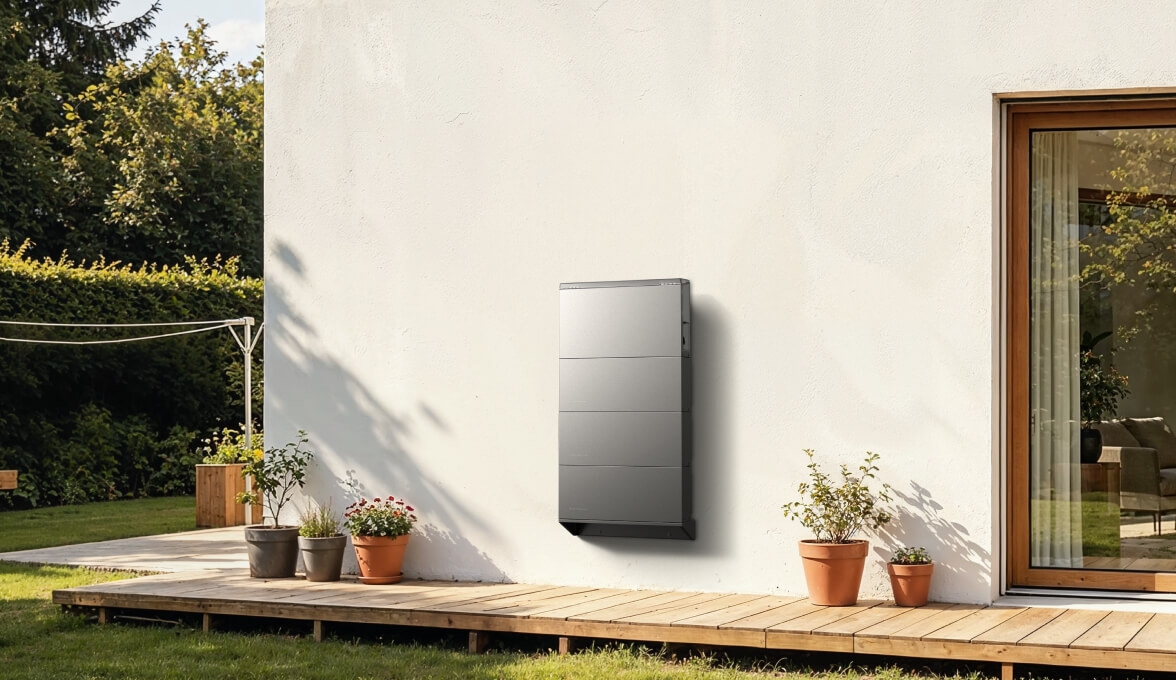
OCEAN 2 Plus Single-Phase is for residential solar battery storage and can help enable a more scalable residential energy consumption strategy. It can be used as part of a proper solar system design that enables households to consume a higher proportion of their own generation during the day and plan for their future energy needs.
For installers, this is a great opportunity to discuss storage during system design, especially if they are installing a larger array or their customers' future electricity demand may grow.
Coordinate Solar Generation with EcoFlow Intelligent HEMS
Storage is only one part of making better use of solar output. A ground-mounted solar panel system also benefits from visibility over when electricity is generated, where it is used, and how household demand changes during the day.
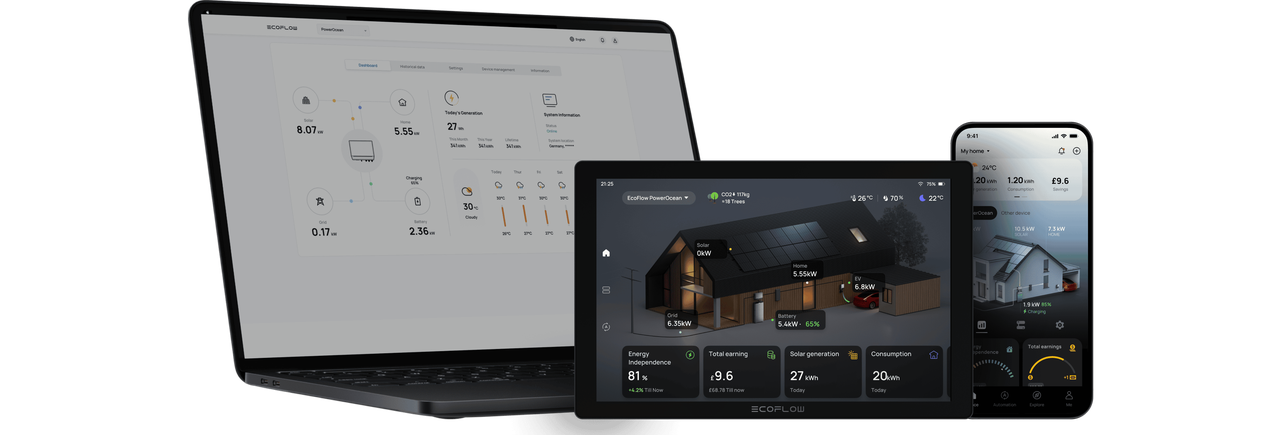
EcoFlow Intelligent HEMS enables whole-home energy management by monitoring, scheduling, and coordinating among connected devices. It can provide customers with informed choices of the energy they have available to them, used for solar generation, home consumption, and storage, to make more informed decisions.
For installers, considering energy management in the broader system discussion can help take a project beyond just panels to a more integrated, long-term energy planning approach.
Schedule Your Free Consultation Today!
What kind of product or solution are you interested in?
Conclusion
Ground mounted solar panels can be a compelling option when customers have adequate land, restricted roof space, or flexible options when it comes to the layout of their solar array. The ideal result for installers is to select the installation method that is appropriate for the solar exposure, site constraints, drainage and access needs, and planning location.
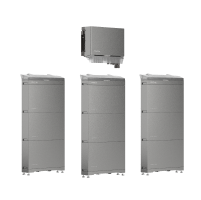
If a project is to be successful, it is important that it be designed to be more than a ground mounted array. Combined with solutions like EcoFlow OCEAN 2 Plus Single-Phase and EcoFlow Intelligent HEMS, this helps customers store more surplus energy, get better visibility into energy usage, and create a future-proof system to handle future household demands.
With a broader approach to energy management and careful site assessment, installers can deliver ground-mounted solar panel systems that are viable, scalable and long-lasting.
FAQs
Which ground-mount solar system is most commonly used in the UK?
Fixed-frame ground mounted solar panels are typically the most prevalent type of solar panel system for smaller residential and commercial applications. They are simple, have a predictable installation process, and are less mechanically complicated than tracking systems.
For many sites, a fixed-tilt design provides a sensible balance among generation potential, installation cost, and long-term maintenance needs.
How much land is required for a ground-mounted solar installation?
For ground mount solar panels, the land size depends on the number of panels, size of panels, tilt angle of panels, spacing between rows of panels, and the access space surrounding the array.
Installers need to allow for more than just the panel footprint, such as:
Space between rows to reduce self-shading.
Access routes for installation, inspections, and maintenance.
Maintain clear areas for cable runs, drainage and vegetation control.
A site layout should be provided as part of a complete system design, not simply a panel-area calculation. This prevents overcrowding and allows for ease of access when the system is in use.
Can ground-mounted solar systems generate more electricity than rooftop systems?
In some cases, yes. A ground mounted solar panel system may provide more flexibility for orientation, tilt and spacing for the installer than a rooftop system.
But, more output is not necessarily guaranteed. But the current generation will depend on local sunlight, shading, array size, selected equipment, and the quality of the site assessment prior to installation.
Can ground-mounted solar panels be installed on uneven terrain?
Yes, but uneven ground can make the project more complex. A solar panel ground mount may need adjusted foundations, stepped rows, revised support heights, or additional ground preparation to keep the structure level and stable.
This will depend on the extent of the slope, soil conditions, drainage, and if access for safe construction and maintenance of the site is still available.
Can ground-mounted solar panels be combined with battery storage systems?
Yes, when paired with home battery storage, ground-mounted solar panels can help customers retain more of the electricity they produce during the day to utilise throughout the day or into the evening.
Installers should take into account before making any storage recommendations:
Expected solar generation and seasonal output.
Typical household electricity demand and peak-use periods.
Potential future loads, such as EV charging or electric heating.
This broader analysis will determine if storage should be sized for current demand and/or future energy needs.
How does a home energy management system improve solar self-consumption?
A home energy management system enables customers to visualise their solar power generation, storage and utilisation throughout the house. This visibility can help ground-mounted solar panel systems make the most of surpluses when they occur and where they can be used.
Systems like EcoFlow Intelligent HEMS can help optimise energy-use decisions and planning by tracking household demand and managing related energy assets. This makes the powerful solar array more of a family energy system.

