
Green Energy Solutions for Homes: Solar, Storage, and Smarter Electricity Use
Green energy solutions are changing the way we generate, store, and manage electricity. What’s causing this shift is the increasing utility bills. Also, grid outages are disrupting home offices, automated heating, and other important daily routines, leading in financial losses.
Green energy solutions, such as solar panels generate clean electricity and battery storage solutions help store generated energy for later use. Pair these two with a smart monitoring software, you can automate decisions that would require hours of manual tariff checking. With these, you have a total architecture of green energy solutions that can reduce your reliance on the national grid and increase your electricity cost savings.
Understanding the Urgent Pain Points in Home Energy Management
Most homeowners aren't losing money through bad decisions. They're stuck in a supply model that was never designed with their interests in mind—which is precisely why green solutions are gaining serious traction, and why fully integrated green energy solutions are fast becoming the benchmark for forward-thinking households.
The Financial Burden of Skyrocketing Grid Electricity Costs
The unit cost of grid electricity in the UK more than doubled between 2021 and 2024. Time-of-use (TOU) tariffs—pricing structures that apply a premium during peak demand hours, typically 4 pm to 9 pm—mean passive consumers routinely pay the highest possible rate for electricity they could, in theory, be producing themselves.
Ofgem adjusts energy price cap quarterly which means that standing charges and unit rates can change without notice. If you cannot predict the price, it means you can’t budget for the long-term. Also, if your household has heat pumps, EV chargers, or home offices, this unpredictability can cause you a lot of financial losses, and this is exactly what green energy solutions are designed to solve.
Vulnerability to Frequent Grid Instability and Outages
The UK’s electricity infrastructure dates back to the 1960s and 70s. The system still has aging substations which are easily affected by extreme weather events, such as storm surges, prolonged frost periods, and summer heat waves which can result in unplanned outages.
If you work from home or from a remote location, a two-hour blackout can affect your productivity. Such a blackout can also disable automated HVAC systems and create genuine safety risks for households with electrically powered medical equipment.
The Inefficiency of Traditional Solar Setups Without Battery Backup
Solar panels alone do not provide power during a grid failure. Most grid-tied solar inverters shut off automatically when the grid goes down—a legally mandated safety mechanism to prevent live current backfeeding to engineers working on downed lines.
Another inefficiency that traditional solar setups bring about is that solar generation is at peak during midday. During this time, household consumption is usually at its lowest. Without proper storage solutions, the surplus energy generated during this time is exported directly to the grid at low feed-in rates. And in the evening, you have also to import back electricity to power your house when grid electricity is more expensive. And this is despite having generated more than enough hours earlier.
The Critical Role of Reliable Green Power Solutions
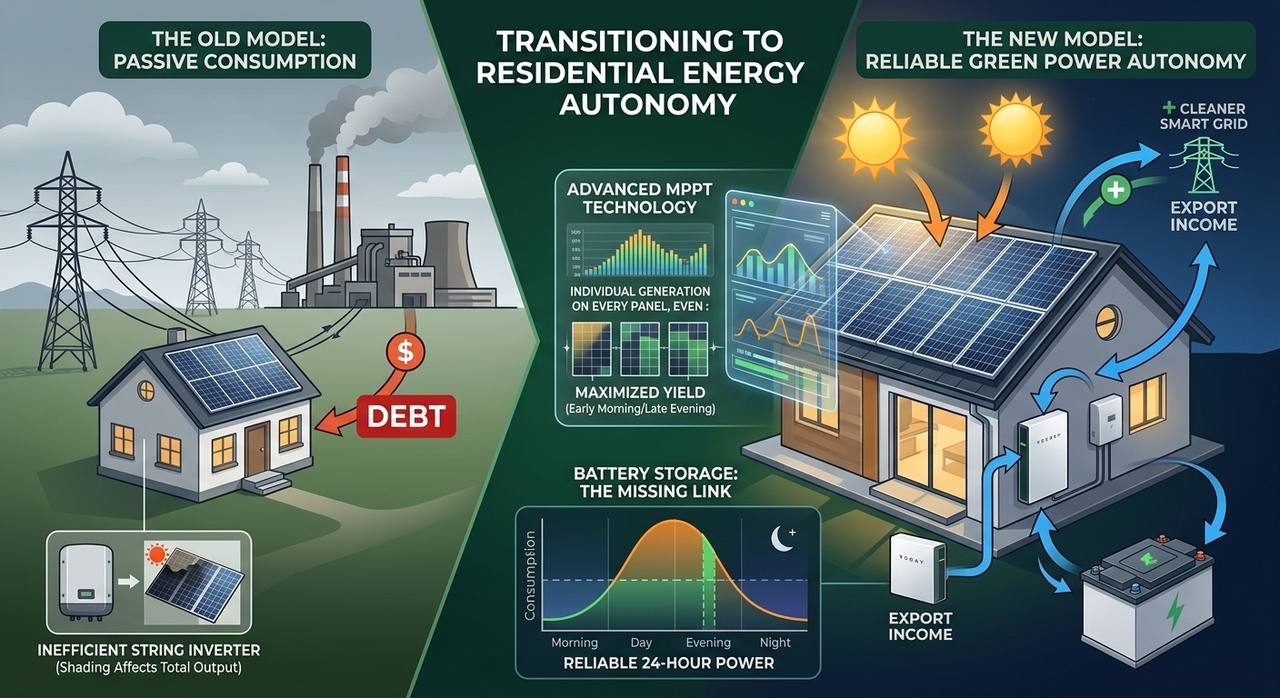
Green power solutions close the gap between passive energy consumer and active energy producer. That shift changes more than just bills—it fundamentally alters a household's entire relationship with electricity supply.
Transitioning from Passive Consumption to Self-Generation
In the standard grid model, you are positioned as a perpetual buyer. Green power solutions change this dynamic. If you have solar panels and solar battery storage, you generate electricity during daylight, store surplus, and use the reserve throughout the evening and overnight. On days when there is a lot of sunlight, the generation increases, and you can feed back the surplus energy to the grid and earn export income. This results in lower import volumes with a meaningful hedge against future rate increase.
Capturing Maximum Clean Power with Advanced Solar Harvesting
Roof orientation, pitch angle, and shading from nearby structures all affect actual versus theoretical solar output. Legacy single-string inverter setups treat an entire array as one unit—meaning a single shaded panel drags down every other panel on the string.
Use modern Maximum Power Point Tracker (MPPT) technology to independently manage each string. In most traditional setups, early morning and late afternoon are usually considered as negligible generation windows. However, when you deploy MPPT correctly, these windows can contribute meaningful rates to daily totals.
Why Storage is the Missing Link in Residential Energy Autonomy
Having solar panels without storage is a partial solution to your energy requirements. Modern battery storage solutions help store excess energy generated for later use when there is no sun, turning this into a reliable 24-hour asset. This architecture is what changes green energy solutions from a useful upgrade to a self-sufficient system.
Maximising Household Efficiency with Green Home Energy Solutions
Effective green energy solutions aren't solely about generation. Green home energy solutions must equally address the hidden waste that inflates bills silently—month after month, appliance by appliance—to deliver savings that actually register on your statement.
Eliminating Waste During Off-Peak and Standby Hours
Standby loads in routers, televisions in sleep mode, and kitchen appliances sitting idle continuously consume power. This may seem like little power consumption, but if you combine it and compound over a year, the consumption becomes significant. The Energy Saving Trust estimates that standby consumption is up to 10–15% of an average household's electricity use per year. Smart green energy solutions address this by monitoring circuits in real time and by shifting loads to the cheapest hours of the day, which typically are the overnight hours.
Navigating Complex Roof Configurations for Optimal Output
Legacy solar designs are built on the assumption that homes have simple south-facing pitched roofs. However, modern homes come with split-level roofs, flat sections, and east-west split orientations. This brings in a challenge for systems built around a single MPPT input.
Modern inverters come with dual or multi-MPPT configurations to solve this problem. They treat each distinct roof section as an independent generation source and in return deliver higher yields on architecturally complex properties.
Scaling Residential Power Capabilities Safely and Durably
LiFePO4 (lithium iron phosphate) battery chemistry is the current industry benchmark for residential storage. Its thermal stability—considerably superior to standard lithium-ion chemistries—handles high ambient temperatures and repeated deep charge-discharge cycles without the degradation that limits lesser alternatives.
Premium systems come with cellular-level thermal protection with lifecycle ratings of over 6000 cycles. This is over 15 years of daily use under normal operating conditions. These systems also include modular designs which allow capacity to grow with your household demand, such as accommodating an additional EV or integrating a new heat pump.
Embracing Smart Technology for Sustainable Green House Energy Solutions
Green house energy solutions become substantially more powerful when guided by intelligent software. The best green energy solutions pair hardware capability with predictive automation—and that combination is what separates a genuinely optimised system from one that simply exists on a rooftop.
Leveraging Dynamic Tariffs and Time-of-Use Savings
UK energy suppliers, such as Octopus Energy, offer agile tariffs. Here, energy rates fluctuate hourly based on the national grid demand. For example, at off-peak times, the rates can drop to near zero and sometimes even go negative.
Smart green house energy solutions are built to integrate with these tariff signals. They set your battery storage to charge when the prices are lowest. They also set your household to use the stored power when energy rates spike. And all this is done automatically without your manual intervention.
Predictive Forecasting for Solar Generation and Consumption
Smart HEMS (Home Energy Management Systems) ingest live local weather data to project solar generation over the following 24–48 hours. If overcast conditions are forecast, the system charges from cheap overnight grid electricity to compensate. If high generation is predicted, it reserves battery capacity to absorb surplus—rather than exporting it at a lower rate—ensuring a reliable buffer for overnight use and unexpected grid outages.
Creating a Unified and Intelligent Home Energy Ecosystem
Buying devices from separate manufacturers brings about the problem of fragmented devices which creates unnecessary complexity and missed optimisation opportunities. Modern green energy solutions come with open communication standards, such as Modbus, CAN bus, and API-based integrations. This allows you to connect all your household appliances, such as solar arrays, battery banks, EV chargers, and HVAC systems, enabling them to operate as a single coordinated home energy ecosystem. The solutions give you one interface with complete visibility and you don’t need to switch between disconnected apps to run your household.
Implementing the Best Green Energy Solutions for Long-Term Autonomy
Identifying the best green energy solutions for a UK household means matching proven hardware to real-world conditions—and ensuring both the storage and management layers are genuinely fit for purpose.
High-Performance Single-Phase Battery Storage Solutions
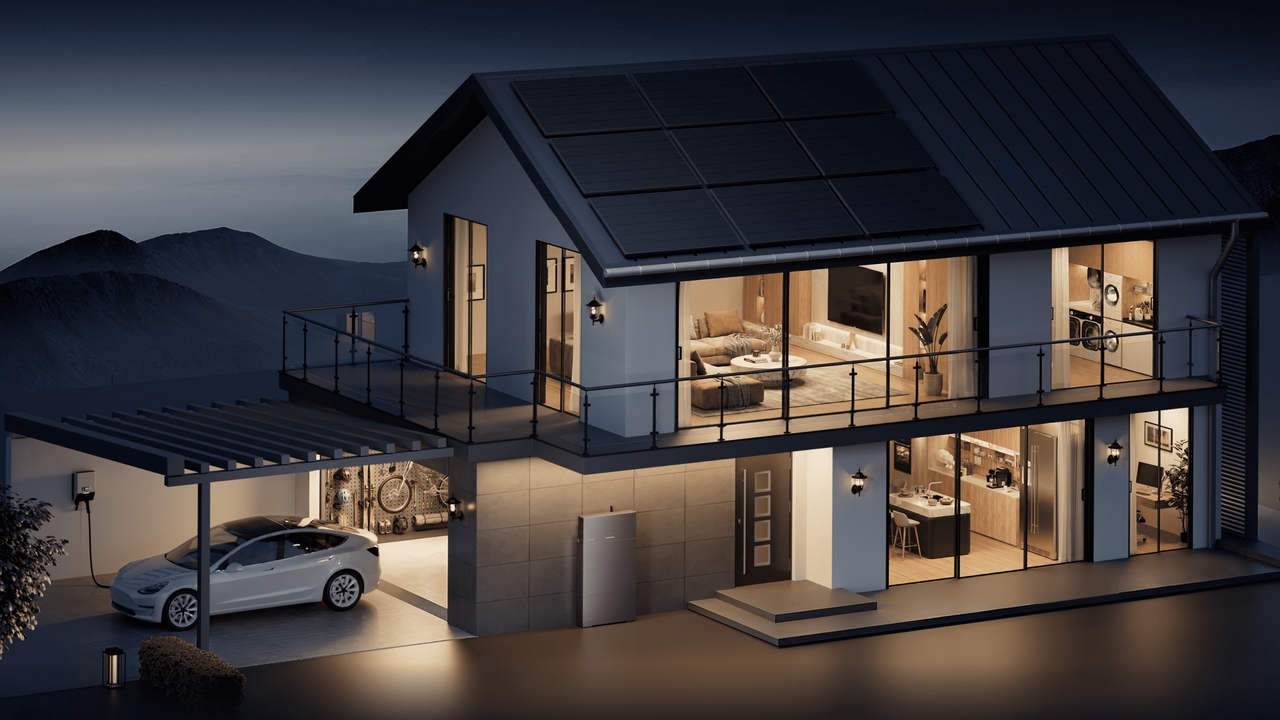
The EcoFlow OCEAN 2 Single-Phase Home Battery directly addresses the storage challenges explored throughout this article.
Its LiFePO4 cell chemistry delivers the thermal stability and deep-cycle durability that residential green energy solutions demand—rated for over 6,000 charge cycles, equivalent to more than 15 years of daily use. Crucially, its backup capability ensures stored solar energy remains accessible during a complete grid failure—resolving the single biggest weakness in standard grid-tied setups, where stored energy becomes inaccessible the moment the grid drops.
The system has a high bypass capacity for supporting heavy-load appliances, such as heat pumps, EV chargers, and induction hobs. It also has a modular architecture which means that you can expand the capacity to match your growing household energy needs without replacing the core system.
Smart Energy Management for Optimised Solar Performance
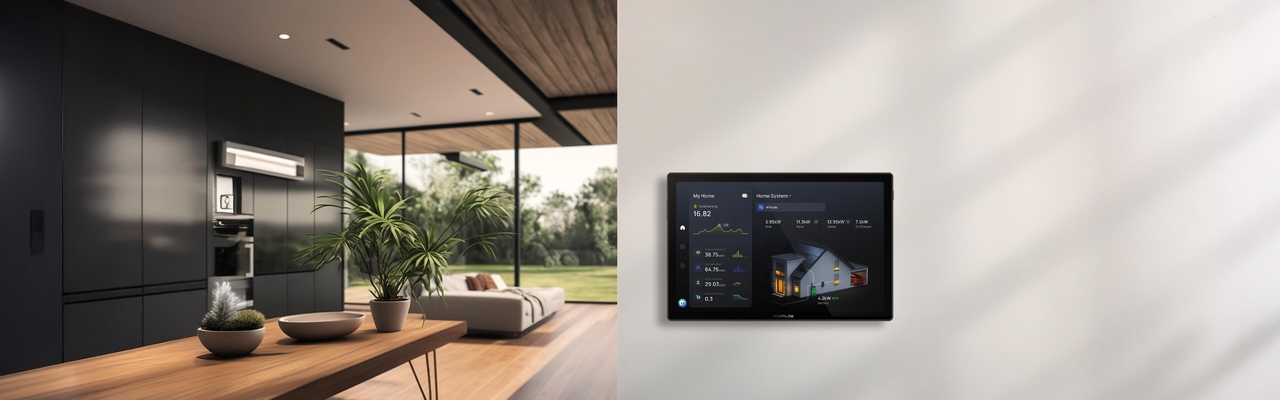
Modern homes are built using intelligent oversight. You can have the best hardware, but without having a way to control its operations, you won’t get the expected ROI from your setup. And that’s precisely what the EcoFlow PowerInsight 2 Home Energy Monitor is designed to address. This system transforms raw generation and consumption data into automated decisions that lower energy bills directly.
Compatible with EcoFlow hardware and third-party systems alike, it provides circuit-level monitoring, live tariff tracking, and automated price-arbitrage logic—demonstrated to achieve up to 77.6% savings on electricity costs in optimised configurations. For households where green energy solutions are already in place but bills have stubbornly refused to fall, this monitoring layer is frequently where the problem—and its resolution—lies. It detects waste, forecasts generation, and ensures battery charging always occurs at the cheapest available rate. Automatically. No spreadsheets required.
Conclusion
If you are looking to lower energy bills, get complete independence from the grid, and have the ability to actually predict your household energy consumption costs, green energy solutions are a must-have. Passive grid reliance is expensive and structurally fragile. And implementing solar without storage, you can’t achieve this objective. Implementing a complete ecosystem with LiFePO4 battery storage, predictive management software, and circuit level monitoring, addresses all the three weaknesses at once. The best green energy solutions help reduce costs and insulate you against future rate rises and grid disruptions.
EcoFlow is the home for modern green energy solutions. We provide a range of solutions, such as the OCEAN 2 Single-Phase Battery and PowerInsight 2 Monitor, for building energy efficient homes. You can explore our website to view our full range of products that can give you back control of your home’s energy today.
Schedule Your Free Consultation Today!
What kind of product or solution are you interested in?

Green Energy Solutions Frequently Asked Questions
What is the difference between standard solar setups and a complete green home energy storage solution?
Standard solar arrays are standalone systems that don’t have storage. They supply surplus power to the grid but shut down automatically during outages to prevent backfeeding. On the other hand, a complete home storage solution incorporates solar arrays and battery storage for capturing energy locally. These solutions allow you to use the stored power overnight and maintain full operations throughout a grid failure. The system only feeds back to the system when there is surplus energy.
How do intelligent home energy management systems (HEMS) lower electricity bills automatically?
A smart HEMS integrates directly with dynamic time-of-use tariffs. It identifies when grid rates are at their lowest, charges your battery accordingly, and automatically switches household loads to stored power when rates spike—delivering maximum financial return without any manual input from the homeowner.
Can single-phase solar storage systems handle high-demand appliances like EV chargers and heat pumps?
Yes. Today's single phase systems with high bypass capacities and scalability provide consistent, substantial power output, enabling high power appliances, EV charging, heat pumps and household applications to operate concurrently without impact to system performance.

