
The Complete Roadmap to Creating Energy Efficient Homes
Energy efficient homes are no longer a premium feature of newly built developments—they are, right now, the most effective financial hedge a property owner can make. UK energy tariffs have climbed sharply over the past three years, and the average household is feeling it. Yet most properties still shed heat through draughty frames, run appliances a decade past their efficiency prime, and have zero visibility into which circuits are draining the most power.
Energy efficient homes is a topic that’s both an environmental conversation and a financial one. Energy efficient homes bring in a balance between three key systems, including structural thermal performance, intelligent appliance selection, and automated hardware infrastructure. If you get all three right, you can minimize your energy bills and insulate yourself against each future tariff hike.
This guide looks at:
Why traditional properties are struggling with efficient home energy management
How to make your home more energy efficient
How to use intelligence for smart home energy efficiency
How to use modern home energy solutions to optimise your financial returns and lower energy bills
Why Traditional Properties Struggle with Efficient Home Energy Management
Efficient home energy management is the discipline of controlling, optimising, and reducing the power a household consumes across every circuit, appliance, and behavioural pattern—and traditional British properties were simply never designed for it. The structural, electrical, and informational gaps built into older homes create a compounding set of drains that no single fix can resolve.
The Costly Reality of Structural Thermal Insulation Breaches
Older homes lose heat constantly, which is both costly and unnecessary. Drafty sash windows, poorly insulated loft spaces, and unsealed gaps around pipes and floors force boilers and heat pumps to work harder than needed. The Energy Saving Trust states that heat loss through uninsulated walls and roofs can account for up to 35% of a home's total thermal costs. And this inefficiency is something that is preventable.
The Operational Burden of Outdated Electrical Distribution Setups
Legacy wiring architectures—particularly those using older fuse boards rather than modern consumer units—introduce minor but continuous impedance losses across circuits. More critically, they limit a property's capacity to safely integrate renewable energy profiles: solar PV arrays, EV charge points, and solar battery storage systems all require a distribution infrastructure that many older homes simply don't have. Without an updated setup, even the most advanced energy efficient homes technology operates well below its potential.
The Inability to Trace and Quantify Daily Power Consumption
Here's where efficient home energy management breaks down entirely for most households: the monthly utility bill arrives, it's higher than expected, and there's no way to know why. Was it the old chest freezer in the garage? The tumble dryer running every other day? Nobody knows—and guessing is expensive. True home energy efficiency starts with measurement. Not estimation, not retrospective billing reviews—live, circuit-level measurement.
Practical Blueprints on How to Make Your Home More Energy Efficient
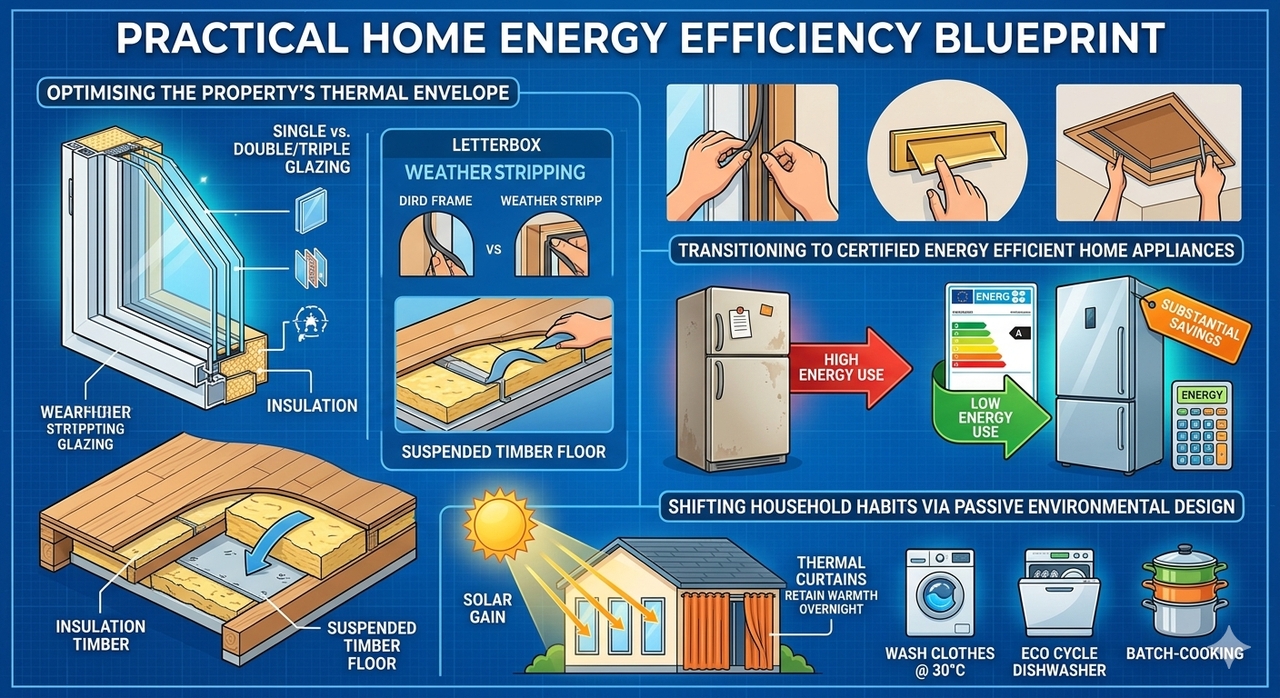
Understanding how to make your home more energy efficient is, for most homeowners, the point at which theory collides with budgets and competing priorities. The highest-return modifications are rarely the most invasive ones—and most can be sequenced without gutting the property.
Optimising the Property's Thermal Envelope Through Strategic Sealing
Start with the envelope. Double or triple glazing retrofits deliver a meaningful return—the Energy Saving Trust estimates upgrading from single to double glazing can save a semi-detached home between £110 and £135 per year before any other changes. Draught-proofing around doors, letterboxes, and loft hatches is cheaper still. Underfloor insulation—particularly in properties with suspended timber floors—eliminates one of the most overlooked sources of cold infiltration. These aren't glamorous upgrades. But they form the structural foundation of genuine home energy efficiency.
Transitioning to Certified Energy Efficient Home Appliances
One of the major consumers of energy in a household is old appliances. For example, a 2005 refrigerator can consume up to three times electricity than a modern A-rated refrigerator. Energy efficient home appliances have an A or B rating in the current UK energy system. These appliances consume less power and therefore lowers your household daily energy consumption rates. If you compound this reduction in consumption across the entire year, the savings are substantial. To check on how much energy efficient home appliances can save you, use our energy calculator now.
Shifting Household Habits via Passive Environmental Design
Passive design involves using your household’s orientation and thermal mass to gain energy efficiency. For example, if you have south-facing rooms, make them the primary living spaces. This means that during daylight, you will be maximizing free solar gain and closing thermal curtains at dusk can help retain that warmth overnight.
Other simple shifts in behavior, such as washing your clothes at 30°C, running the dishwasher on eco cycles, and batch-cooking to reduce oven use provide measurable reductions in home energy efficiency costs without any capital investment whatsoever.
Leveraging Intelligence for Smart Home Energy Efficiency
Smart home energy efficiency is the integration of connected hardware, automated software, and real-time behavioural data to actively manage a property's power profile—not merely log it after the fact. This is where reactive households become proactive ones.
Eradicating Phantom Loads via Intelligent Circuit Automation
The average UK household wastes about £147 per year on standby power (appliances that are not active but are connected to your electric outlets). To avoid this, implement smart plugs and automated power strips. You can also schedule circuits to deactivate automatically during sleeping hours, or when your household is empty. Forming this as the foundation for your smart home energy efficiency strategy can deliver great results, eliminating power wastage even before you start optimising.
Capitalising Automatically on Dynamic Time-of-Use Electricity Tariffs
Time-of-Use (ToU) tariffs—offered by providers such as Octopus Energy under their Agile tariff—vary electricity pricing throughout the day based on grid demand. During off-peak energy windows, typically overnight between 00:00 and 07:00, rates can drop to a fraction of peak pricing. Shifting energy-intensive operations to these windows—EV charging, dishwasher cycles, hot water immersion heating—significantly reduces monthly bills without reducing comfort. For households with battery storage, this entire process becomes automated.
Note: Check Ofgem official website to get the updated energy costs both for peak and off-peak durations
Moving from Reactive Bill Tracking to Predictive Energy Management
There is a big difference between reviewing what you spent on energy last month and actively managing what you are spending right now. Use predictive energy management to identify load spikes as they occur in real-time. With these home energy ecosystem solutions, you know exactly the amount of energy each appliance in your household is consuming at what time. This gives you the power to act immediately and optimise your energy consumption, and this is what separates genuine smart home energy efficiency from simple consumption tracking.
Optimising Financial Returns with Modern Home Energy Technology
Modern energy efficient homes don't just reduce consumption—they actively store and deploy power intelligently, protecting homeowners against every variable the grid introduces.
Scalable Battery Storage Solutions for Single-Phase Residential Power Systems with the EcoFlow OCEAN 2 Single-Phase
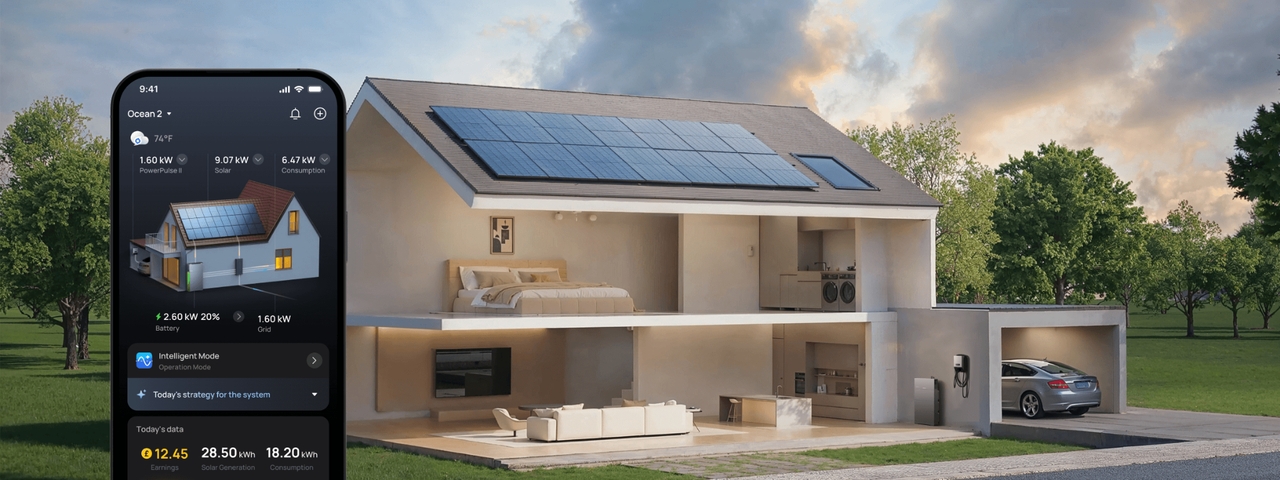
One of the most costly vulnerabilities in any residential property is total grid dependency. When tariffs spike during peak hours—or when supply is disrupted—households without storage have no recourse. The EcoFlow OCEAN 2 Single-Phase Home Battery addresses this directly. The system has a SmartEarning mode for reducing electricity bills and optimizing solar energy generation. The system ensures the battery is charged during off-peak hours and discharged during peak hours, lowering your monthly electricity bills. Implementing this system is a step to creating energy efficient homes that reduces grid power reliance. This system also ensures you have complete financial control over your utility usage, maximizing long-term savings and return on investment.
Centralised Visual Dashboards for Complete Ecosystem Orchestration Using the EcoFlow PowerInsight 2 Monitor

The best strategy for optimising financial returns using modern home energy technology is eliminating waste and maximizing investment returns. The EcoFlow PowerInsight 2 Home Energy Monitor delivers total visibility over your solar generation and household power consumption. The system identifies expensive peak usage habits and streamlines your daily electricity allocation, creating energy efficient homes. The EcoFlow PowerInsight 2 allows you to convert real-time data into actionable savings, helping reduce your monthly energy bills and gain long-term economic benefits.
Conclusion
Converting a standard property into one of the truly energy efficient homes requires a layered approach: fix the structure first, modernise the appliances, automate the management, and deploy intelligent storage to shield against a grid you can no longer afford to trust blindly. From sealing the thermal envelope to deploying real-time monitoring and scalable LiFePO4 battery storage, every upgrade compounds on the last—building a household that becomes progressively less exposed to volatile energy markets and progressively more in control of its own financial future.
At EcoFlow, the technology to make this transition a reality is already available for standard British residential properties. The OCEAN 2 Single-Phase Home Battery and PowerInsight 2 Home Energy Monitor are engineered specifically for UK single-phase homes—delivering the storage capacity and circuit-level visibility that energy efficient homes demand. Whether you're at the very beginning of your energy efficiency journey or ready to close the final loop with integrated storage and live monitoring, EcoFlow's range provides a clear, scalable path forward. Explore the full EcoFlow range today and take the first step towards a home that works for your finances—not against them.
Schedule Your Free Consultation Today!
What kind of product or solution are you interested in?

Energy Efficient Homes Frequently Asked Questions
How much utility cost can realistically be cut by transitioning to energy efficient homes?
By executing a holistic approach—upgrading to verified energy efficient home appliances, maximising structural insulation, and deploying smart battery storage systems to shift consumption away from peak tariff windows—homeowners frequently report utility bill reductions of up to 70% or more, depending on baseline household usage and solar array sizes.
What are the fastest first steps to take when figuring out how to make your home more energy efficient?
Start the process with a low-barrier, high-impact assessment. The first step is locating and sealing air leaks around doors, windows, and loft hatches to solidify your home's thermal envelope. Then, introduce smart plugs on standby devices to eliminate phantom electricity loads. Finally, implement live, circuit-level monitoring solutions that can help identify and eliminate heavy energy drains before investing in larger structural upgrades.
How does smart home energy efficiency shield households from fluctuating dynamic electricity rates?
Dynamic electricity tariffs charge different rates throughout the day based on wholesale grid demand. Advanced smart home energy efficiency hardware utilises integrated Home Energy Management Systems (HEMS) to monitor live rate feeds. It automatically instructs your home battery to charge from the grid when electricity rates drop to their lowest—typically overnight—and discharge that stored power to run your household during expensive peak pricing hours.

