
Can You Install a Solar Battery in a Loft?
Installing a solar battery in a loft is generally not recommended in the UK. Under PAS 63100:2024, domestic battery energy storage systems (BESS) should not be placed in lofts, attics, or primary escape routes, due to fire safety and accessibility concerns. Lofts also present temperature swings, poor ventilation, structural load challenges, and servicing difficulties.
An unused loft might look like a convenient spot, especially in tighter UK homes, but it's rarely a sensible place for a high‑capacity solar battery. This guide runs through the key regulations, the risks of loft installation, and safer alternatives for siting your home battery system.
Key Takeaways
Safety First: UK guidance under PAS 63100 restricts domestic battery installations in habitable roof voids and lofts. The concern? Thermal runaway and fire escape risks.
Temperature Extremes: Uninsulated roof spaces swing from below 0°C in winter to over 45°C in summer. That's tough on lithium batteries – it shortens their lifespan and can trigger safety shutdowns.
Structural & Practical Roadblocks: Modern solar batteries weigh anywhere from 45 kg to over 120 kg. That's a serious load on ceiling joists, and a logistical headache for service engineers who need to get at them.
Better Alternatives: Ground‑floor utility rooms, integrated garages, or sheltered external walls with IP‑rated enclosures are far better choices. They give you better airflow, more stable temperatures, and easier access – all while keeping you on the right side of compliance.
Why Are Lofts Not Recommended for Solar Battery Installation?
You might think shoving the battery up in the loft is a handy way to keep it out of the way. But the truth is, it’s a pretty rough environment for that kind of gear. Three main things make it a bad idea:
UK Safety Regulations Prohibit Loft Installations
PAS 63100:2024, published by the British Standards Institution (BSI), sets out clear fire safety and installation rules for domestic battery energy storage systems. It specifically classes roof spaces, lofts, and primary escape routes as no‑go zones for battery placement.
Now, PAS standards are industry best practice. But certified installers, including those accredited under MCS, are required to follow them. And for good reason: if something does go wrong, toxic fumes and heat rise fast. Having a high‑capacity battery sitting directly above where people sleep creates a serious evacuation risk. Install a battery in breach of PAS 63100, and you could fail building sign‑offs, void your home insurance, and run into problems when you come to sell the place.
Loft Temperatures Affect Battery Performance
Most home solar batteries use lithium iron phosphate (LiFePO₄) cells, which perform optimally within a steady temperature range, ideally around 15°C to 25°C. Lofts, however, are subject to wide fluctuations. In summer, loft temperatures can rise significantly – particularly during a UK heatwave – and excessive heat accelerates cell degradation, while the Battery Management System (BMS) may reduce output to protect the internal components.
In winter, an unheated loft can drop below freezing, and charging lithium batteries under such conditions may cause permanent damage. In fact, the system may refuse to charge at all until the internal temperature rises to a safe operating level. Over time, these repeated thermal stresses can shorten the usable lifespan of the battery.
Loft Access Makes Maintenance Difficult
Hauling a 60 to 100 kilogram battery pack up through a tiny loft hatch on a pull‑down ladder is an installer’s worst nightmare and a health‑and‑safety breach to boot. Standard ceiling joists aren’t designed for that kind of weight; they’re built to hold up plasterboard and a few boxes of Christmas decorations, not a chunk of heavy electrical hardware. And if something goes wrong down the track, technicians will often flat‑out refuse to work in a loft that’s a pain to get into.
Where Should You Install a Solar Battery Instead?
The best spot for your battery is somewhere that stays at a steady temperature, gets decent airflow, and is easy for installers and maintenance techs to get to.
Garage
An attached or integrated garage is widely seen as the gold standard for home battery placement. You’ve got a concrete floor, so no worries about weight. Vehicle access makes delivery and mounting a whole lot easier. And garages tend to stay cooler in summer than upstairs spaces. Just make sure the unit’s mounted out of the way of car doors and bumpers, and shield it from harsh winter drafts.
Utility Room
Ground‑floor utility rooms are another great option. They’re clean, temperature‑controlled, and keep your battery running at its best all year round. The catch? You’ve already got washing machines, dryers, and consumer units in there, so you need a system that’s compact and adaptable.
Modern units like the EcoFlow OCEAN 2 Plus Single Phase are built with exactly that in mind. Its sleek, modular design lets you go floor‑standing or wall‑mounted, so you can work it around existing pipework and cabinetry without eating up valuable floor space.
Outdoor Enclosure
When you’re tight on space indoors, putting the battery outside on a sheltered north‑ or east‑facing brick wall can work well. But PAS 63100 has some clear rules to follow: the unit needs to be at least 1 metre away from doors, openable ground‑floor windows, vents, and escape routes. And never mount it directly below a bedroom window.
On top of that, make sure the kit has an ingress protection rating of at least IP65 (IP66 if you can get it) to cope with driving rain. And look for a system with built‑in thermal self‑heating, so charging doesn’t grind to a halt on freezing winter nights.
Location Comparison at a Glance
| Location | Temperature Stability | Ease of Access | Installation Complexity | PAS 63100 Compliant? |
|---|---|---|---|---|
| Loft / Attic | Very Poor (Extreme heat/cold) | Difficult (Hatch/ladder) | High (Weight & fire risks) | No |
| Integrated Garage | Good (Moderate year-round) | Excellent (Ground level) | Low (Solid walls & floors) | Yes |
| Utility Room | Optimal (Heated living envelope) | High (Easy monitoring) | Moderate (Space planning) | Yes |
| Outdoor Wall | Moderate (Requires IP65 & shade) | High (External access) | Moderate (Weatherproofing) | Yes |
What Should You Consider Before Installing a Solar Battery?
Sorting out the installation location upfront saves you from costly changes down the track and helps make sure the system runs safely for its full 10‑to‑15‑year lifespan.
Check Available Installation Space
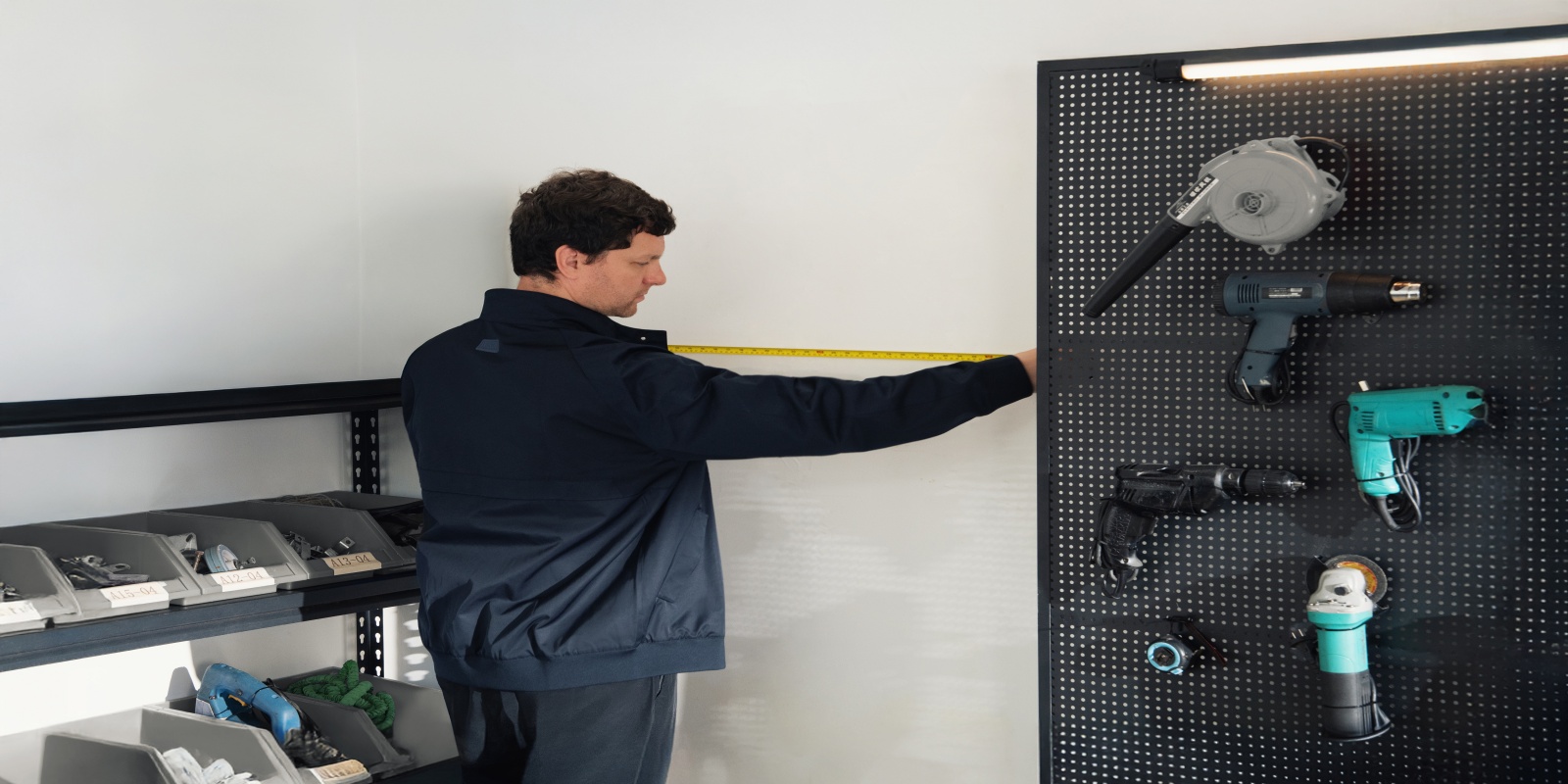
Solar batteries need a bit of room around them to stay cool and run safely. Most manufacturers ask for a clear gap, typically 100 to 300 millimetres, around the sides and top of the unit for airflow. So before you commit to a spot, double‑check the space and make sure you’re not blocking doors, windows, or anything electrical like the fuse board.
Check Battery Size and Weight
A standard 10 kWh residential battery stack tips the scales at anywhere from 70 to 110 kilograms. If you’re planning to wall‑mount it, that wall needs to be solid masonry or reinforced studwork. Lightweight partition walls without proper timber backing won’t safely support a modern modular unit.
Review Temperature and Ventilation
Stay away from unventilated cupboards or damp outbuildings. Proper airflow keeps heat from building up during those high‑draw moments, like when you’re running an induction hob and a heat pump at the same time.
Confirm Solar System Compatibility
Before purchasing, confirm whether your setup uses an AC-coupled or DC-coupled (hybrid) architecture and choose a suitable EcoFlow Solar Battery solution that matches your existing solar system requirements.
DC-coupled systems route energy through a single hybrid inverter, offering superior round-trip efficiency during solar generation.
AC-coupled systems integrate easily with pre-existing solar arrays, retrofitting a battery without requiring you to replace your existing solar PV inverter.
Choose a Qualified Installer
Always use an installer with a valid mcs certificate, such as those accredited under the Microgeneration Certification Scheme (MCS), who works to the IET Code of Practice and Building Regulations (Part P). Certified installers take care of the mandatory DNO approvals, whether it’s a G98 notification or a G99 application, so you’re covered to legally export stored power back to the grid.
How Can a Solar Battery Improve Home Energy Management?
With battery storage, excess solar energy generated during the day can be stored and used when you need it most, including in the evening and overnight.
Use Stored Energy After Sunset
The average British household generates peak solar power between 11:00 AM and 3:00 PM, precisely when most occupants are at work or school. Understanding how many kWh does a house use can help homeowners choose the right battery capacity and make better use of stored solar energy. Without storage, that excess energy is exported back to the grid for modest export rates.
Monitor Energy Use With Smart Tools
Gaining granular visibility into real-time generation and household consumption makes it easy to spot phantom loads and trim wasteful habits.
Dedicated energy management consoles—such as the EcoFlow PowerInsight 2 with its clear 11-inch HD touchscreen—serve as a centralised home dashboard. Rather than relying solely on mobile apps, this display presents real-time solar generation, home loads, and battery charge states at a glance. Access to historical telemetry allows homeowners to track seasonal trends and fine-tune their appliance timers for maximum self-sufficiency.

Optimise Battery Charging Times
Modern smart battery systems don’t just sit idle during overcast winter months. Through automated scheduling, you can instruct your system to trickle-charge from solar when daylight permits, reserving reserve capacity for high-draw evening periods and preventing unnecessary imports from the grid.
Combine Batteries With Smart Tariffs
Pairing a home battery with time-of-use tariffs (such as Octopus Agile or Intelligent Octopus Go) creates a more connected Home Energy Ecosystem and can deliver faster payback periods:
Overnight Charging: Fill your battery from the grid during off-peak hours (typically between 00:00 and 05:00) at substantially lower rates compared to daytime unit prices.
Peak Shaving: Run your entire home off the battery during the expensive late-afternoon/early-evening peak window (often 16:00 to 19:00), when standard grid power can be two to three times higher than off-peak rates.
Smart Export: Export excess stored power during surge-pricing events under the Smart Export Guarantee (SEG) for additional cash returns.
Schedule Your Free Consultation Today!
What kind of product or solution are you interested in?


Conclusion
While stowing a solar battery in the loft might seem like an easy way to save living space, the combined risks of fire safety violations under PAS 63100, severe temperature swings, and structural load hazards make it a non-starter.
By placing your battery in an integrated garage, a well-ventilated utility room, or a dedicated outdoor enclosure, you protect your home’s safety, preserve your manufacturer warranty, and secure top-tier efficiency. When coupled with modular hardware and smart management displays, your solar battery will reliably deliver lower electricity bills and clean energy for years to come.
FAQs
1. How far can my solar panels be from the battery?
Ideally, keep the cable run between your panels, inverter, and battery within 10 to 20 metres. You can go longer if you use thicker DC solar cables – say 6mm² or 10mm² – but shorter runs mean less voltage drop and better efficiency. So keep it as tight as you can.
2. Where's the best spot for a solar battery?
An attached garage or a ground‑floor utility room is usually your best bet. These spots stay at a fairly steady temperature year‑round, give you solid walls or concrete floors to mount on, and make life easy for installers and maintenance techs who need to get at it.
3. Do batteries stop charging when they're full?
Yes. Modern solar batteries automatically stop drawing power once they hit 100%. The built‑in Battery Management System (BMS) stops overcharging in its tracks, and any extra solar generation gets diverted – either into your household appliances, an immersion heater diverter, or back out to the grid.
4. Why are my solar batteries overheating?
Common causes include inadequate ventilation, direct exposure to sunlight, or repeated high-current charge/discharge cycles. If a battery is installed in a confined space with restricted airflow, or the ambient temperature consistently exceeds 35°C–40°C, the BMS will typically throttle performance or initiate a system shutdown to protect the internal cells from thermal damage.

