
Battery Sizes in the UK: What Size Home Battery Do You Need?
Home batteries in the UK are available in a wide range of capacities, from smaller systems of around 3–5 kWh to larger systems of 15 kWh or more. For many households, a usable capacity of around 6–10 kWh can be a practical starting point for shifting solar generation into the evening or making use of cheaper off-peak electricity.
The right size depends on your daily electricity use, solar generation, tariff, and backup requirements. This guide explains how to estimate a suitable battery size and compares common capacity ranges for different UK home energy profiles.
Key Takeaways
Typical UK homes: Around 6–10 kWh of usable battery capacity can be a reasonable starting point for many 3- to 4-bedroom homes, depending on electricity use and solar generation.
Check usable capacity: Compare usable kWh rather than relying only on nominal battery capacity.
Match the battery to your load: Evening and overnight consumption is often more useful than total daily consumption when sizing solar storage.
Consider your tariff: Cheap overnight electricity can make a larger battery useful even when winter solar generation is low.
Plan for future loads: A modular battery can be useful if you may add an EV or heat pump later.
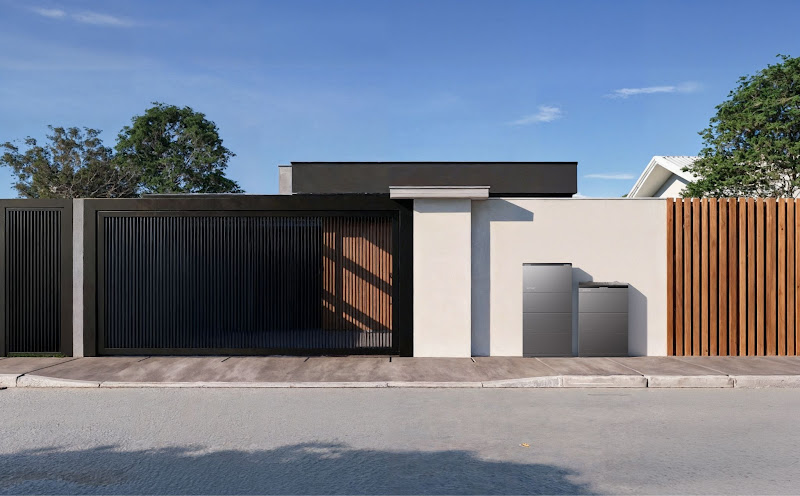
What Home Battery Sizes Are Available in the UK?
UK home batteries are available across a wide range of capacities, with smaller systems suited to lower electricity demand and larger systems better suited to homes with higher loads, EVs, heat pumps, backup requirements or regular off-peak charging. Compare solar battery storage options using usable capacity and your household’s energy needs.
Nominal Capacity vs. Usable Capacity (DoD Explained)
When you’re comparing batteries, look at usable capacity, not just the nominal figure. Nominal capacity is the total energy the battery holds; usable capacity is how much of it you can actually draw on day to day. The gap comes down partly to the Depth of Discharge (DoD).
For example, a 10 kWh battery with a 90% usable depth of discharge would provide around 9 kWh of usable energy, assuming the manufacturer’s stated capacity and DoD are measured on a comparable basis. Many modern lithium iron phosphate (LiFePO4) systems offer high usable capacity, but the actual usable figure varies by manufacturer, model and operating conditions. When you’re sizing your system, usable capacity is the number that actually matters.
Small Batteries (3–5 kWh): Flats & Low-Usage Homes
Batteries in the 3–5 kWh range can suit flats, smaller terraced houses, and one- or two-person households with relatively low electricity demand. Team one with a smaller solar array and it’ll stash the daytime surplus for the evening. Especially handy if your roof space is tight or you’re on gas heating.
Mid-Size Batteries (5–10 kWh): Typical Family Homes
The 5–10 kWh range can suit many 3- and 4-bedroom homes, although the appropriate capacity depends more on electricity use than the number of bedrooms. Electricity demand can vary significantly between gas-heated and highly electrified homes, so actual meter data is more useful than a property-size assumption.
Large Batteries (10–15 kWh): Higher-Usage Homes
Batteries between 10 and 15kWh suit bigger households, places with a heat pump, or homes that just use more power. They work well with time-of-use tariffs too, charge up overnight when it’s cheap, then draw on it when grid prices climb.
Extra-Large Systems (15+ kWh): Heat Pumps, EVs & Backup
Batteries above 15kWh are mainly for heavily electrified homes like heat pumps, regular EV charging, or bigger backup needs. They can also make sense if you lean hard on cheap overnight charging. At that size, a modular system gives you more flexibility, since you can add storage as your demand grows.
How Do You Calculate the Right Battery Size for Your Home?
Your daily electricity use gives you a rough idea of the capacity you need, but the final figure also depends on your solar surplus and how much electricity you use after sunset.
Step 1: Calculate Your Average Daily Electricity Use
Check your electricity bill or supplier app for your annual consumption and divide it by 365. Ofgem’s Typical Domestic Consumption Values provide a useful benchmark for household electricity use, but they are not intended to represent every home. Ofgem updated these values in July 2026 to reflect more recent evidence that household electricity consumption has fallen, so it is better to use your own annual bill or smart-meter data when sizing a battery. Smart meter half-hourly data will show how your specific draw shifts across weekdays and seasons. Understanding how many kWh does a house use helps put your own readings into context.
Step 2: Estimate Your Solar Surplus
Next, work out how much solar electricity is left after daytime household use. For example, if a 4 kWp system generates 16 kWh on a particular sunny day and the home uses 6 kWh directly during that period, around 10 kWh could be available for battery charging or export. Actual generation varies with location, season, orientation, pitch and shading.
Step 3: Estimate Your Evening and Overnight Demand
Look at how much electricity you normally use after solar generation falls. If your home uses 10 kWh per day and around 6 kWh of that is consumed from late afternoon to the following morning, roughly 6 kWh of usable storage could be a reasonable starting point.
Step 4: Allow for Battery Efficiency
Some energy is lost when the battery charges and discharges. If you assume a round-trip efficiency of 90% and want to deliver 6 kWh of energy to the home, a simplified estimate would be:
Required stored energy = 6 kWh ÷ 0.90 ≈ 6.7 kWh
This is a simplified calculation rather than a complete battery-sizing method. Actual sizing also depends on the battery’s usable capacity, power rating, operating limits, inverter efficiency and how the system is controlled.
A Simple Home Battery Sizing Formula
To calculate your required storage based on evening and overnight demand:
For Usable Capacity:
Target Stored Energy ≈ Evening & Overnight Demand ÷ Assumed Round-Trip EfficiencyFor Nominal (Nameplate) Capacity:
Estimated Nominal Capacity ≈ Evening & Overnight Demand ÷ (Usable DoD × Assumed Round-Trip Efficiency)
These formulas are simplified estimates. For a real installation, use the manufacturer's usable-capacity figures and the installer’s system-level sizing assessment.
Example: Choosing a Battery for a Typical UK Home
Consider a semi-detached property in Yorkshire with a 3.8 kWp solar array, an annual draw of 3,200 kWh (8.8 kWh/day), and no electric car.
Daytime solar generation: ~12 kWh on a bright April day.
Direct daytime self-consumption: ~4 kWh (fridge, washing machine timer, work-from-home setup).
Surplus solar available for charging: 8 kWh.
Evening and overnight demand: ~5 kWh (cooking, lighting, television, standby).
A battery with around 5.5–7 kWh of usable capacity could be a reasonable fit for this example household. It could capture a substantial share of the 8 kWh daytime surplus while providing enough usable energy to cover the stated 5 kWh evening demand. Actual performance would vary with weather, household load and system losses.

What Factors Can Change the Battery Size You Need?
Solar generation is only one part of battery sizing. Your tariff, backup needs, budget and future electricity use can all affect how much storage makes sense.
Electricity Tariffs Can Make a Larger Battery Worthwhile
With a time-of-use tariff, a larger battery may still be useful even if solar generation is not sufficient to fill it every day. You can store cheap overnight power and use it during the pricier daytime slots, handy in winter when solar generation drops off. Check how much is electricity per kwh during each tariff window when estimating the potential savings.
Backup Requirements Increase the Capacity You Need
If you want battery-backed power during an outage, you’ll need a system designed to provide backup or islanded operation. Depending on the system, this may involve an EPS output, backup interface or other dedicated changeover equipment. You might also want to keep a chunk of the battery in reserve for emergencies, so the total capacity needs to be big enough to cover both your everyday use and that backup allowance.
Smart Energy Management Can Reduce the Capacity You Need
Effective energy management can help make better use of the available battery capacity. For example, a system can charge from surplus solar or cheaper off-peak electricity and discharge during higher-price periods, depending on the tariff and system controls. The EcoFlow PowerInsight 2 shows you solar generation, household use, and battery status in real time, so managing those charge and discharge windows becomes a lot less hassle.
Your Budget Affects the Practical Battery Size
Larger batteries generally have a higher upfront cost, although the installed cost per usable kWh may decrease at higher capacities because some installation costs are shared across the system.
Expandability Can Let You Start With a Smaller Battery
If your system takes extra modules, you don’t have to buy all your future capacity upfront. You could start with a smaller capacity and expand later if your demand increases, provided the battery system supports additional modules and the manufacturer allows the proposed expansion. Just check the manufacturer’s expansion limits and compatibility rules before you install.
Future Electricity Use May Require More Storage
Adding an EV, heat pump, induction cooking or other significant electrical loads can increase household electricity demand. If any of that’s on the cards in the next few years, either leave yourself some extra capacity now or go for a modular battery you can expand later. When comparing an EcoFlow Solar Battery, consider those planned loads alongside today’s demand.
Which Battery Size Is Best for a UK Home?
For most homes, it makes more sense to size the battery around current electricity use and choose an expandable system if demand may increase later.
Sizing by Property Type
1–2 Bedroom Flat or Small Mid-Terrace:
Illustrative Daily Use: 5–7 kWh
Indicative Battery Range: 3.5–5 kWh usable
Profile: Space-constrained properties with limited roof area. Storage focuses on covering the evening lighting, cooking, and baseline appliances.
3–4 Bedroom Semi-Detached House:
Illustrative Daily Use: 8–11 kWh
Indicative Battery Range: 6–10 kWh usable
Profile: The heart of UK residential housing. A balanced system captures solar surplus from a standard 3.5–4.5 kWp roof array and shifts low-cost off-peak power into high-tariff evening hours.
4–5 Bedroom Detached Property:
Illustrative Daily Use: 12–18+ kWh
Indicative Battery Range: 10–15+ kWh usable
Profile: Larger floor plans, multi-occupant living, higher thermal and cooling demands, and multi-car driveways. Demands high storage depth to cover extended peak-rate running.
If you're not sure what your future demand looks like, an expandable system makes more sense than splashing out on a big battery upfront. The EcoFlow OCEAN 2 Plus Single Phase lets you pick a capacity that suits your current solar and household use, then add more storage later if you get an EV, a heat pump, or anything else that draws a lot. That way you're not paying for capacity you're not using today—and you've still got room to grow.
Summary Table: Household Size vs. Battery Capacity vs. Typical Daily Use
| Property Type | Typical Occupants | Illustrative Daily Use (kWh) | Typical Solar Array Size | Indicative Usable Battery Range (kWh) | Best Suited For |
|---|---|---|---|---|---|
| Flat / Terraced | 1 – 2 | 5 – 7 kWh | 1.5 – 2.5 kWp | 3.5 – 5 kWh | Baseload coverage, low-usage households, compact wall spaces |
| Semi-Detached | 3 – 4 | 8 – 11 kWh | 3.5 – 4.5 kWp | 6 – 10 kWh | Standard family peak-shaving, evening cooking, off-peak tariff arbitrage |
| Large Detached | 4 – 5+ | 12 – 16 kWh | 5.0 – 7.0 kWp | 10 – 15 kWh | Active family routines, larger roof arrays, EV top-ups, summer self-sufficiency |
| Highly Electrified Home | Any | 16 – 25+ kWh | 6.0 – 10.0+ kWp | 15 – 20+ kWh | Heat pumps, daily dual-EV charging, maximum off-grid resilience |
Schedule Your Free Consultation Today!
What kind of product or solution are you interested in?


Conclusion
For many UK homes, around 6–10 kWh of usable battery capacity can be a sensible starting point, but the right size depends on actual electricity use, solar surplus, tariff structure and backup requirements. But the right size really comes down to how much power you’re using after the solar tails off, how much surplus you’ve got to charge from, and whether you plan to top up on an off-peak tariff.
Smaller homes may work well with around 3–5 kWh, while homes with a heat pump, EV or higher electricity demand may benefit from 10–15 kWh or more. And if your usage is likely to climb, a modular system is a smarter move than piling on extra capacity before you actually need it.
Disclaimer: The battery sizes, energy-use figures and examples in this guide are illustrative only. Actual battery requirements vary by household consumption, solar generation, tariff, system configuration and backup needs. Consult a qualified installer and the battery manufacturer for a system-specific assessment before purchasing or installing a home battery.
FAQs
What size battery do I need for a 4kW solar system?
A battery with around 6–8 kWh of usable capacity could be a reasonable starting point for a typical 4 kWp UK solar installation, but the right size depends on the home’s daytime consumption, solar generation profile and tariff. On a suitable sunny day, a 4 kWp system could generate around 12–16 kWh, although actual output varies with location, season, orientation, pitch and shading.
Is a 10kWh battery enough for a UK home?
Yes. A 10 kWh usable battery can be suitable for many 3- to 4-bedroom UK homes, although whether it is the right size depends on the home’s electricity demand, solar generation and tariff. For a home with moderate evening and overnight demand, 10 kWh may provide enough capacity to cover much of that demand. However, a larger battery is not necessarily better if the home does not have enough solar surplus or low-cost electricity to charge it regularly.
Is a 5kWh home battery worth it?
A 5 kWh battery can be worthwhile for smaller, energy-efficient homes or properties with relatively low electricity demand. Larger systems may have a lower installed cost per usable kWh, but a 5 kWh battery can keep the upfront capacity and cost more modest while still helping to reduce electricity imports during higher-price periods.
Can a home battery be too big?
Yes, a battery that is significantly oversized relative to your solar generation, electricity demand and tariff structure may deliver lower financial returns. However, a larger battery can still be useful for homes with higher evening demand, regular EV or heat-pump loads, backup requirements or a suitable time-of-use tariff. In some winter conditions, a 4 kWp solar array can generate only a small fraction of its summer output, so a large battery may need to rely more heavily on grid charging during periods of low solar generation.
Can I add more battery storage later?
Yes, some modular battery systems are designed for later expansion. Whether additional battery modules can be added depends on the battery manufacturer, model, system architecture and installation requirements. Compatibility, module age, firmware, maximum system capacity and other manufacturer requirements should be checked before installation. If you expect your electricity demand to increase in the future, choosing a system with a suitable expansion pathway can provide greater flexibility.

