
Battery Management System Explained: Why It Matters for Home Energy Storage
If you’ve been weighing up a solar battery to protect your home from the UK’s ever-rising energy prices, you’ve probably come across the term “BMS.” Sounds technical, but the Battery Management System is really the brain of your storage setup. Think of it as an orchestra conductor — without one, the individual cells fall out of sync. That means poor efficiency, or worse, a complete system failure. In this guide, we’ll walk you through what a BMS actually does, why it’s the most critical safety feature in your home, and how it keeps your investment running through the British weather — year after year.
What Does a Battery Management System Actually Do in a Home Setup?
At its core, a BMS is the electronics that run the show for your rechargeable battery. It’s an active watchdog, making sure every bit of the battery pack stays in its “sweet spot.”
Keep an Eye on Every Cell's Voltage
stopping them from overcharging or dropping too low. Get that right, and you keep the chemistry nice and stable.
Balance energy across the pack
Over time, some cells pull ahead while others lag behind. The BMS moves energy around during charging so every cell tops up together. That stops the weaker ones from holding the whole system back.
Track temperature in real time during charging
Batteries don’t take kindly to heat or cold. The BMS keeps a constant eye on internal sensors, making sure the pack doesn’t overheat on a fast charge or seize up when temperatures drop.
Predict Backup Duration with Precision
Ever wondered how your battery app knows exactly how many hours of power you’ve got left? This level of insight is crucial for a reliable home energy management system to function effectively. The BMS works out the “State of Charge” (SoC) by tracking current flow and voltage. That’s what gives you a reliable countdown for those rainy evenings.
Regulate Power Loads During Peak Loads
Stick the kettle, oven, and dishwasher on all at once, and the BMS jumps in to sort the discharge rate. It stops the battery from killing itself, so you still get a steady flow of power without wrecking the internals.
What Problems Happen Without a Proper Battery Management System?
According to the UK Department for Energy Security and Net Zero, battery safety and system monitoring are critical for preventing thermal incidents in residential storage systems. Investing in a battery without a decent BMS is like driving a car with no dashboard or brakes. The risks range from annoying niggles to genuine danger.
Face higher risks of battery fire: Without a BMS to cut power during a fault, cells can hit “thermal runaway” — a self-heating loop that can spark a fire. A good BMS works as a fail-safe circuit breaker.
Lose storage capacity within a year: Poorly managed batteries degrade fast. Without precise balancing, you cannot maintain the long-term solar panel efficiency and lifespan of your connected system. No cell balancing? You could find your 10kWh battery holds just 7kWh of usable power after only twelve months.
Get unexpected blackouts at home: A dodgy BMS might misread the energy levels. You go to bed thinking you’ve got 50% left, only for the system to shut down at midnight because the cells are actually knackered.
Damage cells through deep discharge cycles: Lithium batteries hate hitting zero. A smart BMS sets a floor — usually 5–10% — to protect the cells and make sure they’ll charge back up the next morning.
Suffer inefficient energy conversion: Without proper regulation, you lose energy as heat when converting from DC (battery) to AC (your home). That means you’re paying for power you never actually get to use.

How Does a Battery Management System Improve Daily Home Energy Use?
A smart BMS transforms a dumb box of chemicals into a responsive energy asset that adapts to your lifestyle.
Maximize Usable Output from Every Charge
By ensuring every cell is balanced, a good BMS allows you to use a higher percentage of the stored energy without risking damage, effectively giving you more “bang for your buck.”
Protect Sensitive Appliances from Voltage Fluctuations
British homes are full of sensitive electronics. Reliable home battery storage provides a stable output, as the BMS ensures the voltage remains steady. This protects your high-end PC or OLED TV from the “jolts” that can occur during power switching.
Reduce Energy Waste During Overnight Energy Usage
Modern systems have “low-power modes” managed by the BMS. During the night, when only your fridge is humming, the BMS minimizes its own internal consumption to save every watt for your appliances.
Maintain Peak Performance in Cold Mornings
Lithium batteries can be sluggish in a cold garage. A smart BMS will precondition the battery, ensuring it’s ready to take a full charge the moment your solar panels catch the first light of a British dawn.
.png)
What Should You Look for in a Smart Home Battery System?
When choosing a system, you need hardware that can handle both the technical demands and the specific quirks of the UK environment.
Prioritize Cell-Level Safety Mechanisms
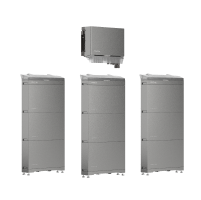
British spring is famous for its “four seasons in one day.” One minute it’s glorious sunshine, the next it’s a classic “April shower.” This damp, changeable environment puts heavy demands on the sealing of outdoor energy storage. The EcoFlow PowerOcean features IP65-rated protection, specifically designed to withstand rain. Internally, it builds a safety foundation using LFP (Lithium Iron Phosphate) technology and innovative cell-level fireproof modules. Whether it’s a sudden downpour or the frosty chill of a spring morning, the built-in smart heating pads work with the BMS to automatically regulate temperature, ensuring the battery maintains peak performance throughout its 15-year life cycle.
Centralize Energy Data for Easy Control
As the days get longer in spring, capturing the erratic sunlight becomes the key to slashing energy bills. Because clouds move fast in the UK, solar generation can fluctuate wildly within minutes. Through the 11-inch screen of the EcoFlow PowerInsight 2, you can track these energy peaks in real-time, ensuring you never miss a window of sunshine. Even better for UK homeowners, it syncs directly with 24-hour dynamic tariffs from providers like Octopus Energy. The system automatically decides when to store solar and when to top up using cheap off-peak grid power based on spring light forecasts and real-time pricing, letting you manage your bills intelligently while enjoying the spring sun.
| Feature | Importance | Benefit |
|---|---|---|
| IP65 Rating | High | Protects against UK rain/humidity |
| LFP Chemistry | Critical | 10+ years of daily use (6000+ cycles) |
| App Integration | High | Monitor your savings from your phone |
| Modular Design | Medium | Add more capacity as your family grows |
Enable Active Heating for Efficiency
Standard batteries stop charging effectively below 5°C. Look for a system with an active heater controlled by the BMS to keep energy flowing during those frosty British winters.
Access Remote Diagnostics Through Apps
The best BMS allows technicians to “look inside” your battery remotely. If something feels off, the manufacturer can often push a firmware update or diagnose a setting without needing a call-out fee.
Support Modular Battery Expansion over Time
Your energy needs today might not be the same in three years. A sophisticated BMS allows you to “plug and play” new battery modules alongside old ones, automatically balancing the different ages of the cells.
How to Choose and Use a System That Fits Your Home
To avoid an expensive white elephant in your utility room, follow these localized steps to ensure your BMS-controlled battery delivers a real return on investment.
Check Safety Certifications on Enclosures
Ensure your system carries the UKCA (or CE) mark and complies with appropriate G98 or G99 engineering standards. These are legal requirements for connecting to the National Grid: G98 applies to smaller systems under 3.68kW (16A), while G99 is required for larger setups. Without these, your Distribution Network Operator (DNO) may block your installation, preventing you from exporting solar power or claiming smart export incentives.
Size Your Battery Based on Essential Appliances
Focus on your base load, not total capacity. Think about what you actually run on those dark winter evenings when the sun drops at 4 pm. A well-managed 5kWh battery that covers your key appliances often works out better value than a 10kWh unit that rarely gets a full cycle.
Verify Local Installer Credentials and Reviews
Always insist on an MCS-certified professional. A BMS is only as reliable as its setup; an installer familiar with UK grid regulations ensures the system is configured for our specific climate, handling everything from coastal salt air to high humidity.
Choose Brands with UK-Based Technical Support
Opt for manufacturers with a physical presence in the UK. If your BMS triggers a warning, you don’t want to chase support across different time zones. Brands like EcoFlow offer local assistance, ensuring help is available during standard British business hours.
Ensure Compatibility with Future Home Upgrades
Choose a future-proof system that communicates with other smart technology. If you’re planning to install a heat pump or add EV home charging to reduce charging costs, your BMS must be intelligent enough to balance household power priorities against the significant draw of a vehicle charger.
Schedule Your Free Consultation Today!
What kind of product or solution are you interested in?
Conclusion
The Battery Management System might not get the spotlight, but it’s the real workhorse behind the renewables revolution. Pick a system with a clever, well-designed BMS like the EcoFlow PowerOcean, and you’re buying peace of mind. You’re keeping your home powered through April showers, winter frosts, and everything in between. And you’re doing it while saving more and keeping your family safe.
FAQ
1. How Much Power Does a BMS Battery Consume?
A BMS typically consumes a very small amount of power, usually between 2W and 10W, depending on the system’s complexity. This is a negligible “tax” to pay for the safety and longevity it provides to your battery pack.
2. What Is the Difference Between PCM and BMS?
A PCM (Protection Circuit Module) is a basic safety device that only cuts power during emergencies, whereas a BMS is a smart system that actively balances cells and communicates data. Think of a PCM as a simple fuse and a BMS as a smart computer.
3. How Does a BMS Estimate Battery Health in SOH?
A BMS calculates State of Health (SOH) by comparing the battery’s current capacity and internal resistance against its original factory “as-new” specs. It tracks how much energy the battery can hold now compared to when it was first installed.
4. How to Prevent Battery BMS from Tripping?
To prevent your BMS from tripping, avoid overloading the system with too many high-wattage appliances at once and ensure the battery is kept in a well-ventilated area. Regular firmware updates via the manufacturer’s app can also prevent “nuisance” trips caused by outdated software.

