
Battery Backup for Home Power Outage UK: Essential Guide to Emergency Power
Power cuts caused by winter storms, strong winds and local network faults can leave UK households without heating, lighting or internet access. A home battery backup system can keep essential appliances running during an outage, provided it has the right backup configuration. This guide explains how home battery backup works in the UK, how to choose the right capacity, what installation and equipment may cost, and how battery storage can also help reduce everyday electricity bills.
Key Takeaways
Not all domestic batteries back up power cuts automatically: Standard grid-tied solar batteries shut down during blackouts to protect utility engineers unless fitted with an islanding switch (gateway) or EPS (Emergency Power Supply).
Heating needs electricity too: Modern gas combi boilers rely on mains electricity (approx. 80–150W) for their electronic ignition, internal PCBs, and circulation pumps.
Smart tariffs double the return on investment: Smart tariffs can improve battery savings: Pairing domestic storage with a suitable off-peak tariff allows households to charge at lower rates and use stored electricity during more expensive periods, potentially reducing energy costs alongside providing backup protection.
Zero VAT on professional installs: Qualifying domestic battery storage installations in the UK benefit from 0% VAT until 31 March 2027. Note that this applies exclusively to professionally supplied and installed systems; retail hardware-only purchases and portable power stations remain subject to standard 20% VAT.
Whole-home vs essential circuits: Sizing for critical loads (fridge-freezer, router, heating controls, lighting) is considerably more cost-effective than trying to back up high-draw power hogs like electric showers.
What Is a Home Battery Backup System and How Does It Work?
A home battery stores electricity, then an inverter feeds it to your appliances. During a power cut, a properly configured backup system keeps essential circuits running safely.
How Battery Backup Works During a Power Cut
When grid power drops, a backup-enabled system isolates the protected circuits from the grid so nothing feeds back into the network. The inverter then converts stored DC into 230V AC. Depending on the setup, changeover can take milliseconds or a few seconds.
Home Battery Backup vs. UPS
A UPS typically provides near-instant backup for computers and networking equipment, usually for minutes rather than hours. Home battery systems offer much larger capacities, often 3–20 kWh or more, allowing essential appliances to run for hours or longer. However, transfer times vary, and not all home batteries provide uninterrupted power.
Backup Compatibility of Home Batteries
Not every home battery rides out a power cut. Standard grid-tied systems shut down when the grid fails unless they can run safely in island mode. Look for an Emergency Power Supply (EPS) function and compatible changeover gear to make sure your battery can step in during an outage.
Home Battery Backup Without Solar Panels
A home battery can run without solar panels, charging from the grid during cheaper off-peak hours and discharging when rates climb. With the right backup setup, it can also keep essential appliances going during an outage, handy for UK homes with no rooftop solar.
What Size Battery Backup Do You Need for a UK Home?
The right battery size depends on which appliances you need during a power cut, their energy consumption, and how long you want them to run. Understanding how many kWh a house uses can provide a useful starting point, but you should calculate the energy required for essential appliances during an outage rather than relying solely on your household’s typical daily consumption.
Power Consumption of Essential Household Appliances
Start by estimating the electricity your essential appliances will use during a 12-hour outage.
| Appliance | Running Wattage | Usage During 12h Outage | Energy Used |
|---|---|---|---|
| Wi-Fi Router & Fibre ONT | 12–20W | 12 hours | 0.18 kWh |
| Combi Boiler (Controls & Pump) | 90–140W | 6 hours | 0.72 kWh |
| Tall Fridge-Freezer | 40–120W | 4 hours | 0.40 kWh |
| LED Lighting (4–5 rooms) | 25–50W | 5 hours | 0.20 kWh |
| Laptop & Phone Charging | 45–80W | 4 hours | 0.25 kWh |
| 55-inch TV & Streamer | 80–130W | 3 hours | 0.35 kWh |
| Electric Kettle | 2,500–3,000W | 10 minutes | 0.45 kWh |
Figures are illustrative estimates. Actual consumption varies by appliance model and usage.
How to Calculate Emergency Battery Capacity
Estimate your required capacity in three steps:
Calculate energy consumption: Multiply each appliance’s wattage by its expected running hours, then add the results.
Allow for inverter losses: Assume 90% inverter efficiency for a rough estimate.
Account for usable capacity: Use the battery’s specified depth of discharge (DoD), typically around 80–90% for many LFP systems.
Required Battery Capacity (kWh) = Total Energy Consumption (kWh) ÷ (Inverter Efficiency × Usable Depth of Discharge)
For example, if essential appliances consume 4.5 kWh, assuming 90% inverter efficiency and 90% usable capacity gives a required battery size of approximately 5.6 kWh.
Battery Runtime Comparison: 2kWh vs. 5kWh vs. 10kWh
Assuming a continuous 350W essential load, 90% usable capacity, and 90% inverter efficiency:
2kWh Battery: Approximately 4.6 hours, suitable for short power cuts.
5kWh Battery: Approximately 11.6 hours, enough for many overnight outages.
10kWh Battery: Approximately 23 hours, suitable for longer outages with essential loads only.
Actual runtime depends on appliance usage, battery settings, and inverter losses.
Running High-Power Appliances During a Power Cut
A typical UK electric kettle draws 2.5–3kW and may work with a backup inverter rated for that load. However, electric showers often require 8.5–10.5kW, exceeding the output of many domestic backup systems. Always check the inverter’s continuous output rating and the combined power demand of connected appliances before using high-wattage equipment.

What Are the Best Battery Backup Options for UK Homes?
Depending on whether you rent, live in a terraced property, or own a detached house in the countryside, your emergency power strategy will differ significantly.
Portable Power Stations for Short Power Cuts
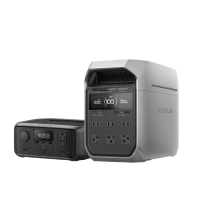
Compact, plug-and-play lithium power stations require zero electrical work. You simply wheel them out, plug your router and fridge into their integrated three-pin sockets, and run an extension lead to your work desk. While brilliant for flat dwellers and quick four-hour suburban outages, they cannot easily power hard-wired appliances like ceiling light roses or your gas boiler’s internal heating spur.
Home Battery Storage Systems for Longer Outages
During prolonged winter power cuts in the UK, portable power stations may struggle to keep essential appliances running. Permanently installed home batteries offer greater capacity for heating controls, refrigeration, and home office equipment.
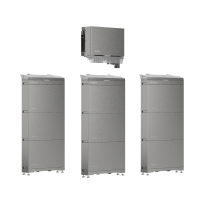
For UK homes with single-phase electricity supplies, the EcoFlow OCEAN 2 Plus Single Phase combines expandable battery storage with solar energy management. When configured with compatible backup equipment, it can support essential household circuits during outages. On normal days, it can store surplus solar energy or cheaper off-peak electricity for use during expensive peak hours, helping reduce electricity bills while maintaining emergency reserves.
Solar Battery Backup Systems for Extended Power Cuts
For households looking to make better use of solar energy beyond power cuts, solar battery storage provides further information on combining solar panels with battery storage to support everyday electricity needs and provide backup power when the grid goes down.
Pairing your battery with rooftop solar creates an off-grid microgrid. In a prolonged multi-day outage, an islanded solar system can recharge your storage during daylight hours. A coordinated home energy ecosystem can help households manage solar generation, battery storage and electricity use together, although backup performance still depends on compatible equipment, available sunlight and household demand.

How Much Does a Home Battery Backup Cost in the UK?
Home battery backup costs in the UK depend on battery capacity, installation requirements, and whether you need portable or permanently installed storage.
Portable Battery Backup Costs in the UK
Portable power stations with 1–2kWh capacity typically cost £700–£1,600, while larger expandable models with around 3kW output range from £1,800–£3,200. They require no professional installation when used through their built-in sockets.
Home Battery Storage and Installation Costs
For professionally installed home battery systems, estimated costs are:
Small (3–5kWh): £3,200–£5,000
Medium (6–10kWh): £5,200–£7,800
Large (10–15kWh+): £7,500–£11,000+
These are indicative installed prices. EPS functionality, additional equipment, and electrical upgrades may increase the total.
Factors Affecting Whole-Home Battery Backup Costs
Installation costs come down to your consumer unit, cable runs, backup setup and DNO connection requirements. Older wiring may need upgrading, and whole-home backup usually calls for extra changeover gear and more involved wiring. A qualified installer can quote you for your property specifically.
Saving Money With Off-Peak Electricity Tariffs
Home batteries cut bills by storing cheaper off-peak power and pushing it out during pricey peak periods. To assess whether this strategy makes financial sense, check how much is electricity per kWh on your tariff at different times of day. Actual savings depend on the tariff spread, battery efficiency, household consumption and how much capacity you reserve for emergencies.
To get the most out of those savings, homeowners need to see when electricity is used, stored and discharged. The EcoFlow PowerInsight 2 gives you a central dashboard for household consumption, solar generation and battery status. Paired with compatible EcoFlow systems, it helps homeowners spot energy patterns and manage battery use more effectively, balancing everyday savings against backup cover.
UK Grants and VAT Relief for Home Battery Storage
Since February 2024, qualifying standalone domestic battery installations have been eligible for 0% VAT relief (extended to match solar-plus-storage), currently scheduled to run until 31 March 2027. Crucially, this zero-rate applies only to supply-and-fit installations carried out by an installer. If you purchase equipment supply-only or opt for a plug-and-play portable power station from a retail store, standard 20% VAT still applies. Dedicated national capital grants for domestic batteries remain rare, though localized energy efficiency schemes may provide funding depending on your area and EPC rating.
Schedule Your Free Consultation Today!
What kind of product or solution are you interested in?
Conclusion
A home battery backup can keep essential appliances running during a UK power cut, but the right setup comes down to battery capacity, inverter output and backup compatibility. Focus on heating controls, refrigeration, lighting and broadband first that keeps costs sensible. Paired with a decent off-peak tariff or rooftop solar, home battery storage can also trim everyday electricity bills.
FAQs
Can a home battery power a house overnight?
Yes, provided your electrical usage is kept to normal baseline levels. A standard domestic load overnight sits between 300W and 600W (running the fridge, boiler controls, and standby appliances), meaning a modest 5kWh to 10kWh battery comfortably carries a family from dusk until morning without grid assistance.
Can a battery backup run a fridge, gas boiler, or Wi-Fi router?
Yes, these are precisely the appliances domestic backup circuits are designed to support. Gas combi boilers require only around 100W of electrical power to run their internal pump and ignition, while modern fridge-freezers and broadband routers consume very modest amounts of energy.
Can you use a home battery backup without an electrician?
Portable power stations can be used straight out of the box without an electrician, simply by plugging appliances into their integrated sockets. However, any permanent battery system wired directly into your consumer unit or home circuits legally requires installation and sign-off by a qualified Part P registered electrician.
Is a home battery backup worth it in the UK?
Yes, especially if you pair it with a split-rate tariff or existing rooftop solar. Using a home battery with an off-peak tariff or rooftop solar can help reduce electricity bills. However, whether the savings offset the initial investment depends on installation costs, tariff differences, battery efficiency and household consumption.
What happens when the battery runs out during a power cut?
Once the battery hits its lower reserve cutoff, protected circuits will lose power just like a normal blackout. To prevent a complete lock-out, standard backup systems reserve a buffer (e.g. 10–20% SoC) so the inverter has enough internal power to perform a black start when required. If the battery reaches its minimum operating charge, backup power may stop. Whether the system can restart without grid power depends on the inverter, battery protection settings and available solar generation. Some compatible systems support PV-assisted recovery during an outage.

