
Average Monthly Electric Bill with Solar Panels in the UK: Cost & Savings Guide
Installing rooftop solar panels can significantly reduce a UK household’s electricity costs, although the amount saved varies with system size, electricity use, solar generation, tariff rates and export payments. A household may still have electricity costs after installing solar because of standing charges, periods of grid import and the seasonal variation in solar generation. The mismatch between daytime solar generation and evening electricity demand can also limit savings when there is no battery storage.
This guide explains what monthly electricity costs can look like after installing solar panels in the UK, how to estimate your own costs, and how pairing solar with home battery storage can further reduce grid imports.
Key Takeaways
Potential Outgoings: A 3-bedroom UK home with solar may have substantially lower grid electricity costs, but the actual monthly bill depends on electricity use, solar generation, tariff rates, standing charges and export payments. Adding a home battery can reduce grid imports further by storing surplus solar for later use.
Why Bills May Not Reach Zero: Daily standing charges add a fixed cost even when electricity use is very low, while winter solar generation may leave some households reliant on grid imports.
Self-Consumption Matters: Solar-only systems may have relatively low self-consumption when most generation occurs during the day, while a battery can increase the share of solar electricity used on-site. In suitable homes, battery storage can raise self-consumption substantially, although the actual result depends on system size, battery capacity and household demand.
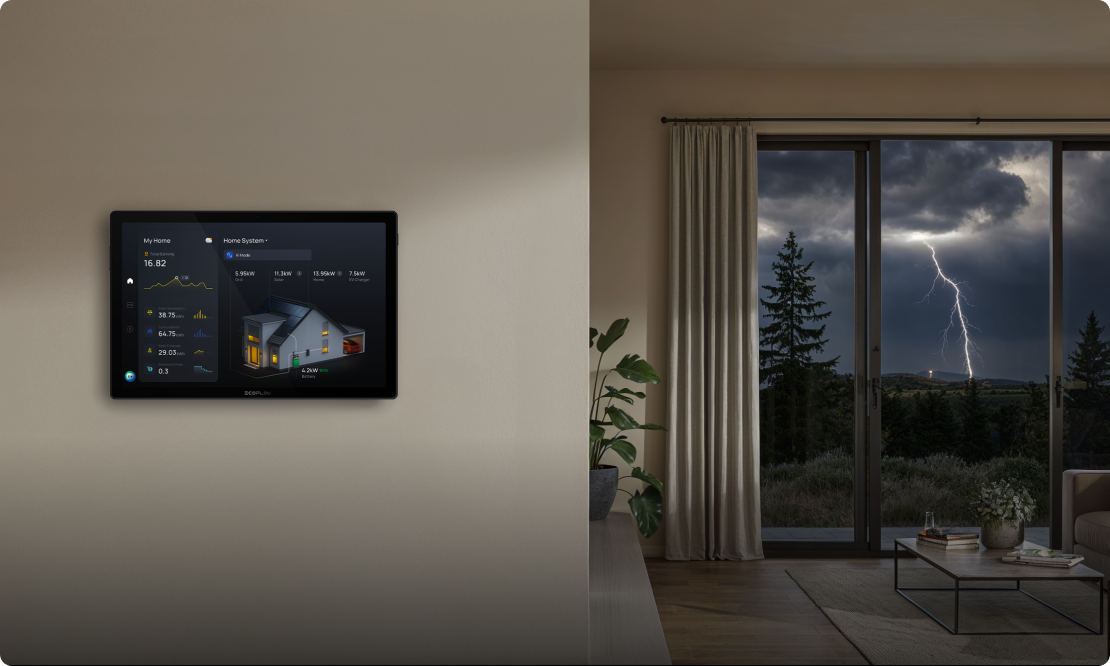
Improve Energy Management: Pairing battery storage with an energy monitoring system such as the EcoFlow PowerInsight 2 can help homeowners monitor solar generation, household consumption and battery activity, while supporting better decisions about when to use, store or export electricity.
VAT Relief: Qualifying residential solar and battery installations currently benefit from a 0% VAT rate in the UK, subject to the relevant conditions. The temporary zero rate is currently scheduled to apply until 31 March 2027.
What Is the Average UK Monthly Electric Bill with Solar Panels?
How much you pay after installing solar depends on how much electricity you still import from the grid, how much solar you use at home, and how much surplus power you export.
Typical UK Electricity Bill Before Solar
A typical UK household’s electricity use varies with household size, appliances, heating systems and lifestyle. For a useful starting point, Ofgem’s Typical Domestic Consumption Values (TDCVs) are used to model household energy use and energy price cap levels. Current electricity rates also vary over time and by region, tariff and payment method. For example, under the current Ofgem price cap, the average electricity unit rate for Direct Debit customers is 26.11p/kWh with a 57.19p daily standing charge from July to September 2026, rising to 26.32p/kWh and 54.83p/day for October to December 2026. Understanding how many kWh does a house use provides a useful starting point for comparing your own consumption.
Realistic Monthly Bills After Solar Installation
With a typical 4kW solar system, grid imports can fall substantially, although electricity costs can still vary considerably by season. Spring and summer bills may be lower when solar generation is stronger, while winter bills can rise as shorter daylight hours and lower solar output increase grid imports. A battery can reduce imports further by storing surplus daytime solar for use later, but the actual monthly cost depends on household demand, solar generation, battery capacity, tariffs, standing charges and export payments.
Why You Still Receive an Energy Bill
Solar panels reduce the amount of electricity you need to buy from the grid, but many homes will still have standing charges and some grid imports to pay for.
Daily Standing Charges
Even if you import no electricity on a particular day, you may still pay your supplier’s standing charge. The amount varies by supplier, region, tariff and payment method. For example, Ofgem’s average Direct Debit electricity standing charge is 57.19p per day for July to September 2026 and 54.83p per day for October to December 2026.
Night-time Grid Reliance
Solar panels generally generate little or no electricity at night, so evening cooking, lighting, entertainment and overnight appliances may require grid electricity unless you have a battery storing surplus daytime generation.
Billing Structure
Imported electricity and exported solar are generally accounted for separately. You pay for electricity taken from the grid, while payments for exported electricity under the Smart Export Guarantee (SEG) depend on the supplier and export tariff. Some suppliers may credit export payments to your account, while others may pay them separately.
5 Factors Determining Your Solar Electric Bill
Your monthly bill mainly depends on system size, self-consumption, battery storage, seasonal generation, and when you use electricity. Comparing solar battery storage options helps you assess how much daytime generation you could use later.
1. System Size and Annual Generation
A 3kW solar array can generate several thousand kWh of electricity per year in the UK, but actual output depends on location, roof orientation, pitch, shading and system performance. A larger, well-oriented 5kW+ system can generate more electricity, although annual output varies significantly between properties. The closer your system’s output tracks your home’s total annual consumption, the smaller your net import balance will be.
2. Self-Consumption Rate
Generating solar energy is only half the battle; consuming it directly on-site is what drives down bills. Solar-only households can have self-consumption rates in the 20%–35% range in some usage scenarios, although the actual rate varies with household demand, solar system size and occupancy. When household demand is low during the middle of the day, more solar generation may be exported to the grid. The household may then need to buy electricity later in the day when solar generation falls and demand increases.
3. Solar Battery Storage
Solar panels often generate the most electricity around midday, while many households use more power in the evening. Without a battery, much of that surplus is exported to the grid, so you may still need to buy electricity later in the day.
A home battery stores surplus solar for later use and can substantially increase self-consumption, depending on the system size, battery capacity and household electricity demand. The EcoFlow OCEAN 2 Plus Single Phase uses LiFePO4 battery technology and offers expandable capacity, allowing households to size storage around their solar generation and electricity needs. It can store excess daytime solar for later use or charge during cheaper off-peak periods in winter, helping reduce grid imports when electricity prices are higher.
4. Seasonal Weather Variation
Solar generation in the UK follows a pronounced seasonal bell curve. Solar generation varies substantially by season. A 4kW system can generate considerably more electricity on long, sunny summer days than during short winter days, when lower sun angles, shorter daylight hours and cloud cover reduce output. Consequently, your monthly bills will naturally oscillate: low single-digit bills in high summer, balanced by larger winter imports when heating systems work overtime.
5. Household Load Profiles and Daytime Occupancy
ReHouseholds with higher daytime electricity demand, such as those with people working from home or using appliances during daylight hours, may achieve higher solar self-consumption than homes that are mostly unoccupied during the day. Higher daytime baseloads yield naturally higher self-consumption rates and lower bills—even without a battery installed.
How to Calculate Your Bill: The UK Formula & Real Example
To estimate your monthly electricity costs, add your grid import costs and standing charges, then subtract any income from exported solar. Check how much is electricity per kwh against your own tariff before applying the example figures.
The Formula: Grid Import Costs + Standing Charges - SEG Earnings
To calculate your true monthly net electricity spend, apply this simple formula:
Net Monthly Bill = (Grid Imports [kWh] × Import Unit Rate) + (Days × Daily Standing Charge) − (Exported Solar [kWh] × SEG Tariff)
This is a simplified estimate. Actual bills can also depend on tariff structure, VAT, payment method and how export payments are credited.
Grid Imports: Electricity your home imports from the grid when on-site solar generation and available battery discharge do not fully cover demand.
Standing Charge: Fixed daily rate (typically around £0.60/day).
SEG Earnings: Credits earned for sending clean electricity back to the grid.
Case Study: Monthly Bill for a 3-Bedroom Semi-Detached House
Consider a family in Bristol living in a 3-bedroom semi-detached property fitted with a 4kW solar system and an energy usage of 240 kWh per month (8 kWh/day):
Scenario A: Solar-Only (No Battery) — Illustrative May Example
Monthly Generation: ~380 kWh
Self-consumed directly on-site: 110 kWh
Excess Solar Exported: 270 kWh
Remaining Grid Imports Required: 130 kWh (about 4.3 kWh/day)
Grid Import Cost (at 24.5p/kWh): 130×£0.245=£31.85
Standing Charge (30 days @ 60p): 30×£0.60=£18.00
SEG Export Credits (at 12p/kWh): 270×£0.12=−£32.40
Net Monthly Cost: £31.85 + £18.00 − £32.40 = £17.45 (illustrative example; actual bills vary by tariff and household usage).
Scenario B: Solar + Battery Storage (OCEAN 2 Plus Single Phase) — Illustrative May Example
Self-consumed (Direct + Battery Discharging): 215 kWh
Remaining Grid Imports Required: 25 kWh
Grid Import Cost (at 24.5p/kWh): 25×£0.245=£6.13
Standing Charge (30 days @ 60p): 30×£0.60=£18.00
SEG Export Credits (165 kWh exported @ 12p/kWh): 165×£0.12=−£19.80
Net Monthly Outgo: £6.13+£18.00−£19.80=£4.33
How Much Can UK Households Actually Save Annually?
Annual savings vary by system size, household electricity use, self-consumption, and how much surplus solar you export.
Estimated Annual and Monthly Savings by System Size
The following table outlines projected annual production and bill reductions for typical South/Midlands roof setups under current tariff averages:
| System Size (kWp) | Approx. Roof Space Needed | Estimated Annual Output | Est. Illustrative Annual Savings: (Solar Only) | Est. Illustrative Annual Savings: (Solar + Batter | Est. Average Monthly Reduction |
|---|---|---|---|---|---|
| 3.0 kW | ~14–16 m² (7–8 panels) | 2,550 kWh | £380 – £460 | £620 – £750 | £35 – £60 / month |
| 4.0 kW | ~18–20 m² (10 panels) | 3,400 kWh | £490 – £620 | £820 – £980 | £45 – £80 / month |
| 5.0 kW+ | ~24–28 m² (12–14 panels) | 4,250+ kWh | £610 – £780 | £1,050 – £1,280 | £55 – £105 / month |
These are illustrative estimates rather than guaranteed savings. Actual savings vary with location, roof orientation, shading, household electricity use, tariff rates, export payments and battery operation.
Smart Export Guarantee (SEG): Earning from Surplus Energy
Under the government-backed Smart Export Guarantee, electricity suppliers with at least 150,000 domestic customers are required to participate as Mandatory SEG Licensees and offer SEG payments to eligible generators. Smaller suppliers can participate voluntarily.
SEG and export rates vary by supplier and tariff and can change over time. For example, Octopus Energy currently lists a flat 12p/kWh rate for its Outgoing Octopus tariff, while its Agile and Flux products use different pricing structures. A 4kW system can earn export payments during periods of surplus generation, but the amount depends on how much electricity is exported and the export tariff available. Higher export rates or greater summer generation can increase export income.
Payback Period & 0% VAT Advantage
Qualifying residential solar installations currently benefit from a temporary 0% VAT rate, while qualifying electrical storage battery installations have also been zero-rated since 1 February 2024. The relief currently applies across the UK and is scheduled to continue until 31 March 2027, subject to the relevant conditions.
The 0% rate can reduce the upfront cost compared with a standard-rated installation, although the actual saving depends on the installation price and which components and services qualify for the relief. The payback period for a solar installation varies significantly with system cost, annual generation, electricity prices, export income and household self-consumption. Rather than applying a single payback period to all UK homes, homeowners should calculate payback using their own installation quote and expected annual energy savings. (Note: The current temporary 0% VAT treatment is scheduled to end on 31 March 2027, after which the applicable reduced rate is expected to apply.)
Practical Ways to Reduce Your Electric Bill Further
You can reduce grid costs further by using more solar during the day and shifting flexible loads to cheaper tariff periods.
Load Shifting: Timing High-Draw Appliances
Tumble dryers, washing machines and dishwashers can be useful loads to shift into periods of stronger solar generation. Where practical, use delayed-start timers to run them during the late morning or early afternoon, helping you use more of your solar electricity directly instead of importing electricity from the grid later in the day.
Smart EV Charging Integration
Electric vehicle owners can potentially reduce grid electricity use by combining solar generation with smart charging. Chargers with solar-matching capabilities can use surplus rooftop generation to charge an EV instead of exporting some of that electricity to the grid. The amount of solar energy available for EV charging varies with weather, system size, driving patterns and household demand. A Home Energy Ecosystem can help coordinate solar generation, storage and EV charging.
Use Smart Tariffs and Energy Monitoring to Cut Grid Costs
Half-hourly or time-of-use tariffs can offer cheaper periods for charging a home battery or EV, while some export tariffs vary by time of day. For example, Octopus Flux is an import-and-export tariff designed for homes with solar and batteries, with different pricing periods during the day. Shifting when you import, store and export electricity can therefore reduce energy costs for households whose usage patterns suit these tariffs.
The EcoFlow PowerInsight 2 makes that a lot easier. It shows solar generation, household use, battery charge and discharge, and energy flow in real time, so you can quickly see whether there’s enough surplus solar to run your appliances or charge an EV without pulling extra from the grid.
Pair it with the EcoFlow OCEAN 2 Plus Single Phase and you get an even clearer picture of when your solar’s being used, stored, or exported. That helps you make the most of daytime solar and the cheaper tariff windows, while cutting back on pricier grid imports.
Schedule Your Free Consultation Today!
What kind of product or solution are you interested in?
Conclusion
Solar panels can significantly reduce a UK household’s electricity costs, but the actual saving depends on system size, electricity use, solar generation, tariff rates, self-consumption and export payments. A battery can reduce grid imports further by storing surplus solar for use later in the day, while smart tariffs may provide additional savings for households that can shift consumption to lower-cost periods. Before installing solar or battery storage, compare expected annual generation, self-consumption, export income and installation costs rather than relying on a single monthly bill estimate.
Disclaimer: Energy prices, tariffs, export rates, government schemes and tax rules can change over time. The figures, examples and savings estimates in this guide are for illustrative purposes only and may not reflect your actual costs or savings. Always check the latest information from Ofgem, HMRC, your energy supplier and other relevant official sources before making financial or installation decisions.
FAQs
Can solar panels completely eliminate my electricity bill in the UK?
Solar panels can substantially reduce electricity costs, but many households will still have standing charges and may need to import electricity when solar generation is low. The exact bill depends on the tariff, household demand, solar generation and export arrangements. Even if your solar array covers most or all of your daytime demand, you may still have a standing charge and some grid imports during periods of low solar generation. For reference, Ofgem’s average electricity standing charge for Direct Debit customers is 57.19p/day for July–September 2026 and 54.83p/day for October–December 2026.
How much does a 4kW solar system generate per day in UK winter?
A 4kW solar system can generate considerably less electricity in winter than in summer, but daily output varies widely with location, weather, roof orientation, shading and daylight hours. A single winter-day figure is therefore not representative of every UK home. Short days, heavy cloud, and a low sun angle all knock it back, especially compared to summer peaks, when you’ll routinely see 16kWh to 22kWh a day.
Is a solar battery worth it in the UK in 2026?
A solar battery can be worthwhile for UK homeowners who have surplus solar generation, significant evening electricity demand or access to tariffs that reward flexible energy use. It can increase solar self-consumption by storing surplus generation for later use, although the financial benefit depends on battery cost, capacity, tariff rates, household consumption and system performance. Dynamic tariffs can provide additional opportunities for savings, but the best tariff depends on the household’s usage pattern.
Which energy supplier offers the best SEG export rates?
Export rates vary by supplier, tariff and market conditions, so there is no single supplier that is always the best option. For example, Octopus Energy currently lists its Outgoing Octopus export tariff at 12p/kWh, while its Agile and Flux products use different pricing structures. Compare the export rate alongside the import rate, standing charge, eligibility requirements and any battery or smart-meter conditions before switching.
Do I need planning permission to install solar panels in England and Wales?
Many domestic solar installations in England can be carried out under Permitted Development rights if they meet the relevant conditions and limits. However, planning requirements can differ for listed buildings, designated areas and installations that do not meet the applicable limits. The rules in England were updated on 27 August 2026, with a 12-month transitional period for the previous and new rules. Planning rules in Wales may differ, so homeowners should check with their local planning authority before installation.

