What Is a Smart Home in Australia: 2026 Definitions and Setup Tips
Electricity bills are higher. Time feels shorter. Traditional household energy management leads to unnecessary power expenses amid Australia's rising retail grid rates in 2026. Manually adjusting the thermostat, leaving lights on, and guessing when appliances draw peak power all add up.
That is exactly why the idea of a smart home has moved from a novelty to a practical solution for Australian households. A connected home runs more efficiently and reacts to real household patterns. Energy, security, and comfort are all managed from a single screen or voice command.
This guide answers the core question: What is a smart home? It also covers the technology behind it, the devices worth adding first—such as a reliable home solar battery—and how a unified system can permanently lower electricity bills for Australian households.
Understanding exactly what a smart home is today
According to energy.gov.au, a smart home enables household equipment and appliances to be controlled automatically and remotely, which can save energy and money. It is the foundational definition and the most practical one.
In plain terms, a smart home is a house where devices connect to each other and to the internet. Residents control them remotely from a phone, tablet, or voice command. The devices also share data with each other and, over time, automate tasks without being asked.
The Australian context adds urgency to this shift. Time-of-use electricity tariffs are now standard across most states. Grid reliability is under growing pressure from extreme weather. Households that manage their own energy actively pay less and face fewer disruptions. A smart home is the infrastructure that makes that management possible at scale.
The transition does not require full renovation. Most Australians start with one or two connected devices and expand from there.
Unpacking what is a smart home technology for beginners
Understanding what smart home technology is starts with one question. How do devices actually talk to each other without causing chaos?
Communication protocols and IoT
The Internet of Things (IoT) is the name of the network that connects smart devices. Each device in the home, whether a light bulb, thermostat, lock, or battery, has a small chip that lets it send and receive signals. Those signals travel over one of several communication protocols.
Wi-Fi is the most familiar. Most smart devices connect directly to the home's existing router. It is fast and has good range, but a home with many Wi-Fi devices can put strain on the network.
Zigbee and Z-Wave are low-power mesh protocols designed specifically for smart homes. Devices on these networks relay signals through each other, so the more devices installed, the stronger and more reliable the network becomes.
Bluetooth handles short-range, low-latency connections. It works well for devices like smart locks and speakers that sit close to the user.
Most modern smart home platforms combine these protocols. A central hub manages them, so homeowners never need to think about which one any given device uses.
Automated data and machine learning
What separates a smart home from a remote-controlled home is the ability to learn. Early smart devices were glorified timers. Current systems go further.
Modern smart home technology uses Intelligent Mode algorithms that analyse data from daily usage, detect patterns, and act on them. A smart thermostat learns that the household gets home at 5:30 pm on weekdays and adjusts the temperature before anyone walks through the door. A smart battery learns that energy uses peaks around 7 pm and pre-charges itself from solar during the day to cover that window. Advanced setups, like those used when designing a sustainable house, integrate Home Energy Management Systems that act as the brain for the entire property—tracking local weather patterns and learning family habits to distribute power efficiently.
The automation runs in the background. Once a pattern is learned, no manual input is required to maintain it.
Essential smart home devices to upgrade your routine
When planning your upgrades, understanding exactly what is a smart home device and how it functions helps narrow down where to start. The category matters less than choosing devices that connect to each other through a shared platform.
Smart lighting and climate control
Smart lighting is typically the first upgrade Australian households make. The entry cost is low and the impact on daily routine is immediate.
Smart bulbs and switches dim at sunset and turn them off when a room empties. They switch back on when motion is detected. For a household leaving lights overnight, the annual savings are real and measurable.
Smart thermostats learn daily routines and adjust heating and cooling without manual input. In Australian homes, air conditioning accounts for up to 40% of the power bill. A smart thermostat that avoids peak-rate hours and pre-cools during cheap solar hours delivers genuine savings every quarter.
Automated security monitoring
Smart cameras and video doorbells provide high-definition footage accessible from anywhere on a phone. Motion alerts notify residents of activity at the property in real time.
Smart locks remove the physical key entirely. Access can be granted remotely, time-limited for guests or trades, and revoked instantly. When leaving for a holiday, there is no need to wonder whether the door was locked.
Smart kitchen and cleaning appliances
Robot vacuums can be scheduled to run during work hours or overnight, eliminating a weekly task without any thought. Connected models map the floor plan of the home and avoid obstacles automatically.
Smart refrigerators adjust cooling cycles based on how full they are and how often the door is opened. Some models track contents and flag items approaching their use-by date, reducing food waste alongside energy use.
Smart entertainment and media
Connected TVs and smart speakers allow voice-controlled media across every room. A single command starts music in the kitchen, pauses it when the phone rings, and resumes it in the bedroom without touching any device. Convenience compounds quickly in a household that uses multiple rooms throughout the day.
Modern home energy storage
The battery has become the most consequential smart device an Australian household can install. It stores excess solar generated during the day and releases it during the evening peak window, when grid power is most expensive. Unlike passive appliances, a smart battery actively monitors the home's energy flow and makes decisions that directly reduce the quarterly power bill.
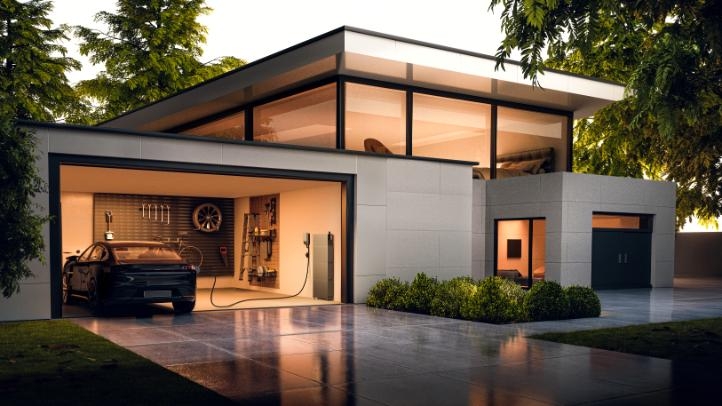
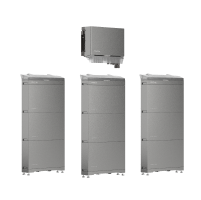
For Australian solar households aiming to maximise daytime solar self-consumption, scalable home battery storage acts as the core energy smart device. It offsets costly evening peak grid rates and delivers backup power during storm-related outages, with flexible capacity to match shifting family power loads. Modular systems such as the EcoFlow PowerOcean Single-Phase Battery are built for this role. Usable capacity starts from 5 kWh and expands up to 15 kWh per unit, so the system scales with the household's actual needs. Learn more about EcoFlow PowerOcean.
Creating a seamless smart home system network
Owning ten separate smart devices with ten separate apps is just a collection of gadgets. If you are wondering what is a smart home system, it is a unified network where all these devices connect into something that works as a whole.
Central hubs vs. app-based control
Some households run smart devices through a central hub. This is a dedicated piece of hardware that manages the network and processes automation rules locally. This approach is fast and works even if the internet goes down.
Others rely on cloud-based app platforms such as Google Home, Apple HomeKit, or Amazon Alexa. These require an internet connection but are easier to set up and update. Most mainstream smart home devices are compatible with at least one of these platforms.
The ideal setup connects all devices to a single platform, so they share data and work together. A motion sensor detecting movement at the front door should be able to trigger the outdoor light and send a camera alert, all automatically.
Voice assistants and Intelligent Mode integration
Smart speakers like the Google Nest, Amazon Echo, or Apple HomePod serve as the vocal interface for the whole home. A spoken command adjusts the thermostat, locks the door, and dims the lights. All without touching a phone.
Beyond responding to commands, Intelligent Mode integration goes further. Over time, the system learns which commands are used most and when. It begins suggesting automations and acting before requests are even made. Over time, the home becomes less reactive and more proactive.
Routine automation and scene setting
A smart home system allows devices to be grouped into scenes. A scene triggers multiple devices at once with a single command or at a scheduled time.
A "Goodnight" scene might lock the front door, turn off all lights, lower the thermostat, and switch off media devices. It can also shift the home's power draw to battery reserves rather than the grid. All at once. All of that happens with a single voice command or tap.
Scenes eliminate the end-of-day checklist. They also mean that energy-saving actions happen consistently rather than being skipped when life gets busy.
Unified energy management and monitoring
The most advanced layer of a smart home system is unified energy management. A unified platform treats solar panels, batteries, appliances, and the grid as one system. It optimises across all of them at once.
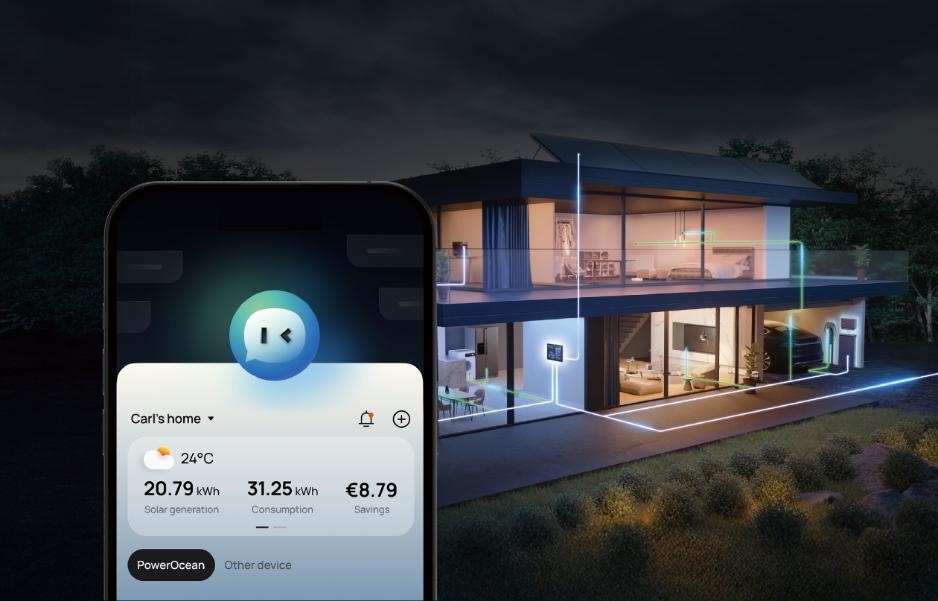
Managing solar panels, battery storage and dozens of smart household appliances separately creates fragmented energy control. A unified home energy platform syncs all power assets, automatically adjusting charge and discharge cycles to align with local weather and Time-of-Use tariff rules. The EcoFlow Home Energy Ecosystem delivers unified energy control tailored to Australian tariff and climate conditions. It brings solar generation, battery storage, and home energy use onto a single dashboard. The EcoFlow App pulls in local Australian weather forecasts, tracks household usage patterns, and automatically adjusts battery charge and discharge cycles to maximise savings. When a cloudy day is forecast, it charges the battery harder the day before. When grid tariffs are high, it draws from storage rather than the grid. All without manual input.
Why upgrading to a smart home makes sense in 2026
From slashing electricity bills during peak hours to fortifying your home's security and effortlessly streamlining daily routines, upgrading to a smart home in 2026 is the ultimate investment in practical, modern living.
Lowering your electricity bills
Time-of-Use tariffs charge more between roughly 3 pm and 9 pm on weekdays. That is when most Australian households use the most power. A smart home tackles this directly.
Smart appliances shift energy-hungry tasks to off-peak hours. The dishwasher runs at midnight. The hot water system reheats during the solar sponge window at midday. The battery covers the evening peak from stored solar. The grid only comes into play once those resources are exhausted.
Over a full year, consistent Time-of-Use shifting through automation cuts quarterly bills significantly. The household does not need to change how it lives to achieve that.
Enhanced physical security
Smart security works on two levels. Active monitoring through cameras and motion sensors alerts residents to activity in real time, wherever they are. Passive security through automated lighting and scheduled routines mimics occupancy when the house is empty, reducing the property's appeal to opportunistic intruders.
For households heading away over summer, automated lighting that varies each evening creates the appearance of occupancy. Smart locks confirm the house is secured remotely. No standard lock can match that combination.
Ultimate lifestyle convenience
The daily time saved by automation is easy to underestimate. Lights that turn off automatically when a room is empty. Blinds that open at sunrise. A coffee maker that starts before anyone gets out of bed. A robot vacuum that runs while the household is at work.
None of these individually seems significant. Together, across a week, they represent a real reduction in small decisions and tasks. That is the compounding value of a well-configured smart home system.
For households wanting to understand the potential savings on electricity bills through smart energy management, the EcoFlow team can map it out. Contact our professional energy consultants for a personalised assessment based on actual usage patterns and local tariff structure.
Schedule Your Free Consultation Today!
What kind of product or solution are you interested in?

Conclusion
A smart home does not need to be built all at once. Starting with energy management, a smart battery, or a connected thermostat creates the foundation. Adding security, lighting, and appliances over time builds a system that grows with the household rather than requiring a single large investment.
In 2026, the case for a smart home in Australia comes down to three things. Lower power bills through automation. Better security through connected monitoring. Time is saved through routines that run without being asked. Each device added makes the whole system more capable. Getting the energy foundation right first makes every other upgrade more effective.
FAQs
What exactly does a smart home do?
A smart home connects appliances and devices to the internet so they can be controlled remotely, automated on schedules, and made to work together. It saves energy by avoiding peak-rate grid use, improves security through remote monitoring, and saves time by running household routines automatically.
What are the disadvantages of a smart home?
The main drawbacks are upfront cost, reliance on internet connectivity, and the need for compatible devices across a shared platform. Cybersecurity is also a consideration, as connected devices can be entry points for network intrusion if not properly secured with strong passwords and firmware updates.
Do smart homes use more electricity?
Not necessarily. Smart homes are generally designed to use less electricity by automating energy-saving behaviours. Smart homes shift appliances used to off-peak hours and draw from battery storage during expensive tariff windows. Devices turn off automatically when not in use. Consumption drops compared to an unmanaged home.
How much does it cost to make a smart home?
A basic smart home setup with a few lights, a smart speaker, and a security camera can start from a few hundred dollars. A full setup including a battery storage system, smart thermostat, connected appliances, and a unified platform will cost considerably more. Many households build the system incrementally over several years.
What is the most important smart home device?
For Australian households in 2026, a home battery storage system is the most impactful smart device. It directly reduces grid electricity costs, provides backup power during outages, and integrates with solar to maximise self-consumption. All other smart devices build around the energy foundation it creates.