How to Estimate Solar Energy for Home Cost in Australia During 2026
Electricity prices in Australia have not relented. Grid rates sit above 30 cents per kWh in most states. For many households, the quarterly bill is now one of the largest fixed expenses in the budget. Investing in a home battery backup system is increasingly part of how Australians are taking control of that cost.
For many households, solar has shifted from a lifestyle consideration to a financial one. But before committing to any system, understanding the actual solar energy for home cost matters more than ever. The baseline cost of solar energy for homes varies widely depending on your setup, but upfront rebates change the equation significantly. And battery storage adds a layer that fundamentally changes what a system delivers.
This article breaks down what drives solar energy cost for home installations in 2026, what average systems cost across different sizes, how to get maximum return, and what government rebates still apply. The goal is to give households a clearer picture before they start comparing quotes.
What drives the solar energy cost for home setups?
The solar energy for home cost is not a flat rate. Two quotes for the same postcode can differ by thousands of dollars. Three variables drive most of that variation.
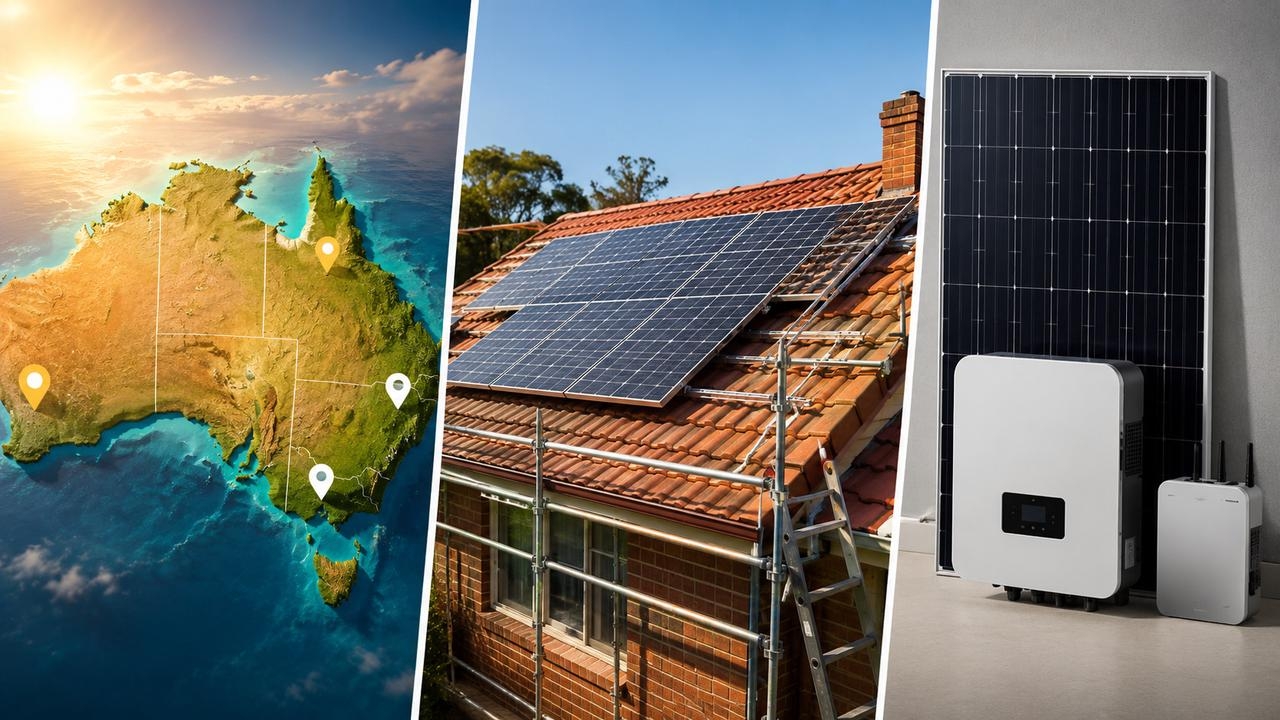
Geographic location. State-by-state pricing reflects local installer competition and transport costs. Queensland and Western Australia tend to sit at the lower end of national pricing ranges due to high installer density and stronger sunlight zones. NSW and Victoria often run higher, particularly in metro areas where labour costs are elevated. The federal STC rebate also varies by postcode, since it is calculated based on solar zone and system size.
Roof complexity. A single-storey home with a tin or Colorbond roof costs less to install on than a double-storey home. Terracotta tiles and complex pitch angles add labour time and cost. Scaffolding, reinforced mounting rails, and additional labour time all add to the final quote on harder roofs. Orientation matters too. A north-facing roof at the right tilt angle generates more power and delivers better ROI than a split or shaded installation.
Hardware selection. The pricing tier of the components chosen has a direct impact on both upfront cost and long-term performance. Budget Tier 1 panels from brands like Jinko or Trina retail at the lower end. Premium panels from REC, SunPower, or Australian-made Tindo can cost two to three times more per panel. Inverter choice carries similar variation. Smart string inverters and microinverters offer better performance data and monitoring but carry a premium over basic units.
With these cost variables in mind, let's break down the average all-in pricing for popular residential solar sizes in 2026.
The average cost of solar energy for home systems
The average cost of solar energy for home installations in Australia in 2026 reflects a mature and competitive market. As of 2026, the average cost of a residential solar system in Australia is around $0.88 to $0.95 per watt installed after the STC discount. In practical terms, that translates into the following benchmarks.
System Size | Typical Household | After-Rebate Cost Range | Annual Savings Est. |
5 kW | 1 to 2 person home | $3,500 to $5,500 | $1,100 to $1,600 |
6.6 kW | Average family home | $4,000 to $6,500 | $1,500 to $2,500 |
10 kW | Large family or EV home | $6,000 to $10,500 | $2,200 to $3,400 |
The 6.6 kW system is the most popular choice in Australia. It sits at the sweet spot between cost and output for a standard three to four bedroom home consuming 15 to 25 kWh per day. Larger families and homes with ducted air conditioning or an EV typically need 10 kW or more. That is the threshold for making a meaningful impact on the grid bill.
Upfront panel and installation fees
The sticker price of any solar system covers more than just the panels. A fully installed quote includes four main cost categories.
Solar panels typically account for 35 to 50% of the pre-rebate system cost. The exact proportion depends on panel brand and wattage.
Inverter and monitoring hardware covers the smart string inverter, DC isolators, switchboard upgrades if required, and the monitoring gateway.
Mounting hardware includes aluminium racking rails, roof anchors, and cable management.
Labour and compliance covers the installation team, electrical certification, and grid connection approval from the local distributor.
One point that must be stated clearly: any work involving a high-voltage residential solar system is never a DIY project. Installation must be carried out by a licensed electrician holding Solar Accreditation Australia (SAA) accreditation. This is a legal requirement under Australian Standards including AS/NZS 4777. Unlicensed work voids all product and installation warranties and creates serious insurance and safety risks.
Adding battery storage to your system
Adding battery storage reshapes the total budget for residential solar installations. It also changes what the system delivers. A solar-only setup generates cheap power during the day. A battery captures what the household does not use and stores it for the evening peak window, when grid electricity costs the most.
The upfront investment shift is real. A conventional 6.6 kW system with a 5 kWh battery generally costs between $8,500 and $11,500 after federal STC rebates and current battery rebates. That is a meaningful increase over a panels-only installation. Whether that investment makes sense depends on the household's evening energy use and local tariff structure.
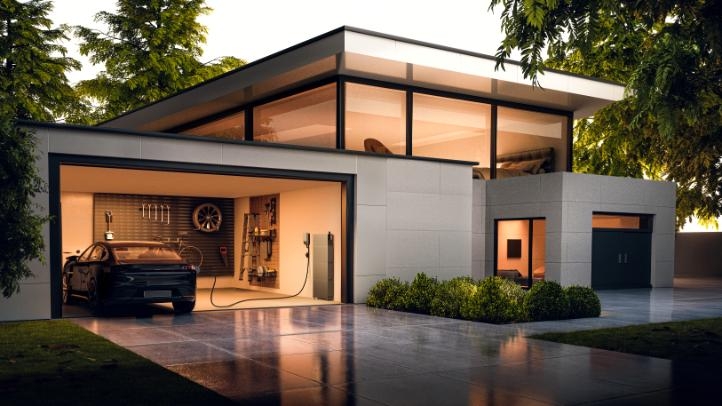
For households managing a budget alongside energy needs, modular battery systems address the capacity-versus-cost dilemma. A scalable solution such as the EcoFlow PowerOcean Single-Phase Battery is built around this principle. Usable capacity starts at a single 5 kWh base module. Additional modules can be integrated later as the household's budget or energy demands increase. Starting with a base unit and expanding capacity over time provides a practical approach to managing upfront costs.
Maximizing ROI with smart energy management
The long-term value of a residential solar setup depends heavily on daily power usage efficiency. With Australian feed-in tariffs averaging 5 to 10 cents per kWh and grid electricity costing 30 cents or more, exporting daytime power only to repurchase grid power at night results in a financial loss. Keeping solar energy on-site for direct use yields a much higher return. Reviewing solar panel installation cost breakdowns helps identify system value upfront, but improving daily self-consumption requires no additional expense. Simple, effective load-shifting adjustments include:
Running pool pumps between 10 am and 3 pm during peak solar generation.
Scheduling high-draw appliances, like washing machines and dishwashers, for the middle of the day.
Leveraging intelligent HEMS automation
Manual load-shifting is effective but inconsistent. A Home Energy Management System (HEMS) automates the entire process without requiring ongoing input from the homeowner.
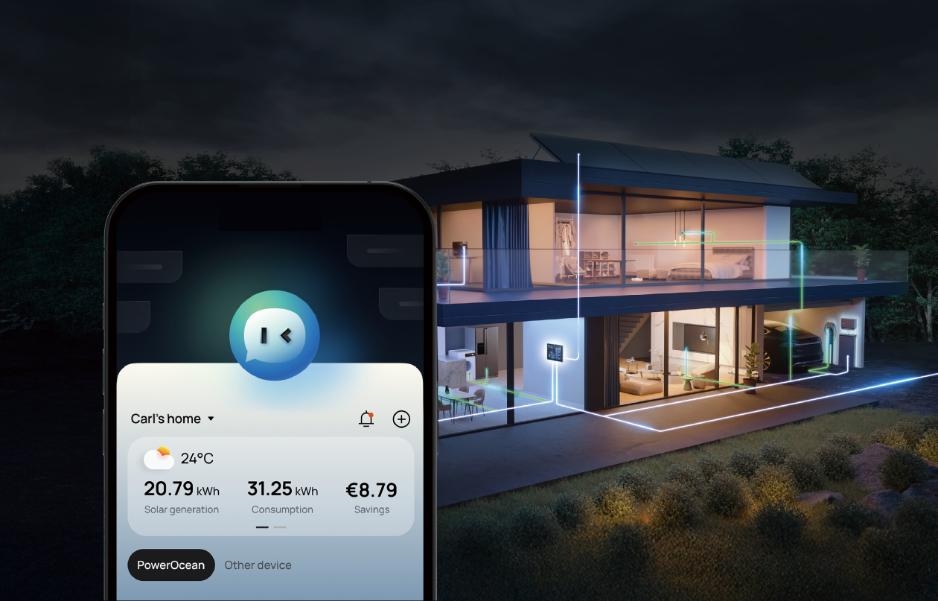
Operating through Intelligent Mode, the EcoFlow intelligent HEMS acts as the brain of the solar-plus-storage setup. It tracks real-time weather patterns and adjusts battery charge schedules based on expected solar generation for the following day. The system reads the household's Time-of-Use tariff schedule and automatically holds stored energy in reserve for the 4 pm to 9 pm peak window. When grid rates are high, it draws from the battery; when solar generation is high, it charges. This process runs continuously in the background. If stored solar is available during peak evening hours, the system prioritizes drawing from the battery rather than the grid.
Over the life of a system, this automated management supports significantly better charge cycle efficiency compared to a passive installation running without optimization.
Government rebates and solar incentives in 2026
Government incentives significantly reduce the solar energy for homes cost across Australia. Understanding how each program works helps households maximise the upfront savings available at point of sale.
Federal STCs (Small-scale Technology Certificates)
The STC scheme is the primary federal incentive. The Clean Energy Regulator manages STC registration and provides the most current information on certificate values by zone and system size. It provides an immediate upfront discount at the point of sale. The installer claims the certificates and passes the value directly to the customer as a reduction in the quoted price. No paperwork is required from the homeowner.
For a typical 6.6 kW system, the STC rebate reduces the price by between $1,500 and $2,000. A 10 kW system could see savings of $2,000 to $3,000. The STC scheme steps down by one-fifteenth each January and is scheduled to phase out entirely on 31 December 2030. The rebate value in 2026 is higher than it will be in 2027 or beyond, since the step-down continues each January.
State-specific battery incentives
State programs stack on top of the federal STC discount.
Victoria: The Solar Homes Program provides up to $1,400 for eligible households installing up to 6.6 kW. Income eligibility criteria apply.
NSW: VPP connection incentives and Peak Demand Reduction Scheme payments are available for battery installations meeting program criteria.
South Australia: Battery subsidies ranging from $2,000 to $6,000 depending on the program and system size.
Queensland: Low-interest government loans are available for solar-plus-battery systems through the Queensland Government's programs.
Cheaper Home Batteries Program
The federal Cheaper Home Batteries Program provides a rebate of approximately 30% of the battery cost at the point of sale. For a 10 kWh battery system, that equates to roughly $3,300 to $3,700 off the installed price. While the program continues through 2030, the maximum rebate values are currently operating under the tiered taper introduced after May 2026.
Size tapering rules
In 2026, a regulatory shift affects larger storage setups. Battery rebate calculations are now capped and taper for systems above certain capacity thresholds. Using a Clean Energy Council-approved modular system allows capacity to be added incrementally across separate claims. That approach preserves rebate eligibility at each stage rather than over-specifying on day one.
Conclusion
Understanding the solar energy for home cost in 2026 comes down to three decisions: system size, battery inclusion, and smart management. Each one affects both the upfront number and the long-term return.
The average cost of solar energy for home installations ranges from $4,000 for a basic 5 kW setup to $18,000 or more for a fully integrated 10 kW solar-plus-battery system. That range is wide because the variables are real. Location, roof, hardware tier, and battery capacity all move the final figure. But so do rebates.
Pairing a solar array with modular battery storage and an intelligent HEMS is one approach to improving long-term ROI in Australian conditions. The combination can reduce grid dependence and provide some buffer against tariff movements, though outcomes depend on household usage and local conditions.
Need help balancing budget and energy needs? Contact our professional energy consultants for a tailored solar battery quote based on actual usage, roof space, and local tariff structure.
Schedule Your Free Consultation Today!
What kind of product or solution are you interested in?


FAQs
How much does a 6.6 kW solar system cost in Australia?
A standard 6.6 kW system in 2026 costs between $4,000 and $6,500 after the federal STC rebate. Premium systems with top-tier panels and inverters can run $7,000 to $8,500. The STC discount of $1,500 to $2,000 is applied at point of sale by the installer.
Is solar power worth it in Australia in 2026?
For many households, yes. Grid electricity rates sit above 30 cents per kWh in most states. A 6.6 kW system may save $1,500 to $2,500 per year depending on usage and tariff structure, with payback periods often falling between 3 and 6 years. Longer-term returns vary based on system performance, feed-in rates, and how much solar is self-consumed.
How long does it take for solar to pay for itself?
Payback periods for quality 6.6 kW systems in Australia typically fall between 3 and 6 years after rebates. Adding battery storage extends the payback to 6 to 9 years but increases annual savings by reducing expensive evening grid purchases.
Can a solar battery power a house at night?
In many cases, yes. A 10 kWh battery can cover a typical evening load of 8 to 12 kWh, though actual performance depends on the household's consumption and battery state at sunset. On nights with higher usage or lower daytime solar generation, some grid top-up may be needed. Modular systems allow capacity to grow as household needs change.
Are there hidden costs in solar installation?
Common unexpected costs include switchboard upgrades ($500 to $1,500), metering changes, and scaffolding for complex or multi-storey roofs. Old wiring in the meter box may also need remediation before installation can proceed. Always ask installers to quote these items separately rather than treating them as included.