Electricity Top Up Online: Smart Meter Functions, Tariffs, and Residential Energy Management
For households using a prepayment or pay-in-advance electricity service, online top-ups provide a convenient way to add credit to an energy account. For standard postpaid customers, online payments can also be used to make interim payments without waiting for the next bill.
This guide covers how online top‑ups work, how smart meters feed live data to your device, how different retail tariffs affect your balance, and how modern energy setups can help you rely less on the grid.
Key Takeaways
Digital payments move fast: In‑app card payments and wallets like Apple Pay and Google Pay credit your account straight away, so there's no risk of disconnection. BPAY is still a solid backup, but it may take 1-3 business days to appear on your account depending on your retailer and payment timing.
Smart meters are accurate: They log your usage in 5‑minute or 30‑minute intervals and send the data to your provider automatically each day. This can reduce reliance on estimated bills and remove the need for traditional manual meter readings in many cases.
Tariff Impact: Your balance drains a lot faster during peak ToU windows. Moving heavy loads to solar hours or off‑peak times helps your credit stretch further.
Solar Self‑Consumption: Without a battery, surplus daytime solar gets exported for peanuts, while you pay full price for evening power. Storage lets you keep that energy for when you actually need it.
Holistic Energy Monitoring: Smart home consoles give you a real‑time view of generation, storage, and usage. They turn all that complex meter data into clear, actionable ways to save every day.
What Is Electricity Top Up Online and How Does It Work?
Managing residential energy balances through online portals gives consumers full transparency over power spending without the shock of quarterly billing cycles.
Define Online Top-Up and Available Payment Channels
An online electricity top-up is a digital transaction that applies instant or same-day monetary credit to your retail energy account. While standard postpaid accounts let users make ad-hoc interim payments to smooth out expenses, some providers or specific services may offer prepaid, pay-in-advance or account-credit arrangements. The availability and operation of these services depend on the individual provider and plan.
Depending on the retailer and account type, Australian customers may have access to a range of digital payment channels:
Retailer Mobile Apps & Portals: Stored debit/credit cards or saved digital wallets (Apple Pay, Google Pay) provide immediate balance updates.
BPAY: Use your retailer's Biller Code and Customer Reference Number through your online banking service. Processing times can vary by retailer and payment method, so check when the payment will be credited before relying on it to maintain your balance.
Direct Debit / Automatic Payments: Some retailers allow customers to schedule or automate payments from a nominated bank account. Available features and payment triggers vary by provider and account type.
Australia Post Post-Billpay: An online payment option utilizing barcode reference numbers for secure transactions.
Step-by-Step Guide to Adding Credit to Your Account
Keeping your power connected via online platforms follows a straightforward sequence designed to secure immediate confirmation:
Log In to Your Retailer Account: Open your energy provider's mobile app or log into their online portal using your account credentials.
Review Your Current Balance & Run Rate: Check your live credit level alongside estimated daily burn rates calculated from your latest smart meter readings.
Select Your Top-Up Amount: Enter a custom figure or pick a pre-set top-up denomination (e.g., $50, $100).
Choose a Payment Method: Select an instant payment method like a debit card or digital wallet for immediate clearing.
Confirm and Record the Reference: Submit the payment and save the digital receipt number. Many smart systems can update the in-app balance within minutes, depending on the retailer and payment method.
How Do Smart Meters Support Online Electricity Management?
A smart meter acts as the central nervous system of modern residential energy management by replacing old mechanical spinning dials with two-way digital communication.
Automate Meter Reading and Transmit Data to Suppliers
Modern smart meters record your usage in 5‑ or 30‑minute blocks and send that data overnight through cellular or mesh networks. The charts you see in the app are usually from the previous day, not real‑time, but they’re accurate. No more estimated bills, and you can see exactly how fast your credit is burning. That visibility makes a real difference in how you manage your top‑ups.
This automated process delivers two practical benefits:
It greatly reduces the need for estimated meter reads because consumption data can be collected electronically and transmitted to the relevant market participants.
It enables energy retailers to process daily balance deductions accurately, keeping online top-up calculations perfectly aligned with real-world consumption.
Sync Real-Time Usage Data With Mobile Applications
Modern smart meters bridge the gap between utility data and everyday consumer insights. By relaying interval figures directly to your retailer’s cloud platform, these meters populate energy dashboards inside your phone app.
Instead of deciphering a dense bill months down the track, you can see exactly how many kilowatt-hours your household consumed while running the air conditioning yesterday afternoon or how baseline loads impact your nightly burn rate. This granular visibility helps households track their daily spending trajectory and top up accurately before balances run thin.
Detect Irregular Consumption and Issue Fault Alerts
Because smart meters monitor voltage levels and power flow continuously, they can identify anomalies long before a homeowner notices a problem on their balance sheet. When connected through a Home Energy Ecosystem, these insights can be combined with other household energy data to support smarter daily management.
Appliance Faults: A failing hot water element or a stuck pool pump running 24/7 creates an immediate baseline spike, triggering automated app notifications.
Low Credit Warnings: Integrated platforms warn users when their balance drops below two to three days of projected usage.
Power Quality & Outage Detection: Smart meters alert distribution networks instantly if supply drops out, speeding up neighborhood fault restoration without requiring manual phone calls to network emergency lines.

How Do Electricity Tariffs Affect Your Top-Up Costs?
The rate at which your online balance depletes depends directly on the structure of your underlying electricity contract.
Compare Prepayment Tariffs vs. Standard Postpaid Plans
Choosing between prepaying your electricity and sticking to a traditional postpaid plan comes down to budgeting preferences and cash flow control.
| Feature | Prepayment Tariffs | Standard Postpaid Plans |
|---|---|---|
| Payment | Pay for energy before use | Pay after energy is consumed |
| Budgeting | Provides more visibility over daily spending | Offers less immediate spending feedback |
| Energy monitoring | Requires regular balance tracking | Usually focuses on billing cycles |
| Risk | Users need to maintain sufficient credit | Bills may be higher after periods of increased usage |
| Best for | Households wanting upfront budget control | Households preferring traditional billing |
Calculate Costs Under Fixed-Rate and Variable-Rate Models
Electricity retailers package energy rates into two primary pricing models:
Fixed-Rate Plans: The cost per kilowatt-hour (c/kWh) and daily supply charge remain locked for the duration of the contract term (e.g., 12 months). Your top-up burn rate stays entirely predictable, insulating your household budget against wholesale market volatility.
Variable-Rate Plans: The retailer reserves the right to adjust usage and supply rates throughout the contract period, subject to regulatory notice rules. While initial variable rates often look competitive, sudden market adjustments mean your regular $50 top-up may not last as long if wholesale power costs climb.
How Time-of-Use Tariffs Affect Electricity Costs
Typical ToU periods vary by retailer, network and tariff. The following is an illustrative example rather than a universal Australian schedule. :
| Period | Example Timing | Typical Price |
|---|---|---|
| Peak | Often late afternoon/evening | Usually higher rates |
| Shoulder | Varies by retailer and network | Moderate rates |
| Off-Peak | Often overnight or selected periods | Usually lower rates |
If your tariff charges substantially more during peak periods, running high-consumption appliances at those times can cause your balance to fall much faster than it would under a cheaper off-peak rate.

How Can Households Manage Electricity Costs More Efficiently?
Strategic energy management turns raw smart meter visibility into long-term reductions on retail top-up outlays.
Run Flexible Loads During Peak Solar Production
Match your usage to your solar production, and the savings show up fast. Run washing machines, dishwashers, pool pumps, and electric hot water systems between 10 AM and 2 PM. Combining daytime solar usage with a solar battery can help households use more renewable energy throughout the day. Use delay timers or smart plugs to handle it automatically. Those appliances pull heavy loads, and when they run off free daytime solar, you’re not buying power from the grid. These small adjustments can help reduce unnecessary grid consumption over time.
Store Excess Solar Energy for Evening Use
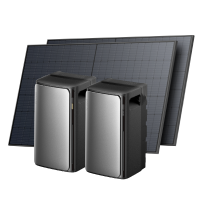
For many Australian solar households, there’s a mismatch that costs real money. Panels pump out power in the middle of the day when no one’s home. An EcoFlow Solar Battery can help store this excess solar energy, allowing households to use more of their own generation when electricity demand rises later in the day. But demand peaks in the evening, when the cooking starts, lights go on, and the air con ramps up. Without a battery, that extra solar gets pushed to the grid for a relatively low feed-in credit, often around a few cents per kWh depending on your retailer and location. Then, a few hours later, you’re buying it back at higher retail rates, which can vary significantly depending on your retailer, state, and tariff structure.
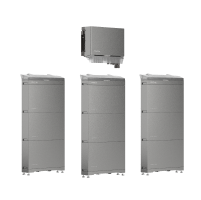
A home battery system such as the EcoFlow OCEAN 2 Plus Single Phase fixes that. It captures the solar you’d otherwise export and holds it for when you actually need it. Evening rolls around, you run the heavy stuff off your stored power. That means higher self‑consumption, less drawn from the grid, and bills that don’t spike. Simple equation.
Adjust Daily Habits Based on Consumption Data
Upgrading to smart meters, solar, and a battery is a big step. But to get the most out of it, you need to see what’s actually happening with your energy, in real time.
That’s where a hub like the EcoFlow PowerInsight 2 comes in. It provides a central display for monitoring generation, household usage, and battery status, helping users better understand how their energy system operates. You can see where your power’s going, adjust your habits, time your appliances better, and keep proper track of your costs. Simple, but it changes how you use the system.
Schedule Your Free Consultation Today!
What kind of product or solution are you interested in?

Conclusion
Putting online top‑ups together with the detailed data from a smart meter gives Australian households a real grip on their power budgets. When you know how your tariff hits you during peak times, you can schedule heavy appliances to run when the sun’s out and use home battery storage alongside live monitoring to keep your account in the black. That way you can bring your grid costs down and keep them there.
FAQ
Will getting a smart meter automatically change my tariff?
Not necessarily. A smart meter can make a household eligible for time-of-use, demand or other interval-based tariffs, but whether your retail electricity plan changes depends on your distributor, retailer, location and applicable tariff arrangements. Before or after a smart meter installation, check with your retailer to confirm whether your pricing structure will change and what options are available.
What happens to excess solar energy if I don't have a battery?
It flows back into the grid automatically, and you’ll get a small feed‑in tariff credit. But since feed‑in rates are usually much lower than what you pay for grid power, exporting without storage doesn’t deliver the same financial benefit as using it yourself.
Why is my electricity bill so high when I have solar panels?
You’re probably using most of your power in the evening, after the sun goes down, or on overcast days when solar output drops. If you’re running heavy appliances outside daylight hours, you’re paying full retail rates for that power no matter how many panels you’ve got on the roof.
Can I add a battery to my existing solar system?
Yes, most existing residential solar systems can be retrofitted with an AC-coupled or hybrid battery storage setup. An accredited installer will inspect your existing inverter model and switchboard capacity to determine the cleanest, most efficient integration method for your home.