Electricity Discounts: How to Find a Cheaper Energy Plan in Australia
Electricity discounts can make an Australian energy plan look cheaper than it is. A large percentage off may still leave you paying more if the plan has high usage rates, a steep daily supply charge or conditions that are easy to miss. Before switching, compare the full rates, check the offer against the relevant government benchmark, and see whether you qualify for rebates or concessions.
Key Takeaways
Base rates matter more than headline percentages: A 25% discount off an inflated base rate often costs more than an unbundled plan with rock-bottom daily supply and usage tariffs.
Compare the overall cost: Guaranteed discounts avoid payment-related discount conditions, but a conditional offer may still have a lower estimated annual cost.
Always benchmark against the official safety net:
Use the DMO comparison price (in NSW, SE QLD and SA) or the VDO to check whether an offer actually saves you money.
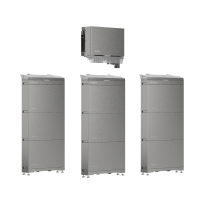
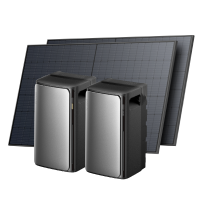
Self-generation changes the maths: Rooftop solar paired with home battery storage such as the EcoFlow OCEAN 2 Plus Single Phase can reduce grid purchases; savings depend on tariffs, system sizing and usage.
What Are Electricity Discounts in Australia?
Retailers use discounts to attract customers, but the percentage alone doesn’t tell you how much you’ll save. Check which charges the discount applies to and whether you need to meet any conditions.
How Electricity Discounts Are Applied to Electricity Bills
Discounts may apply to usage charges or to more of your bill, depending on the offer. In NSW, south-east Queensland and South Australia, relevant electricity offers use the DMO comparison price to help customers compare plans; Victoria uses the VDO. Check the plan information and your bill to see which charges qualify and how credits are applied.
Common Types of Electricity Discounts Offered by Energy Retailers
Retailers structure promotional pricing across several common categories:
Guaranteed usage discounts: A fixed percentage knocked off the per-kilowatt-hour (kWh) cost of the power you consume throughout the contract term.
Total bill discounts: Reductions that slash both your daily supply charge and your electricity usage costs.
Upfront sign-up credits: A one-off cash credit (for instance, $75 to $150) credited against your first or second monthly statement.
Direct debit and paperless incentives: Modest ongoing bill credits awarded simply for opting out of paper letters and automating bank payments.
Conditional vs Unconditional Electricity Discounts
Understanding contract fine print separates real savings from unexpected bill shock:
| Feature | Unconditional Discounts | Conditional Discounts |
|---|---|---|
| How It Applies | Automatic reduction applied every single billing cycle. | Applied only when you meet strict operational rules. |
| Common Triggers | Available without meeting a payment-method or payment-timing condition. | "Pay-on-time", paying via a specific portal, or maintaining dual-fuel. |
| Risk Factor | The discount is not conditional on payment timing; other charges may still apply. | The discount may be lost if its conditions are not met; check the contract. |
| Budget Predictability | High; easy to budget across seasonal peaks. | Low; a single late fee can suddenly spike your quarter’s costs. |
An unconditional discount can make budgeting simpler, but compare the plan’s full estimated cost and other terms before choosing.

What Should You Compare When Looking for a Cheaper Electricity Plan?
For households considering solar, solar battery storage can also affect how much electricity they need to buy under a new plan.
A lower advertised rate doesn’t always mean a lower bill. Daily supply charges, usage rates, solar credits and the offer’s expiry date all affect what you’ll pay over a year.
Electricity Usage Rates and Daily Supply Charges
Every standard residential electricity quote consists of two distinct cost components. First is the daily supply charge, a fixed fee (quoted in cents per day) that covers connection and grid maintenance regardless of how much power runs through your switchboard. Second are the usage rates, the variable cost (cents per kWh) charged for every unit of electricity consumed. If your property stands empty for long stretches or you run a lean household, a high daily supply charge can rapidly negate a cheap usage rate. Conversely, large families running ducted air conditioning ought to prioritise the lowest possible per-kWh charge.
Electricity Tariffs and Solar Feed-in Rates
The way your distributor meters electricity determines the framework of your plan:
Single-rate tariffs: You pay the exact same cents-per-kWh rate 24 hours a day, offering simplicity and straightforward budgeting.
Time-of-use (TOU) tariffs: Rates vary across distinct time windows—typically Peak (expensive late afternoon/evening), Shoulder (moderate daytime), and Off-Peak (cheaper overnight periods).
Solar Sharer Offer (SSO): Introduced on 1 July 2026, this optional electricity offer gives eligible households with smart meters three consecutive hours of free electricity each day. Available in participating DMO regions, it allows households to shift energy-intensive activities, such as running washing machines or charging home batteries, to the free-use window. However, daily supply charges and electricity rates outside this period still apply, so compare the overall plan cost before signing up.
Solar feed-in tariffs (FiTs): Retailers may credit exported rooftop solar per kWh. Rates and conditions vary by offer and location, so compare the feed-in credit alongside supply and usage charges. If you use the EcoFlow solar battery to store surplus solar for later, compare plans using your remaining grid imports and exports rather than the feed-in rate alone.
Discount Conditions, Eligibility and Promotional Periods
Attractive offers often come with an expiration date. Check the length of the benefit period, what happens when it ends, and any notice from your retailer. Scrutinise whether eligibility hinges on a motoring club, loyalty membership or online sign-up, and set a reminder to review the offer before its benefits expire.
Comparing Annual Electricity Costs Across Different Plans
Rather than running mental arithmetic across conflicting discount percentages, rely on standard regulatory benchmarks:
DMO comparison price / VDO: The official benchmark representing the annual cost for an average household in your specific distribution zone.
Percentage relative to the benchmark: Retailers must state whether their plan is “15% less than the DMO comparison price” or “at the DMO comparison price”.
Energy Made Easy and Victorian Energy Compare: Independent, government-run comparison portals that let you upload actual recent meter data to calculate precise annual estimates without commercial bias.

How to Switch to a Cheaper Electricity Plan
If you have a smart meter, check how interval data supports your retailer’s billing and tariff options before switching.
Most household customers can switch without a visit or interruption to their electricity supply. Before you sign up, check your current contract and make sure the new plan’s rates and conditions match the quote.
Check Your Current Electricity Contract and Exit Fees
Check your current contract for any exit fee before switching. Whether a fee applies depends on your plan and contract terms; do not assume residential market offers are universally exempt.
Review the New Plan's Rates, Conditions and Eligibility
Before committing, inspect the prospective provider’s Basic Plan Information Document (BPID) or Energy Fact Sheet. These documents clearly declare:
Exact daily supply and usage tariffs inclusive of GST.
The length of any introductory benefit periods.
Specific conditions regarding payment methods, paper statement surcharges, or late fees.
Solar feed-in structures and potential daily limits on feed-in exports.
Complete the Switch Through Your New Electricity Retailer
Once you select a competitive offer, head directly to the incoming retailer’s website:
Provide your personal details and the National Metering Identifier (NMI) printed on your bill; it contains 10 or 11 characters.
Choose your billing frequency and set up automated payments if a direct-debit discount applies.
The new provider arranges the transfer with your existing supplier. Ask the retailer to confirm the expected completion date, as timing depends on your metering and circumstances.
You receive a legally mandated 10-business-day cooling-off period during which you can cancel the switch without penalty.
Check Your First Bill After Switching
When the inaugural bill arrives, pull up your agreement confirmation email and cross-check the numbers. Verify that the daily supply rate, usage tiers, and guaranteed discount credits align with the signed quote. If your property features a solar array, check that your meter data accurately registers daytime exports under the agreed feed-in tariff.
How to Keep Your Electricity Bills Low Beyond Discounts
A cheaper plan helps, but it’s only one way to manage energy costs. Rebates, when you use electricity and how much rooftop solar you use can all make a difference.
Take Advantage of Government Electricity Rebates and Concessions
Federal and state governments offer energy concessions to eligible households, including pensioners, Health Care Card holders, Department of Veterans’ Affairs Gold Card holders and some low-income households. These credits are usually applied to your electricity bill. From time to time, governments also provide broader energy relief, which may appear as credits on several bills.
Shift Electricity Use to Lower-Cost Tariff Periods
If you have a smart meter and a time-of-use plan, running appliances during off-peak hours can reduce costs. You can also use sunny midday hours to make better use of rooftop solar.
When your panels produce more electricity than your home can use, the surplus is often exported for a modest feed-in credit. A home battery can store some of that power for evening use, reducing the amount you need to buy from the grid. The EcoFlow OCEAN 2 Plus Single Phase combines solar and battery storage to help households use more of their own generation.
Reduce Household Electricity Consumption Through Energy-Efficient Practices
Set reverse-cycle air conditioning to around 24°C in summer and 20°C in winter, wash everyday clothes in cold water, and switch off entertainment devices or bar fridges when they’re not in regular use. To see which appliances are using the most power, the EcoFlow PowerInsight 2 displays real-time data for compatible solar generation, household consumption and battery storage, helping you spot patterns and make more targeted changes.
Monitor Electricity Prices and Review Your Plan Regularly
For a retailer-specific example, compare AGL energy rates alongside the current offer available for your postcode.
Electricity rates can change, often after the annual benchmark updates in July. Set a reminder to compare your latest bill against independent comparison sites. If a better offer is out there, switching online helps you avoid staying stuck on an uncompetitive plan.
Schedule Your Free Consultation Today!
What kind of product or solution are you interested in?
Conclusion
When comparing electricity plans, focus on the rates and terms that actually shape your bill: daily supply charges, usage rates, discount conditions and solar feed-in credits. Check offers against the relevant benchmark, then review your bill after switching to confirm the agreed rates are in place. Rebates, careful appliance use and making better use of rooftop solar can all help lower costs further, especially as retail offers keep changing.
FAQs
Can you receive both electricity discounts and government energy rebates in Australia?
Yes. Eligible households can get retailer electricity discounts and government energy rebates on the same bill. Government rebates and concession credits are applied as direct reductions to your account balance, independent of any percentage discounts or sign-up credits you’ve agreed with your retailer.
Is it worth changing the electricity provider?
It can be worth switching if another available plan has a lower estimated cost for your usage after fees and conditions are considered. Review current offers when your benefits change or your usage pattern changes.
Do electricity discounts apply to households with solar panels?
Yes. Standard electricity discounts apply to homes with solar, though the discount usually targets grid consumption charges rather than boosting your feed-in rate. When comparing solar plans, check that a high headline consumption discount doesn’t come with an unusually suppressed solar feed-in tariff.
Can you lose your electricity discount if you miss a bill payment?
If your plan includes a conditional pay-on-time discount, missing its payment conditions may affect that discount. Check your contract and ask your retailer about payment assistance if needed.
Can you keep your electricity discount when moving house in Australia?
Do not assume your current discount will apply at a new address. Ask your retailer which plans and rates are available there, and compare the new offer before agreeing.