AGL Energy Rates 2026: How to Lower Your Household Electricity Costs in Australia
In 2026, understanding your AGL electricity bill is essential for keeping your household expenses under control. Whether you’re living in Sydney, Melbourne, or Adelaide, your electricity costs depend not just on how much power you use, but when you use it. This guide breaks down the latest AGL Energy rates for 2026, explains how pricing really works, and shows you practical strategies—from smart usage habits to home energy storage—to significantly reduce your power bills.
Latest AGL Electricity Rates in 2026
Keeping up with energy prices in Australia feels like chasing a moving target. Where you live makes a big difference whether it’s a terrace in Sydney or a bungalow in Adelaide, your per kWh rate can vary a fair bit.
1. Rates by State
AGL remains a dominant player in NSW, VIC, QLD, and SA. Currently, Victoria often sees more competitive “market offers” due to high retail competition, while South Australia continues to face some of the highest wholesale costs in the country.
Here’s a general snapshot of typical AGL electricity rates across major states in 2026:
| State | Typical Rate (c/kWh) | Daily Supply |
|---|---|---|
| NSW | 30–38c | $1.00–$1.20 |
| VIC | 26–34c | $0.90–$1.10 |
| QLD | 28–36c | $1.00–$1.25 |
| SA | 35–45c | $1.10–$1.30 |
Rates vary depending on your postcode, meter type, and whether you’re on a single-rate or Time-of-Use tariff.
2. Supply Charges
Don’t forget the daily supply charge. This is the fixed cost you pay just to stay connected to the grid, regardless of how much power you use. In 2026, these charges typically hover between $0.90 and $1.30 per day, depending on your distribution zone.
3. Understanding "Five-Period" TOU Pricing
While many households remain on traditional Peak/Off-Peak rates, the most significant savings in 2026 come from AGL’s Time-of-Use (TOU) specialized offers. These plans are designed to sync with Australia’s renewable energy peaks:
Super Off-Peak (10 AM – 3 PM): The “Solar Sponge.” Rates are near-zero due to excess solar.
Evening Peak (4 PM – 9 PM): The “Danger Zone.” Demand is high and prices are at their max—avoid grid usage here at all costs.
Overnight Off-Peak (9 PM – 10 AM): Standard rates for baseline usage.
| Period | Time | Strategy | Plan Type |
|---|---|---|---|
| Super Off-Peak | 10 AM – 3 PM | The "Solar Sponge": Run heavy appliances (Dishwasher, EV charging). | Specialized AGL Smart Plans |
| Evening Peak | 4 PM – 9 PM | The "Danger Zone": Minimize grid draw; use your EcoFlow battery. | All TOU Plans |
| Off-Peak | 9 PM – 10 AM | Baseline: Standard overnight usage. | Standard TOU Plans |
Pro Tip: In 2026, don’t just settle for a generic plan. If you have a smart meter, ask AGL specifically for a “Solar Sponge” or “Super Off-Peak” window. Shifting your energy-heavy tasks to the 10 AM – 3 PM window can often land you rates near zero—or even negative in some experimental VPP (Virtual Power Plant) offers.
Why Aren’t We Seeing the Full Savings Yet?
While the AER’s March 2026 draft determination points to significant price drops this July, several factors are still cushioning the fall for Australian households:
Grid Modernization Costs: A huge portion of your bill still goes to “poles and wires.” The massive 2025-2026 rollout of community batteries and grid upgrades for two-way solar flow is a long-term investment that is still being recovered through network charges.
The Reliability Gap: As older coal plants like Eraring operate within their extended service window (currently slated until at least August 2027), the NEM (National Electricity Market) still experiences occasional price volatility. This is particularly true during the “evening peak” as the grid balances traditional base-load power with the rapid integration of large-scale storage batteries.
Retail Lag: Even as wholesale gas and coal prices have stabilized in early 2026, retail plans (like the DMO) are adjusted annually. This means your current AGL rate might not reflect the market’s recent downward trend until your next contract refresh.
The Transition Levy: The upfront capital cost of the ‘Rewiring the Nation’ projects—bringing renewable energy from windy regions to the cities—is still being amortized across current retail rates.
In short, while wholesale prices are falling, network costs and timing delays are keeping retail bills sticky—for now.
How to Calculate Your AGL Electricity Bill
Before you can slash your bill, you need to know how the math works. It’s not just magic numbers on a page!
1. Basic Formula for Estimating Your Bill
Your total cost is generally calculated as:
Total Cost = (Usage in kWh × Rate) + (Daily Supply Charge × Number of Days)
Example: Average Australian Household Energy Costs
An average household using 15 kWh per day, at a rate of $0.32/kWh, with a daily supply charge of $1.10, would pay approximately:
Energy cost: 15 × 30 × $0.32 = $144
Supply charge: 30 × $1.10 = $33
Total monthly cost ≈ $177 (around $180)
Note: These figures are based on Q1 2026 rates and are expected to decrease following the July 1st price resets.)
2. Factors That Influence Your Final Bill
Your bill isn’t just about the rate. Things like controlled loads (for your hot water system), solar feed-in tariffs (what AGL pays you for your excess sun), and seasonal changes (hello, summer AC!) will shift the final tally.

Best Ways to Lower Your AGL Energy Costs in 2026
Ready to fight back against rising costs? Here’s how to put some money back in your pocket.
1. Switch to the Right AGL Plan
Don’t just “set and forget.” AGL often introduces new plans with better “Value Add” credits or Netflix inclusions. Check if you’re on the Standard Retail Contract—if you are, you’re likely paying too much. Ask for their best Market Offer.
2. Take Advantage of Off-Peak Pricing
If you’re on a TOU plan, run your dishwasher and washing machine at 10 AM rather than 6 PM. Some AGL plans even offer “Free Power” periods or ultra-low rates during the day.
3. Upgrade to Energy-Efficient Appliances
That old fridge in the garage might be costing you a fortune. Look for appliances with high “Energy Star” ratings to lower your base load.
4. Install Solar Panels and Battery Storage
In Australia, many Australian households are turning to home energy storage systems and solar batteries solutions to reduce reliance on the grid. With peak electricity prices climbing, relying solely on daytime generation isn’t enough to kill off those high evening bills.
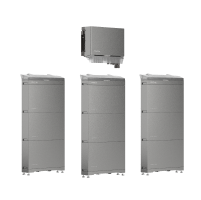
This is where an advanced solution like the EcoFlow PowerOcean(Three-Phase) Home Battery System comes in. Featuring a modular design, it starts at 5kWh and can scale up to 45kWh, making it a perfect fit for a small unit or a big family home in the suburbs. By storing your excess solar energy during the day and using it at night, you can bypass AGL’s expensive peak rates entirely. Plus, with a 12kW output and three-phase support, the PowerOcean can keep your whole house running—even if the grid goes down. In states like NSW and VIC, this “store-and-use” strategy is the best hedge against future price hikes.
How Much Can You Actually Save?
You can estimate your annual savings using this simple formula:
Savings per year ($) = Annual kWh shifted × Peak price difference
| Scenario | Value |
|---|---|
| Shifted usage | 8 kWh/day |
| Peak vs Off-peak difference | $0.20 |
| Annual savings | ≈ $584 |
5. Use Smart Energy Monitoring Tools
You can’t manage what you can’t see. A lot of Aussie households are moving away from “passive” consumption to “active” control.
Devices like the EcoFlow PowerInsight 2 provide a sleek 11-inch touchscreen that acts as the “brain” of your home energy. It shows you exactly where your power is going in real-time from your solar production to your battery levels. By identifying “power hog” appliances, you can use the data to shift your habits to AGL’s off-peak windows. It’s the difference between guessing your bill and knowing exactly how much you’re saving.
Simple Everyday Habits to Reduce Electricity Bills
You don’t always need high-tech gear to save a few bucks. These “old-school” tricks still work wonders:
Reduce Standby Power: Switch off your gaming consoles and TVs at the wall. “Vampire power” can account for 5% of your bill.
Optimise Heating and Cooling: Set your AC to 24°C in summer and 18-20°C in winter. Every degree lower/higher adds about 10% to that appliance’s running cost.
Switch to LED Lighting: It’s a no-brainer. LEDs use about 80% less energy than old halogens.
Wash Clothes Efficiently: Use cold water cycles and only run the machine when you have a full load.
Improve Insulation: Use “snake” draft stoppers under doors and close your curtains before the sun hits the windows.

Is AGL Still Competitive in 2026?
With so many “tier two” retailers popping up, is the big blue “A” still worth your time?
Pros of Choosing AGL
Reliability: They are a massive company with a stable balance sheet.
Advanced Tools: The AGL app is one of the best for tracking daily usage and managing multiple accounts.
Cons of AGL Energy Plans
Price: They are rarely the absolute cheapest on the market compared to smaller, “no-frills” retailers.
When Should You Compare Other Electricity Providers?
If your “benefit period” (the discount period) has expired, or if you haven’t checked your plan in 12 months, it’s time to shop around.
Best Energy Comparison Platforms in Australia
Use the government-run Energy Made Easy (all states except VIC) or Victorian Energy Compare for unbiased results.
Conclusion
Lowering your AGL energy costs in 2026 is all about a two-pronged attack: shifting your habits to match off-peak times and reclaiming your energy independence. By building a robust home energy ecosystem, you can move away from passive consumption and take full control of your own ‘micro-grid’ at home.
Schedule Your Free Consultation Today!
What kind of product or solution are you interested in?

FAQ
1. How much is AGL electricity going up?
Actually, the trend is reversing. According to the AER’s March 2026 draft determination, we expect to see a price drop of 5% to 10% in many regions (like QLD and NSW) starting July 1, 2026. However, AGL’s specific rates will depend on whether they pass on these savings in full to their Market Offers.
2. Does AGL offer seniors discounts?
Yes, AGL offers various concessions and rebates for Pensioner Concession Card or Seniors Card holders, though these are often state-funded and applied through your AGL account.
3. Who is cheaper, AGL or EnergyAustralia?
It depends entirely on your postcode and usage profile; while they are “The Big Two” and often price-match, EnergyAustralia sometimes wins on solar feed-in tariffs, while AGL often has better loyalty rewards.
4. Is Solar Worth It with AGL in Australia?
Absolutely, though the focus has shifted from “selling back to the grid” to “self-consumption” due to lower feed-in tariffs and higher retail rates.
5. How Often Should I Compare Electricity Providers?
You should compare your rates every 6 to 12 months or whenever you receive a “Price Change” notification from your current provider.