Smart Meters in Australia: How They Work with Solar and Home Batteries
A smart meter tracks how much electricity your home imports from the grid and, where applicable, how much it exports. If you have solar and a battery, this data can help show when you are importing or exporting electricity across different tariff periods.
This guide explains how smart meters work with solar and batteries, what their data can and cannot show, and what to check before you install or upgrade your system.
Key Takeaways
• Bi-directional tracking: Smart meters can record electricity imported from and exported to the grid, making them suitable for homes with solar generation.
• Interval data and billing: Smart meters can provide interval data remotely, reducing the need for manual meter reads and supporting tariff structures such as time-of-use pricing. The exact billing arrangement depends on your retailer and meter configuration.
• Peak-shaving potential: When paired with a suitable battery energy management system, smart-meter and tariff data can support charging during lower-cost periods and discharging during higher-cost periods.
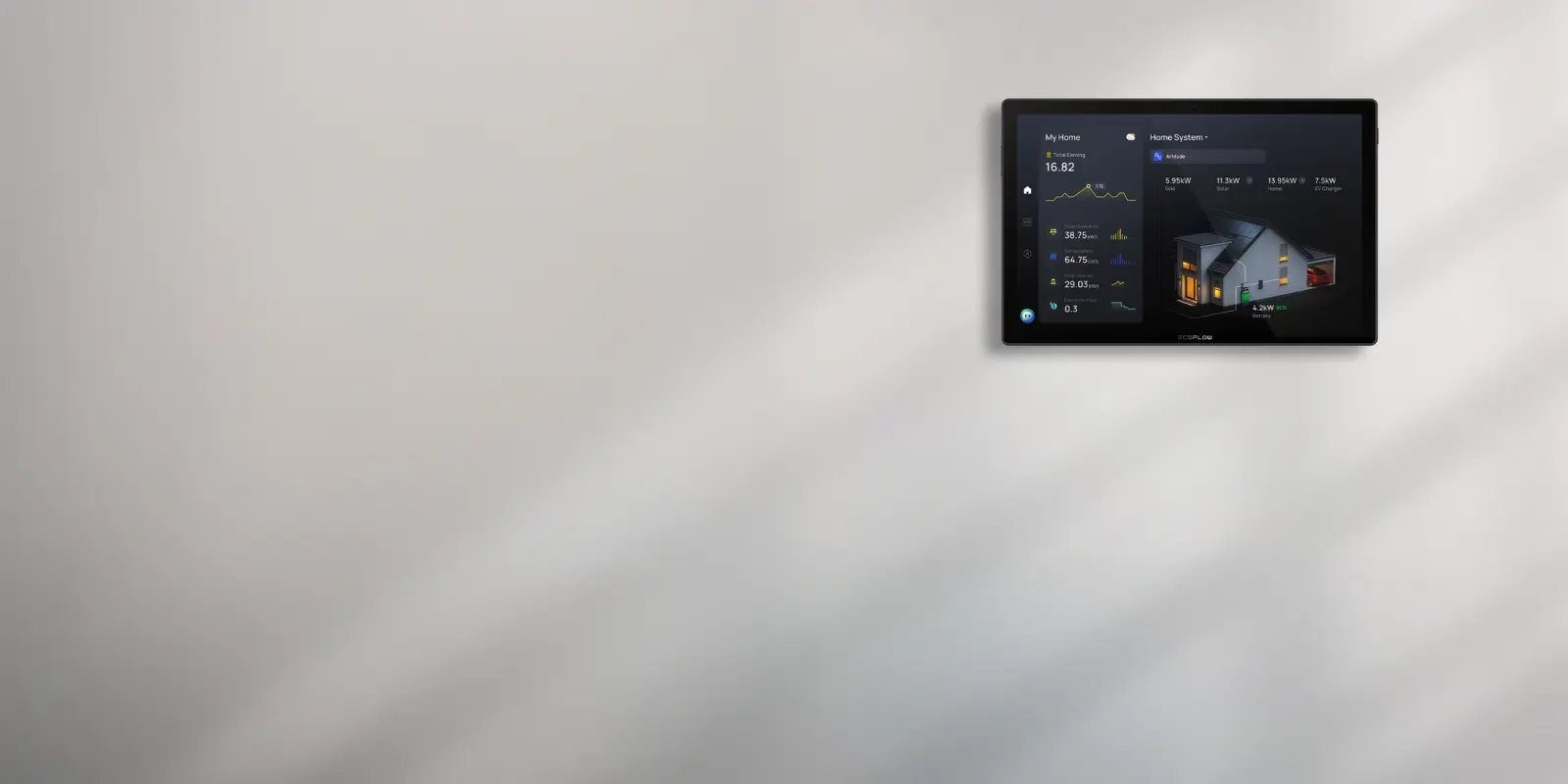
• Visibility beyond the meter: While a utility smart meter primarily records grid imports and exports, dedicated home energy monitors such as the EcoFlow PowerInsight 2 can provide a broader view of solar generation, household consumption, and battery status.
• Pre-install checks: Confirm that your meter supports the required import and export measurement and interval data for your tariff, check your distributor’s phase and export requirements, and use appropriately licensed and accredited installers where required.
What Is a Smart Meter and How Does It Work?
A smart meter records how much electricity your home uses and sends the data automatically to your electricity provider. Unlike older meters that require manual readings, it provides regular interval data that can be used for more accurate billing and time-of-use tariffs.
Real-time consumption data replaces manual meter readings
Traditional manual meter reads can require physical access to the meter and may be less frequent than interval readings. Smart meters record electricity use at regular intervals, with current Type 4 smart meters generally providing 5-minute data in the National Electricity Market. This gives retailers and customers a more granular view of when electricity is being used.
Automatic data transmission enables more accurate billing
Smart meters can transmit interval data remotely to the relevant metering and market systems, allowing retailers to use measured consumption data for billing. In the NEM, five-minute settlement applies to the electricity market, while some legacy metering arrangements may still involve different interval configurations. Smart-meter data can also support tariff structures such as Time-of-Use (ToU) pricing, depending on the retailer and customer’s meter configuration. When comparing tariff options, our guide to AGL energy rates explains how usage and supply charges affect your bill.
In-home display helps you spot energy-hungry appliances instantly
While smart meters capture interval data, the meter itself does not necessarily provide a dedicated in-home display. Retailer apps may also present usage data with a delay, depending on the retailer, metering arrangement, and data-processing process. This means they may not be suitable for monitoring household consumption in real time. To get live, second-by-second feedback, Australian homeowners pair their setup with a dedicated bridge device or a complete home energy management display like the EcoFlow PowerInsight 2, which bridges the gap between historical billing data and live consumption.
How Can Smart Meter Data Help You Monitor Solar and Battery Performance?
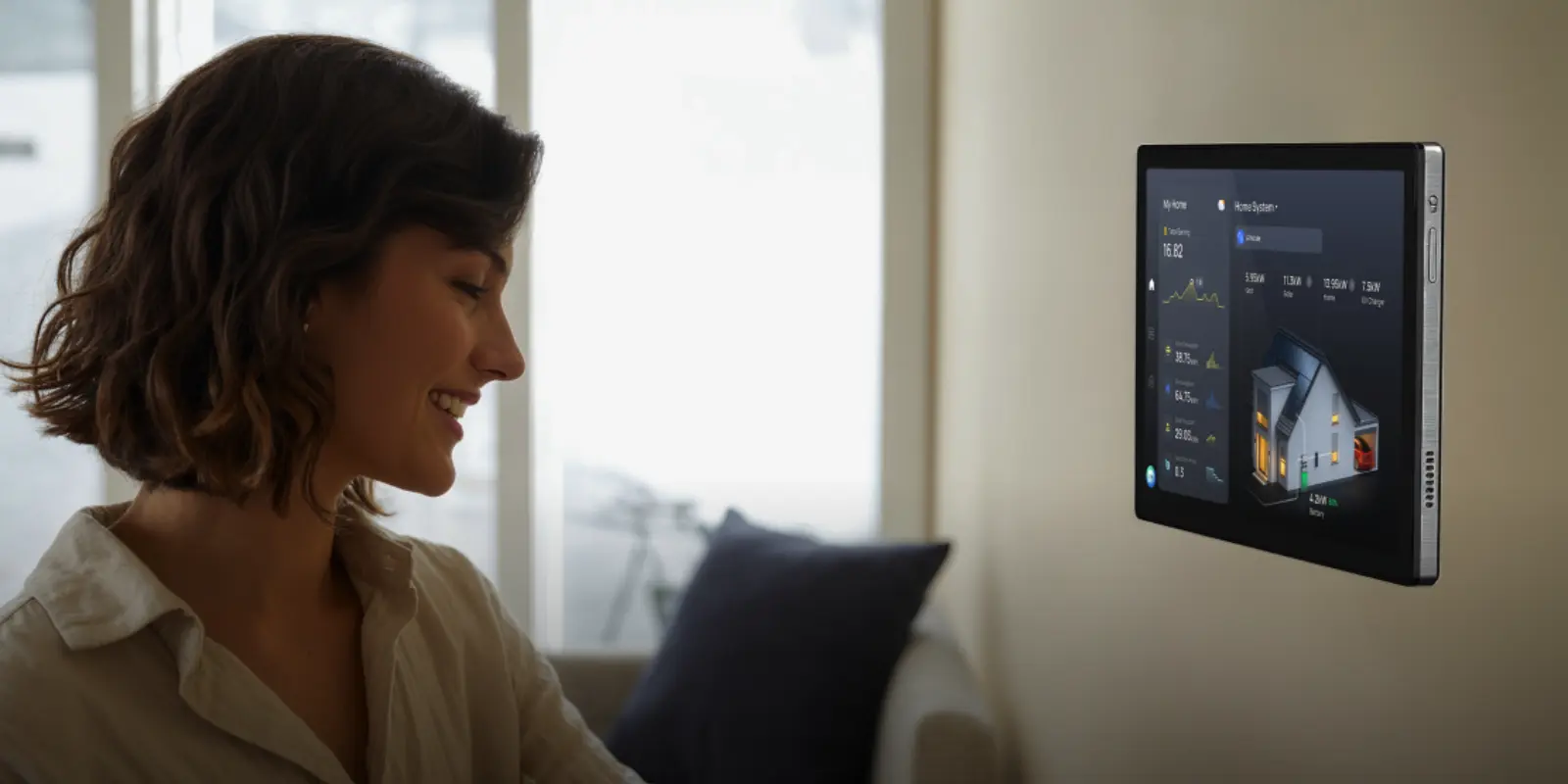
A smart meter records how much power your home pulls from and sends back to the grid. What it won’t show you is total solar generation or battery state of charge, for that, you’ll need to keep an eye on things through your inverter, battery app or a home energy management system.
| Metric | Smart Meter | HEMS / Energy Monitor |
|---|---|---|
| Grid Import | Measures electricity imported from the grid at the meter | Can provide real-time or near-real-time monitoring, depending on the system |
| Grid Export | Measures electricity exported to the grid | Can track export alongside solar and household loads |
| Solar Generation | Not normally measured as total PV generation | Can show solar generation when connected to the inverter or PV system |
| Battery Charge / SoC | Not normally available from the utility meter | Can show battery charging and state of charge when supported |
| Appliance-level draw | Usually shows whole-home grid exchange | May provide circuit-level or device-level data, depending on the system |
Track solar generation vs. household consumption in real time
Solar panels do not always generate electricity at the same time or rate as your household consumes it. Smart-meter data can help you analyse this difference retrospectively. Your usage data may show whether you regularly export surplus electricity around midday or import more power during higher-cost periods in the evening.
While utility smart-meter data may not be available to you immediately, pairing your system with a compatible HEMS or inverter monitoring system can provide more timely information about solar generation, household consumption, and battery operation. This can help you shift flexible loads, such as dishwashers, toward periods when more solar energy is available.
Monitor battery charge/discharge cycles and state of charge
Smart-meter data can help you identify changes in grid imports and exports around the times when your battery is expected to operate. However, the utility meter does not normally provide the battery’s exact state of charge or charge and discharge cycles. For those details, use the battery or inverter monitoring system.
Identify historical patterns to spot waste or underperformance
A noticeable drop in solar exports on a clear day may indicate changes in solar generation, household consumption, shading, equipment performance, or other system conditions. Comparing historical data can help you identify when a change occurred, but further checks are usually needed to determine the cause.
A standard smart meter, though, only records power imported from and exported to the grid. It won’t show you total solar generation or battery state of charge.
The EcoFlow PowerInsight 2 gives you the fuller picture including solar generation, household consumption and battery levels, all in one interface. You can also dig into historical data to see how your home’s energy use shifts through the day.
How Do Smart Meters and Batteries Work Together to Cut Bills?
A home solar battery storage system can reduce grid imports during higher-cost tariff periods. Depending on the tariff, battery configuration, and system settings, it may charge from surplus solar or, where permitted, from the grid during lower-cost periods and discharge when electricity prices are higher.
Battery control typically relies on local energy measurements
A battery system does not generally use the utility meter’s billing data as its only source of real-time control information. Depending on the system design, local energy meters, CT sensors, inverter measurements, or other monitoring hardware can provide the real-time information needed to manage charging and discharging. These measurements allow the battery or energy management system to respond to changes in household demand and apply configured charging or discharging strategies. The response speed and control method depend on the battery, inverter, meter, and system configuration.
The battery charges during cheap periods and discharges during peak
A home battery can soak up surplus solar during the day, or charge from the grid when off-peak power is cheap, then discharge through peak periods to cut both grid imports and bills.
The Ecoflow OCEAN 2 Plus single phase handles dynamic tariff scheduling, it automatically adjusts charging and discharging based on power prices and available solar. So households can store energy when it’s cheap or abundant, and use it when prices climb.
Solar generation reduces how much grid energy you need to buy
Every kilowatt-hour of solar electricity that you generate and use directly at home can reduce the amount of electricity you need to buy from the grid. In many Australian tariffs, retail electricity rates are higher than solar feed-in tariffs, so increasing self-consumption can improve the value you get from your solar generation. The exact difference depends on your retailer, tariff, location, and contract.
Automated HEMS optimises the whole system daily
A modern Home Energy Management System can use factors such as weather forecasts, solar-generation forecasts, historical consumption, and electricity prices to optimise battery operation. Depending on the system and tariff, it may schedule charging during lower-cost periods or adjust battery operation when solar generation is expected to be lower. A Home Energy Ecosystem brings compatible solar, battery and monitoring devices together for this kind of coordination.
What Should Australian Homeowners Check Before Installing Solar and Batteries?
Before installing solar or a battery, check your meter configuration, current tariff, export limits, inverter compatibility, and installation requirements. These factors can affect how the system is configured and how well it performs. Checking them in advance can help avoid compatibility issues or unexpected installation changes.
1. Check smart meter compatibility with tariffs
Moving from a flat tariff to a time-of-use or demand tariff may require a suitable interval meter and an appropriate tariff configuration. Type 4 smart meters generally provide five-minute interval data in the NEM, but the specific metering and tariff requirements depend on your retailer, distributor, and location. Check these requirements before changing tariffs.
2. Confirm solar export metering requirements
Local distribution network service providers (DNSPs)—such as Ausgrid, Endeavour Energy, Energex, and Powercor—set network-specific requirements for solar exports. Export limits can vary by distributor, connection type, location, and the connection arrangement. Some networks also offer dynamic export options that use monitoring and control equipment to manage export levels. Check the current requirements with your DNSP before installation.
3. Match battery capacity with household demand
Pull out your quarterly power bills and check how much you use in the evening. A home using around 16 kWh a day may find a 10 kWh battery useful, but the right capacity depends on when electricity is used, solar generation, tariff structure, backup requirements, and the battery’s usable capacity. Homes with high evening demand from electric cooking, heating, cooling, or EV charging may need more storage. Matching capacity to those needs also helps you assess solar battery cost before requesting quotes.
4. Check inverter and meter compatibility
Decide early whether you are using a DC-coupled hybrid inverter or an AC-coupled battery retrofit. Your installer should confirm that the inverter, battery, CT sensors, and metering interfaces are compatible. Incorrect configuration or delayed measurements can affect how the system responds to changes in household demand.
5. Compare warranties and installer qualifications
For solar and battery installations that are intended to qualify for Small-scale Technology Certificates (STCs), use an appropriately licensed and Solar Accreditation Australia (SAA)-accredited installer with the relevant accreditation or endorsement. Battery installations must comply with applicable Australian Standards, including AS/NZS 5139:2019, as well as state and territory electrical safety requirements. SAA became the installer and designer accreditation scheme operator for the SRES after the transition from the Clean Energy Council’s previous accreditation arrangements.
Schedule Your Free Consultation Today!
What kind of product or solution are you interested in?

Conclusion
Smart meters give Australian households a clearer view of electricity imported from and exported to the grid. For homes with solar and battery storage, this interval data can help identify consumption patterns and evaluate opportunities to increase solar self-consumption, store surplus generation, or shift grid use to lower-cost tariff periods.
Before adding a battery, check your meter configuration, electricity tariff, solar export limits, and inverter compatibility. The right setup depends on how much electricity your household uses and when you use it.
Disclaimer: This article is for general informational purposes only. Electricity tariffs, metering requirements, solar export limits, and installation standards may vary by location and provider. Always check the latest requirements with your retailer, DNSP, and a qualified installer before making changes to your energy system.
FAQs
What are the benefits of smart meters in Australia?
Smart meters reduce the need for manual meter reads and provide interval consumption data. Depending on your retailer and tariff, this data can support time-of-use pricing and other tariff options. Smart-meter communications can also support faster network awareness of some outages and faults.
Can I switch retailers with a smart meter?
Yes. Having a smart meter generally allows meter data to be collected remotely, so changing retailers does not normally require a physical meter read. The retailer-switching process and timing can vary depending on your circumstances.
Will a smart meter work during a power outage?
A smart meter generally cannot continue normal grid metering when the electricity supply is unavailable. Some smart-meter systems may support outage communications, such as a “last gasp” notification, but the exact functionality depends on the meter and communications network. During an outage, a battery system with suitable backup or islanding capability may continue supplying designated circuits, depending on its installation and configuration.
How often does a smart meter send data?
Smart meters in Australia can record electricity use at five-minute intervals, while the timing and frequency of data transmission and customer-facing updates can vary by meter, retailer, and metering arrangement. As a result, the data shown in a retailer app may not be available immediately.
Can I keep my solar feed-in tariff after upgrading?
In many cases, you can continue to receive a feed-in tariff after upgrading to a smart meter, but the applicable export rate and tariff conditions depend on your retailer and contract. Check the retailer’s current offer and energy price fact sheet before making the change.