Electricity and Gas: Key Differences and How to Compare Energy Plans in Australia
Electricity and gas bills are hard to compare because each one carries its own supply charge, usage rates and billing units. The best plan comes down to where you live, how much energy you use and when you use it. This guide breaks down how electricity and gas work in Australian homes, what to check on your bill, and how to weigh up plans against what your household actually needs.
Key Takeaways
Two charges to watch: Electricity and gas bills both come in two parts: a fixed daily supply charge (cents per day) and variable usage rates (cents per kWh or cents per MJ).
Efficiency vs fuel cost: Natural gas usually costs less per unit of raw energy, but modern high-efficiency electric appliances (like split-system heat pumps) turn electricity into heat far more efficiently than gas heaters do.
Location drives the choice: Gas availability and tariff structures vary widely from state to state. Victoria, for example, has banned new reticulated gas connections for most homes that need a planning permit, while parts of regional Queensland and South Australia lean heavily on bottled LPG rather than mains gas.
Self-consumption cuts bills: Pair rooftop solar with modular battery storage and households can reduce expensive peak-tariff grid imports. Gas supply charges only stop once the gas account is closed through the appropriate disconnection process.
What Are Electricity and Gas, and How Are They Used in Australian Homes?
Most Australian homes use electricity for everyday appliances, lighting and cooling. Some also use mains gas for heating, hot water or cooking. The mix varies by home and location, so it helps to know which appliances use each fuel before comparing costs.
Common Household Uses of Electricity
Electricity powers most everyday household appliances, including LED lights, fridges, televisions and washing machines. It also runs reverse-cycle air conditioners for heating and cooling, as well as ceiling fans, pool pumps and home EV chargers. For many Australian households, electricity covers nearly every daily energy need.
Common Household Uses of Natural Gas
Natural gas is commonly used for heating, hot water and cooking. In older homes in Melbourne, Adelaide and Canberra, a gas ducted heater may warm several rooms through ceiling or floor ducts. Some homes also use gas for continuous-flow hot water or an outdoor barbecue, so there’s no need to replace a portable gas bottle before cooking.
What Are the Main Differences Between Electricity and Gas?
Electricity and gas are billed in different units and reach homes through separate networks. Appliance efficiency also affects what each fuel costs to use. These differences can help explain why a lower rate per unit does not always mean a lower bill.
| Feature | Mains Electricity | Reticulated Natural Gas |
|---|---|---|
| Primary Billing Unit | Kilowatt-hours (kWh) | Megajoules (MJ) |
| Grid Infrastructure | Poles, wires, and sub-stations | Underground piped network |
| Baseline Thermal Efficiency | Up to 300%–500% (Heat pumps) | 60%–90% (Combustion loss) |
| Supply Availability | Widely available; off-grid homes use separate systems | Urban/suburban mains only (or bottled LPG) |
| Fixed Daily Cost | Daily supply charge (varies by plan) | Separate daily supply charge (varies by plan) |
Energy Sources and Supply Methods
Mains electricity is delivered over regional transmission and distribution networks, such as Ausgrid, Energex, or Powercor, drawing from a National Electricity Market (NEM) mix of coal, grid-scale solar, wind farms, and rooftop arrays. Natural gas travels through underground pipes directly to your boundary gas meter box, primarily sourced from domestic gas basins. If you live off the reticulated grid or in specific regional pockets, gas must be delivered manually via pressurized LPG cylinders.
Energy Efficiency and Operating Costs
While gas appears cheaper per raw unit of energy, actual appliance efficiency flips the script. A traditional gas burner or space heater loses heat through exhaust flues, netting roughly 60% to 85% thermal efficiency. By contrast, modern reverse-cycle air conditioners act as heat pumps, absorbing ambient heat from outside air to deliver 300% to 500% efficiency. That means 1 kWh of electricity can generate 3 to 5 kWh worth of heat, which can reduce heating costs; actual savings depend on local tariffs, climate and appliance performance.
Installation and Maintenance Requirements
Running two energy types requires dual safety checks, separate meters, and redundant pipework. Gas appliances demand licensed gasfitter certification, flue ventilation to prevent toxic carbon monoxide build-up, and ongoing valve maintenance. Electricity requires compliant switchboards, safety switches (RCDs), and correctly rated wiring circuits. Crucially, maintaining a live gas meter commits your household to paying a separate daily gas supply charge, even if you rarely use gas. To stop this charge, contact your retailer about closing the gas account and the appropriate disconnection or abolishment process. Options, availability and fees vary by property and location.
Environmental Impact and Household Emissions
Burning natural gas produces carbon dioxide and can produce indoor nitrogen dioxide from unflued appliances; methane can also leak during gas production and supply. As Australia’s electricity grids rapidly integrate large-scale wind, utility batteries, and commercial solar farms, standard grid electricity becomes cleaner by the year. For homes generating clean power right on their roof, electric appliances run with virtually zero operational emissions.
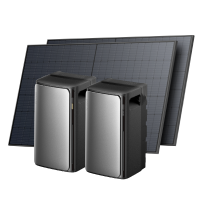
A home energy ecosystem brings compatible solar, battery and monitoring devices together to coordinate household electricity use.

How to Compare Electricity and Gas Plans in Australia
A plan’s headline discount doesn’t tell you what you’ll pay over a year. Compare the supply charge, usage rates and fees against your actual consumption, using a recent bill and the official comparison tool for your state or territory.
Compare Energy Retailers and Available Plans in Your State
Energy deregulation means retailers compete aggressively for market share in New South Wales, Victoria, South East Queensland, and South Australia. Residents in these deregulated zones can use independent benchmarking platforms—primarily the federal government’s Energy Made Easy site or Victoria’s Victorian Energy Compare—to review competitive offers.
Retail choice and regulated offers vary by location. Energy Made Easy covers NSW, Queensland, South Australia, Tasmania and the ACT; Victoria has Victorian Energy Compare. Check postcode-specific offers and your local authority’s guidance elsewhere.
Understand Electricity and Gas Usage Rates and Daily Supply Charges
Every energy plan splits your charges into fixed and variable costs:
Daily Supply Charge: A fixed fee charged every day for maintaining your property’s connection to the distribution network, billed in cents per day regardless of whether you consume any power.
Usage Rates: The variable cost billed for the volume of energy consumed. Electricity is billed in cents per kilowatt-hour (c/kWh), while gas meters measure volume in cubic metres or cubic feet, which retailers convert on your bill into cents per megajoule (c/MJ) using a heating value multiplier.
For compact units or low-usage homes, a low daily supply charge yields the biggest savings; larger families with high continuous consumption should prioritize lower variable usage rates.
Calculate Your Estimated Annual Electricity and Gas Costs
Rather than relying on glossy headline percentages, compare plans against the benchmark reference price. In NSW, SA, and SE Queensland, retailers must state how their offer compares to the Default Market Offer (DMO); in Victoria, plans benchmark against the Victorian Default Offer (VDO). Grab a recent bill, locate your average daily consumption (e.g., 14 kWh/day for power and 45 MJ/day for gas), and multiply those figures against prospective rates plus the annualised supply charges. This simple calculation gives you a grounded, apples-to-apples dollar estimate.
For the gas portion of your estimate, our gas price calculator guide explains how usage and tariff inputs affect projected costs; check the result against your current retailer’s rates.
Compare Discounts, Contract Terms and Additional Fees
Headline discounts often conceal restrictive fine print:
Guaranteed vs. Conditional Discounts: Look for unconditional discounts off your entire bill rather than conditional “pay-on-time” perks that vanish if a payment processes a single day late.
Exit Fees and Lock-in Contracts: Most residential plans across the NEM are now zero-exit-fee contracts, but verify that your agreement offers flexible month-to-month terms.
Hidden Surcharges: Scan the retailer’s Energy Fact Sheet (Basic Plan Information Document) for paper invoice processing fees, credit card surcharges, connection/disconnection costs, and move-in fees.

How to Choose the Most Cost-Effective Electricity and Gas Plan
The cheapest plan on paper may not suit your household if its rates are high when you use the most energy. Consider your appliances, daily routine and solar setup, then check whether the tariff structure fits those patterns.
Assess Your Household's Electricity and Gas Needs
Analyze when your family is actually home and active. A household where everyone leaves for school and work from 8:00 AM to 5:00 PM requires a vastly different plan structure than a household running multiple home offices, domestic pool pumps, and reverse-cycle cooling around the clock. If your cooking and water heating are your only gas loads, calculating the annual cost of the gas supply charge might help assess potential savings from going all-electric, after allowing for appliance, installation and disconnection costs.
Consider Solar and Battery Compatibility
For Australian homes with rooftop solar, finding the right energy plan means choosing one that lets you use as much of your own solar power as possible instead of exporting it for a low feed-in tariff and buying it back at peak rates.
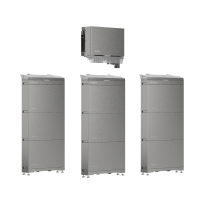
Adding home battery storage lets you capture excess daytime generation and feed it back into your household circuits during evening price spikes. An integrated system like the EcoFlow OCEAN 2 Plus single phase fits neatly into this residential setup, scaling modular storage capacity to suit your roof’s output and cutting dependency on expensive evening grid power.
Maximising these savings requires clear visibility over where your power goes throughout the day. Installing a central energy monitor such as the EcoFlow PowerInsight 2 gives you an intuitive, real-time snapshot of household consumption, active solar generation, and battery reserve levels. Having access to live data takes the guesswork out of shifting heavy appliance loads, like running dishwashers or washing machines, and can help you compare tariffs against your actual consumption habits.
Choose Tariffs That Match Your Energy Usage Patterns
Common electricity tariff structures include the following; controlled-load tariffs may also apply to separately metered appliances:
Flat rate (single rate): You pay the same usage charge per kWh around the clock. This suits households whose use peaks in the late afternoon and evening.
Time-of-use (ToU): Usage rates split into peak, off-peak and shoulder periods. Rates, time windows, weekdays and seasonal rules vary by plan and network; check the tariff schedule for your address.
Demand tariffs: These add a charge based on measured demand during specified periods. The measurement interval, peak window and calculation method depend on the plan.
Match your tariff to your hardware: Households with solar battery storage or programmable heat pumps can shift load into off-peak windows, which may reduce costs on a suitable time-of-use plan; compare total annual charges before switching.
Monitor Energy Usage and Reassess Your Plan Over Time
Retailer benefit periods and contract terms can end on different dates. Check your contract and any end-of-benefit or price-change notice to see what rates will apply next. Get into the habit of logging into your customer portal every six months to review your meter data. If your usage drops or your feed-in tariff falls, check what other offers are out there and make sure your plan still pulls its weight.
Our smart meter guide explains how interval import and export data can help you review when your household draws electricity from the grid.
Schedule Your Free Consultation Today!
What kind of product or solution are you interested in?
Conclusion
To compare energy plans, look beyond discounts and add up the daily supply charges, usage rates and extra fees. Your recent bills can show where your energy goes and which costs are fixed. If you’re considering replacing gas appliances or adding solar and a battery, include those changes in the comparison too, so you can judge the likely effect on your total energy costs.
FAQs
Will I Be Left Without Electricity or Gas When I Switch Providers?
No. Switching retailers won’t cut your power or gas. The poles, wires and underground gas pipes stay exactly as they are and are still run by your regional distributor, so moving between retailers is just an administrative billing change.
Will My Electric Bill Spike if I Switch Appliances from Gas?
Your electricity use will go up, but your total household energy costs usually come down. Modern split systems and heat pump hot water units run at two to four times the thermal efficiency of gas burners, so the extra power gets offset by lower fuel needs, and once the gas meter is formally decommissioned you can drop the daily gas supply charge too.
How Do Seasonal Changes Affect Electricity and Gas Bills in Australia?
Bills swing sharply with regional climate extremes. Southern states see gas bills surge through cold winters from space heating, while northern states see power bills jump over summer as air conditioning runs nonstop. Shifting when you run heavy heating and cooling, sealing drafty doors and windows, and pre-cooling rooms with daytime solar all help flatten out those seasonal spikes.
What Rebates Apply to Switching from Gas to Electric in 2026?
Households swapping old gas appliances for efficient electric ones can get help from both the federal government and their state. Eligible solar water heaters and air-source heat-pump water heaters may qualify for federal Small-scale Technology Certificates (STCs); this does not extend to ordinary heat-pump space heaters. State schemes such as Victoria’s VEU and NSW’s ESS have separate eligible upgrades and conditions. Check the current approved models, installation requirements and available support before purchasing.
What Happens to Your Energy Bills When You Move to a New Home?
Your current plan doesn’t automatically follow you to a new address. You’ll need to lodge a move-in request with your retailer or set up a new agreement. The retailer arranges a final meter reading at your old place to issue an accurate closing bill, then arranges connection at the new property, which may add a small standard network connection fee to your first invoice.