Gas Price Calculator: Tips for Reducing Household Gas Consumption in Australia (2026 Guide)
High gas bills in 2026 are a direct result of rising supply charges and volatile markets, but you can slash these costs by using a gas price calculator to pinpoint exactly where your money is leaking. By inputting your daily Megajoule (MJ) usage into a digital estimator, you can move beyond guesswork and start making data-driven decisions.
In this guide, we’ll break down how gas pricing actually works in the Land Down Under, how a gas price calculator can help you regain control, and why moving toward smarter energy management is the only way to keep your hard-earned dollarydoos in your pocket.
Understanding Gas Prices and Your Household Consumption in Australia
Before you can shrink your bill, you need to understand the line items on your statement. Gas pricing in Australia depends on where you live and how the grid gets to your door.
1. How gas pricing works in Australia
According to the Australian Energy Regulator (AER), household gas prices in Australia are influenced by wholesale supply costs, network charges, and retailer margins. These components vary by state and can change based on market conditions. In 2026, international export parity and local supply constraints continue to influence the “variable rate” you see on your statement.
2. How households are charged for gas
Most Aussies are charged based on a two-part tariff:
Daily Supply Charge: A fixed cost for being connected to the grid, regardless of usage.
Usage Charge: A variable rate per Megajoule (MJ) consumed, often “stepped” so the first block of energy costs more than the rest.
3. Key factors affecting your gas bill
Your location is the biggest factor, followed by your contract type. Additionally, seasonal fluctuations play a massive role. Australian gas demand peaks significantly in winter due to space heating, often leading to higher seasonal rates that catch families off guard.
What Is a Gas Price Calculator and How to Use It
If you’re tired of “bill shock,” a gas price calculator is your best friend. It’s a digital tool designed to demystify those cryptic MJ readings on your meter.
1. Definition of a gas price calculator
Simply put, it’s an algorithm that takes your historical data or appliance list and translates it into a dollar figure based on current market rates.
2. How it estimates usage and costs
By using averages for common Australian appliances (like a 4-star gas heater), the calculator multiplies estimated MJ usage by your provider’s specific tariff.
3. Key inputs required
To get an accurate result, you’ll usually need:
Your latest bill (to find your MJ rate).
Your postcode.
A list of gas appliances (cooktop, hot water, heater).
4. Step-by-step guide
Input your postcode to account for regional network fees.
Select your household size.
Enter your usage from a previous bill.
Compare results against different provider rates.
5. Why 'Static Estimates' are not enough
When you use a standard Gas Price Calculator, most Aussie families just get a “cold estimate” based on old bills. But that totally misses the real-time tug-of-war between your daily habits and how hard your appliances are working.
The real bottleneck in saving cash is the “invisible waste” you can’t see. That’s where the EcoFlow PowerInsight 2 steps in. With Australia’s wild weather, PowerInsight 2 provides real-time insights into your household energy usage. You’ll see instantly if that old gas hot water system is working overtime or if the heater is smashing your budget in the middle of the night. By linking with your smart gear, it turns those “calculator predictions” into actual “savings instructions,” helping you stay ahead of price hikes and track every cent.
.png)
How Much Gas Does an Average Australian Household Use?
To know if you’re a “heavy user,” you need a benchmark. Australian usage varies wildly by state, but the trends are fairly consistent.
1. Usage by household size
A single person in a Sydney apartment might use 30–40 MJ per day, whereas a family of five in a cold Melbourne suburb can easily chew through 200+ MJ per day during a winter cold snap.
2. Are You a "Heavy User"? National Consumption Benchmarks
Before diving into appliance specifics, check where your household sits compared to the state average. In 2026, climate remains the biggest driver of gas usage in Australia.
| State / Territory | Primary Usage | Avg. Daily Usage (MJ/day) | Annual Total (GJ/year) | Energy Stress Level |
|---|---|---|---|---|
| Victoria (VIC) | Heating, Hot Water, Cooking | 150 – 220 MJ | 55 – 80 GJ | High (Cold Winters) |
| NSW / ACT | Hot Water, Some Heating | 60 – 90 MJ | 22 – 33 GJ | Moderate |
| South Australia (SA) | Hot Water, Heating | 70 – 100 MJ | 25 – 36 GJ | Moderate |
| Queensland (QLD) | Hot Water, Cooking only | 25 – 45 MJ | 9 – 16 GJ | Low |
| Western Australia (WA) | Hot Water, Cooking | 35 – 55 MJ | 13 – 20 GJ | Low |
3. How to Read This Table:
The “Red Zone”: If you are in Melbourne and hitting 250+ MJ/day in winter, your home likely has major “draft leaks” or an aging heater.
The “Green Zone”: If your usage is below these averages, your habits are on point, but you could still save by eliminating the daily supply charge through electrification.
1 GJ = 1,000 MJ
4. Breakdown by appliances
Heating: Accounts for up to 60% of gas use in southern states.
Hot Water: Roughly 25-30%.
Cooking: A small slice, usually around 5-10%.
Key Factors That Affect Gas Consumption and How to Reduce It
Lowering your energy use can still keep your home comfortable when you use energy more efficiently.
Heating and climate: Use “zone heating” to only warm the rooms you’re using.
Appliance efficiency: An old 2-star gas heater is a money pit. Transitioning to electric heat pumps is the gold standard for 2026.
Household habits: Energy efficiency guidance from Australian regulators suggests that small behavioural changes—such as reducing shower time by just two minutes—can significantly lower household gas consumption and annual energy costs.
Home insulation: “Seal the drafts!” Use door snakes to keep the heat inside and the winter chill out.
Smart Ways to Lower Your Gas Bill in Australia
Moving beyond basic habits, we need to look at structural changes that offer long-term relief from the “gas trap.”
Strategic Energy Independence
In Australia, simply “turning down the heater” has hit a ceiling. With the 2026 energy market still riding a rollercoaster, the real secret to long-term savings is a total rethink of your energy setup.
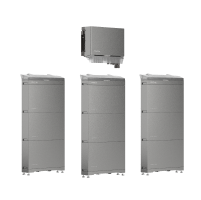
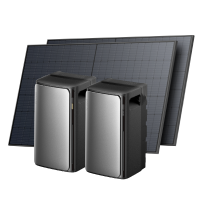
The EcoFlow PowerOcean(Single-Phase) is a home battery system designed to help Australian households store solar energy and reduce reliance on the grid. This top-tier home battery system takes Australia’s famous rooftop solar and turns it into high-value stored power.
By integrating solar batteries into your setup, you can store excess solar energy and draw from it when gas and electricity prices spike. During those peak hours when gas and power prices are through the roof, you can tap out of the expensive gas network and use your stored clean energy to run high-efficiency heat pumps. In areas with Time-of-Use (TOU) rates, PowerOcean even does the “cheap-charge, peak-discharge” dance for you. It’s the fastest way to significantly reduce your energy costs over time while keeping your home powered even when the grid plays up.
.webp)
Conclusion
Managing gas costs in Oz doesn’t have to be a guessing game. By using a gas price calculator to find your baseline and transitioning to a modern home energy ecosystem with smart gear like the EcoFlow PowerOcean and PowerInsight 2, you can stop being a victim of price hikes and take full control over your energy expenses.
Schedule Your Free Consultation Today!
What kind of product or solution are you interested in?

FAQ
1. Are gas calculators accurate?
Yes, gas calculators are generally accurate provided you input specific data from your latest energy bill. While they use averages for appliances, entering your exact MJ rate ensures the dollar estimate is very close to reality.
2. How do you predict gas cost for a trip?
It is important to distinguish between vehicle fuel and portable cooking gas, as they use different pricing models:
Autogas (Vehicle Fuel): If your vehicle runs on LPG, calculate your cost by multiplying your car’s fuel consumption (litres per 100km) by the current retail price per litre at the bowser.
Portable LPG (BBQ & Caravans): For 9kg or 4.5kg gas cylinders used in camping, you aren’t usually charged by the MJ or litre. Instead, you pay a flat “Swap’n’Go” or refill fee per bottle. In 2026, a standard 9kg swap typically ranges from $35 to $55, depending on how remote your location is.
Pro Tip: While household gas is measured in Megajoules (MJ), portable gas is measured by weight (kg). Always check your caravan’s gas levels before heading into the Outback, as “bush prices” for a bottle swap can be significantly higher than in the city.
3. How much is a gas bill per month in Australia?
The average Australian gas bill ranges from $60 to $150 per month, depending heavily on your state and whether you use gas for heating. Households in Melbourne typically pay more in winter, while Queenslanders might only pay a small amount for cooking.
4. How can I reduce my gas usage and lower my bills?
You can reduce usage by lowering thermostat settings, insulating your home, and switching to energy-efficient electric appliances powered by solar. Using a smart monitor to help identify hidden waste in real-time.
5. Is it cheaper to run gas or electricity?
In 2026, running high-efficiency electric appliances (like heat pumps) powered by solar and battery storage is significantly cheaper than running traditional gas appliances. While gas used to be the “cheap” option, rising gas prices and the efficiency of modern electric tech have flipped the script.