Electric Cars in Australia: The 2026 Complete Guide to EVs
In 2026, more Australian drivers are ditching the petrol pump for the plug. The shift to an electric car in Australia is surging, driven by a desire for lower running costs and cleaner air. Today, the local market is buzzing with variety, from sleek city hatchbacks to rugged electric utes. Whether you're in Sydney or Perth, the infrastructure is catching up fast.
This guide breaks down the current EV scene in Australia. You'll learn about market growth, different types of vehicles, real benefits, charging setups, and what to watch before you buy. We'll also cover how smart home energy solutions make ownership even better.
Electric car Australia: Adoption trends and state incentives
The Australian EV market has shifted dramatically in just a few years. In 2020, electric vehicles made up less than 1% of new car sales. By 2025, that figure had climbed to over 13%. In 2026, it's expected to top 15%. That's not just a trend. That's a fundamental change in how Australians buy cars.
The Australian EV market at a glance
Australia sold over 156,000 electrified vehicles in 2025 — a 38.7% jump from 2024. Tesla and BYD together accounted for more than half of all EV sales. Hyundai, Kia, BMW, and Polestar are all expanding their electric line-ups fast.
More models. Lower prices. Stronger competition. It's a great time to be an EV buyer.
Government policies, rebates, and state-based incentives
The single biggest federal incentive right now is the Fringe Benefits Tax (FBT) exemption. If you buy an eligible EV through a novated lease or employer, you pay zero FBT. That can save you $6,000 to $12,000 a year — making a $50,000 EV genuinely cheaper than many petrol alternatives.
The LCT threshold for fuel-efficient vehicles in 2025–26 sits at $91,387 — higher than for standard petrol cars. That means more EVs avoid the luxury car tax entirely.
At the state level, things vary:
Queensland offers up to $6,000 rebate on EVs under $68,000
ACT provides low-interest loans of $2,000 to $15,000 for zero-emission vehicles
NSW has shifted its focus toward fleet incentives of $5,000 to $50,000 per vehicle
Victoria has wound back most direct rebates, but EVs remain exempt from luxury car tax concessions
Western Australia's $3,500 rebate wrapped up in May 2025
These EV incentives change regularly. Always check your state government's website before purchasing.
The transition from petrol to power
Switching to an EV isn't just about a different fuel. It changes how your home uses energy. Your car becomes a large, rechargeable device that plugs into your house every night.
That means your electricity costs go up — but your fuel costs disappear. And if you have solar panels, the equation shifts even further in your favour.
It's a lifestyle change as much as a car purchase. But for most Australians who make the switch, there's no going back.
Types of EV cars available in Australia
Not all electric vehicles work the same way. Understanding the difference helps you pick the right one for your lifestyle. In terms of EV charging and energy costs per 100 kilometres, BEVs are the most economical — but each type has its place.
Battery Electric Vehicles (BEVs)
BEVs run entirely on electricity. There's no petrol engine at all. You charge at home or at a public station, and you drive. That's it.
Energy cost: roughly $2 to $6 per 100 km when charging at home. Compare that to petrol, which typically runs $12 to $15 per 100 km. The savings add up quickly.
Popular BEVs in Australia in 2026: Tesla Model Y, BYD Sealion 7, Kia EV5, Hyundai Ioniq 6, Geely EX5.
Plug-in Hybrid Electric Vehicles (PHEVs)
PHEVs have both a battery and a petrol engine. You can charge them up and drive on electricity for 40 to 80 km. After that, the petrol engine kicks in.
They're a solid middle ground — especially if you do a lot of long regional driving where public charging is still sparse. PHEV sales in Australia jumped 134.5% in 2025, reflecting how many buyers still want that petrol backup.
Note: PHEVs no longer qualify for the FBT exemption on new novated leases as of April 2025.
Hybrid Electric Vehicles (HEVs)
Standard hybrids can't be plugged in. The battery charges itself through regenerative braking and the petrol engine. They use less fuel than a regular petrol car — but you can't run them on electricity alone.
If you're not ready to plug in yet, a hybrid is a decent stepping stone.
Fuel Cell Electric Vehicles (FCEVs)
FCEVs use hydrogen to generate electricity. They emit only water. But the refuelling infrastructure in Australia is almost non-existent at this point — just 2 hydrogen vehicles were sold here in the first half of 2025.
FCEVs are more of a future technology than a practical 2026 option for most Australians.
How to charge an electric car in Australia
Most EV vehicles in Australia get charged at home — it's the easiest and cheapest way. You simply plug in overnight and wake up to a full battery. Public chargers help for longer trips, but home charging handles daily driving for the vast majority of owners.
Home charging (Most common method)
According to the EV Council's 2024 Ownership Survey, 85% of EV owners in Australia charge at home as their primary method. It's convenient, cheap, and — with the right setup — can even be free.
Charging via a standard household outlet
You can plug most EVs into a standard 10-amp Australian power outlet. This is called Level 1 or 'granny cable' charging. It's slow — adding about 10 to 15 km of range per hour. Fine for overnight top-ups if you only drive short distances.
Installing a dedicated EV charger (Wallbox)
A dedicated Level 2 wallbox charger — typically 7kW to 22kW — dramatically cuts charging time. A 7kW wallbox can add 40 to 50 km of range per hour. A full charge overnight is easily achievable for most EVs.
EV charger installation costs vary but typically run from $1,000 to $2,500, including hardware and a licensed electrician.
Smart charging integration
Modern chargers allow you to "set and forget." You can schedule charging for midnight when electricity rates are lowest or sync it with your solar panels.
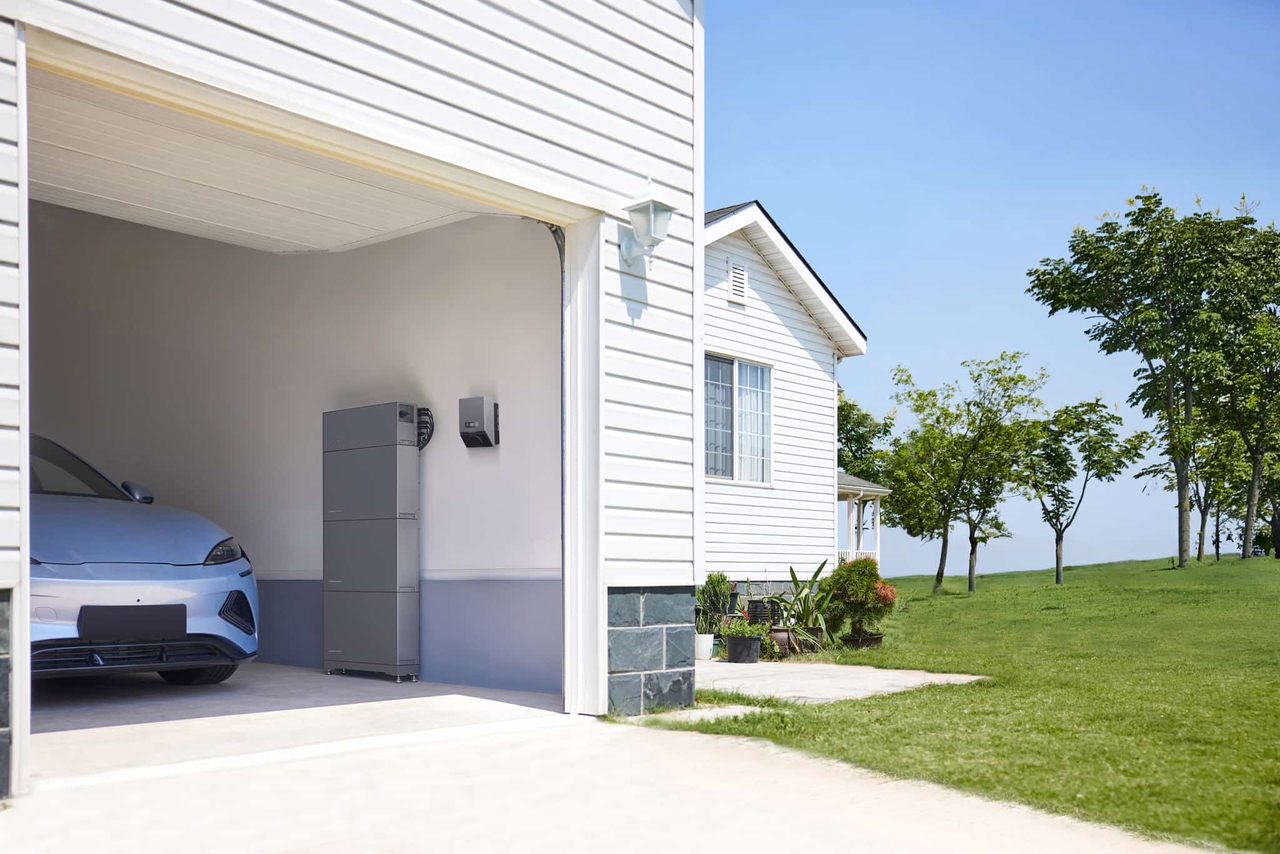
The EcoFlow PowerPulse 2 is a next-generation smart EV charger that delivers up to 22kW of power. It is designed specifically to work with your home's energy ecosystem.
Solar mode: This feature prioritises your rooftop solar, effectively letting you drive on 100% free, renewable energy.
Smart mode: Automatically finds the cheapest electricity prices (Time-of-Use) to save you money without you having to lift a finger.
Public charging networks in Australia
Public charging has improved dramatically across Australia. The two main types you'll encounter are:
Fast DC chargers along major highways — typically 50kW to 350kW. These can add 100 to 300 km of range in 20 to 45 minutes. Tesla Superchargers, Chargefox, and bp pulse are the biggest networks.
Destination chargers at shopping centres, hotels, and workplaces — typically slower (7kW to 22kW), but great for topping up while you go about your day.
How home EV charging will change your electricity bill
Adding an EV to your household is a significant change in how you use electricity. A typical EV uses around 15 kWh per 100 km. At the Australian average of 35 km per day, that's roughly 5 to 7 kWh of extra electricity every single day.
Over a month, that could add $40 to $90 to your electricity bill at standard rates. But there's a lot you can do to minimise that.
The challenge of charging at night vs. high time-of-use tariffs
Most Australians charge their EVs overnight. That makes sense — the car sits idle, and you wake up to a full battery. But standard overnight electricity rates can be 30 to 43 cents per kWh, depending on your state.
The solution? Switch to an EV-specific electricity plan or a time-of-use tariff with cheap off-peak rates. AGL, Origin, and Amber Electric all offer dedicated EV plans with overnight rates as low as 10 to 15 cents per kWh. At those rates, your monthly charging cost can drop by more than half.
At a 15c/kWh off-peak rate versus a 39c/kWh standard rate, someone driving 15,000 km a year saves around $370 annually on charging alone — just by timing when they plug in
Maximizing ROI: charging your EV with solar in Australia
Solar panels and an electric car make a perfect pair in Australia. You generate free power during the day. Why send it to the grid for a few cents when you can store it and use it to charge your EV? That's where a home battery shines.
Solar pumps out the most power when you're often not home. Without storage, much of it gets exported at low feed-in tariffs — often just 3 to 8 cents per kWh in 2026. A battery lets you hold onto that energy and use it later for overnight EV charging. You avoid buying expensive grid power and get way more value from your solar setup.
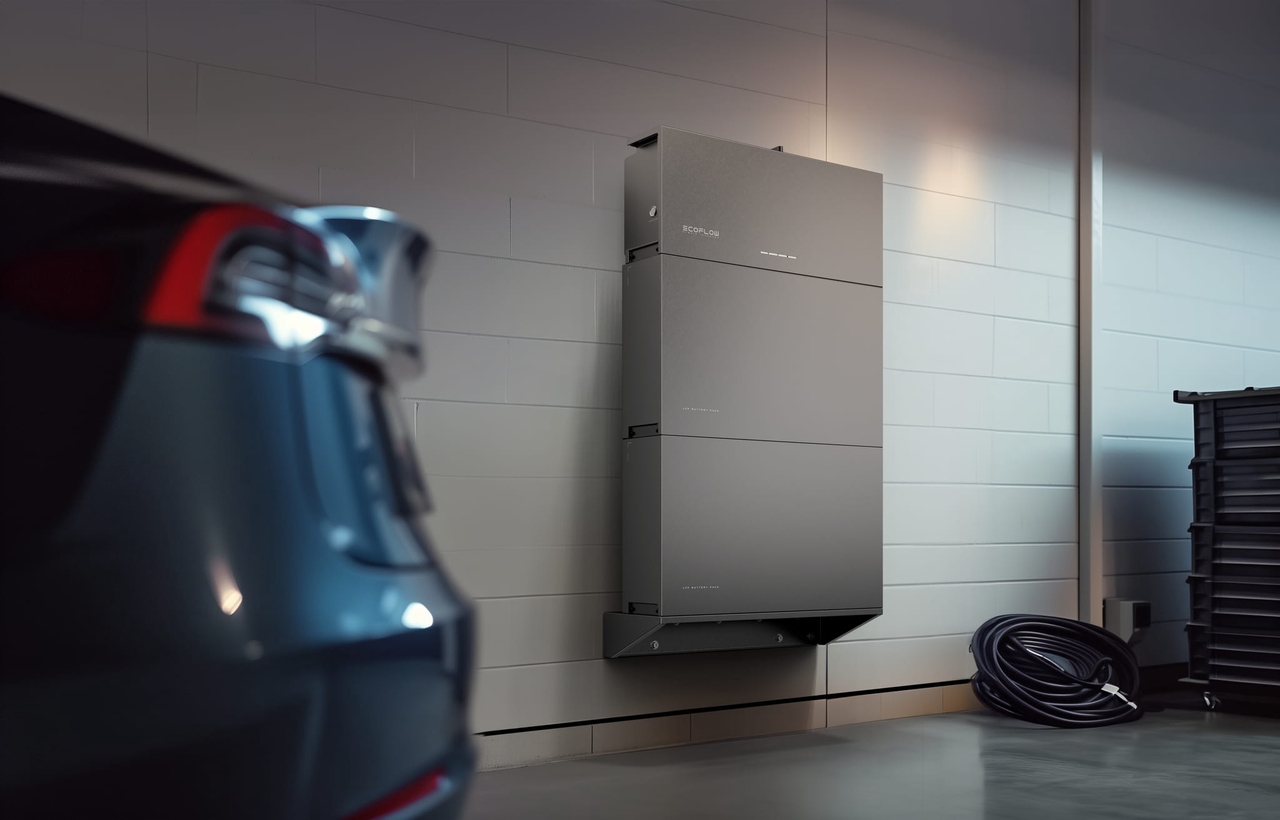
A system like the EcoFlow PowerOcean Single-Phase Battery does exactly that. It starts small with a 5kWh battery and expands up to 15kWh in one inverter as your needs grow. You get reliable LFP battery tech with a long 15-year warranty and over 6,000 charge cycles.
By "banking" your solar energy directly into the battery and then into your car's battery, you skip those low feed-in rates completely. Every kWh you use from your own solar saves you the full retail rate instead of earning just a few cents. Over time, this boosts your return on investment and cuts your overall energy bills significantly.
Want to maximise your solar savings and power your EV smarter? Book a free solar quote today to see how EcoFlow home battery solutions can transform your energy setup.
Schedule Your Free Consultation Today!
What kind of product or solution are you interested in?
What to consider before buying an EV in Australia
Thinking about making the switch? Buying EVs in Australia is easier than ever in 2026, but you should keep these five key factors in mind first.
Driving range
Most new EVs offer 400 to 600 km of real-world range. For the average Australian driving 35 km a day, that's more than enough. If you regularly drive long distances — especially in regional areas — prioritise a higher-range model and plan your charging stops in advance.
Charging infrastructure
If you have a garage or off-street parking, home charging is easy. If you live in an apartment or rely on street parking, check what public charging options are available near you. The Chargefox and PlugShare apps are useful for mapping nearby chargers.
Battery warranty and health
Look for at least an 8-year / 160,000 km battery warranty with at least 70% capacity retention. Most reputable brands include this as standard.
Budget and total cost of ownership
The sticker price is just one part of the equation. Factor in charging costs, servicing savings, insurance (EVs can cost 15 to 20% more to insure), and any applicable government incentives. A $55,000 EV can easily be cheaper to own over five years than a $40,000 petrol car.
Incentives and taxes
The FBT exemption through novated leasing is the most powerful tool available right now — potentially saving $6,000 to $12,000 per year. If your employer offers novated leasing, it's worth exploring before buying outright. Also, check your state's current rebate status, as these change frequently.
Conclusion
Electric cars in Australia have moved from novelty to mainstream. In 2026, they're genuinely competitive — on price, range, performance, and practicality.
The running costs are lower. The maintenance is simpler. And with solar and smart home battery storage, the economy gets even better.
If you're thinking about making the switch, pair your EV with a smart home energy setup. Charge on solar. Store the excess. Take control of your energy costs. That's where the real return on investment lives — and where products like the EcoFlow PowerPulse 2 and PowerOcean become more than just accessories. They become the backbone of a smarter, cheaper way to live and drive.
FAQs
1. How far can an EV travel on a single charge in Australia?
Most new EVs in 2026 travel between 400km and 600km on one charge. This is plenty for daily Australian commutes and even long weekend trips. High-end models can now reach over 700km before needing a top-up.
2. How much does it cost to charge an EV at home?
On off-peak rates, a full charge usually costs $4 to $10. With solar and battery storage (such as the EcoFlow home battery), it can drop close to zero. It's far cheaper than filling up with petrol.
How long does it take to charge an electric car in Australia
A dedicated home wallbox takes about 6 to 10 hours (perfect for overnight). On the road, ultra-rapid public chargers can add 300km of range in just 15 to 30 minutes while you grab a coffee.
4. Are electric cars safe in Australia?
Yes. Most EV cars in Australia sold locally carry a 5-star ANCAP rating. They feature advanced crash-avoidance tech and a low centre of gravity. Data shows they are statistically less likely to catch fire than petrol vehicles in Aussie conditions.
5. Are there enough public charging stations for a road trip?
Yes, Australia's charging network is expanding quickly. Major highways and cities now have reliable fast chargers. Planning your route is still important, but most popular travel routes are well covered for EV road trips.