
Who Provides Electricity to My Address? Easy Ways to Find Out
The company that provides electricity to your address is your local utility, and the fastest way to find it is checking your electric bill or entering your ZIP code into your utility's service area lookup tool. If you don't have a recent bill on hand, your landlord, property manager, or even a neighbor can usually tell you within seconds. Beyond that quick answer, knowing your provider matters for more than just paying your bill. It helps you set up new service when you move, report outages fast, and compare plans if you live in a deregulated market. This guide walks through every way to identify your electricity company and what to do if you have more than one provider to choose from.
Why you need to know your electricity provider
Knowing your electricity provider makes managing your home's energy much easier. It helps you schedule service before moving into a new home, start or transfer an account without interruption, and report power outages to the right company for updates and repairs. If you live in a deregulated market, it also lets you compare rates and plans from different suppliers. And if you're planning to install solar panels or a home battery, your utility handles grid connection approvals and net metering, so knowing who they are keeps the process moving smoothly.

How to find who provides electricity to your address
If you're unsure which company supplies electricity to your home, there are several easy ways to find out. The following methods can help you identify your utility provider quickly, whether you're moving, switching service, or simply confirming your account details.
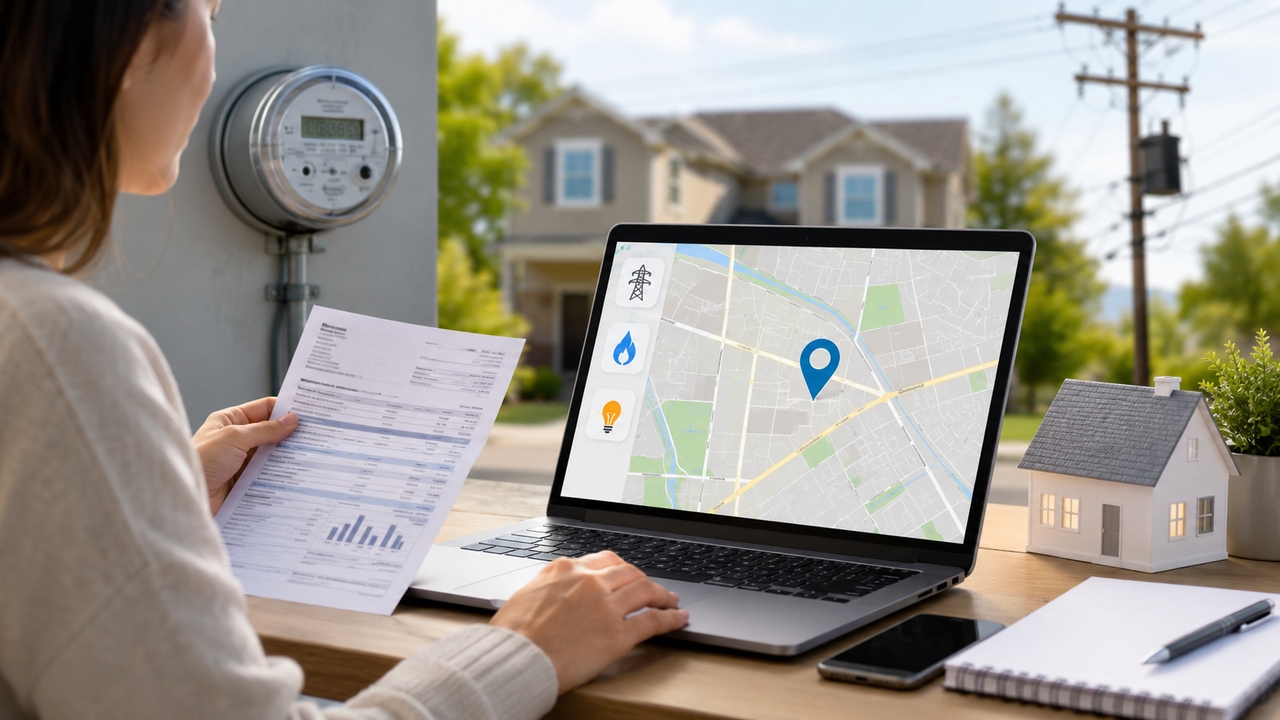
Check your electric bill: Your electric bill is the easiest place to identify your provider. Whether you receive a paper statement or access your account online, the bill displays the utility company's name, account number, customer service information, and billing details.
Search your email for e-bills/energy statements: If you receive electronic bills, search your inbox using terms like "electric bill," "energy statement," or "utility." Most providers send monthly billing emails that clearly identify the company and include your account information.
Use your ZIP code or address lookup tool: Many utility companies offer online service area lookup tools where you can enter your ZIP code or street address. These tools quickly confirm whether the company provides electricity to your property and guide you through starting service.
Ask your landlord, property manager, or neighbors: If you're renting or recently moved into a neighborhood, your landlord or property manager can usually tell you which utility company serves the property. Neighbors can also be a reliable source, especially in established residential communities.
Use online utility locator websites: Several online utility locator websites allow you to search by address or ZIP code to identify your electricity provider. These resources are especially useful if you're unfamiliar with the area or moving to a different city or state.
Common electricity providers by region
Not every state works the same way when it comes to electricity. Some operate on a regulated model, where a single vertically integrated utility owns generation, transmission, and distribution, and state regulators set fixed rates. Customers in these areas have no choice of supplier; the assigned utility handles everything. Others operate on a deregulated model, where the local utility owns only the delivery infrastructure, poles, wires, and meters, while competitive retail suppliers sell the actual electricity. In deregulated markets, you can choose your provider and plan, though the utility still handles distribution and billing for delivery charges.
Electricity providers also vary widely based on geographical location. Below is a snapshot of primary regional utility providers across major areas of the United States, along with their market type:
Region / State | Major Utility Providers | Market Type |
|---|---|---|
California | Pacific Gas & Electric (PG&E), Southern California Edison (SCE), San Diego Gas & Electric (SDG&E) | Mostly Regulated |
Texas | Oncor, CenterPoint Energy, AEP Texas (Retail providers vary: TXU Energy, Reliant, etc.) | Deregulated |
Northeast (NY, MA, CT) | Consolidated Edison (ConEd), National Grid, Eversource | Mixed / Deregulated |
Southeast (FL, GA, NC) | Florida Power & Light (FPL), Georgia Power, Duke Energy | Mostly Regulated |
Midwest (IL, OH, MI) | ComEd, DTE Energy, AEP Ohio | Mixed / Deregulated |
Notes
Rural electric cooperatives and municipal utilities serve many additional customers and are not fully listed.
In deregulated markets, the delivery utility owns the wires; competitive retail providers sell the energy supply.
Utility service territories are tracked at the county level by the U.S. Energy Information Administration (EIA-861), and more than one utility can serve the same county. Boundaries can also shift at a more local level, so confirm your provider with an official address or ZIP lookup for accuracy.
How to manage electricity costs and prepare for power outages
Electricity bills can rise due to seasonal demand, changing utility rates, and increased household energy use. Even after finding out who provides electricity to your address, you're still dependent on the grid for everyday power. Unexpected outages and rising energy costs can disrupt daily life and increase monthly expenses. A whole-home battery backup system helps reduce these challenges by storing energy for use when grid power is unavailable or electricity rates are highest.
The EcoFlow OCEAN Pro is designed as a complete home solar battery solution. Key capabilities include:
Whole-home power: The 24 kW continuous-output model can run high-wattage loads such as HVAC systems, pumps, and multiple appliances simultaneously, with strong surge capacity.
Expandable capacity: Starts at 10 kWh and scales up to 80 kWh, so you can size storage for your home's needs.
Solar savings: Pairs with solar panels and accepts up to 40 kW of solar input. It stores free daytime energy for use at night or during outages, cutting utility purchases and lowering monthly bills.
Smart, seamless operation: Intelligent energy management, grid-tied operation with fast automatic switchover during outages, multi-source charging (solar, grid, generators, even certain portable power stations), and app-based monitoring and scheduling.
By storing solar energy and providing reliable backup, a system like the OCEAN Pro helps you ride out outages, shift usage away from expensive peak periods, and reduce long-term dependence on your utility.

Final Thoughts
Knowing who provides electricity to your address is the first step toward better control of your energy. Whether you're starting service, comparing rates, or preparing for outages. In both regulated and deregulated markets, the right information helps you act quickly and avoid surprises on your bill. Relying solely on the grid leaves your home vulnerable to rate hikes and unexpected outages.
Pairing your grid connection with a whole-home solar battery backup solution, like EcoFlow OCEAN Pro protects your household from blackouts while using stored solar energy to cut monthly costs. Ready to shield your home from power outages and lock in long-term savings? Schedule a consultation with an energy expert today to find the ideal solar battery setup for your address.
FAQs
How do I find out who my electricity provider is?
Check your latest electricity bill, log in to your online utility account, search your email for billing statements, or use your ZIP code on a utility service area lookup tool. You can also ask your landlord or property manager if you've recently moved.
Can I choose who provides electricity to my address?
It depends on where you live. In regulated markets, your local utility is assigned by location. In deregulated markets, you can choose a retail electricity supplier, while your local utility continues delivering electricity and maintaining the grid.
Who provides gas and electricity to my address?
Electricity and gas are often supplied by separate utility companies, though some offer dual-fuel plans. Check lease paperwork, consult municipal utility directories, or ask your property manager to identify your specific regional gas and electric vendors.
What should I do if I just moved into a new home?
Contact the regional electric utility 1–2 weeks before your move-in date. Set up a new account or schedule a service transfer, so power is active when you arrive, preventing service delays or unexpected dark rooms on moving day.
Why does my neighbor have a different electricity company?
In deregulated markets, neighbors can pick different retail suppliers while sharing the same delivery utility. Service boundaries can also change block by block if more than one utility operates nearby.

