
Solar On-Grid Inverter: Power Your Home and Save Big
A solar on-grid inverter sits at the heart of most residential solar installations in the US today. Electricity bills keep climbing, and rooftop solar looks more attractive every year. Panels alone do not power a home, though. The inverter is what bridges the gap, converting the raw output from solar panels into electricity that appliances can actually use. For homeowners still buying power entirely from utility, understanding how a grid-tied inverter works is the first step toward real energy savings. And for those who want more than just a lower bill, who want backup power and true independence, pairing an on-grid setup with a home battery backup changes the equation entirely.
What is a solar on-grid inverter, and why do you need one?
Solar panels produce direct current (DC) electricity, but homes and the utility grid run on alternating current (AC). The inverter bridges this gap by continuously converting raw DC into usable AC power for your household appliances.
Grid-tied inverters go a step further by matching the grid's exact voltage and frequency in real time. This synchronization enables seamless net metering: when your panels generate more power than your home needs, the surplus automatically flows back to the utility grid, earning you credits that dramatically lower future energy bills.
The main advantage of going grid-tied is immediate savings with a lower upfront cost, as no expensive battery backup is required to get started. These systems slash your monthly utility costs by covering daytime demand and offsetting local fossil-fuel peaker plant output, reducing both your bill and the grid's carbon footprint.
How does an inverter on-grid solar system work?
Making Power: Sunlight hits the panels, creating DC electricity (raw power). The amount changes throughout the day depending on clouds and the sun's angle.
Changing Power: Your appliances can't use raw power. The inverter instantly changes it into AC electricity (standard 120V/240V home power).
Powering the House: This electricity goes straight to your breaker box. Your lights, fridge, and appliances use this solar energy first.
Handling Extras & Gaps:
Sunny Midday: If your roof makes more power than you are using, the extra flows out to the electric grid, earning you credits.
Nighttime / Clouds: If you need more power than the panels are making, the grid automatically passes electricity into your house. You won't even notice the switch.
Common Issue: Why your solar power turns off during a blackout:
By law, grid-tied systems must shut down within 2 seconds of a power outage. This stops your panels from sending electricity down the street, protecting utility crews who are working on the lines. Because of this safety rule, standard solar will not power your house during a blackout unless you have a battery backup system to isolate your home from the grid.
Types of on-grid solar inverters
Not all grid-tied inverters are built the same. Three main types are in common residential use, and they suit different system designs.
Feature | String Inverter | Microinverter | Hybrid Inverter |
Cost | Lowest | Highest | Mid to High |
Efficiency | Good (95–98%) | Excellent (96-99%) | Very Good |
Shading Impact | High (affects whole string) | Minimal (panel-level) | Minimal to Moderate |
Battery Compatible | Not natively | Not natively | Yes |
Best Use Case | Simple rooftops, no shading | Complex rooftops, partial shade | Solar + backup homes |
String inverters connect all panels in a series string to a single central unit. They are the most affordable option and work well on simple, unshaded rooftops. The downside is that shading on one panel reduces output for the entire string.
Microinverters attach to each individual panel, converting DC to AC right at the source. This eliminates the string shading problem entirely and allows panel-level monitoring. The tradeoff is a higher upfront cost, though prices have come down significantly.
Hybrid inverters combine the grid-tied capability of a string inverter with built-in battery integration. They can draw from solar, the grid, and a battery simultaneously, prioritizing sources based on availability and cost. This type is what makes whole-home backup possible without a separate external inverter.
Solar on-grid inverter vs. off-grid and hybrid inverters
Choosing between these three approaches comes down to what trade-offs a household is willing to make between cost, resilience, and independence.
Grid-tied is the entry point for most homeowners. Keeping the utility connection means the grid acts as free storage, exporting surplus during the day and pulling from it at night. No battery required. Upfront cost stays manageable. The catch is total dependence on the grid remaining available. When it goes down, everything shuts off, including the solar panels sitting on the roof doing nothing.
Off-grid is a different situation entirely. No grid connection means no grid bill, but also no grid safety net. Every kilowatt-hour the home needs has to come from panels or a generator, stored in a battery bank large enough to cover nights, cloudy stretches, and seasonal dips in production. Rural properties where running grid connection would cost more than the whole system are the natural home for this approach. For suburban or urban households, the cost and complexity rarely make sense.
Hybrid sits in the middle and, for a growing number of homeowners, offers the most practical combination. The grid connection stays active for net metering and as a fallback. A battery system stores surplus solar and provides backup when the grid fails. The inverter manages all three sources, grid, panels, and battery, automatically with no manual switching required. Higher upfront cost than a pure grid-tied setup, but the system delivers what neither of the other two options can on their own.
Common challenges of traditional on-grid systems
For all their advantages, standard grid-tied setups carry limitations that become obvious the first time the power goes out.
No backup during grid outages: This is the most frequently overlooked limitation. A home with a fully functional solar array and a clear sky still goes dark when the grid fails, because the inverter's anti-islanding protection kills all output the moment it detects a grid fault. Panels that could be powering the home sit idle.
Dependence on utility availability: An on-grid system is only as reliable as the grid itself. Aging infrastructure, extreme weather events, and increasing grid strain during heat waves all create vulnerability. A system that depends entirely on the grid cannot protect a household when the grid fails.
Limited energy storage capabilities: Standard on-grid systems have no way to store surplus solar generation for later use. Excess power gets exported at low feed-in rates, often bought back later at full retail price. The financial logic of this arrangement is increasingly unfavorable as net metering policies tighten in many US states.
Why the EcoFlow OCEAN Pro is the smart choice for on-grid solar homes
The answer to all three of those limitations is a hybrid-capable battery system that works alongside the existing grid connection rather than replacing it.
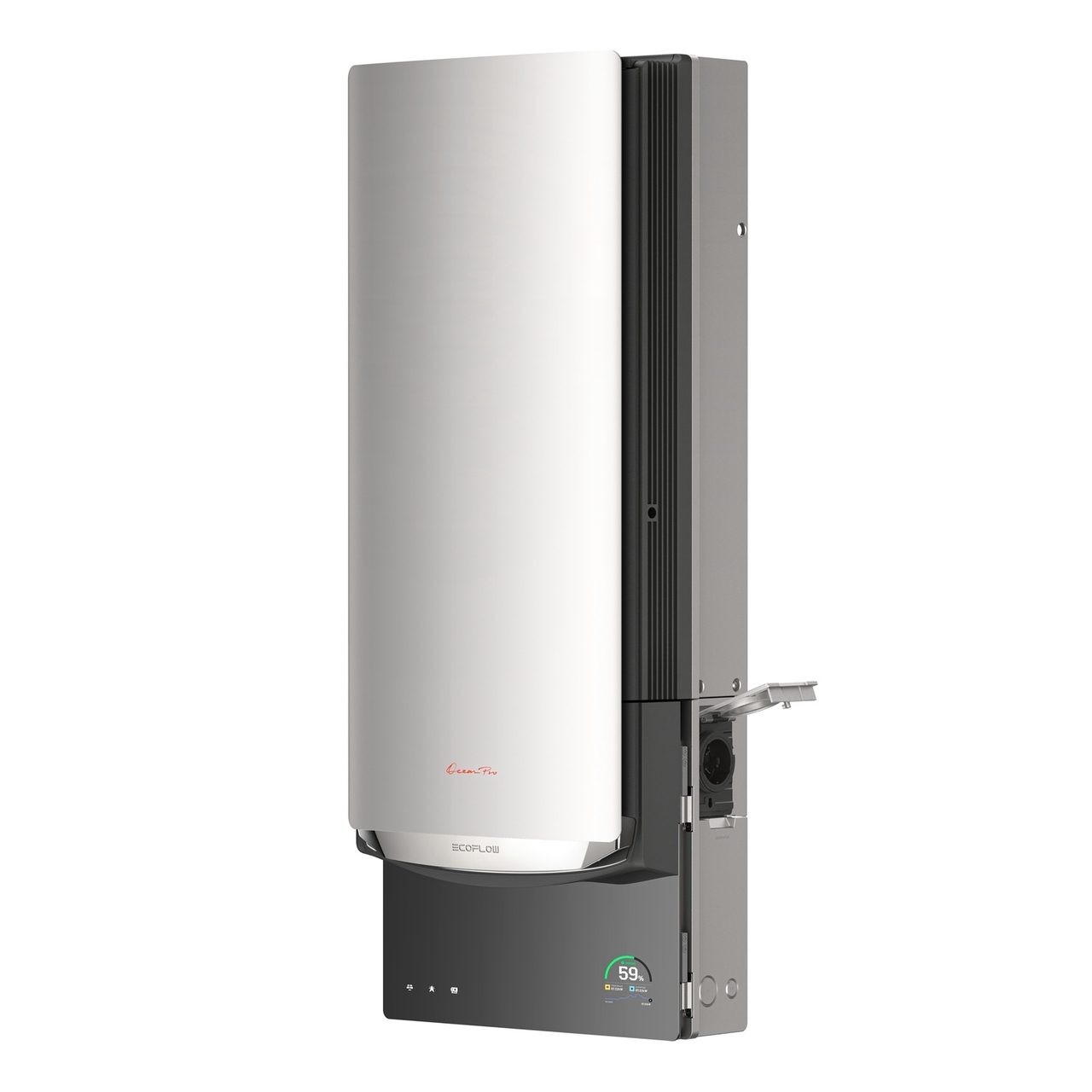
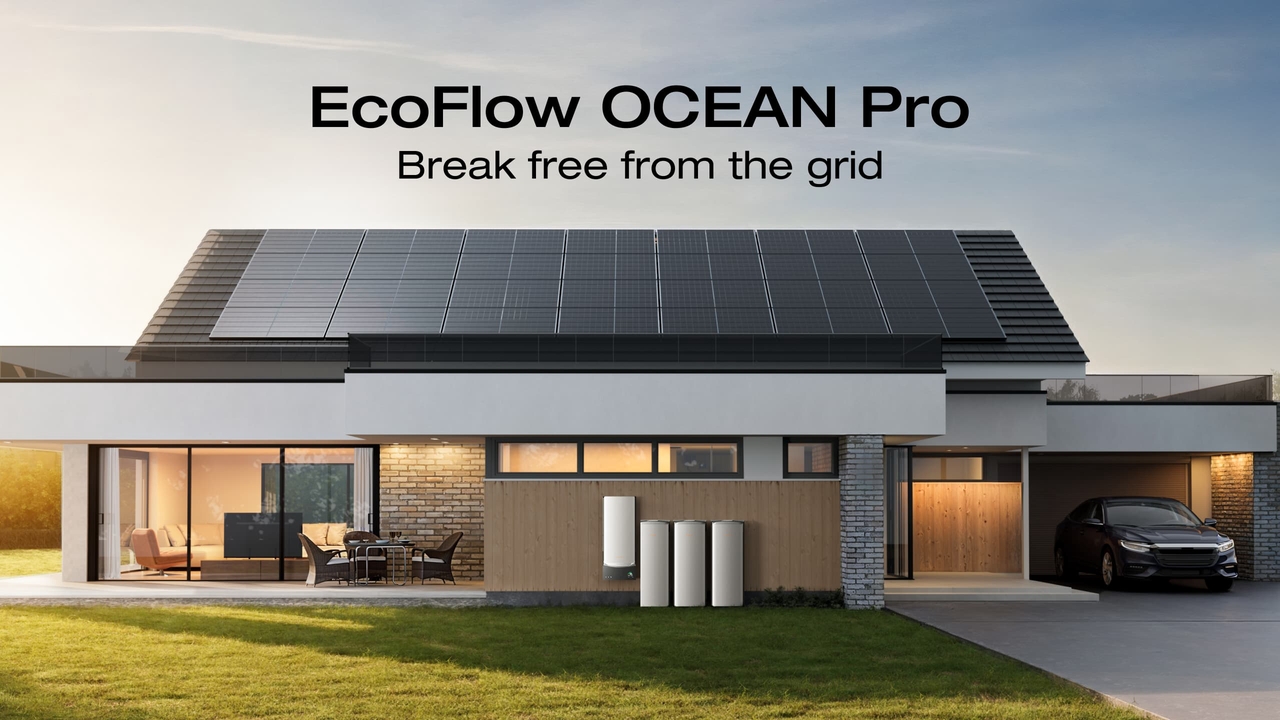
The EcoFlow OCEAN Pro Solar Battery System is designed specifically for this role. It integrates with a home's existing on-grid solar setup and adds the battery storage and hybrid inverter capability that turns a grid-dependent system into a genuine whole-home backup solution.
It stores surplus solar energy and deploys it during peak hours or outages with near-instant switchover. With 24kW continuous output, 10–80kWh scalable storage, and 40kW solar input, it delivers whole-home backup. The built-in Intelligent Mode handles daily cost optimization automatically. It monitors TOU pricing, shifts consumption to off-peak windows, pre-charges before forecast storms, and manages grid, solar, battery, generator, and EV inputs simultaneously. For homeowners ready to move from a basic on-grid setup to a fully capable whole-home energy system, this is where the upgrade path leads.
How to choose the right solar on-grid inverter for your home
Five factors separate a well-matched inverter from one that creates problems later.
System size requirements: The inverter's output capacity needs to match both the solar array size and the home's peak demand. An undersized inverter clips solar production and fails under heavy loads. An oversized one wastes capital.
Efficiency ratings: Modern inverters range from 95 to 98 percent efficiency. Higher efficiency means more of the energy the panels produce actually reaches the home or the grid. Over years of operation, a few percentage points of efficiency difference add up to meaningful energy production.
Monitoring features: Good inverters come with real-time monitoring apps or web dashboards that show production, consumption, grid export, and battery state simultaneously. Visibility into the system's performance is essential for maximizing savings and catching issues early.
Backup power needs: A homeowner in a stable grid area with no medical equipment or critical loads may be fine with a basic on-grid string inverter. A household with HVAC-dependent needs, a home office, or located in a storm-prone region should plan for hybrid capability and battery backup from the start.
Future scalability: Inverter upgrades are disruptive and expensive. Choosing a system with modular battery expansion, EV integration, and generator compatibility from day one avoids the need to replace core hardware when needs change.
Conclusion
A solar on-grid inverter is what makes residential solar practical. It converts panel output into usable electricity, synchronizes with the grid, enables net metering, and keeps the system operating safely. For most homeowners, it is the single most important piece of hardware in the solar setup.
The right inverter choice matters more than most buyers realize. A standard string inverter suits a simple, shading-free rooftop with no backup needs. A microinverter handles complex panel configurations better. A hybrid inverter, paired with battery storage, closes all the gaps that a grid-only system leaves open.
The EcoFlow OCEAN Pro takes that hybrid capability further than most residential options. With whole-home output, scalable storage, multi-source integration, and automated energy management, it represents the practical endpoint of what a modern on-grid solar home can become: a resilient, cost-efficient, genuinely independent energy system that uses the grid as a tool rather than a dependency.
Ready to take the next step? Request a consultation with an EcoFlow energy advisor to find the right configuration for the home's solar setup, load profile, and backup goals.
Get Your Free Home Energy Consultation!
Which energy solution are you interested in?
FAQs
Which is better, on-grid or off-grid?
For most US homeowners, on-grid or hybrid is the better choice. On-grid systems cost less and use the grid as backup. Off-grid makes sense only for remote properties without grid access. A hybrid system offers the best of both: grid connection for cost efficiency plus battery backup for resilience.
Does a solar on-grid inverter work during a power outage?
A standard on-grid inverter shuts down automatically during outages due to anti-islanding protection. This is a required safety feature. Homes that want backup power during outages need a hybrid inverter paired with battery storage, like the EcoFlow OCEAN Pro, which switches to battery power in under 10 milliseconds, well within the 2-second grid safety window, and fast enough that most devices never register interruption.
How long does a solar on-grid inverter last?
Most string inverters are rated for 10 to 15 years. Microinverters typically carry 25-year warranties, matching the lifespan of the panels themselves. Hybrid inverters vary by manufacturer. Regular monitoring and proper installation conditions extend service life significantly.
Do I get paid for the excess power my solar system generates?
In most US states with net metering policies, yes. Surplus power exported to the grid earns bill credits at a rate set by the utility. Some states offer feed-in tariffs that pay cash instead of credits. Policies vary significantly by state and utility, so checking local rules before system sizing is worth the effort.
What size on-grid solar inverter do I need for my home?
Inverter size should match the solar array's output and the home's peak demand. A typical US home with a 10 kW solar array needs at least a 10 kW inverter. Homes with heavy loads like central HVAC, EV chargers, or electric water heaters should size up to handle simultaneous peak draws without clipping.

