
Upgrading Your Solar Kit for Home: Install a Battery Now or Later?

The transition to renewable energy is no longer just about generating power; it is about managing it. For homeowners investing in a solar kit for home, the decision of when to add battery storage has become a central point of deliberation. While solar panels provide electricity during daylight hours, a battery system allows for that energy to be used 24/7. This guide explores the financial, technical, and regulatory factors that determine whether you should integrate storage immediately or wait for future developments.
The Core Benefits of Immediate Battery Integration
Deciding to install a battery alongside your initial solar array offers immediate operational advantages that are difficult to replicate through a delayed retrofit.
Energy Independence and Resiliency
The primary driver for many homeowners is the need for a reliable backup. In many regions, the utility grid is becoming increasingly unstable due to weather events and aging infrastructure. When you purchase one of the comprehensive solar kits available on the market, adding a battery ensures that your home remains powered during a blackout. Without a battery, most solar systems are designed to shut down during a grid failure to prevent "islanding," which can be dangerous for utility workers. A battery allows your system to create a "microgrid," keeping your essential appliances running.

Financial Optimization Through Time-of-Use (TOU) Rates
Many utility companies have moved away from traditional net metering toward Time-of-Use (TOU) billing. Under TOU, electricity prices are significantly higher during the evening when solar production is low. By using a battery, you can store the energy generated during the day and discharge it during peak evening hours. This strategy, known as "peak shaving," can drastically reduce your monthly utility bills and accelerate the return on investment for your solar kit for home.
Financial Incentives and the Deadline
While several incentives remain active, the long-term availability of these programs is never guaranteed.
Maximizing Available Incentives and Rebates
The Residential Solar Tax Credit was one of the most effective ways to lower the cost of a new system, allowing homeowners to deduct a significant percentage of the total cost of solar and battery storage from their federal taxes. However, this incentive expired on December 31, 2025. Homeowners who installed their systems before the deadline could still claim this credit, but now the opportunity to benefit from this federal tax incentive has passed.
Local Utility and State Programs
Many states and local utilities offer performance-based incentives or direct rebates for battery adoption. These programs are designed to encourage early adopters and help stabilize the local grid. Since these programs typically operate on a "first-come, first-served" basis with limited annual funding, delaying your installation increases the risk that the available budget will be depleted before you can take advantage of them.
Technical Considerations: Now vs. Later
While it is technically possible to add a battery to an existing system, the complexity and cost of a retrofit often exceed the cost of an integrated initial installation.
Efficiency of DC-Coupled vs. AC-Coupled Systems
When you install a battery later, you are often forced into an "AC-coupled" configuration. In this setup, the DC power from your panels is converted to AC by your solar inverter, then converted back to DC to be stored in the battery, and finally converted back to AC for home use. Each conversion results in energy loss.
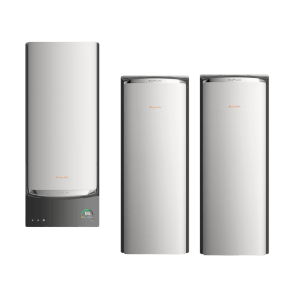
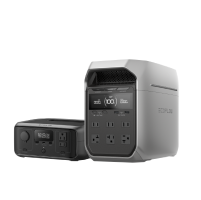
If you install the battery now as part of an integrated solar kit, you can utilize a DC-coupled system. This allows the energy to flow directly from the panels to the battery with fewer conversions. For high-performance needs, the EcoFlow OCEAN Pro Solar Battery System is a professional All-in-One Home Energy Ecosystem featuring X-BUS 400V DC coupling, which improves generation efficiency by 5% over traditional AC-coupled alternatives.
Get Your Free Home Energy Consultation!
Which energy solution are you interested in?
The Complexity of Retrofitting
Adding a battery to an older solar kit may require replacing your existing inverter. Standard inverters are often not "battery-ready," meaning they cannot communicate with a storage system. A retrofit might also require a main service panel upgrade or the installation of a separate "critical loads" sub-panel. These labor-intensive tasks are significantly cheaper when performed as part of a single, comprehensive installation project.
Comparing System Scales: From Small Kits to Whole-Home Backup
Homeowners must determine the scale of their needs. A smaller 1900 solar kit might be sufficient for a remote cabin or a tiny home, but for a standard family residence, the requirements are much higher.
A basic 1900 solar kit can provide roughly 1.9kW of peak power, which is useful for light loads like LED bulbs or a small refrigerator. However, modern homes with HVAC systems, well pumps, and electric vehicle chargers require a "Whole-Home Backup" solution. These systems are designed to handle high "Locked Rotor Amps" (LRA), which is the surge of electricity needed to start large motors.
When selecting between various solar kits, it is vital to check if the battery can expand. A modular system allows you to start with a baseline capacity (such as 10kWh) and add modules over time as your energy needs grow. This "future-proofing" is a hallmark of modern energy management.
Installation Efficiency and Labor Costs
From a logistical standpoint, doing everything at once is almost always more cost-effective.
Permitting and Interconnection: Every solar installation requires a permit from the local building department and an interconnection agreement with the utility. If you install panels now and a battery later, you may have to pay for these applications twice.
Labor and Mobilization: Contractors charge for "truck rolls"—the cost of bringing a crew and equipment to your site. Combining the battery and panel installation into one project eliminates the second mobilization fee.
Unified Warranty: Installing a complete system from a single manufacturer ensures that all components are designed to work together. This simplifies troubleshooting and ensures that your warranty claims are handled by a single entity.

Why the Integrated Approach Wins
The evidence suggests that for the majority of homeowners, installing a battery now is the superior choice. The combination of the efficiency of DC-coupled systems, and the reduced labor costs of a single installation creates a compelling financial case. Furthermore, the peace of mind provided by a "Whole-Home Backup" system ensures your family is protected regardless of external grid conditions.
When evaluating your options, ensure you are looking at professional-grade equipment. The EcoFlow OCEAN Pro Solar Battery System provides a 24kW continuous output, supporting heavy loads like two 5-ton AC units simultaneously, ensuring your home remains fully functional regardless of the weather. [Get a Quote]
FAQs
Q1: Can I add a battery to any solar kit for home?
It is possible to add a battery to a home solar kit. However, it may not be cost-effective. In addition, the solar kit may be using microinverters or an old string inverter. In these cases, you would have to use an AC-coupled battery. However, it is not very efficient. Therefore, it is recommended to use "battery-ready" solar kits.
Q2: Is it safe to have solar batteries in your house?
Yes, solar batteries are generally safe to have in your house when installed correctly. Make sure to follow manufacturer guidelines, use certified products, and hire a professional for installation. Proper ventilation and regular maintenance are important to prevent overheating or any safety risks. Always ensure the battery system meets local safety standards.
Q3: How big a solar system do I need to run a house?
Most homes in America would require a solar system of 5 kW to 10 kW. The size of the solar system would depend on the average monthly consumption and local sunlight hours. Therefore, it is recommended to use a Whole Home Backup system for high-demand homes with large HVAC systems.
Q4: Can I mix 100W and 200W solar panels?
It is possible to mix 100W and 200W solar panels. However, it is not recommended because it would decrease the efficiency of the solar kit. In addition, it would be difficult to match the power output of the solar kit. Therefore, it is recommended to use solar kits of the same power output. However, advanced systems are available to match the power output of the solar kit.
Q5: Can AC be run on solar power?
It is possible to power the house's air conditioning with solar power. However, the solar kit would have to be of a high capacity. In addition, the solar kit would have to be able to handle the power requirements of the air conditioning. EcoFlow OCEAN Pro is a solar kit of 24 kW. Therefore, it is possible to power two 5-ton air conditioning units simultaneously.

