
Solar Battery Calculator: A Complete Guide to Battery Sizing
Choosing the right solar battery starts with understanding how much energy your home uses and how much backup you need. A solar battery calculator provides a practical way to estimate your storage requirements using factors such as daily consumption, backup duration, usable capacity, and efficiency. However, battery sizing also requires checking power output, appliance demand, and the specifications of the home battery energy storage system.
What is a solar battery size calculator?
A solar battery calculator is a tool that estimates the battery capacity needed to meet a home's energy requirements. It typically uses electricity consumption, backup duration, and battery specifications to calculate storage needs. Common outputs include battery capacity in kWh, usable battery capacity, and approximate battery bank size, helping homeowners plan a suitable storage system.
How to calculate battery size?
Calculating battery size involves more than matching your home's daily electricity consumption to a battery's rated capacity. Consider the following factors to develop a more practical estimate.
Step 1: Calculate your daily energy consumption
Start by identifying the appliances and devices you want your battery to operate. Multiply each appliance's power rating by its estimated daily runtime, then add the results to determine total energy consumption in watt-hours or kilowatt-hours.
Step 2: Decide how much backup energy you need
Next, determine how long you want the battery to provide power without solar generation or another energy source. Multiply your daily energy consumption by the desired backup duration to estimate the total stored energy required.
Step 3: Account for depth of discharge
Depth of discharge (DoD) indicates how much of a battery's capacity can be used. Since the entire rated capacity may not be usable, divide your required usable energy by the recommended DoD to estimate the necessary rated capacity.
Step 4: Allow efficiency losses
Energy can be lost as electricity moves through the battery, inverter, wiring, and other components. Account for these losses by considering the system's overall efficiency, which can increase the storage capacity required to meet your intended energy demand.
Step 5: Check the battery's power rating
Battery capacity measures stored energy, while power output determines how much electricity the system can deliver at once. Check continuous and surge output to ensure the battery and inverter can handle appliances with high running or startup power requirements.

Whole-home vs essential loads: learning the differences
Choosing between whole-home and essential-load backup directly affects battery capacity, inverter power, runtime, and installation requirements.
Whole-home backup: Powers most or all household circuits, including higher-demand appliances such as HVAC systems, electric water heaters, and EV chargers when the system is appropriately sized.
Essential-load backup: Prioritizes selected circuits, such as refrigerators, lighting, internet equipment, medical devices, and designated outlets.
Backup type | Typical loads | Battery requirement | Best suited for |
Whole-home | Most household circuits, HVAC, water heating, EV charging | Higher | Larger energy needs |
Essential loads | Refrigerator, lights, internet, selected outlets | Lower | Critical backup needs |
Whole-home systems generally require greater capacity and higher inverter output, while essential-load systems can reduce system size by prioritizing critical appliances. The right approach depends on peak demand, outage duration, household priorities, and budget.
How does EcoFlow OCEAN Pro fit larger home energy needs?
For homes with larger loads or greater backup requirements, EcoFlow OCEAN Pro Home Solar Battery offers a scalable approach that combines substantial storage with high power output and intelligent energy management. It starts at 10 kWh and can scale to 80 kWh, supporting different household storage requirements. Ocean Pro provides up to 24 kW of continuous output and supports demanding loads when properly configured. The intelligent, analysis-driven modes can help coordinate charging, discharging, solar use, and backup reserves.

Get Your Free Home Energy Consultation!
Which energy solution are you interested in?
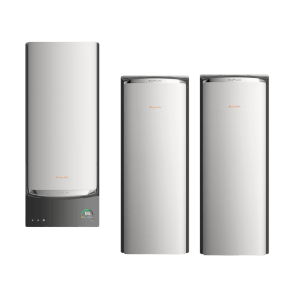

Explore whether EcoFlow OCEAN Pro is a suitable fit for your home's energy storage and backup needs. Speak with an energy specialist to discuss your household's power requirements, battery capacity, and system configuration, and find an approach designed around your energy goals.
Conclusion
A solar power battery calculator provides a useful starting point for estimating how much storage a home may require. However, battery sizing should be considered more than daily energy consumption. Backup duration, depth of discharge, efficiency, inverter capacity, appliance startup demands, and future energy use can all affect the final requirement. For homes with larger loads, a scalable system can offer more flexibility than a smaller fixed-capacity battery. EcoFlow OCEAN Pro combines expandable storage, high power output, and intelligent energy management, making it an option worth considering for homeowners looking to create a more energy-resilient home energy system.
FAQs
How long will a 20kWh solar battery last?
A 20 kWh battery's runtime depends on the home's actual energy demand and usable capacity. For example, a 5 kW average load could theoretically consume 20 kWh in about four hours before accounting for system losses.
How do I calculate how much battery I need for my solar system?
Start with daily energy consumption and desired backup duration, then account for usable battery capacity, depth of discharge, and efficiency. Also check inverter power and appliance surge requirements before selecting a battery.
How does a solar battery calculator work?
A solar battery calculator uses inputs such as energy consumption, backup duration, battery capacity, depth of discharge, and efficiency to estimate required storage. More detailed calculations can also consider system voltage and power requirements.

