
Smart Home Solar: How Modern Automation Redefines Home Energy Resilience
Installing solar panels is no longer just about generating electricity. Modern homeowners are increasingly looking for systems that can intelligently manage energy production, storage, and consumption while maintaining power during grid outages.
Smart home solar systems combine advanced monitoring, battery integration, and automated energy management to improve efficiency and resilience. This guide explains how smart solar differs from traditional installations and explores the technologies that make today's home battery energy management systems more adaptable and future-ready.
Traditional solar vs. Smart home solar systems
Traditional solar systems primarily generate electricity, while smart home solar systems actively manage production, storage, and consumption. Solutions like the EcoFlow OCEAN Pro ecosystem combine intelligent controls with battery integration for greater flexibility and energy resilience.
Feature | Traditional Solar | Smart Home Solar |
Energy management | Generates electricity and exports excess energy to the grid. | Dynamically stores, uses, or exports electricity based on household demand and utility rates. |
System architecture | Commonly uses string inverters where shading or faults can reduce overall output. | Uses advanced optimization technologies and integrates seamlessly with battery storage for improved resilience. |
Monitoring & visibility | Offers basic production data through inverter displays or utility bill comparisons. | Provides real-time monitoring of solar generation, battery status, and household energy consumption. |
Grid outage response | Automatically shuts down during outages for grid safety. | Power essential household circuits using battery backup until grid comes back to normalcy. |

The core pillars of Smart Home Solar systems (what makes it so smart?)
Modern smart solar systems combine hardware and software to manage energy more efficiently than traditional installations. Instead of only producing electricity, they monitor performance, automate decisions, and coordinate battery storage to support everyday household energy needs.
Panel-level resilience and safety
Panel-level optimization allows individual solar panels or separate MPPT channels to operate independently. If one panel experiences shading or reduced output, the remaining panels can continue generating electricity with minimal impact on the overall system.
The communication gateway (the system's nervous system)
A communication gateway connects the solar inverter, battery system, and other energy devices to a centralized monitoring platform. It continuously transfers production and consumption data, allowing homeowners and installers to monitor system performance remotely.
Continuous over-the-air (OTA) software updates
Unlike conventional solar systems that rely mainly on fixed hardware, smart solar platforms can receive software updates through an internet connection. These updates may improve energy management algorithms, introduce new features, or support changing utility rate structures.
Intelligent battery integration
Battery storage is a central component of many smart solar systems. Instead of serving only as emergency backup, the battery works alongside the solar system to store excess generation and supply electricity when household demand or utility prices increase.
Achieving true smart solar solar automation with the EcoFlow ecosystem
Modern smart solar systems become more effective when solar generation, battery storage, monitoring, and automation work together as a single ecosystem. The EcoFlow OCEAN Pro ecosystem combines these components to help homeowners monitor energy usage, manage backup power, and optimize electricity consumption from one connected platform.
The powerhouse: EcoFlow OCEAN Pro system
The EcoFlow OCEAN Pro system serves as the foundation of the ecosystem by integrating solar generation, battery storage, and power conversion into a modular home energy solution.
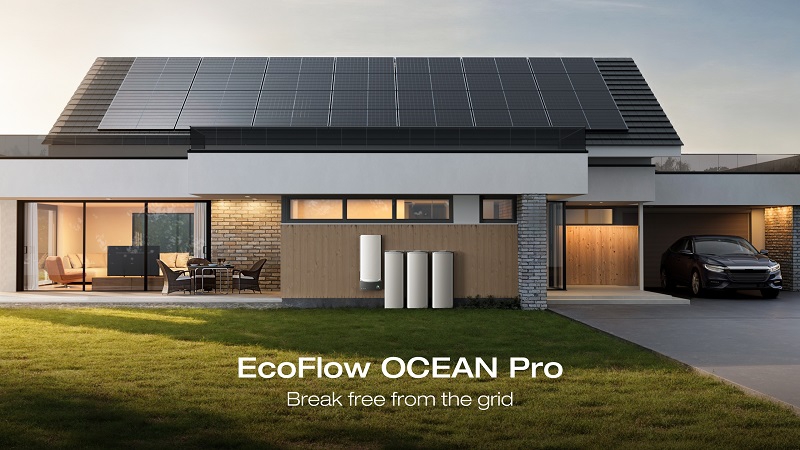
Unmatched scalability: The system starts with 10 kWh of battery storage and can be expanded up to 80 kWh as household energy requirements grow. This modular approach allows homeowners to increase storage capacity without replacing the existing system.
Industrial-grade output: With up to 24 kW of continuous AC output, the system can support multiple high-power household appliances simultaneously, including HVAC systems, EV chargers, and well pumps, when properly configured.
Maximum solar harvest: The high-voltage DC architecture supports up to 40 kW of solar input across eight independent MPPT channels. Multiple MPPTs help optimize energy production by allowing different groups of solar panels to operate efficiently under varying sunlight conditions.
Get Your Free Home Energy Consultation!
Which energy solution are you interested in?
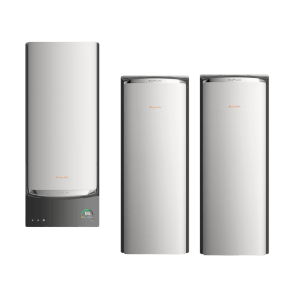

The intelligence center: EcoFlow OCEAN Gateway
The EcoFlow OCEAN Gateway acts as the coordinating hub of the ecosystem, managing solar generation, battery storage, and household loads from one place. Paired with the OCEAN Pro battery, it helps maximize solar self-consumption, automates smart charging during off-peak hours, and keeps the home powered if the grid goes down.
Eight smart circuits: Eight smart circuits connect the OCEAN Pro system, third-party solar arrays, standby generators, and high-power loads, letting homeowners schedule specific devices to run during off-peak hours or reserve battery backup for essentials through the EcoFlow app.
Power more, stay protected: A 260A busbar with smart breaker control supports larger solar arrays, bigger storage capacity, and more powerful loads, while automatically balancing current across circuits to keep the main service line under 200A so the panel doesn't trip.
Less installation work: Its modular architecture reduces wiring and typically avoids the need for a panel upgrade, simplifying installation and streamlining ongoing maintenance.
The remote brain: EcoFlow App
The EcoFlow App extends system management beyond the home, allowing users to monitor and adjust energy settings remotely through their mobile devices.
Intelligent mode scheduling: The app automatically schedules charging and discharging based on solar production, battery levels, and utility pricing, helping homeowners better utilize available solar energy throughout the day.
Device-level load control: During power outages or periods of limited battery capacity, users can prioritize critical appliances while reducing power supplied to non-essential loads, helping extend available backup time.
Easy optimization: Users can quickly switch between different operating modes depending on their priorities, including maximizing backup protection, increasing self-consumption of solar energy, or optimizing electricity usage around time-of-use utility rates.
Together, the EcoFlow OCEAN Pro, OCEAN Gateway, and EcoFlow App create a connected smart solar ecosystem. Rather than operating as separate components, they work together to automate energy management, improve system visibility, and support reliable home battery backup while helping homeowners make more efficient use of their solar energy.
Get Your Free Home Energy Consultation!
Which energy solution are you interested in?
Conclusion
Smart home solar systems extend the role of traditional rooftop solar by combining intelligent energy management, battery storage, and real-time monitoring into a connected ecosystem. Instead of only generating electricity, these systems help homeowners decide when to use, store, or export energy based on changing household demand and utility pricing.
As electricity costs and energy demands continue to evolve, adopting a smart solar system can help homeowners build a more flexible and resilient home energy setup. If you're planning a new solar installation or upgrading an existing one, evaluating a fully integrated smart solar ecosystem can be an important step.
FAQs
Can a house run 100% on solar power?
Yes, a house can operate entirely on solar energy when the system is properly sized and includes sufficient battery storage or another reliable backup source. Actual performance depends on factors such as local sunlight, seasonal weather, household electricity usage, and system capacity.
Can I upgrade my existing "traditional" solar panels to a smart solar system?
In many cases, yes. Existing solar panels can often be retained while upgrading other components such as the inverter, battery system, communication gateway, and energy management platform. The available upgrade options depend on your current equipment and installation.
How does a smart solar system save me money if my utility company doesn't offer good net metering rates?
Instead of exporting excess electricity for low compensation, a smart solar system stores surplus energy in batteries and uses it later when electricity prices are higher or solar production has stopped. This helps increase self-consumption and reduce purchases from the grid.
What is the benefit of a system with Matter 1.4 support over standard solar monitors?
Matter 1.4 enables compatible smart home devices to work together using a common standard. Compared with basic solar monitors that primarily display energy data, a Matter-enabled platform can coordinate connected devices, supporting broader home automation alongside energy management.

