
Signs of Electrical Fire: Warning Signs and Prevention Tips
Electrical fires often start silently behind walls or inside outlets, giving subtle clues long before flames appear. A persistent burning smell, warm switch plates, or lights that flicker without reason can leave homeowners uneasy, and for good reason. These signs of electrical fire can signal overheating, arcing, or overloaded systems that can quickly escalate into a dangerous situation. Recognizing them early and acting fast protects your home and family.
What causes electrical fires to start
Electrical fires usually begin when wiring, electrical devices, or circuits generate excessive heat. Over time, this heat can damage insulation, ignite nearby materials, and lead to dangerous house fires. Understanding how electrical fires can start is the first step toward prevention.
Overloaded circuits and old wiring: Circuits designed for older loads struggle with modern appliances, electronics, and HVAC systems. Aging insulation degrades, increasing resistance and heat. Homes over 20–40 years old face higher risk if systems have not been updated.
Damaged outlets and arcing: Loose connections, worn receptacles, or damaged wiring allow electricity to jump gaps between contacts. This arcing produces intense localized heat that can ignite nearby insulation, wood, or dust without always tripping a standard circuit breaker, creating a hidden fire hazard.
Faulty or aging appliances: Frayed cords, internal short circuits, or overheating components in space heaters, dryers, toasters, and similar devices generate dangerous heat. Worn parts or manufacturing defects can cause sparks or sustained high temperatures that easily ignite surrounding materials during normal use.
Extension cord misuse: Using extension cords as permanent wiring, daisy-chaining multiple cords, running them under rugs, or exceeding their rated capacity causes overheating. The insulation can melt, exposing wires and creating conditions that readily start electrical fires in everyday home settings.
7 warning signs of an electrical fire to watch for
Recognizing the early signs of electrical fire gives you valuable time to address dangerous problems before they escalate.
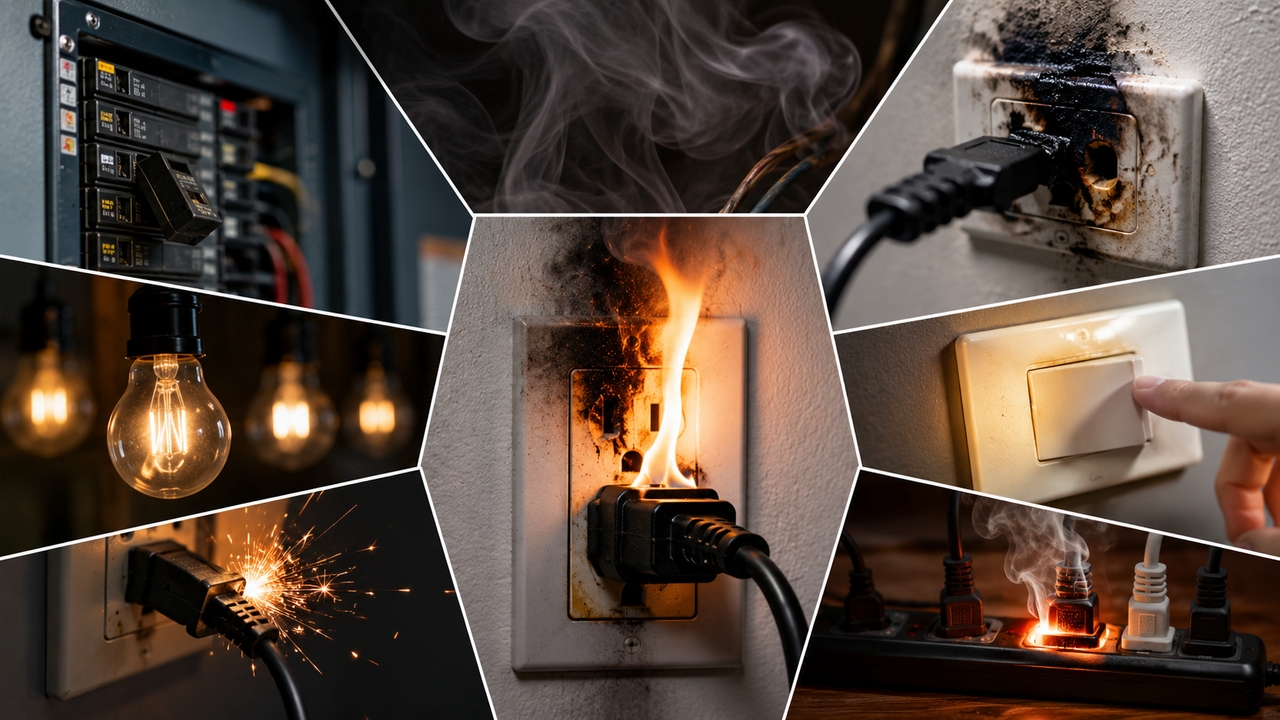
Circuit breaker tripping often
Circuit breakers are designed to protect your home's electrical system by shutting off power when a circuit becomes overloaded or faulty. If the same breaker trips repeatedly, it could indicate overloaded circuits, damaged wiring, a short circuit, or a failing appliance. Avoid simply resetting the breaker each time, as repeated trips often signal an underlying electrical problem that requires professional inspection.
Persistent burning smell
An acrid, plastic-like, fishy, or chemical odor near outlets, switches, the electrical panel, or with no clear source often indicates melting wire insulation or overheating parts. This is one of the strongest early warnings of an electrical fire. Shut off power to the affected area if safe, evacuate if the smell is strong, and call a licensed electrician or emergency services immediately.
Discolored or charred outlets and switches
Brown, yellow, black, or scorched marks on faceplates or the surrounding wall show that heat damage from arcing or loose connections has already occurred. These visible signs mean the outlet or switch has been running dangerously hot. Stop using the affected device right away, and arrange professional inspection and replacement without delay to eliminate the fire hazard.
Flickering or dimming lights
Lights that flicker or dim occasionally may simply have a loose bulb, but frequent or widespread flickering often points to electrical issues. Loose wiring, overloaded circuits, deteriorating electrical connections, or an aging electrical panel can all cause unstable power delivery. If multiple lights throughout your home flicker at the same time, it's important to have your electrical system evaluated as soon as possible.
Buzzing or crackling sounds from outlets
Healthy electrical systems operate completely silently under normal conditions. Buzzing, sizzling, or crackling sounds coming from outlets, switches, or the main panel usually indicate electrical arcing or loose wiring connections. These sounds signal active faults that produce intense localized heat and sparks, creating a serious and immediate fire hazard that requires prompt professional attention.
Warm or hot switch plates
Outlets and light switches should remain cool during normal use. If the faceplate feels warm or hot to the touch, it may indicate excessive electrical resistance, overloaded wiring, or loose internal connections that are generating dangerous heat behind the wall. Continued use can increase the risk of fire, so discontinue using the outlet or switch until the issue has been repaired.
Sparks when plugging in devices
A small blue spark can occasionally occur when plugging in certain appliances as electricity begins flowing, but large sparks, repeated sparking, or sparks accompanied by popping sounds or a burning smell are not normal. These symptoms may indicate worn outlets, loose wiring, or damaged electrical connections that can quickly become a fire hazard. Replace damaged outlets and have the wiring inspected before using them again.
Hidden signs of electrical fire in walls
The most dangerous electrical hazards occur out of sight, tucked deep within walls and ceilings. Pay close attention to these subtle red flags:
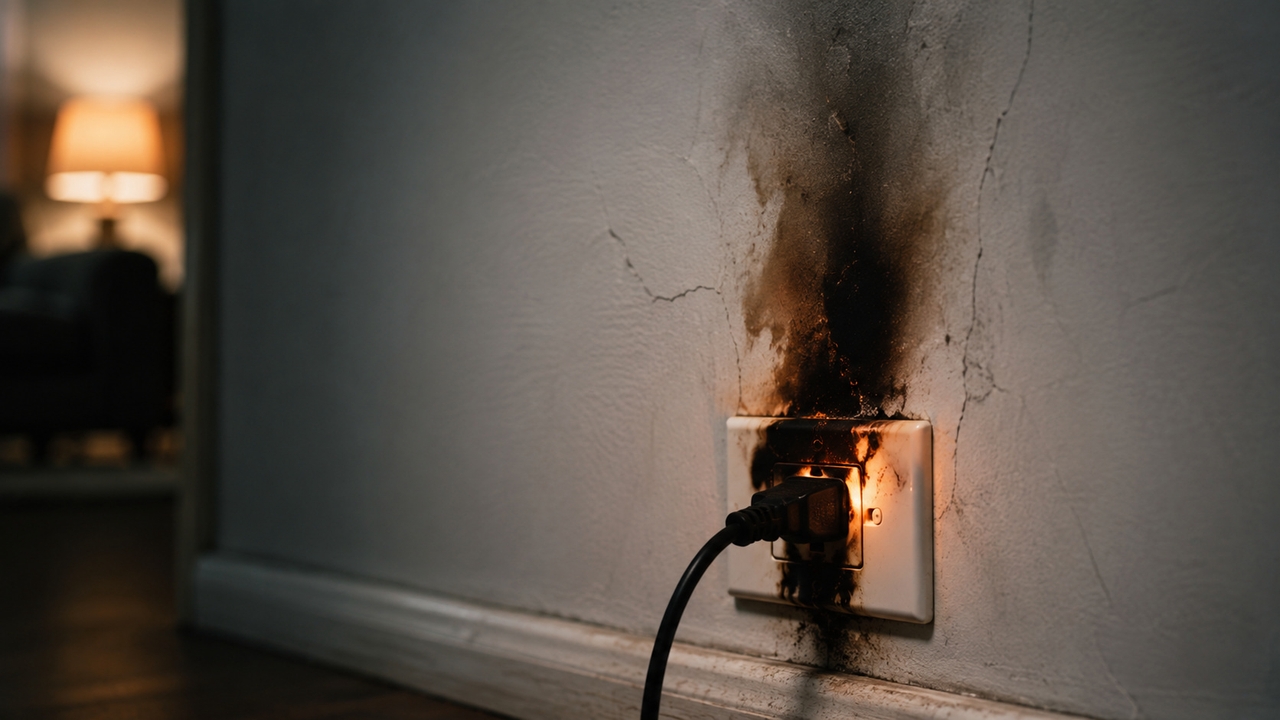
Unexplained hot spots on walls or ceilings: Warm or hot areas on walls or ceilings with no heating pipes or vents nearby can indicate overheating wires behind the surface. This hidden heat buildup from damaged insulation or loose connections creates a serious fire risk that only a licensed electrician can properly diagnose and resolve.
Burning smell with no visible source: A persistent plastic-like, fishy, or chemical odor without an obvious origin often means wires are overheating inside walls or the ceiling. This smell signals melting insulation from internal faults and should never be ignored. Contact a licensed electrician promptly for a thorough inspection of the hidden wiring.
Scorch marks near outlets or panels: Dark discoloration, yellowing, or charring around outlet edges and electrical panels signals extreme internal heat buildup caused by dangerous electrical arcing or degraded wiring behind your home's drywall.
These hidden signs usually point to a wiring issue inside the wall or panel itself. Because you can't see the damage directly, they call for a professional inspection rather than a guess.
What to do if you notice these signs
If you notice any signs of electrical fire, act immediately to reduce the risk of injury and property damage. Quick action can help prevent a minor electrical issue from becoming a serious emergency.
Immediate safety steps: Unplug devices from the affected outlet or circuit if it is safe to do so. Shut off power at the circuit breaker for that area, or turn off the main breaker if you are unsure which circuit is involved. Evacuate the home right away if you see smoke, flames, or detect a strong burning odor. Do not stay to investigate further.
Call emergency services when needed: Call 911 immediately for any active fire, heavy smoke, or visible flames. Never attempt to extinguish an electrical fire with water, as this can worsen the situation and create shock hazards. Use a Class C or ABC multi-purpose fire extinguisher only if the fire is small, contained, and you know how to operate the extinguisher safely.
Contact a professional for follow-up: Once the immediate danger has passed, contact a licensed electrician promptly for a full inspection and necessary repairs. Do not keep resetting breakers, continue using the affected outlets, or ignore the problem. Ongoing issues can lead to a full electrical fire if left unresolved.
How to prevent electrical fires at home
Preventing electrical fires starts with proper maintenance, safe electrical habits, and regular inspections. Taking proactive steps today can significantly reduce fire risks and protect your home and family.
Schedule regular professional inspections: Have a licensed electrician check your wiring, panel, outlets, and grounding every 3–5 years (or sooner after major renovations, storms, or if you notice any warning signs). Older homes especially benefit from this, as insulation degrades and systems struggle with modern loads.
Avoid overloading circuits and extension cords: Spread high-draw appliances across different circuits instead of one. Use power strips only within their rated capacity, and never as a permanent wiring solution. Replace any cord that's frayed, cracked, or warm to the touch right away. If you find yourself relying on extension cords long term, it's better to install additional outlets.
Upgrade outdated components: Replace old two-prong outlets, worn breakers, and aging panels that cannot handle today's demand. Consider AFCI/GFCI protection where required by code. Address any scorch marks, warm faceplates, or buzzing promptly rather than resetting breakers repeatedly.
Practice everyday safe habits: Unplug heat-producing appliances when not in use. Keep space heaters at least three feet from combustibles and never leave them unattended. Use the correct bulb wattage in fixtures and opt for cooler-running LEDs. Maintain clear access to your electrical panel.
Improve electrical monitoring and load awareness:Modern smart electrical systems can give clearer insight into circuit-level usage and help prevent overload conditions before they escalate. Solutions such as the EcoFlow Smart Electrical Panel 40 monitors and controls up to 40 individual circuits, shows real-time energy data, and switches to backup power in 10 milliseconds or less. Instead of guessing which circuit is drawing too much power, you can see it directly in the app.
Integrate stable backup power: Pairing a smart panel with a dedicated home battery system helps keep voltage steady throughout the house during power surges or grid disruptions. The EcoFlow OCEAN Pro works alongside the Smart Electrical Panel 40 to deliver up to 24kW of continuous output, and its battery capacity can scale from 10kWh up to 80kWh depending on your home's needs.

Install and maintain basic fire-safety equipment: Put smoke alarms on every level of your home and outside sleeping areas, and test them monthly. Keep a Class C or ABC multi-purpose fire extinguisher somewhere accessible, and make sure everyone in the house knows how to use it. Put together a simple evacuation plan and walk through it with your family.
Conclusion
Recognizing the signs of electrical fire early can help prevent costly property damage and protect your family from serious safety hazards. Simple warning signs like burning smells, flickering lights, hot outlets, and frequently tripping breakers should never be ignored. Regular inspections, safe electrical practices, and modern energy solutions all play a role in reducing fire risks. Take total control of your home's electrical safety today. Schedule a free consultation with EcoFlow energy consultant to explore how modern smart panel technology and integrated battery solutions can keep your power stable, monitored, and secure.
FAQs
How do you know if an electric fire is starting?
Look for persistent burning or plastic-like smell, warm or discolored outlets, frequent breaker trips, flickering lights, buzzing sounds, or sparks. Any of these signs, especially together, means you should shut off power if safe and call a licensed electrician right away for inspection.
What is the most common cause of electrical fire?
Faulty or outdated wiring, overloaded circuits, damaged outlets or cords, and issues with appliances or extension cords are among the top causes. Arc faults from loose connections frequently create the heat that starts these fires in homes.
Can an electrical fire start if nothing is plugged in?
Yes. Electrical fires can start even when nothing is plugged in. Hidden wiring faults, loose electrical connections, deteriorated insulation, faulty outlets, or a failing electrical panel can overheat and ignite materials inside walls.
Where do most electrical fires start in a house?
They often start in the electrical panel, inside walls near wiring, or around outlets and switches, especially in older homes. Kitchens and rooms with many appliances plugged in at once are also common starting points for electrical fires.

