
PHEV Meaning: Everything You Need to Know About PHEVs
PHEV stands for plug-in hybrid electric vehicle. A PHEV combines a gasoline engine with an electric motor and a rechargeable battery that can be plugged into an external power source. It can drive on electricity for shorter trips and use gasoline when additional range is needed.
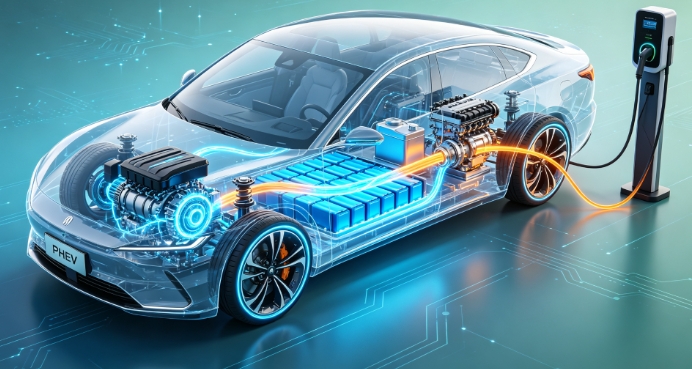
What does PHEV mean in cars? Key components explained
What exactly is inside a PHEV, and how do the parts work together? Below is a quick guide to each major component, its role, and the typical numbers you'll see on a spec sheet.
Component | Function | Typical Figures |
Internal Combustion Engine (ICE) | Powers the car after the battery depletes; assists during acceleration | 1.5L–2.5L, 3–4 cylinders |
Electric Motor | Drives wheels in EV mode; adds torque with ICE | 60–150+ kW |
Traction Battery (Li-ion) | Stores energy for electric-only driving | 8–28+ kWh |
Charge Port | Connects to external power to recharge the battery | Level 1 (120V) & Level 2 (240V); DC fast charging is available on some PHEVs |
Onboard Charger/AC-DC Converter | Converts AC to DC for the battery; steps down voltage for 12V system | Matches charger speed |
Regenerative Braking | Recaptures braking energy to recharge battery | Extends range, reduces brake wear |
Transmission | Transfers power from engine/motor to wheels | Single-speed to 8-speed automatic |
Benefits and limitations of PHEV cars
Benefits
Handles most daily errands and commutes on electric power alone, cutting gas use.
Gas engine takes over once the battery runs low, so long trips don't depend on charging stations.
Regular charging reduces gas use, though savings vary with driving habits and gas prices.
No tailpipe pollution in electric mode; emissions depend on how often that mode is used.
Charges at home or at public stations, making regular electric driving easy to sustain.
Limitations
Combining a motor, battery, and combustion engine makes the powertrain more complex.
The battery and motor add weight, which can hurt efficiency when running on gas alone.
Benefits shrink fast if you don't charge often, since that means relying mostly on gas.
Electric-only range is shorter than a full EV's, so gas is needed for longer trips.
Typically costs more upfront than conventional cars or standard hybrids.
Can you charge a PHEV with home solar?
Of course! Let's explain the potential benefits of combining a PHEV with solar and home battery storage:
Solar-powered charging: Surplus solar electricity can charge a compatible PHEV through suitable home charging equipment. This can reduce immediate electricity exports.
Better solar self-consumption: Excess solar electricity generated during the day can be stored in a home battery for use later. Vehicles that can be charged with stored electricity can help meet charging needs.
Energy-cost management: Smart energy systems can shift electricity use toward solar production periods. They can also respond to suitable lower electricity rates.
Future energy flexibility: Treat your PHEV, solar panels, battery, and charging equipment as one energy system. This approach can simplify future energy planning.

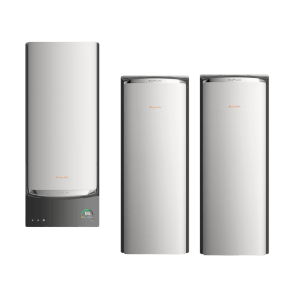
Looking to support your plug-in hybrid ownership with a home solar and battery system? The 11.5kW EcoFlow OCEAN EV Charger provides one example of how home energy storage can complement PHEV charging.
It works exclusively with the EcoFlow OCEAN Pro solar battery system, which integrates solar generation, battery storage, household electricity management, and grid power. The hybrid inverter connects these energy sources, while the modular battery capacity can scale according to household energy requirements.
The EV charger provides up to 11.5kW/48A and uses an SAE J1772 connector, with actual vehicle compatibility and charging speeds varying by model. The OCEAN Pro is designed for fixed residential installation and professional setup, helping homeowners use stored solar and grid energy to support EV charging.
Get Your Free Home Energy Consultation!
Which energy solution are you interested in?
Who should consider a PHEV and how to choose one?
Best suited for: PHEVs are best for those who have access to charging at their home or workplace. They're also good for short commutes and frequent extended trips.
Driving needs: Match the vehicle's electric range with your typical daily travel distance. Consider longer journeys when evaluating overall driving requirements.
Charging: Ensure charging space before selecting the PHEV. Look at the different types of connectors, charging capacity, and how long you can expect to charge during your usual routine.
Efficiency: See how battery capacity, electric range, and fuel economy vary between models. How you charge can also affect real-world efficiency and fuel savings.
Ownership costs: Before purchasing, compare fuel, electricity, maintenance, insurance, and warranty costs.
Conclusion
By learning the phev cars meaning, you can decide if a plug-in hybrid car is right for you and your driving and energy consumption habits. PHEVs can offer convenient electric driving for daily trips and have gas-powered range for longer trips. Their benefits, however, are highly dependent on charging frequency, driving habits, and vehicle selection. Energy flexibility and solar self-consumption can be further enhanced by using a PHEV in combination with home solar and battery storage. The EcoFlow OCEAN Pro Solar Battery System can complement compatible charging setups. Finally, when selecting a PHEV, think about electric range, charging facilities, efficiency, ownership cost, and usability.
FAQs
Is a PHEV better than a hybrid?
When you can charge your PHEV regularly, it can be a better choice than a hybrid. Typically, it has a bigger battery that allows for electric-only driving, and a gasoline option for long-distance trips. Home charging solutions, such as those using EcoFlow Ocean Pro Solar Power Battery Systems, can facilitate charging convenience.
Which is better, PHEV or MHEV?
A PHEV suits drivers seeking greater electric driving and fuel savings when convenient charging is available daily. An MHEV generally costs less, weighs less, and improves engine efficiency without requiring external charging infrastructure. Choose an MHEV for simplicity, while a PHEV works better for short daily commutes and regular charging.
Can you drive a PHEV without charging?
Yes, you can drive a PHEV without plugging it into a charger for extended periods when necessary. When the battery charge becomes low, the vehicle operates similarly to a conventional hybrid using gasoline power. However, carrying the battery without charging can reduce efficiency and increase fuel consumption compared with regular charging.
How does the PHEV meaning differ from BEVs?
PHEVs use a combination of gasoline engines and electric motors, and BEVs use only electric motors and batteries. PHEVs provide a shorter range but still have gas refueling capability, while BEVs have a longer electric range with no tailpipe emissions. EcoFlow Ocean Pro Solar Power Battery System configurations can provide a great solution for daily charging for compatible home PHEV needs.

