
How to Identify, Fix, and Prevent an Overloaded Circuit in Your Home
An overloaded circuit happens when household appliances draw more electricity than the wiring can safely carry. This often occurs during busy evenings when the microwave and toaster run at the same time, and suddenly, the kitchen goes dark. Tripping a circuit breaker is the electrical system's built-in safety feature to prevent overheated wires. These unexpected power cuts are a clear warning that daily energy demands exceed what the current setup can handle. Spotting early warning signs and balancing power use across different rooms keeps the home safe. Upgrading the electrical panel or adding a home battery backup permanently solves these power struggles.
What Causes an Overload Electrical Circuit?
An overload electrical circuit occurs when too much electrical current flows through a wire that is not rated to carry that volume of electricity. Every residential circuit has a safe capacity limit measured in amperes, or amps. Standard household outlets typically connect to 15-amp or 20-amp circuit breakers located inside the main electrical panel.
When the total amperage of every plugged-in device exceeds that safety threshold, a switch inside the breaker trips. This shuts off the power before wires inside the wall can overheat.
Understanding electrical load comes down to a simple formula:
$$\text{Watts} = \text{Volts} \times \text{Amps}$$
A standard 15-amp circuit running at 120 volts has a maximum theoretical capacity of 1,800 watts. However, electrical safety standards recommend keeping continuous loads below 80 percent of the maximum rating. This means a 15-amp circuit should ideally support no more than 1,440 watts at one time. Once multiple high-wattage devices run simultaneously on that same line, an overload electrical circuit becomes almost inevitable.
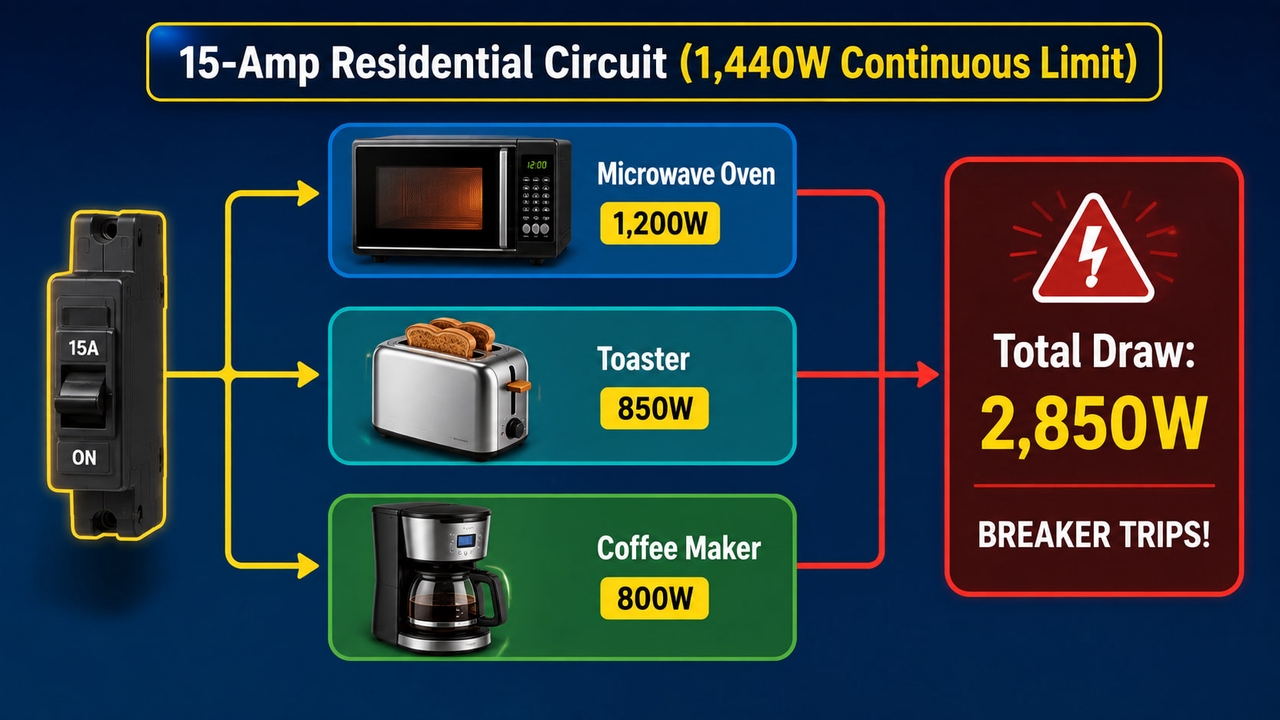
Several common household items are notorious for creating sudden spikes in electrical demand:
Heating Appliances: Space heaters, hair dryers, and curling irons rely on electrical resistance to generate instant heat. A single portable space heater can easily draw 1,500 watts by itself, leaving almost no remaining capacity on a standard bedroom circuit.
Kitchen Essentials: Countertop appliances are compact but energy-hungry. Running a 1,200-watt microwave, an 850-watt toaster, and an 800-watt coffee maker on the same kitchen outlet line demands nearly double the capacity of a standard 15-amp breaker.
Heavy Motorized Tools: Motors require a significant surge of electricity the moment they turn on. Vacuum cleaners, bench saws, and window air conditioning units pull a sharp spike of current upon startup, which often pushes a stressed circuit over its limit.
Appliance / Device | Average Wattage Draw | Estimated Amperage (at 120V) | Circuit Share on 15A Breaker |
|---|---|---|---|
Portable Space Heater | 1,500 W | 12.5 A | 83% (Exceeds safe continuous limit) |
Countertop Microwave | 1,200 W | 10.0 A | 67% |
Hair Dryer (High Heat) | 1,800 W | 15.0 A | 100% (Will trip with any other load) |
Toaster (2-Slice) | 850 W | 7.1 A | 47% |
Window A/C Unit | 1,200 W | 10.0 A | 67% |
LCD Television (55-inch) | 120 W | 1.0 A | 6% |
Identifying Warning Signs Before the Breaker Trips
Waiting in the dark after a breaker flips is not the only way to discover overloaded circuits. Residential wiring systems usually display several physical warning signs when operating under excessive electrical pressure. Spotting these symptoms early helps prevent blown fuses, damaged electronics, and long-term wear on household wiring.
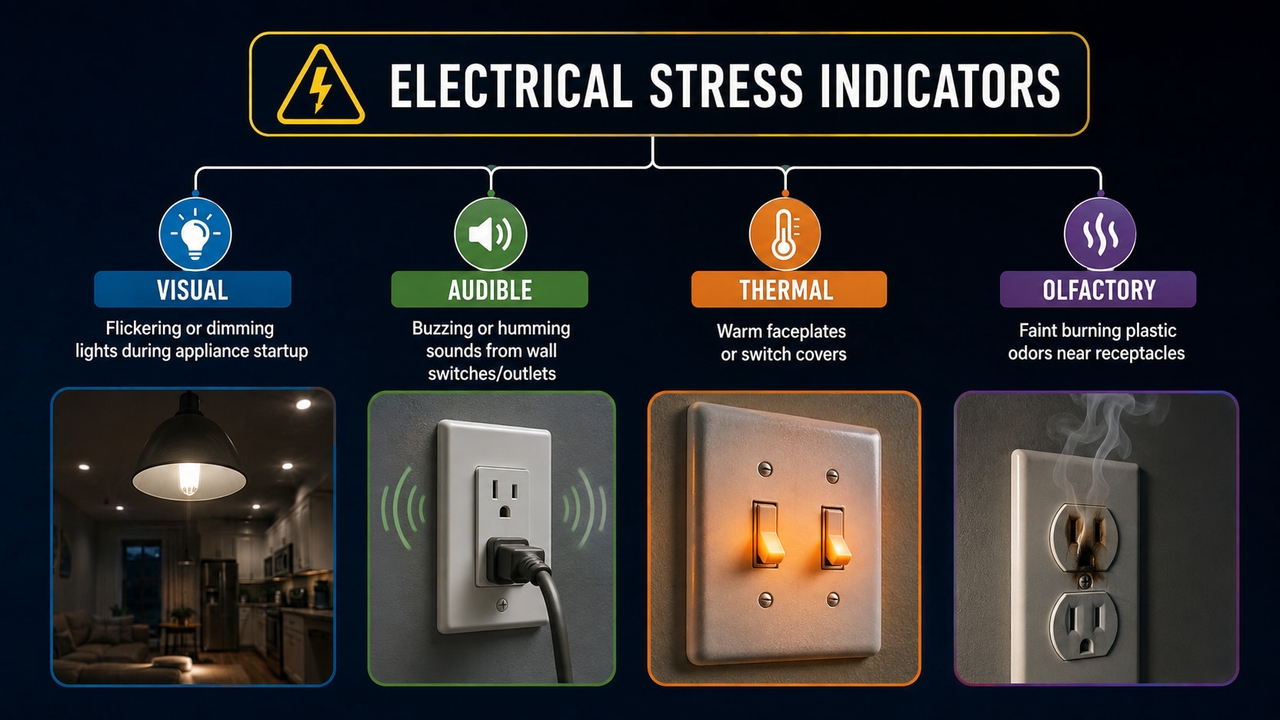
Flickering or Dimming Lights: Overhead lights that dim briefly when a refrigerator compressor kicks on or a vacuum cleaner starts up indicate that the circuit is straining to deliver enough current.
Buzzing Sounds: A faint humming or buzzing noise coming from an outlet, wall switch, or electrical panel is a serious warning sign. This sound often points to loose wiring connections vibrating under heavy electrical flow.
Warm Faceplates: Outlet covers and wall switches should always feel cool to the touch. When a faceplate feels warm or noticeably hot, the wires behind the wall are generating excessive heat. Unplugging every device from that receptacle immediately is the safest course of action.
Mild Odors: A faint scent of burning plastic or ozone near an outlet means wire insulation is actively melting or overheating behind the drywall. This situation requires shutting off the circuit breaker right away and contacting a licensed electrician.
Building a reliable home energy ecosystem starts with recognizing these everyday stress indicators. When home electronics consistently compete for limited power, taking corrective steps protects both personal property and the overall electrical system.
How to Safely Manage Overloaded Circuits
Mapping and Redistributing Your Power Draw
The simplest and most cost-effective way to resolve an overload electrical issue is to map out the home's circuits and balance the load. Many homeowners are surprised to learn that outlets in two different rooms might share a single circuit breaker.
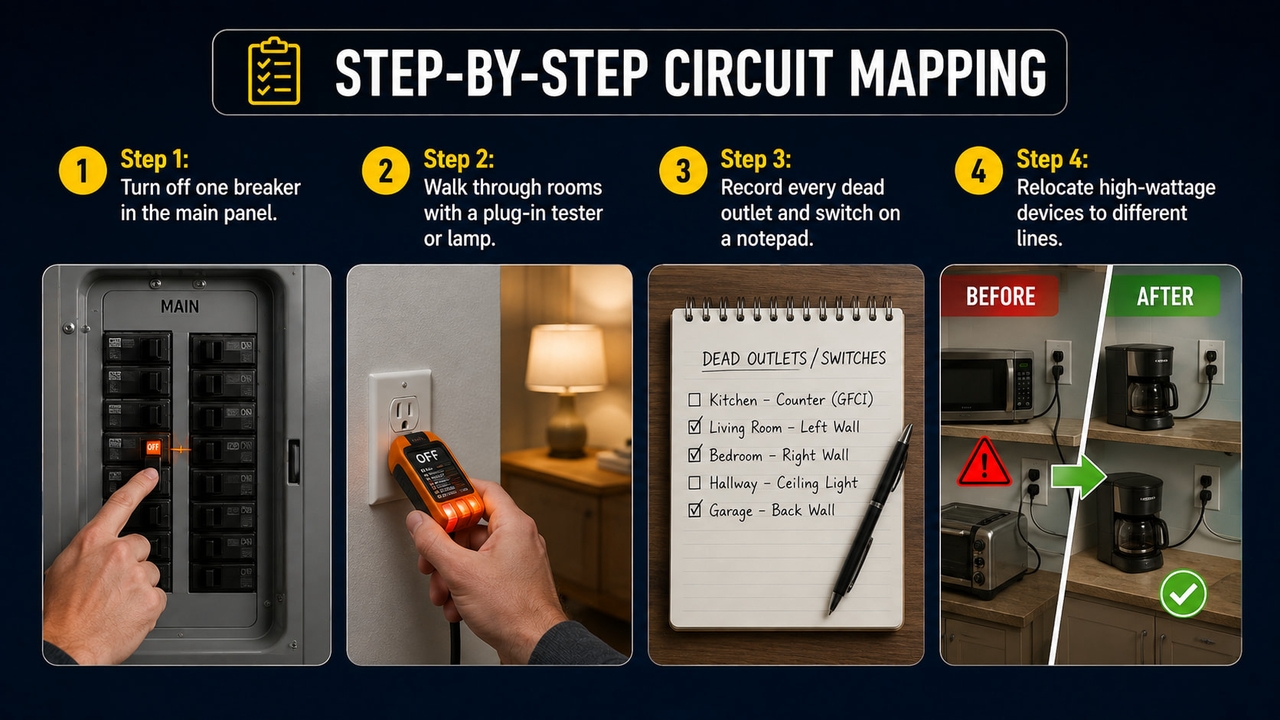
To map the wiring, turn off one circuit breaker at a time at the main panel. Walk through the house with a small lamp or a handheld outlet tester to see which outlets and ceiling lights lose power. Documenting these pairings on a sheet of paper reveals exactly how the electrical load is divided across the property.
Once the layout is clear, redistributing power becomes straightforward. Moving a portable space heater to an outlet on a less congested hallway circuit prevents bedroom breakers from tripping. Similarly, plugging the toaster and coffee maker into receptacles on opposite kitchen circuits keeps daily morning routines running smoothly without interruptions.
Upgrading to a Smart Electrical Panel
For modern households with high energy demands, manually moving cords from one outlet to another is rarely a permanent solution. Upgrading the home's hardware to an EcoFlow OCEAN Smart Electrical Panel 40 makes it possible to monitor and control energy loads automatically across every room. Designed to serve as either a main electrical panel or a sub-panel with up to 40 smart circuits, this system provides real-time visibility into household power consumption. Homeowners can check digital dashboards to see exactly which appliances pull the most current.

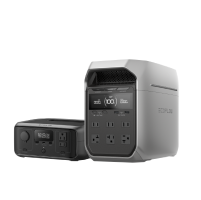
When integrated with the EcoFlow OCEAN Pro, the property gains a powerful buffer against grid outages and peak demand limitations. Offering up to 24kW of continuous output alongside a robust 205A LRA (Locked Rotor Amp) rating, this setup effortlessly handles demanding equipment simultaneously. For example, during a hot summer afternoon, the system can run dual 5-ton air conditioning units alongside kitchen appliances without stressing the utility connection or tripping the main service panel.
Beyond raw power delivery, the setup uses Intelligent Mode to automatically shift electricity consumption to off-peak hours. The system stores lower-cost energy when utility rates are low and discharges that battery power during expensive peak hours. This automated load management eliminates the power spikes that cause an overload electrical circuit while noticeably reducing monthly electricity bills.
Get Your Free Home Energy Consultation!
Which energy solution are you interested in?
Are you ready to resolve your uncertainty about home battery backups? We can help you protect your modernized property against overloaded circuits and grid failures. Request a consultation today to find the perfect energy solution for your home.
Long-Term fixes for an Overload Electrical System
When redistributing appliances does not stop breakers from tripping, the home likely requires a structural wiring upgrade. Older electrical frameworks simply were not built to support the volume of appliances, computers, and climate control devices used in modern daily life.
Install Dedicated Circuits: High-demand appliances should never share an electrical line with general lighting or bedroom outlets. Appliances such as refrigerators, microwaves, electric ranges, sump pumps, and electric vehicle chargers require dedicated circuits. A dedicated circuit serves only one appliance, guaranteeing that the machine receives steady, uninterrupted power without overloading shared wiring.
Service Panel Upgrade: Many historic and older homes still operate on 100-amp electrical service panels. While 100 amps was plenty of power decades ago, modern households usually require a 200-amp service panel. Upgrading the main electrical panel raises the total capacity ceiling for the entire home, allowing multiple heavy appliances to operate at the same time safely.
Conclusion
An overloaded circuit is a clear message that a home's energy demands have outgrown its current wiring layout. By understanding the math behind watts and amps, people can easily recognize why high-draw heating and kitchen appliances cause circuit breakers to trip. Paying close attention to warning signs like flickering lights, buzzing switches, and warm outlet covers allows homeowners to catch electrical strain before it leads to serious damage.
Solving load issues starts with mapping out home circuits and balancing portable appliances across different lines. When household energy needs exceed what standard wiring can support, installing dedicated lines or upgrading to an automated smart electrical panel provides a permanent solution. Taking a proactive approach to electrical management keeps daily life running smoothly, protects valuable appliances, and ensures a safe, dependable home environment.
FAQs
What happens when a circuit is overloaded?
When a circuit is overloaded, the wire carries more electrical current than its safe rating allows, causing it to heat up. The circuit breaker detects this excess thermal buildup and automatically trips to cut off power, preventing wire damage or electrical fires.
How do I know if my circuit is overloaded?
Common warning signs include breakers that trip frequently, lights that dim when heavy appliances turn on, and buzzing noises near wall switches. Warm outlet faceplates or a faint burning smell also signal that a circuit is under excessive electrical strain.
How much does it cost to fix circuit overload?
Simply moving appliances to different outlets costs nothing. For permanent fixes, installing a dedicated circuit by a licensed electrician typically costs between $250 and $800, while a full 200-amp main panel upgrade generally ranges from $2,500 to $4,500.
Are overloaded circuits dangerous?
Yes, overloaded circuits present serious fire risks if protective devices fail. When breakers do not trip, overloaded wires generate intense heat that can melt insulation and ignite surrounding drywall. Advanced systems like the EcoFlow OCEAN Pro help manage high residential loads safely.

